Covid-19

Letters: the NHS shutdown is hurting patients and costing lives

From our UK edition

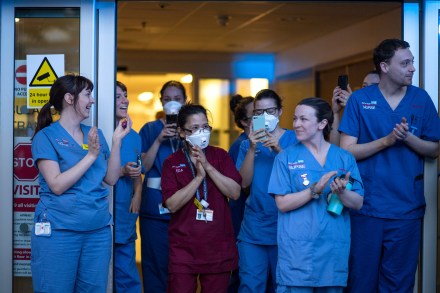
Poor treatment Sir: My recent experience supports Dr Max Pemberton’s view that the NHS is letting down thousands of patients (‘Nothing to applaud’, 30 May). I am a 71-year-old living alone, with no symptoms of coronavirus. For several weeks I have, however, been experiencing severe pain in my left hip. A consultation with my GP diagnosed that I needed a shot of cortisone to reduce the inflammation, but I was told that the NHS was unable to offer clinical consultations due to a focus on the crisis. I was unable to cope with the pain any longer, so my daughter arranged a private consultation and an injection at a cost of £220. My heart problem is potentially more serious and is proving more difficult to resolve.

Why is YouTube so afraid of free speech?

From our UK edition

On Sunday, the hosts of Trigger--nometry, a YouTube show, posted an interview they’d done with Peter Hitchens. They labelled it ‘Lockdown is a catastrophe’, which is an accurate summary of the journalist’s view. Over the next 24 hours, instead of generating tens of thousands of hits, which their interviews normally do, it got very few. Why? The hosts got out their laptops and discovered that when they searched for the video on YouTube or Google, its parent company, it didn’t come up. That wasn’t a technical hitch. On the contrary, it’s a tried-and-tested method that YouTube and Google employ to suppress traffic to material they regard as suspect. It’s a form of censorship known as ‘shadow banning’.

A death, live-streamed: my husband’s Skype funeral

From our UK edition

When my husband died last month, I was as prepared as a person can be. Howard had been afflicted for many years by early-onset dementia and that, as we all know, is a one-way street. What I was totally unprepared for was the lockdown factor. Could we even have a funeral? Yes, we could, as long as we adhered to some rules. And would I like the ceremony live-streamed to those unable to attend? Well yes, I suppose I would. The offer of live-streaming solved my biggest problem. Howard was an American who had lived for many years in Europe. He had family and friends who couldn’t possibly travel to be with us in person. But all they needed was a Skype account and they’d be able to witness and feel part of the whole 20-minute, socially distanced ceremony. Perfect.

The intense pleasures of lockdown

From our UK edition

I used to live in Mogadishu for months at a time, cooped up in compounds behind fortified walls. Venturing on to the streets meant a flak jacket, escort vehicle bristling with guns, chain-smoking as we zoomed through smashed districts, militias, ambushes and roadside bombs. Despite the incarceration, Somalia gave me some of my happiest memories. At home on the ranch in Kenya we often make a point of staying away from town for as long as possible. Our record is three months of no shops, offices, crowds or traffic — just cattle, pasture, birdsong and the rarest of visitors dropping by for a beer. And as a child in north Devon during the winter of 1978, I recall the local constable escorting me across fields in a blizzard to my mother’s arms.

Can the government deliver apprenticeship guarantees?

From our UK edition

What exactly is an apprenticeship guarantee? That’s the major question to come out of Wednesday night's Covid press conference after Boris Johnson committed to offering an apprenticeship to all young people:   I think it is going to be vital that we guarantee apprenticeships for young people. We will have to look after people across the board, but young people in particular, I think, should be guaranteed an apprenticeship. While the commitment was there, the detail was not. Is this really a guarantee for all young people? In the first quarter of this year, over 350,000 people aged 16 to 24 were unemployed (excluding those in full-time education); another 1.5 million aged 18 to 24-year-olds were registered as economically inactive.

The evidence on school re-openings is being ignored

From our UK edition

One of the benefits of the UK exiting lockdown so slowly is supposedly that evidence from other countries can help mould our decisions. If liberalising parts of society in other countries doesn’t cause a Covid-19 flare-up, the UK can proceed with cautious optimism. If lockdown easing leads to a spike in infection rates, the UK can row back its plans before its too late, or put off making changes for a while longer. Around 50 per cent of people polled oppose the partial re-opening Based on this logic, the return of Reception, Year 1 and Year 6 to school today should be warmly embraced, as reports from Denmark over the weekend (which reopened daycare and schools for kids aged two to 12 in mid-April) confirmed that doing so has not led to an increase in infections.

Britain’s contact tracing conundrum

From our UK edition

If there is hope, it lies in contact tracing. The countries that have successfully managed Covid-19 outbreaks and reopened without second peaks (at least so far) have done so through extensive track and trace infrastructure to prevent recurring outbreaks, sometimes after instituting general lockdown. The UK plan is no different: for weeks, ministers have been talking up efforts to build a UK infrastructure to handle the difficult task of rapidly testing every suspected case of Covid-19, and then quickly contacting everyone they may have recently come into contact with, and testing them too.

re-lockdown

A short guide to justifying re-lockdown

Fear is gripping the American public health and media establishments: they are losing control. States are belatedly (and far too tentatively) easing their coronavirus lockdowns, many without having met the absurd CDC benchmarks for doing so. Customers are joyfully returning to previously shuttered restaurants and parks, some even discarding that symbol of subjugation: the outdoor mask. The mainstream media and health experts are not going down without a fight, however; their newfound power over almost the entirety of human life has been too exhilarating to give up now. Their reaction to the current rebellion provides a glimpse of the strategies that will be deployed during the much-hyped 'second wave' of infections this fall in order to shut the economy down again.

Dominic Cummings has a human shield: Boris Johnson

From our UK edition

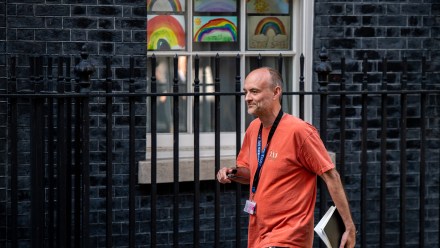
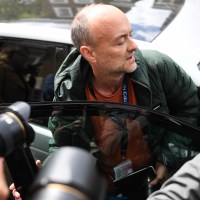
The rule of modern politics, let's call it Trump's first law, is that if you are being attacked for apparently breaking the rules, the best defence is to double down and insist that it is in fact you and your colleagues who have acted with the utmost integrity - and anyone who suggests otherwise is a knave or a fool. Such was how the prime minister defended his chief aide Dominic Cummings - who as I said just now in the daily Downing Street press conference breached not just one but at least three lockdown rules (don't leave the house if someone in it has Covid-19 symptoms, don't spend hours in very close proximity in a confined space like a car with a sufferer and don't go to a second home).

What’s more disturbing: Cummings’ behaviour – or the mob pursuing him?

From our UK edition

The Dominic Cummings story is deeply disturbing. No, not the fact that Cummings and his wife, Mary Wakefield, took what they considered to be essential steps to ensure the welfare of their young child, but the fury and the bile that have been heaped upon them for doing so.It really is something. For the entire weekend the media and the Twitterati have been raging against two parents who were ill, or at risk of falling ill, and who did what they thought was best for their kid in this situation: drove from London to Durham so that family members could assist with childcare if necessary. In a more morally coherent era than ours, the media might even have celebrated such parental commitment Parents taking measures to protect their child is perfectly normal.

Sunday shows round-up: Shapps says Dominic Cummings won’t resign

From our UK edition

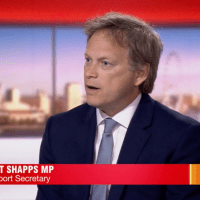
Grant Shapps - Dominic Cummings won't resign A media storm has been battering the government this morning after it emerged that the Prime Minister's key adviser Dominic Cummings could have breached the government's strict advice against travel during the lockdown. In March, Cummings and his family left London to self-isolate in his native Durham, in order to be near to close relatives should he and his wife be unable to look after their 4 year old son. Cummings and the government insist that he did nothing wrong. The Transport Secretary Grant Shapps defended Cummings' decision and denied that his job was on the line: https://twitter.com/BBCPolitics/status/1264492870880428032?

Was Dominic Cummings acting legally?

From our UK edition

As a lawyer, I am firmly against the politicisation of law. It is important to remember that we who serve justice do so for everyone - not merely for people we like or to advance political causes. ‘Lockdown’ has so far been three different legal regimes, and for ease, I’ll restrict myself here to the first one. Under that, we all had the power in reg. 6(1) to leave the house whenever we had a “reasonable excuse”. What it said was “During the emergency period, no person may leave the place where they are living without reasonable excuse”. What that means is: provided we had a reasonable excuse, we could leave the house. It was not then for parliament to tell us what a reasonable excuse is. It is for the courts.

Why Dominic Cummings’ departure may only be a ‘matter of time’

From our UK edition

Dominic Cummings's role in government no longer looks sustainable, as members of the cabinet and Tory MPs turn against him - and in the words of one very senior member of the government, it is "only a matter of time" until the prime minister asks him to go. The problem for Cummings - and the prime minister - is summed up in a Tweet by the former minister Caroline Nokes: "My inbox is rammed with very angry constituents and I do not blame them." Nokes is typical, according to ministers and MPs. Like all prime ministers, Boris Johnson risks deep harm to his own authority and popularity if he ignores what his party is telling him.

Revealed: 90,000 ‘void’ UK Covid tests

From our UK edition

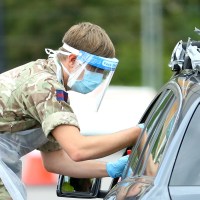
Every evening, at around 5 o'clock, a minister walks through the large panelled doors to Downing Street's state dining room and delivers the daily coronavirus briefing. The conference always begins in the same way – 'I'd like to update you on the latest daily figures'. The minister in question then proceeds to tell us just how many tests have been carried out over the last 24 hours and the number of positive cases discovered. We are left to conclude that the remaining tests must have come back as negative, that no infection was detected. However, there is a third category of result: void tests. These are tests that proved inconclusive, either because the sample wasn't taken correctly or because of some other issue involving the lab. Essentially, the test failed.

Taiwan’s balancing act is becoming ever more precarious

From our UK edition

After a landslide victory in January’s election, Taiwanese president Tsai Ing-wen was re-inaugurated on Wednesday at a scaled-down ceremony in Taipei. As ever, Taiwan’s relationship with China was the central issue of the election. This year, though, a greater sense of urgency surrounded the vote, primarily because of the instability in Hong Kong.  Now, polling day feels like it belongs to a distant past, taking place amid rumblings of a new virus infecting residents of Wuhan across the Taiwan Strait. Although Taiwan has rightly received much praise for its response to coronavirus, the past few months have not been without significant difficulties.

Boris’s NHS immigrant surcharge shake-up doesn’t go far enough

From our UK edition

The Prime Minister has asked the Home Office to remove NHS workers and social care workers from the immigration health surcharge as soon as possible. As Katy Balls reported earlier today, frustrations were growing within the Tory party that healthcare workers could be clobbered with this fee as they work tirelessly to help British patients get through the Covid crisis. It seems Boris Johnson has listened to his backbenchers and u-turned. The fee will be waived for a range of health staff, from doctors and nurses to technicians and cleaners. This exemption is good news for workers in the healthcare sector, but it shouldn’t be the end of the policy review. This update for health workers creates an opportunity to assess the fairness of the surcharge overall.

Switzerland is now an enemy of the rich

From our UK edition

Gstaad The staff are back and all is well, as they used to say long ago in faraway places. The gardener and the cleaner are Portuguese, and they greet me, with their inherent dignity, from afar. The Filipina maid and cook almost gets me in a headlock trying to thank me for keeping her on salary while she rested at home. I shoo her away. Who does she take me for, a lowlife cheapskate like Philip Green? I didn’t hesitate to send them all home. Mind you, I’ve taken such a shellacking on the stock market that I’ll soon be applying for a job myself, perhaps as an ageing gigolo to some fat old tart from Marienbad. I tango well and can waltz, so all I need to do is grow a pencil-thin moustache. But I’ll start with the bad news.

Sunak’s coronavirus rescue package looks increasingly unsustainable

From our UK edition

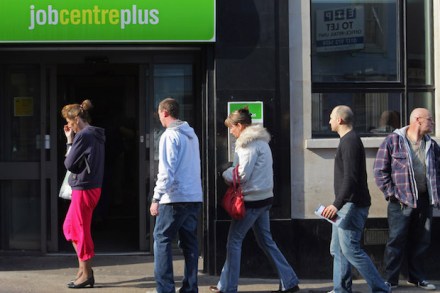
The number of people claiming unemployment benefits in Britain rose by over 856,000 to 2.1 million in April, the first full month of the lockdown. Figures from the Office for National Statistics reveal that the number claiming benefits due to unemployment has increased by nearly 70 per cent. This marks an unbelievable u-turn from the start of the year, when UK employment figures were hovering at record highs. These figures do not include ‘the furlough effect’: those who are still counted as employed, paid by the Government to stay home and wait for the green light to return to work.