Covid-19

Moderna’s vaccine breakthrough reveals the folly of UK efforts

From our UK edition

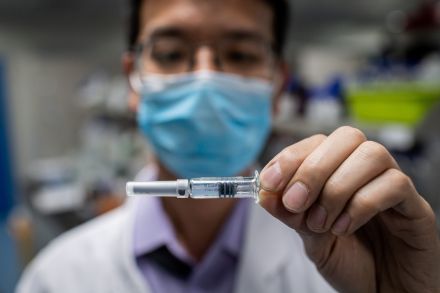
The effect that a commercially-available vaccine would have on the global economy was amply demonstrated on Monday afternoon. The FTSE 100 jumped by more than 4 per cent after an announcement from US drug company Moderna that results of phase one vaccine trials had been successful. Development of a vaccine has become an international race with Moderna, the AstraZeneca-Oxford University project and Chinese work among those in the frame. The government would be advised to stop dangling the elusive possibility of a vaccine arriving by this September Of all of them, Moderna has a headstart. Its trial vaccine, mRNA-1273, was first sequenced on 13 January, just two days after China shared the sequence for Sars-CoV-2, the virus which causes Covid-19.
Do the experts believe in the R number?

From our UK edition

The R-number has been declared the most important metric in monitoring Covid in Britain. For young children to return to school in June, or for pubs to open in July, it is always linked to the rate of Covid transmissions - the R-number - staying below one. Above one is the danger zone: it means each infected person is infecting, on average, more than one other. So plans to liberalise are put on hold and we possibly enter a more severe lockdown once again. When explaining his strategy last weekend, the Prime Minister even showed a picture of an R-Number speedometer. But it gave no reading. We're instead told a range: is that it hovers somewhere between 0.7 and 1. But we have never been told exactly what the R-number is.

My positive antibody test is an ‘immunity passport’ in all but name

From our UK edition

I wouldn’t say I felt I had joined a master race when my coronavirus ‘immunity passport’ arrived this week. But I did have a slightly smug glow of satisfaction when discussing my positive Covid-19 antibody test result with colleagues. ‘Jammy devil’ and ‘I wish I had one’ were among the envious, bordering on resentful, responses. Although there is no absolute proof, it means it is almost certain I cannot get the disease again soon and consequently, unable to pass it on to anyone else. By contrast, friends who had antibody tests that proved negative bore the dejected air of youngsters who had just failed the 11 plus exam. Or failed their driving test for the fourth time. I paid £85 to a private GP practice for the test.

Covid’s knock-on effect on child deaths

From our UK edition

The daily death toll has been a constant backdrop to the Covid-19 crisis. Would we ever have entered lockdown, would so many people have been driven to panic, were it not for the publication, every afternoon, of the number of deaths in the past 24 hours? It has helped set in the minds of the public the idea that this is a lethal disease, on a scale completely removed from other common diseases. How much differently would we see Covid-19, though, if we were also fed with a slightly different statistic: the number of indirect deaths, caused not by the disease itself but by other factors associated with lockdowns: closure of medical facilities, fear of going to a hospital and so on.

Let’s bring back Britain’s fever hospitals

From our UK edition

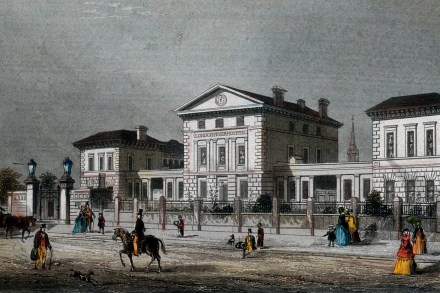
Could the future of pandemic planning lie in our past? A century ago, there were hundreds of so-called 'fever hospitals' dotted across Britain. These small institutions were built for diseases of a bygone age – smallpox, scarlet fever and typhus – but were designed for precisely the same problems we face today.  They contained isolation wards, separate accommodation for different infections, laboratories, operating theatres and convalescent wards with activities for recovering patients. Given the current problems of the Covid-19 outbreak, we need to re-establish these medical relics.

Why I support Greta Thunberg in her fight against COVID-19

My name is Matilda Olofsson and I am Greta Thunberg’s arch-nemesis. For every positive action her climate activism encourages, I have taken it upon myself to cause an equally negative reaction. For example, when Greta challenged world leaders to address the issue of reducing carbon emissions with her famous ‘HOW DARE YOU?’ speech, I marched straight down to my local park and chastised a bunch of kids for riding around on push bikes when limousines exist. So naturally, when I heard of Greta's inclusion on a CNN coronavirus 'facts and fears' panel I was livid.

greta

The coronavirus crash could be even worse than we feared

From our UK edition

Just how bad will the Covid economic hit be? Today’s figures for the first quarter of 2020 show Britain's economy shrunk by two per cent, but that takes into account just a few days of lockdown (and suggests that the recession started some time before). The March figure is more like it: despite only formally being in lockdown for eight days in March, the UK economy contracted 5.8 per cent that month alone. As Capital Economics puts it ‘in just one month the economy has tumbled by as much as it did in the year and a half after the global financial crisis.’ Yet some responses to today's figures reveal a worrying degree of optimism about the future.

Ten reasons to end the lockdown now

From our UK edition

Writing in this magazine a month ago, I applauded the government’s stated aim of trying to follow the science in dealing with Covid. Such promises are easier made than kept. Following science means understanding science. It means engaging with rival interpretations of the limited data in order to tease out what is most important in what we don’t know. Instead, the government in the UK (and many other places) seems uninterested in alternative viewpoints. The chosen narrative – that lockdown has saved countless lives – has been doggedly followed by all spokespeople. No doubt is allowed. We have been seeing the groupthink response to a perceived external threat that Jonathan Haidt describes so lucidly in his excellent book on human moral thinking, The Righteous Mind.

Starmer’s Telegraph splash is a perfect piece of politics

From our UK edition

The Daily Telegraph is considered the voice of the Conservative grassroots - so today’s splash will have driven a sliver of ice into minister’ veins. Here is the new leader of the opposition, a knight of the realm no less, urging the government to get a grip of the Covid-19 outbreak in care homes. ‘We owe so much to the generation of VE Day,’ he says. ‘We must do everything we can to care for and support them through the current crisis.’ On the day we remember the end of hostilities in Europe, Sir Keir Starmer has planted his tanks boldly on the Tories’ lawn.

Has Trump finally decided to dump Saudi?

From our UK edition

In a dramatic move even by his own mercurial standards, Donald Trump has authorised the withdrawal of two Patriot missile systems guarding Saudi Arabia's oil facilities, accompanied by hundreds of American military troops operating them. They were deployed last September after a massive cruise missile and drone attack on the Saudi oil infrastructure – blamed on the Iranians but claimed by their allies the Houthi rebels in Yemen – that knocked about half of the kingdom's production capacity offline. Now Saudi Arabia has just two Patriot batteries, located at Prince Sultan Air Base in the middle of the Saudi desert. They are not there to protect the royal family and its economic resources, but rather the estimated 2,500 American soldiers stationed at the remote military hub.

Keeping schools closed until September would hammer poor kids

From our UK edition

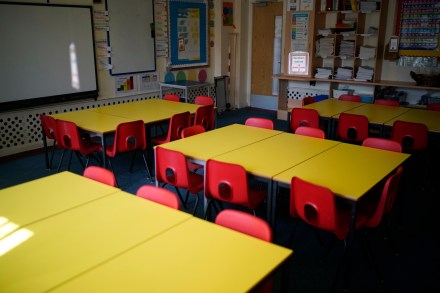
Schools should stay closed until September, according to a big teaching union: In view of the continued and pressing public health challenges and the considerable task that will be required to ensure that every school is ready to admit increased numbers of children and adults into safe learning and working environments, the NASUWT urges ministers to act to end speculation on the reopening of schools beyond the current restrictions prior to September 2020. That’s the latest from Patrick Roach, head of the NASUWT. This is a hardening of the line from teaching unions, and one that I think has the potential to cause significant tensions with the government.

Can we rely on a V-shaped recovery?

From our UK edition

Can the UK expect a V-shape recovery? The Bank of England has this morning published data revealing very deep V, suggesting a complete economic recovery in a matter of months: a 25 per cent plunge in growth in Q2, followed by a 14 per cent and 11 per cent boom in Q3 and Q4. That would be the sharpest collapse in 200 years followed by the sharpest recovery in 300 years: more of a bungee jump than a V. That’s the good news. The bad news is that it’s an ‘illustrative scenario’ rather than a forecast. Source: Bank of England Monetary Policy Report May 2020 It’s not just lockdown: living with the virus takes a big economic toll The Bank’s decision to hold interest rates at (an ultra-historic low) 0.

How do we know which lockdown measures should be lifted first?

From our UK edition

Today, the cabinet has to decide where to go next with the lockdown – although the decision will not be announced until Sunday. Boris Johnson has talked of a ‘menu of options’ for relaxing some of the measures, but we have been warned not to expect too much. The government has also distanced itself from speculation that rules on outdoor exercise will be loosened, as well as garden centres and a few other businesses allowed to reopen. How does anyone know which lockdown measures have been effective and which haven’t? A team of epidemiologists led by Paul Hunter have attempted to do that, and their pre-published paper may well feed into the government’s decision-making today.

Why we’ll all be fleeing to Nigeria

From our UK edition

I keep thinking what I’ll do when we regain our liberty — and I picture that beer at the end of Ice Cold in Alex, when after surviving his trek through the Sahara, a sweaty John Mills traces his finger up the frosted schooner, drinks the golden liquid down in one and says: ‘Worth waiting for.’ A month ago I had big ambitions for the future at home on the farm in Kenya. We were planting thousands of avocado trees, we were about to start rearing organic broiler chickens, there was a tilapia farm to expand, a new dairy project, and preparations for the Nairobi livestock breeders’ show later this year, when we hoped to compete with a string of Boran beef cattle. The event was cancelled and all my farm plans were delayed when the flights home to Kenya were closed.

It’s time we were honest about obesity and Covid-19

From our UK edition

Difficult facts can be conveyed in a sensitive, non-judgemental and compassionate manner; indeed, this describes the daily practise of medicine. When obesity rears its head, however, a significant number of my colleagues in the health professions display a cognitive dissonance and determination to deprive patients of the unvarnished facts that they would not dare hide with conditions such as cancer. Prioritising their own “feelings”, they patronise the obese by taking offence on their behalf, preferring to virtue-signal, accusing those “ insensitive “ enough to want to state the facts of “fat shaming” or victim-blaming.

How will Rishi Sunak roll back the furlough scheme?

From our UK edition

Just weeks ago, Chancellor Rishi Sunak claimed that widespread use of the furloughing scheme was proof of its success. But it appears the government has over-achieved. The Treasury’s original prediction was that 10 per cent of businesses would use the salary safety net; the figure has turned out to be closer to 70 per cent. The cost for just one month of the scheme is estimated to be £8 billion, only £3 billion less than the NHS’s monthly budget. ‘We’re not talking about a cliff-edge but we have to get people back to work.’ says Matt Hancock, the health secretary. ‘We’ve got to wean off it.’ After telling ITV early this week that the scheme was ‘unsustainable’ for the long-haul, Sunak is changing tack.

Is it ‘speculation’ to say the UK has the most deaths in Europe?

From our UK edition

It's a grim news week for the government with Dominic Raab announcing in Tuesday's press conference that the UK coronavirus death toll is now at 29,427 (ONS figures suggest the number of deaths is as high as 32,313). This means that according to official figures from each country, the UK has overtaken Italy in fatalities and currently has the highest death toll in Europe.

A German court has plunged the eurozone into fresh crisis

From our UK edition

An epidemic has been raging across the continent. The economy is in lockdown, and GDP is in freefall. But, hey, just when you thought things couldn't get any worse in the eurozone it now has a financial and currency crisis as well, and one that is being made worse by the week with the shambolic management of the European Central Bank by Christine Lagarde. Today, the German constitutional court has, at least in part, ruled against the ECB's bond-buying programme, which allows the central bank to print money and effectively bail out Italy, Spain, and probably quite soon France as well. You need to be a German lawyer – not usually among the most interesting people on the planet – to unpick the finer points of the ruling.

The return of the deep shelter mentality

From our UK edition

Seven weeks confined to a city apartment changes a man. Trees, for example, have never been a particular passion of mine but recently I've spent many happy moments studying the plane tree outside my bedroom window, and in particular the magpies' nest therein. On Saturday a baby magpie emerged from the nest and edged tentatively along a branch. There it stayed for several minutes until it retreated to the security of its nest. On Sunday, the Observer reported that a similar nervousness now afflicts the British. According to the paper, fewer than one in five of the public believe the time is right to end the lockdown. Britain is not alone in its apprehension.

Our toothless response to China is embarrassing

From our UK edition

If you have been troubled by the government’s failure to get tough on the country responsible for our present malaise, never fear. The Foreign Office has issued a joint statement with ten EU members warning this regime of ‘grave consequences’ for its ‘standing in the international arena’. That’ll put Beijing in its place. Well, not quite. The statement wasn’t directed at China and the deadly pandemic it has unleashed upon the world. It was another scolding for the Israelis, this time over plans to apply sovereignty to West Bank settlements in line with the Trump peace plan. With 250,000 fatalities and the world economy on a ventilator, it’s about time someone stood up to the real global menace: organic date-growers in the Jordan Valley.