Covid-19

How long will it take Britain’s economy to bounce back from Covid?

From our UK edition

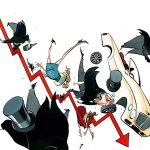
Britain's economy experienced a record rebound between July and September, growing 15.5 per cent. But the vast majority of this recovery took place early on – and there are worrying signs that this slowdown has continued in the months since.  Towards the end of the summer, monthly growth figures were already starting to disappoint. Despite August being the most open month this year since the pandemic struck, with restrictions on businesses and social gatherings the most liberal they had been since mid-March, growth was only 2.2 per cent, followed by 1.1 per cent in September. This major slowdown shows that the economy can only recover so much while major Covid-19 restrictions remain in place.
Don’t panic about the Covid vaccine allergy risk

From our UK edition

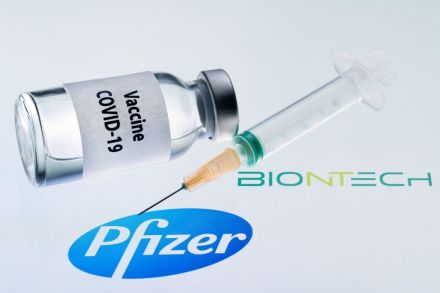
In the coming weeks, you are inevitably going to see a slew of stories in the media about side effects from the licensed vaccines. The first one is already with us. Two healthcare staff – who both have a history of allergic reactions – have reportedly had adverse reactions to the Pfizer vaccine. This has lead to a change in advice about who should get the vaccination.  It is going to be difficult to initially ignore these stories but I am going to suggest if you don’t ignore them outright then try to dial down the volume. There are a number of good reasons to do this. Firstly, in the coming weeks and months, we are going to suffer from the most severe form of what is known as 'observer bias'.

Wealth taxes are not the answer to our financial woes

From our UK edition

Today the Wealth Tax Commission, an initiative involving the LSE, has recommended a ‘one-off’ 5 per cent levy on the assets of Britain’s wealthy residents to pay for the costs of the pandemic. Two immediate problems jump out of the proposal. First, to raise the money it would not be a one-off levy, but rather a 1 per cent tax for five years on the total wealth — property, savings, you name it — on households worth more than £1 million (the tax is estimated to hit one in six adults). Second, this five year period is estimated to raise £260 billion — close to the £280 billion the Office for Budget Responsibility says can be ‘directly attributable to the package of support’ announced since March to tackle Covid-19.

Why is China keeping quiet about its vaccine programme?

From our UK edition

While Britain is the first country in the world to approve a vaccine, it is not the first to start vaccinating people. A million people in China have already been inoculated with Sinopharm and Sinovac jabs. The vaccines, however, have not completed phase three trials, which assess potential side effects. In other words, they have not yet been granted regulatory approval. Could this be the reason that Beijing – never usually shy when it comes to good news – is keeping quiet? The vaccinations first started in July, when a legal provision for ‘emergency vaccinations’, based on the WHO’s response to Ebola, was introduced.

How the foreign press covered Britain’s ‘V-day’

From our UK edition

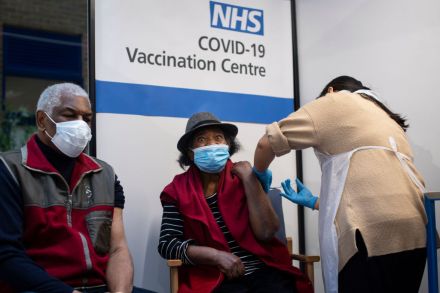
There have been some dark days for Britain over the course of the Covid-19 pandemic, but thankfully today was not one of them. Tuesday 8 December has been hailed as ‘V-day’ as the UK became the first country to begin its mass vaccination programme. Tens of thousands of Brits received their injections, including Margaret Keenan, 90, the first person in the world to be given the Pfizer jab outside of a clinical trial, and William Shakespeare, 81, from Warwickshire, who was the second. Across the world, all eyes have been on the UK today. Here’s how the foreign press covered the start of the biggest mass vaccination programme in the NHS’s history.

How robust was the evidence for lockdown?

From our UK edition

Ever since it was first published in May, the Office of National Statistics’ weekly infection survey has been looked upon as the gold standard of Covid data. It is based on swab testing of a large, randomised sample of the population who are tested repeatedly to see if they are infected with the virus – the results from which are scaled up to arrive at an estimate of incidence of the disease in the population as a whole.  Being a randomised sample, it does not suffer from the drawback of the daily Public Health England figures for confirmed infections – which are heavily influenced by how many tests are being conducted. As the number of tests has expanded, so, too, the number of confirmed infections has risen.

Covid-19: where to get tested

From our UK edition

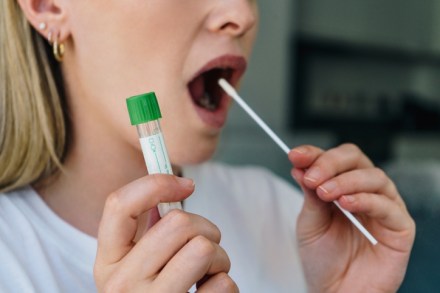
It remains the case that for most people free NHS tests are only available for those taking part in pilot schemes, who have been asked to have one by health professionals, or in people or families showing symptoms of the virus. This means that some people are now looking to private providers to get tested before seeing loved ones and although many such providers are offering tests for a fee now, how do you know which are high quality and which should be avoided? For a start, always look for a home test kit that is CE-marked as this shows it meets the European standards for medical testing and is also approved for sale in the UK – do not use any test without this approval mark.

Could the Zoe app identify local Covid outbreaks?

From our UK edition

In spite of the approval of one vaccine and the likely approval of at least two others, the government seems determined to push ahead with 'operation moonshot' — mass community testing along the lines of that being trialled in Liverpool. That is astonishing, not least because of the cost — put at £100 billion in one leaked document. There is also, as I wrote here a fortnight ago, the matter of the dismal accuracy of the lateral flow tests being used for community testing. It suggests that the government, for all the Prime Minister’s chirpiness this week, has little confidence that vaccination will put an end to the Covid pandemic any time soon. Otherwise, why spend such a fortune on testing for a disease that ought rapidly to die away?

Russians are wary of Putin’s vaccine

From our UK edition

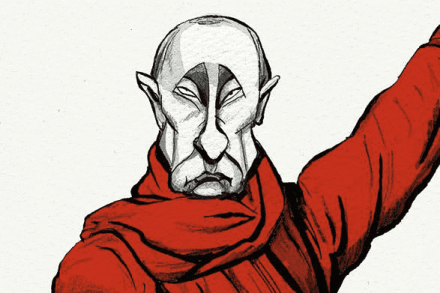
Never one to let a bandwagon pass by, Vladimir Putin launched his own national vaccine programme the moment Britain said it was starting its roll-out. Given how badly Russia has been hit, you would expect it to be a popular move. But Russians themselves seem cautious, not least because they mistrust the Kremlin. On Thursday, Russian health officials announced a new record of more than 28,000 coronavirus cases reported in a single day, bringing the total caseload to almost 2.4 million. Russia has the world’s fourth-worst case numbers, behind only the USA, India and Brazil, with over 41,000 deaths to date. Or at least 41,000 according to official statistics — confidential documents leaked to the press suggest the real figure is at least 75,000.

Boris will be worried by the growing Tory rebellions

From our UK edition

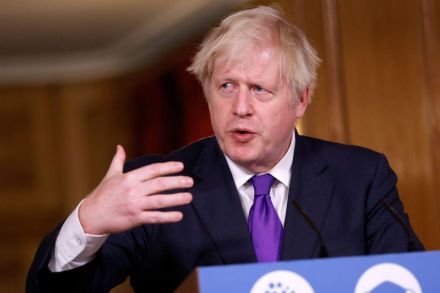
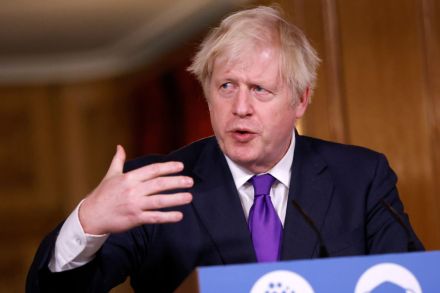
The beginning of the end for Theresa May was when she tried to see if she could pass her Brexit deal with Labour votes. So Boris Johnson will have shifted uncomfortably in his seat on Tuesday night when it became clear that the House of Commons had approved his tier system only because the opposition had abstained, I say in the magazine this week. The worry for Johnson is that the Tory rebellions against his Covid measures keep getting bigger. The original coronavirus act back in March passed without a vote. In September, seven Tories voted against the renewal of those emergency powers; 42 opposed the 10 p.m. curfew in October; and 53 were against the tier system this week.

Was endorsing Boris one of my worst misjudgments ever?

From our UK edition

Now that our social lives are a Venn diagram that only mathematicians can understand I am officially becoming a recluse. I’ve been getting to this point for years, but since the latest Covid rules mean that what we can and can’t do until ‘vaccine freedom day’ can only be understood if you have a head for shaded charts, I am resigning from polite society, in so far as I was ever in it. Boris may as well have announced 375 tiers and a rule saying anyone who wants to celebrate Christmas needs to sit inside an actual bubble and roll themselves along the floor. I have no idea what the government is on about any more.

Boris hasn’t seen the last of the Tory lockdown rebels

From our UK edition

Boris Johnson is wrong if he thinks this week's Tory rebellion on the tiered system marks the end of his party management problems. In fact, Tuesday night's rebels tell me that the main purpose of the vote was to increase the likelihood that a good number of areas will be moved down a tier when the current allocations are reviewed on 16 December.  'If there had just been 20 or 30 of us, the likelihood of getting lots of places moved would have been pretty small,' explains one senior rebel. 'But the fact that we surprised them with the strength of support makes it more likely, so those of us who rebelled have done our colleagues a favour.

Two unanswered questions on the Covid-19 vaccine

From our UK edition

Britain, we learned this morning, has become the first country in the world to approve the Pfizer/BioNTech vaccine, which is likely to be deployed from Monday onwards. Is Britain being reckless, or are other countries dragging their heels?  The first point to make is that, however tempting though it may be to think so, it is not a case of Britain taking advantage of new-found freedoms enabled by Brexit. It may be in the future that Britain develops a more nimble regulatory system than the EU, and that British patients can benefit for the earlier administration of drugs, but the UK will remain under the European Medicines Agency’s regulatory system until the end of the transition period in a month’s time.

The dangers of Covid-19 far outweigh the risks of a vaccine

From our UK edition

For all the good news that has emerged about Covid-19 vaccines in recent weeks, it is clear that we are not doing a particularly good job addressing people’s reasonable concerns about vaccine safety. Before we go on though, it is important for you to know who I am, and who I am not. I am a minor academic in a decent university. I don’t normally work on vaccines, have never had any funding from Big Pharma (or anyone else) for vaccine studies, have no career in vaccines and not much to gain from writing this, other than a spike in trolling. I have never met Bill Gates and have no interest in injecting you with a microchip. As someone on my Twitter feed said, I am shilling for 'Big Staying Alive'. So why listen to me?

A response to Steerpike’s review of Michael Gove’s lockdown claims

From our UK edition

Steerpike ran the rule over Michael Gove's article in the Times in which he argued ‘lockdown was the only way to stop the NHS being broken’. Here, the Cabinet Office responds to Steerpike: 1. Claim: Steerpike claims Michael Gove, the Chancellor of the Duchy of Lancaster, used his essay in the Times on 28 November to set out 'his new argument: the only strategy for stopping the NHS from being overwhelmed now is the government's new tougher three-tier system'. Rebuttal: the argument that social distancing and non-pharmaceutical interventions are necessary for protecting the NHS is not a new argument. It has been at the heart of the UK Government’s approach since spring and is an approach shared by all the devolved administrations in the UK.

Boris’s tier assessment says nothing new

From our UK edition

In an attempt to win tomorrow's vote on the new tier system — without relying on Labour's support — Boris Johnson promised to publish analysis of the health, social and economic impact that the new tier system would have on the nation. But potential rebels are unlikely to be satisfied with the resulting document, published earlier this afternoon.  The intention was to show sceptical MPs that the government is seriously weighing up the trade-offs between the effects of Covid and the effects of stopping its spread. But it did not include a rigorous economic analysis of the tier system: in fact, it provided no cost-benefit analysis of any specific restriction.

Philip Green gave capitalism a bad name

From our UK edition

The giant drug companies that are on brink of delivering a Covid vaccine in record time? Well, that’s easy. The technology companies that have relentlessly innovated to transform the way we communicate with one another? That’s not too hard. The power generators, food manufacturers and automobile conglomerates that supply most of our daily needs? That’s a breeze. Heck, even the banks can justify their existence, at least in theory. Most entrepreneurs and businesses are fairly easy to defend. But Sir Philip Green? Errrrr… The free market needs defending, perhaps more now than at any time in the last 50 years Of course it was just about possible to explain his vast wealth.

Were tiers working before lockdown?

From our UK edition

Beware data that is released on the eve of a Commons vote on lockdown restrictions. That was the lesson of the graph presented by Sir Patrick Vallance at the Downing Street press briefing on 31 October, which included a scenario of 4,000 deaths a day by December unless drastic action was taken. The figure quickly fell apart when it was revealed that the data was several weeks out of date and the curve shown on the graph was already running well ahead of reality. What, then, to make of the React study published this morning, reported on the BBC news and elsewhere this morning, claiming that Covid cases have 'fallen by about a third over lockdown'? Does the research show that cases fell because of lockdown?

The case against the new Christmas Covid rules

From our UK edition

‘The first duty of the government is to keep citizens safe.’ These are the government’s own words. Yet, despite this almost sacred pledge, the four administrations of the UK have agreed to gamble on relaxing restrictions over Christmas, potentially rewarding Covid-19 with the biggest present of them all. With any gamble, there are stakes, risks and prizes. The stakes in this case are people’s lives — they could not, therefore, be any higher. As for prizes, there are several that officials seem to be eyeing up. First is the prize of perceived compassion: that citizens see a commitment to balance, moderation, and kindness after the pain of a very difficult year. This seems a noble intention.

Tory MPs see red over the new tiers

From our UK edition

Boris Johnson began the week with an optimistic message of an end to the English lockdown and hopes of a vaccine breakthrough to rid us of coronavirus restrictions altogether. However, until then his revised three-tier system is becoming a major cause of frustration for Tory MPs. The three tiers have been bulked up from their pre-lockdown incarnation. While gyms and hairdressers now can remain open under any tier, socialising is stricter than before. The level of disquiet means No. 10 will likely have to offer more to backbenchers However, the point of contention among Tory MPs is which areas are under which tier. The hope among many in the parliamentary party was that a four-week lockdown would allow a significant relaxation of restrictions in its aftermath.