Covid-19

Fauci in the hot seat

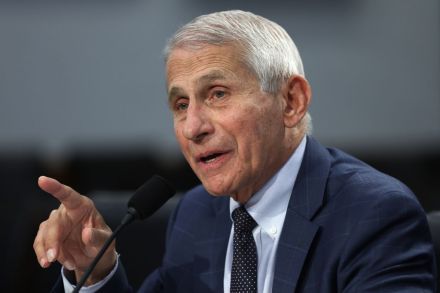
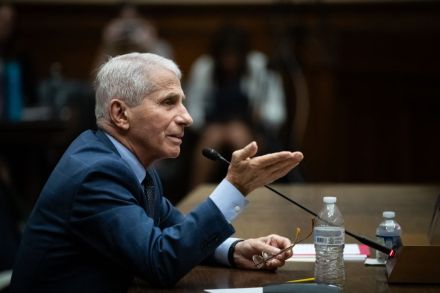
“This might be the most insane hearing that I have ever attended,” freshman Representative Robert Garcia quipped during today’s hearing featuring former head of the NIAID Dr. Anthony Fauci – the first time that “America’s Doctor” testified publicly in Congress since leaving government service. Fauci, who played a dominant role in dictating public health policy across multiple presidential administrations, appeared diminutive in both his physical stature and in addressing the role he played as America grappled with a once-in-a lifetime pandemic.
What can we hope to learn from the Covid inquiry?

From our UK edition

16 min listen

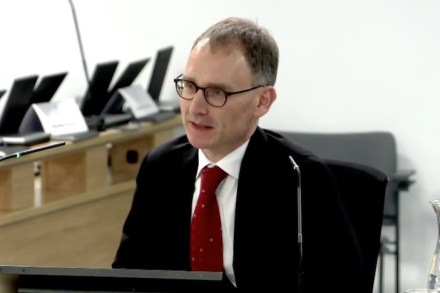
This week there have been some interesting developments in the public Covid-19 inquiry where scientists and mathematical modellers have been giving testimony on how prepared the government was to tackle the pandemic and how they used expert advise.  Within the sessions, WhatsApp messages revealed that Dame Angela McLean – who at the time was chief scientific advisor to Ministry of Defence – sent a secret message referring to Rishi Sunak as 'Dr Death the chancellor' in reference to the public health impacts of the 'eat out to help out' scheme. What were some of the other revelations? Did we get any clarity on how these mathematical models were produced and implemented? And what can we hope to learn from what promises to be a long and protracted inquiry?

Neil Ferguson wasn’t a lockdown fanatic

From our UK edition

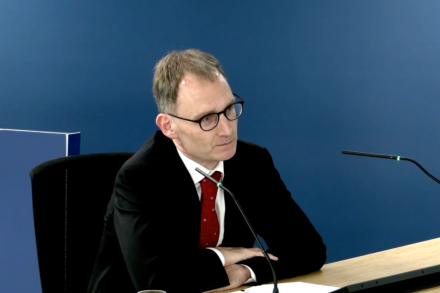
Is the Covid inquiry running out of steam? Today, it saw one of Covid’s biggest stars take the ‘witness stand’: Professor Neil Ferguson, of Imperial College, whose paper in March 2020 was instrumental in persuading Boris Johnson to call a lockdown. Ferguson, of course, went on to achieve notoriety by breaking the very lockdown rules he inspired by meeting his lover, leading to his resignation from Sage.      For the duration of Ferguson’s evidence, which spanned several hours, the number of people watching the live feed rarely reached more than 600. But for those who did take the trouble to listen, what did they learn? Ferguson, it turns out, was initially a bit of a lockdown sceptic.

Covid restrictions are returning with a vengeance

Friends from my hometown are often shocked when they come visit me in the DC area and find that many Americans are still adhering to long-expired Covid restrictions. Thankfully I recently moved to the suburbs, but whenever I travel into the city — or even Arlington or Alexandria — for work, it’s not uncommon to see people driving alone in their cars with a mask over their face. People here still wear N95s into the grocery store, “socially distance” and otherwise behave like paranoid hypochondriacs.  We are now more than three years out from the start of the Covid-19 pandemic.

How political activism in medicine is failing patients

Trust in the public healthcare system declined among Americans during the Covid-19 pandemic. It’s no wonder: public health bureaucrats pushed for various insane policies that ran counter to common sense, admitted to deceiving the American people and worked to shutter debate surrounding the national and global coronavirus response. But instead of doing everything they can to restore trust in the system (and prove that they’re still deserving of it), government officials and medical associations have continued to politicize the healthcare field, sowing discord between patients and their doctors.  A consistent theme throughout the pandemic was that while Americans were less likely to trust the medical establishment, they mostly liked their personal doctors.

Has Matt Hancock just had a good idea?

From our UK edition

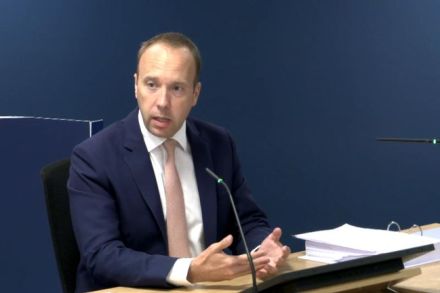
Matt Hancock’s evidence to the Covid inquiry was some of the most explosive we’ve seen so far. It was largely damaging to anyone who wasn’t Matt Hancock, naturally, but the former health secretary did induce some rather big cringes from all present when his voice cracked as he said ‘I’m not very good at talking about my emotions’. He also apologised to all those who had lost loved ones. Hancock did offer some important insights into the mistakes made at crucial moments in the run-up to the pandemic.

Covid’s legacy: how will China remember the pandemic?

From our UK edition

48 min listen

Three years ago, as people across China welcomed the Year of the Rat, a new virus was taking hold in Wuhan. In London, the conversation at my family’s New Year dinner was dominated by the latest updates, how many masks and hand sanitisers we’d ordered.  Mercifully, Covid didn’t come up at all as we welcomed the Year of the Rabbit this weekend, though my family in China are still recovering from their recent infections. The zero Covid phase of the pandemic is well and truly over. So what better time to reflect on the rollercoaster of the last three years? In exchange for controlling the virus, China’s borders were shut for most of that time, while the economy has tanked and a general of children had their schooling disrupted.

Pouria Hadjibagheri and the UK’s abandoned open data revolution

From our UK edition

With a new year comes the New Year’s Honours and I’m struck to see an MBE given to Pouria Hadjibagheri. He’s the technical lead of a civil service team whose drive and creativity led to the Coronavirus data hub. It was a breakthrough in the democratisation of public data. He and his team saw to it that information and metrics were not the secret preserve of a Whitehall cabal, cherry-picked to make a certain point, but available to everyone. This transformed the debate about the virus and the need for lockdown, allowing for new perspectives and new projects. The Spectator’s data hub was one of them. If you were pleased we avoided lockdown in December last year, you have Hadjibagheri’s team to thank – they made the debate possible.

Will 2023 be the year we discover the truth about Covid’s origins?

The search for the origin of Covid-19 has been a story of investigators who suddenly found themselves under investigation. Virus hunters who had spent years successfully tracking the origins of novel pathogens fell under suspicion of having caused the 2019 novel coronavirus outbreak in Wuhan. An international consortium of scientists, including collaborators in the US, had hunted for novel SARS-like viruses in South China and Southeast Asia, collecting tens of thousands of samples from not only bats but animals and people associated with the wildlife trade or living near bat caves. In the lab, the scientists grew or recreated these viruses and made chimeras to understand how they could infect people.

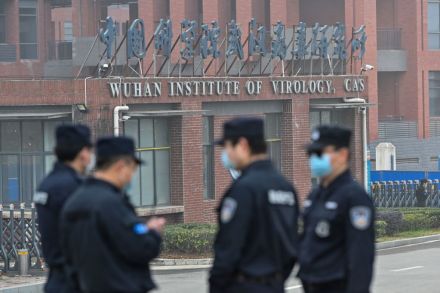
wuhan

When will Fauci admit the ‘open schools’ parents were right?

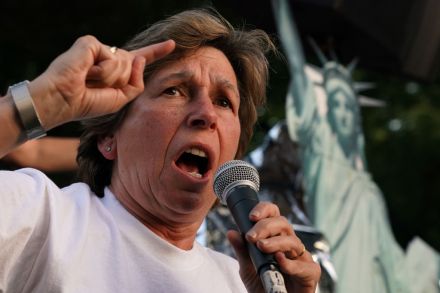
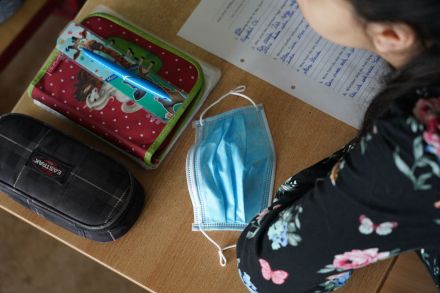
“Was it a mistake in so many states, in so many localities to see schools closed as long as they were?” an ABC reporter asked Dr. Anthony Fauci on October 16. His response: “I would say that what we should realize, and have realized, that there will be deleterious collateral consequences when you do something like that…” That was news to all of us parents who were called racists for raising the issue when it counted. For speaking of “deleterious consequences” during the height of the pandemic, we “open schools" parents were demonized and shut down. As the Chicago Teachers’ Union put it in a characteristic (but now deleted) tweet from December 2020, our push to reopen schools was “rooted in sexism, racism and misogyny.

The data is in and the cost of school closings was terrible

Monday's release of the nation's report card on the academic performance of schoolchildren is just the latest stunning measure of how closed schools damaged young Americans. The National Assessment of Educational Progress, which looks at the test scores of fourth and eighth graders in math and reading, is a devastating indictment of the nation's political leaders and teachers' unions, who collaborated to shut down schools and keep them shut for in-person learning long after those across most of the West had already reopened. We're only just beginning to comprehend the wreckage, which has had significant effects on school districts across the country, even after it was clear they could reopen safely. When Covid first arrived in America, its danger to young students was unclear.

randi weingarten

When the masks come off in blue states

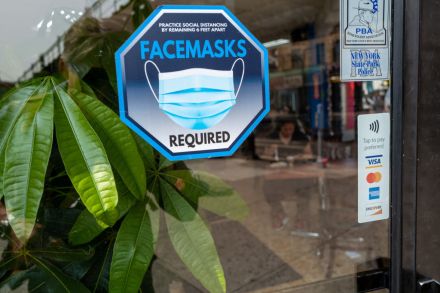
The other night, I went to the Vermont State Fair in distinctly downscale Rutland, where my wife and I watched the pig races, ambled through the livestock exhibits, and examined the farm equipment, while enjoying corndogs and the crowd of distinctly overweight Rutlanders. The next day, I was back in my office in midtown Manhattan. A thin man wearing a mask got into the elevator with me and used a cloth to press the elevator button. Then he used the cloth to open the two doors to the street. He was clearly annoyed to have had to share the elevator with a maskless heathen. As he walked away, it occurred to me that I hadn’t seen a single mask or Covid-crazed person of any sort at the Vermont State Fair.

Covid Mask

EXCLUSIVE: Rubio questions Harvard on Fauci-China cover-up

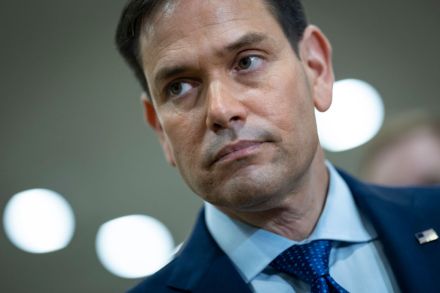
Senator Marco Rubio today sent a strongly worded letter to Harvard president Lawrence Bacow expressing concerns prompted by a Spectator magazine investigation by this reporter that Harvard may be “actively supporting [America’s] principal adversary,” the Chinese Communist Party. “Throughout the pandemic, we were told to trust the experts," Rubio told The Spectator exclusively. "But what we increasingly see is so-called trusted experts and institutions engaged in highly questionable behavior. This looks really bad, and if it turns out to be true, any last shred of faith that the American people had in these ‘experts’ will be deservedly stamped out.

The danger of learning too much from Covid

From our UK edition

When Ray Bradbury was asked if his dystopian vision in Fahrenheit 451 would become a reality, he replied: ‘I don’t try to predict the future. All I want to do is prevent it.’ In the hot embers of the Covid-19 pandemic, it may not be enough to foresee infectious disease threats if we lack the ability to forestall them. After all, predictions were made about 2019. In a Ted talk four years earlier, Bill Gates warned about what he later called ‘Disease X’, a respiratory disease that would cause millions of fatalities. Devi Sridhar, a professor of public health at the University of Edinburgh, addressed the Hay Festival in 2018 with an uncanny description of a zoonotic virus from China that could spread across the globe.

Will the White House delete its false tweet about vaccines?

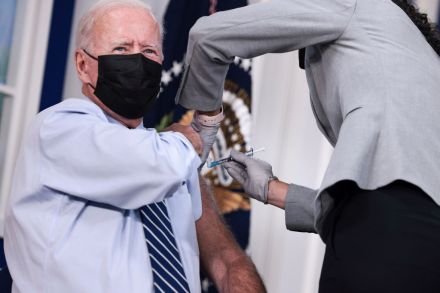
The White House falsely claimed Thursday that there were no Covid-19 vaccines available when President Joe Biden took office in January 2021. "When President Biden took office, millions were unemployed and there was no vaccine available," the official White House account tweeted. In truth, the first vaccines were administered under the FDA's emergency-use authorization in mid-December of 2020. They were developed under the Trump administration's "Operation Warp Speed", a public-private partnership wherein the federal government invested billions of dollars into vaccine development and brokered a deal with pharmaceutical companies to purchase the vaccines once they were approved.

vaccinated

I’m done being a crazy Covid lady

I was seven months pregnant in March, 2020. I had miscarried before, and it had taken a little while to conceive, so even before the world became anxious about reports of a novel coronavirus, I was a nervous wreck. When the pandemic came in earnest, I was utterly overcome. I had been working on a live news show. Every day in late February, and even at the very beginning of March, we were telling Americans to wash their hands, but that everything would be okay. Local politicians and medical experts came on the show to tell people it was all going to be fine. This was The Before. One day, I came into the studio during a commercial.

covid

Macron’s vaccine culture war

From our UK edition

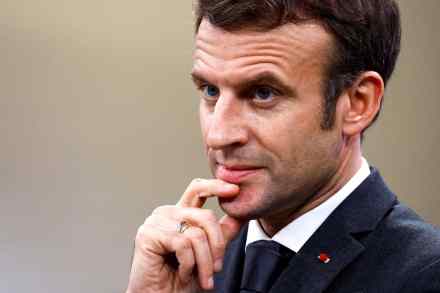
When French prime minister Jean Castex and health minister Olivier Véran held a press conference last week, they outlined the timetable for a gradual easing of the country's many Covid-19 restrictions. Véran talked of an 'encouraging evolution' in the fight against the virus, despite the fact that France had in the previous week recorded an average of over 300,000 daily cases.  As of 2 February, the wearing of masks outdoors will no longer be mandatory; a fortnight later, the French will be able to experience once more the pleasure of standing at a bar with a glass of whatever takes their fancy. Since the start of this month, this practice has been outlawed.

The UK economy has returned to its pre-pandemic size

From our UK edition

Nearly two years after the UK experienced its biggest economic collapse in 300 years, the economy has returned to pre-pandemic levels. GDP is estimated by the ONS to have grown by 0.9 per cent in November, almost twice what had been expected – making it 0.7 per cent larger than it was in February 2020. The US and Sweden managed to pass pre-pandemic levels last spring. China took just a few months. But Britain, whose economy fell further than almost any developed country in 2020, is catching up. Britain, whose economy fell further than almost any developed country in 2020, is catching up The below chart shows how UK growth is now at the top end of forecasts (shaded area) better than envisaged in any Budget since that of March 2020.

Will I ever go on holiday again?

From our UK edition

Last night I dreamt I went on holiday again. It seemed to me I stood by the departure gate, and for a while I could not enter, for I kept setting the metal detector off. Then, like all unvaccinated dreamers, I was possessed of a sudden with supernatural powers and passed through the barrier. The boarding tunnel wound away in front of me, its sides covered with weeds. As I pulled my hand luggage on squeaky wheels, I lost sight of the open door of the plane, and then it appeared again, the smiling stewardess beckoning. I came to the door suddenly with my heart thumping. There was a British Airways Boeing twin-engine jet, and my seat on it, secretive and silent as it had always been, the navy blue leather shining in the moonlight of my dream.

My Omicron hell

From our UK edition

Gstaad   It is hard to imagine that we have reached the year 2022 and are still imposing completely irrelevant restrictions on each other. By we I mean those of us in the supposedly enlightened West, where silliness, jealousy, cruelty and woke rule the roost. I’ll begin with the Chinese virus that has contrived to dominate the headlines even more than Boris and Meghan put together. I got it following my Christmas party, which was a great success if one is to believe some of the thank-you notes I received. All I can say is that it’s not true that chastity is sexually alluring. If it were, women would go for newly ordained priests who take their vows seriously, rather than elderly swine.