Countryside

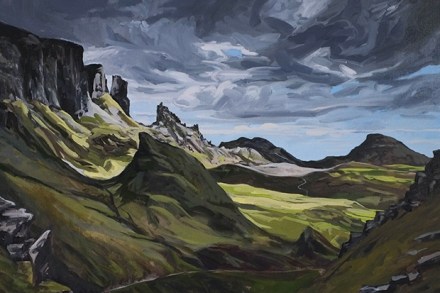
Skye

Glamour. It’s Marcello Mastroianni drinking negronis on the Via Veneto; it’s Audrey Hepburn, George Clooney, Sinatra on the Vegas Strip in ’59… and a composting toilet on the west coast of Scotland. The latter was the only one available when I went glamping in Skye. Glamping is a neologism, an awkward portmanteau word that seeks to persuade us there really can be a satisfactory crossover between glamour and camping, even though most reasonable people have these two concepts pegged in different stratospheres. You can ‘glamp’ all over the place these days, in everything from yurts to airstream caravans, but to do it in Skye you must head to Skye Eco Bells near Dunvegan.
Pilgrimage’s progress

If Christian Britain is fading away, what will survive of it? One answer seems to be pilgrimage. In the past decade, 30 pilgrimage routes have been created or rediscovered; holy places have seen a 14 per cent growth in visitor numbers since 2013. These figures are recorded by a new organisation, the British Pilgrimage Trust, which wants to ‘revive the British pilgrimage tradition of making journeys on foot to holy places’. The BPT stresses that not all pilgrims are religious: ‘Bring your own beliefs’ is the slogan. Guy Hayward, who co-founded the BPT with Will Parsons, observes: ‘We have to tread very carefully around the language of spirituality and religion.

How the rural vote could decide the Conservative leadership race

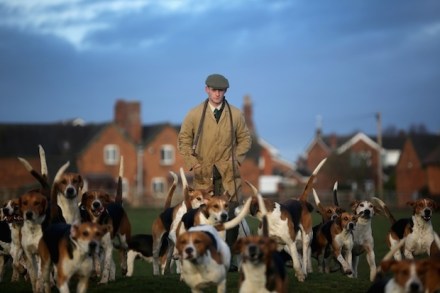
As I passed the Momentum rally in Parliament Square last week, I was reminded of the last time there was such a packed demonstration on Parliament's doorstep. There might not be a huge crossover between Jeremy Corbyn's supporters and Countryside Alliance members, but both groups seem equally passionate.  Huge numbers of rural people protested against the last Labour government for a whole host of reasons, triggered by the bill to ban hunting. The largest demonstration brought over 400,000 people to London and our opponents had no response other than to poll the marchers, find that over 80% of them supported the Conservatives and argue that their protest could therefore be ignored by Labour politicians.

Gatton Park

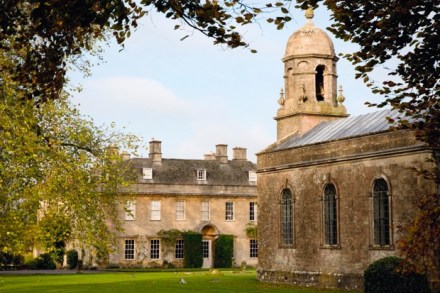
Gatton Park is probably Lancelot ‘Capability’ Brown’s least famous landscape. It is tucked away near Reigate Hill, just beyond the M25, and even in the 300th anniversary year of Brown’s birth it is an unlikely place to visit. Because it shares its plot with a school and stables, you can only go on the first Sunday of the month or if you arrange a tour in advance. A bother, I grant you, when there are so many glorious landscapes to explore elsewhere. But Gatton Park has other attractions, too. For more than 50 years, from 1888, this was the estate of the ‘Mustard King’, Sir Jeremiah Colman.

Soho in Somerset

It is summer and the listless metropolitan thinks of grass. It cannot afford to stay at Durslade Farmhouse, Somerset, a branch of the Hauser & Wirth art gallery that serves food and plays cow noises in a former barn as authentic country folk rip their eyeballs out. Locals talk about Durslade Farm as a child that died. I think it is a Holocaust memorial for cows, but oblivious. Babington House is the country branch, and it is open to members, their friends, and hotel guests. There is a a spa called the Cowshed that sells ‘Lazy Cow’ and ‘Moody Cow’ beauty products (misogyny masquerading as irony), a restaurant and a church, which looks uneasy in the grounds, probably because it has to tolerate celebrity weddings.

My wild place

When I suggested that I might build a little tin house in the subtropical rainforest of south-east Queensland, I was advised by well-meaning folk that this probably wasn’t a very good idea. The forest would close in over the house; mildew and algae would grow on everything including me; the sun would not get above the surrounding scarps on the eastern side till mid-morning, only to plummet out of sight behind the scarps on the western side halfway through the afternoon — not that I’d notice, being penned in perpetual gloom under the forest canopy. All true. And no one to talk to but spiders and snakes. There are certainly many spiders. I do talk to them, shout at them, actually, because when I do they flinch and try to run away.

The art of Jonathan Meades

Ape Forgets Medication: Treyfs and Artknacks Londonewcastle Project (28 Redchurch Street, E2), until 23 April Process, means, method: it was these rather than the results which initially fascinated me. There was an unmistakable exhilaration in discovering that I was not merely learning a new language but that I was creating a language peculiar to myself. Given that it was non-verbal the word 'language' is inappropriate. In every instance the words, the capricious titles I have appended to the works (the treyfs and artknacks) came after. Treyf signifies that which is not kosher. Artknack is a neoligism which suggests arts, a knack or facility, a knicknack or cheap bling, arnaque (French for a scam).

Barometer | 7 April 2016

Squire power The village of West Heslerton in Yorkshire was put up for sale at £20 million after its owner, Eve Dawnay, died. Other villages still largely owned by a local squire: — Hambleden, Buckinghamshire, owned by the W.H. Smith family until 2007 when it was bought by the neighbouring Culden Faw estate, which owns 50 cottages in the village as well as the shop and pub. — Bantham, Devon. An estate consisting of 21 houses, a golf course and 589 acres was bought in 2014 by a businessman, Nicholas Johnston, having been advertised for £11.5 million. The National Trust wanted to buy it but were outbid. — New Earswick, York. Still mostly owned by the Joseph Rowntree Foundation, having been built as a model village by Rowntree on 123 acres he bought in 1901.

The Spectator’s notes | 7 April 2016

However wicked tax evasion is and however distasteful some tax avoidance may be, people should imagine a world without tax havens and see if they really want it. The prime reason that tax havens exist is that taxes in most countries are too high. If they did not exist, the competitive element would be reduced, and taxes would go up even more. The EU constantly complains about ‘unfair tax competition’, by which it really means just tax competition itself. Tax avoidance is what most of us try to do (see next item). Resentment about it is largely because the rich find it easier to achieve than the rest of us. In my latest Notes, I mentioned that the theme of the South of England Agricultural Society this year is sheep. Last week, sheep entered our lives dramatically.

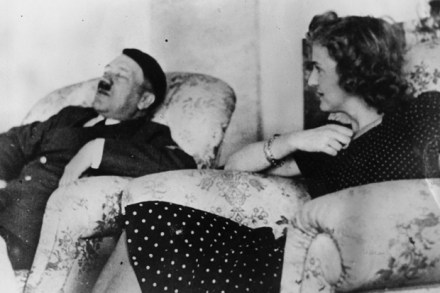
From Hitler to girls in pearls

I’ve heard it said that the ‘countryside’ is an urban idea, a place invented by the late Victorians in order to escape industrialisation. If so, we’re craving it more than ever. Surveys suggest 80 per cent of us now dream of living in a rural idyll. Since foxhunting was banned, riding to hounds has never been more prevalent. Suddenly five million people — most of them city dwellers — are tuning into The Archers, and viewing figures for Countryfile are higher than for The X Factor. But perhaps the most revealing indicator of the allure of the countryside is the enduring appeal of Country Life magazine, which was founded in 1897 and is currently the subject of a three-part documentary on BBC2.

Of geese and men

Grumpy Gertie was killed in a drive-by shooting. This resident of the village of Sandon, near Letchworth, was shot at close range from a passing 4x4. There seems to have been no motive. Apart from pleasure, perhaps. Flowers have been placed at Gertie’s favourite spot, a reward of £250,000 has been offered for information about the killers, and the Sandon villagers are distressed and appalled. Gertie was a goose. A white male farmyard goose — the name indicates an understandable confusion about gender; geese don’t go in for pronounced sexual dimorphism. It’s a strange little parable about the confusions, contradictions, paradoxes and inconsistencies that govern human understanding of non-human life. Are the flower-laying villagers sentimental and mistaken?

Out on the farm

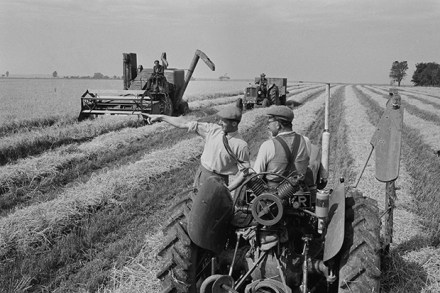
If the Church of England was once the Tory party at prayer, then the nation’s shotgun-owning farmers were the party’s armed wing. I grew up on a farm in the Yorkshire Dales and must have been about 18 before I met someone who didn’t identify as TBC (True Blue Conservative). Ours was one of the safest Tory seats in the country, with the local MP being Leon Brittan and then William Hague. And Margaret Thatcher was considered a hero in our ‘community’ not because of the Falklands war or her defeat of Arthur Scargill but because she liked to greet the dawn by listening to Farming Today on Radio 4 (true). But the Brexit debate is leaving our True Blue farmers deeply conflicted. On the one hand, without EU subsidies, many of them would go out of business.

The wings of winter

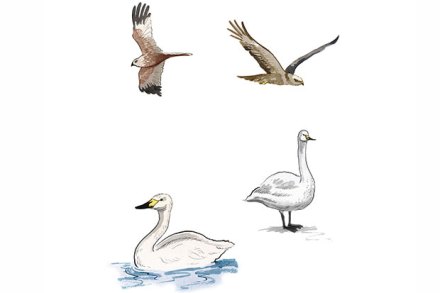
Crisis relocation. A term from the Cold War. It means being somewhere else when it happens. When the threat of the Soviet Empire was as much a part of daily life as tea and toast, there were fixed plans to shift our leaders out of harm’s way at the whiff of the first missile. Birds operate the same strategy. When the Cold War of winter strikes, many birds cope with the emergency by being somewhere else. So you’d think that this would leave the country a little depleted at this time of year: after all, the swifts and swallows are long gone and with them most of the warblers. But that’s not the case at all. The same strategy of crisis relocation brings thousands of birds flocking into Britain to savour the balmy weather of our winters.

The SNP don’t care about foxes. It was all a pack of lies

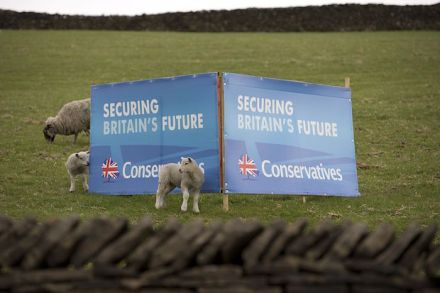
So, it turns out that the SNP weren’t that bothered about the plight of foxes after all. Back in July, you might remember, David Cameron was forced to backtrack on his plan for a parliamentary vote on relaxing the hunting ban, after the SNP decided to vote against any changes. This, of course, came after Nicola Sturgeon wrote in February: ‘the SNP have a long-standing position of not voting on matters that purely affect England — such as fox hunting south of the border, for example — and we stand by that.

The Lake District

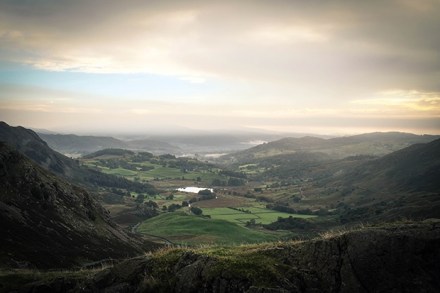
Cumberland and Westmorland Wrestling is the best thing in the Lake District. I lived near Wigton, just north of the fells, for two years and escaping the shadow of the clingfilm factory to witness generations of champions, all called Brocklebank, do writhy battle on the Cumbrian turf was a delight. Fools might think that the embroidered pants worn by competitors over their white suits indicate a camp, silly sport, but they are wrong. It is a noble art and its practitioners are heroes; legends of the Lakes. The terminology is as thrilling as the bouts: swinging hype, hank, cross buttock, inside click. (The latter is a particularly devilish move.

Picnics

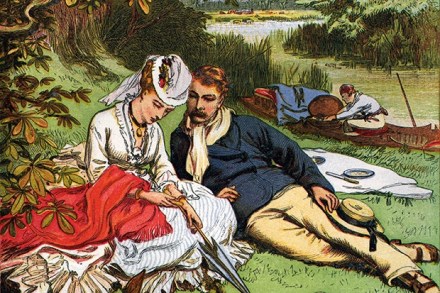
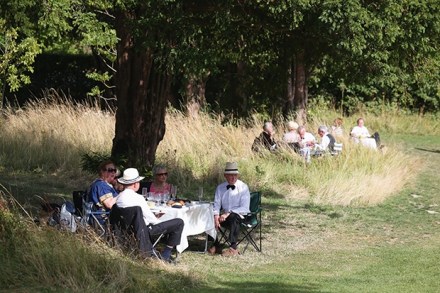
Strange, isn’t it, that despite having such famously terrible weather, we Brits are so fond of a picnic. It’s something to do with making the most of what sunshine we get — but if you ever plan to eat outdoors, it will almost invariably end up raining. Never mind. There’s very little that we’re better at than embracing our terrible weather, and keeping buggering on. This year’s Ascot was, for me, a case in point. Every day of the meet was blessed with excellent weather — except, of course, the one day I went. A person more sensible than I might have looked at the forecast and planned accordingly. I checked, saw that it was going to rain — and just got on with my picnic preparations as usual. So come 11 a.m.

Your problems solved | 18 June 2015

Q. I was at the theatre recently and bumped into a well-known Liverpudlian crooner coming out of the disabled lavatory. She said ‘Don’t worry, luv, it’s fine to use them if no disabled people are waiting.’ Often theatre interval queues are long and in some of London’s better restaurants the ‘disabled toilet’ is closer, cleaner and more convenient. Is there a ruling on this or was Cilla correct? — N.C., Stanton St Bernard, Wilts A. Common sense tells us Cilla is right — but it is only correct to use disabled lavatories if you can be certain you will not thereby stymie the – possibly more urgent — need of a member of the select group for whom the facility is intended.

Country house opera

I stole a blanket last night. Rather a nice one, in fact. I feel bad about it, of course, but guilt is less inconvenient than pneumonia; and after trying to blow-dry my waterlogged dinner jacket with the winds howling through Garsington Opera’s ‘airy’ pavilion, it seemed like pneumonia or the blanket were the options. Forgive the melodramatic, self-justificatory tone. That, too, has its roots in the evening’s diversions, which included a performance of Intermezzo, Richard Strauss’s melodramatic and self-justificatory autobiographical account of a marital misunderstanding. It’s an odd piece, lovely in some ways, trite and misogynistic in others.

The farm that went wild

It was the nightingale I liked best. Or maybe the auroch. The nightingale sang strong and marvellously sweet when all the other singers had given up, his voice filling the night. Each nightingale has a personal repertoire of 250 phrases made from 600 individual sound units. I ran into the auroch at six the next morning: enormous, uncompromising and emerging from the bush with a formidable set of horns. Now it’s true that aurochs went extinct 400 years ago; they were the wild cattle of Europe, Asia and North Africa, ancestors of all our domestic stock. But this wild and extraordinary place is full of free-ranging old English longhorn cattle, and their job is to reprise the role of the auroch in creating and maintaining the atavistic landscape of England.

Equine squatters: the topic that united the Countryside Alliance and the RSPCA

In September last year I wrote about horses being illegally grazed and abandoned, and the inability of landowners to do anything about it. Back then, the government were poised to debate the topic for two hours in a bid to find some kind of solution to the problem. It’s not an issue that gets all that much attention in the media – after all, how much of a problem can a few ponies be? But fly-grazing, as this is called – actually causes a huge amount of trouble, for the horses themselves and for the people whose land they end up on, be that a private landowner or a local authority.