Cooking

In defence of lard

From our UK edition

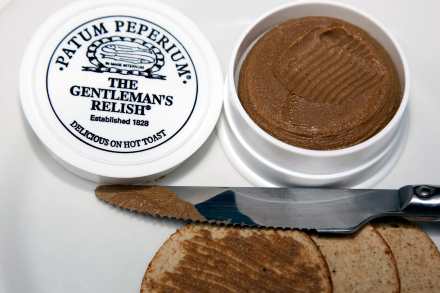
It’s somewhat risky to make the case for lard for a publication whose cookery columnist is the author of a book on butter. But so be it. Because lard has generally been at best overlooked and at worst openly maligned, and that is madness. The cost of cooking oils has rocketed in the past couple of years – sunflower oil has trebled in price, olive oil doubled. Butter is much dearer too. Yet inexplicably no one has suggested lard might step in to save the day. The cheapest pack of butter at Tesco will currently cost you £1.99. A block of lard is 50p. It has long been a slight object of ridicule. A ‘tub of lard’ is somehow crueller an insult than the Shakespearean ‘fat as butter’.

I can’t stand Stanley Tucci

From our UK edition

I love Italian food, and I love food writing and TV programmes, so you might think I’d love Stanley Tucci. And yet I find him creepy and his recipes are rubbish. I can’t be the only one. The actor, who I first saw in the brilliant film Big Night, about a Jersey Shore Italian-American restaurant, is probably best known for The Devil Wears Prada, a film I adore. His character in that film did wind me up, but it took a while before Tucci himself got on my nerves. I suppose it began with him coming over all cheffy, like he’s the new Anthony Bourdain. Who cares what Colin Firth eats when he’s round at the Tucci gaff? I kept being told to watch his TV series where he travels around Italy, but the sight of his smug face on my screen turned out to be more than I could bear.

The offal truth? Organs are delicious

From our UK edition

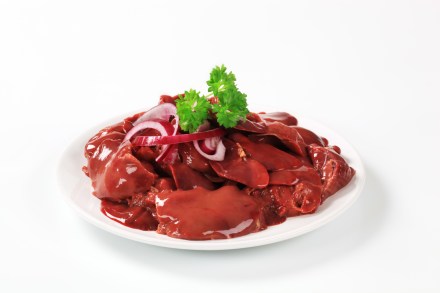
I’m sure my mum would forgive me for saying this, but cooking is not one of her many strengths. Raising three children, and with a husband who worked shifts in a steel mill, she was feeding people round the clock, so cooking became a necessity rather than a pleasure – as it will have been for the majority of working-class women in the 1960s and 70s. Since this was before convenience food really hit the shelves, things were cooked from scratch, and in winter, steak and kidney suet pudding was on the menu in our house most weeks. As were liver and onions, mince and potato pies and anything else cheap and cheerful, usually involving lots of animal fat and parts. The sweet, creamy texture, gamey and pungent, was a delight.

The many faces of Oxo cubes

From our UK edition

It is now not unusual to find ‘bone broth’ in the refrigerated sections of supermarkets or delis, on sale for more than £7. Who can afford this stuff? If you have the time to make your own stock then all credit to you. But if not, the concentrated stock in little cubes or tubs is perfectly acceptable. Knorr and fancy upstarts such as Kallo pose as the superior products. But Oxo has stood the test of time. In a flooded stock market, their cubes remain my choice. Beef is the classic (the name ‘Oxo’ is thought to come from the word ‘ox’). Retailers seem to have taken the lamb version off the shelves, though the brand says they’re working on getting it back. The company has moved with the times, a few years ago launching the first vegan cube.

Mince, glorious mince

From our UK edition

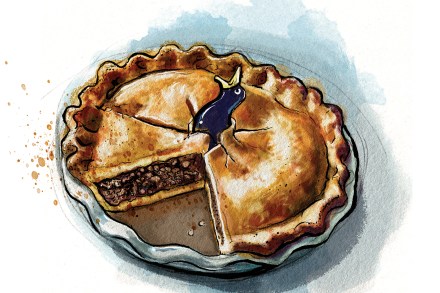
Sometimes, when it comes to culinary history, Britain is its own worst enemy. For a long time, British food has been seen as a joke among other nations, but also nearer to home. Even when the dishes are near indistinguishable, we’re still happy to poke fun at our own fare: we love panna cotta but laugh at blancmange; we cringe at stew but revere boeuf Bourguignon. They’re the same, but that doesn’t stop us. Where better to showcase the unsung hero braised beef mince than in a beautiful short-crust pie? Mince gets the worst of our inward-turned opprobrium, a leitmotif in our national food anthem. A pot of stewed mince speaks to all that is wrong with British food: staid, bland, brown, probably overcooked and definitely stuck in the 1950s.

All hail the microwave!

From our UK edition

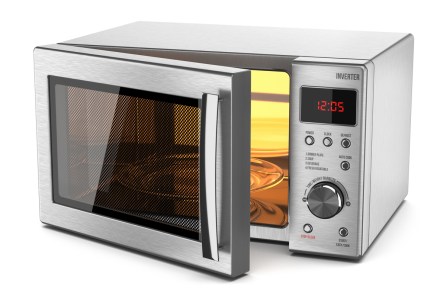
Marco Pierre White may have earned a reputation as the tousle-haired kitchen bad boy who once made Gordon Ramsay cry, but these days he spends his mornings rather more quietly, enjoying his kippers. Yet in his retirement, he can still cause controversy. He recently told a podcast how he cooks his kippers. ‘On a plate, paint it with butter, wrap in cling film, in the microwave, two to two and a half minutes.’ A microwave? Really, Marco?! Yes. As far as kippers go, his reasoning is spot on. ‘Most people put them under the grill, which intensifies the salt’. Meanwhile, boiling them – jugged kippers – washes away the flavour. In fact, there’s nothing wrong with a microwave. As Marco put it, the haters need to ‘take off the blinkers’.

25 years on, no one compares to the Two Fat Ladies

From our UK edition

They were loud, vivacious and gloriously un-PC.  Sometimes they seemed to be learning how to cook as they went, barely one step ahead of the viewer. It didn’t matter. If anything, it only made the BBC's Two Fat Ladies more watchable. And 25 years on – the last of the two dozen episodes pairing Jennifer Paterson and Clarissa Dickson Wright aired on 28 September 1999 – I miss terribly their jaunty style of cooking, glass in hand. I don’t think I’m alone. Spectacularly and unexpectedly successful in their lifetimes – 70 million worldwide watched their programme over its four-year run, including many in the US – the internet has allowed them to find fresh admirers since their death.

Culling cookbooks

How do you choose ten cookbooks out of more than a hundred collected over sixty years? With difficulty. After my beloved husband Richard died, I decided that the only place I would want to live without him was in Meursault, France. The most difficult part was having to leave behind my cookbook collection. For a food writer, it was a daunting challenge. Here is what made the cut. I obviously couldn’t get rid of my father Bob Jones’s The Outdoor Picture Cookbook, published in 1954 and launched to Americans over their morning coffee on NBC’s Today show. He demonstrated how to cook his famous grilled chuck steak as Arlene Francis and Dave Garroway looked on with a bevy of buckets at the ready in case of fire.

cookbook

Iron clad: good cooking’s most essential metal

Miles Coverdale’s translation of Psalm 105 in the Book of Common Prayer elevated iron from metallurgical to literary significance. The story of Joseph being sold unjustly as a bondservant — “Whose feet they hurt in the stocks: the iron entered into his soul” — shames flaccid times like ours. And iron’s virtues excel not least of all in cooking, where it can enter literally into our bodies and, who knows, maybe our souls too. Joseph just got things started. Think of the first ironclads, Monitor and Merrimac, hammering away at each other at Hampton Roads in 1862, of the dreadnoughts that put paid to Nelson’s wooden walls, of Agatha Christie’s ironclad alibis, of the verse in Christina Rossetti’s great carol: “Earth stood hard as iron, water like a stone.

iron

How now, Hausfrau?

It’s summer and very warm on the famed Café Tomaselli terrace in the heart of Salzburg. Nevertheless, I’m sipping a hot coffee and nibbling strudel (mit Schlagobers — whipped cream, of course!) with Melissa (Missy) Baldino. We are talking food, fashion and Rike & Co., the charming entrepreneur’s new business. Missy launched Rike & Co. this past October from her charming Victorian home in Cambridge, Massachusetts. It may seem a bit incongruous in this age of hyperfeminism to be selling aprons and housedresses. But “Rike & Co.,” Missy says, “is all about family and being fashionable while cooking and doing housework and everything else that many of the fairer sex still enjoy doing.

The new Dada movement

I first came across the food influencer Samah Dada while searching for gluten- and dairy-free dishes. Dada, a twenty-eight-year-old food influencer with regular segments on the Today show, a cookbook, and a 400,000-follower Instagram account, somehow makes being a gluten-free vegan who doesn’t drink look fun. Her skin and hair are positively radiant with nourishment and nontoxicity; she looks very well-hydrated. Hoping to achieve some of this plant-based glow for myself, I headed to the Instagram account DadaEats and tried to eat like Dada. I started with the desserts, simply for the economy of scale: check out of the grocery store with almond butter, dark chocolate chips, rice cakes, maple syrup and dates, and you’ll be able to make almost any of her no-bake desserts.

Dada

The delight of reading the New York Times Cooking comments

The cardinal rule of the internet may be “never read the comments,” but in at least one corner of the web, the rule should be never to skip them. I’m talking about the New York Times Cooking blog and app, the most-used resource in my kitchen. NYT has more than 20,000 recipes in its database. Many of them sport hundreds of “community notes” left by passionate home cooks. In my years using the app, I’ve noticed a few trends in the comments. The most famous NYT Cooking comment annotates the classic recipe for Katharine Hepburn’s brownies. The commenter gushes about the recipe before veering into a story about sharing her brownies with a German acquaintance. The note ends with a twist: “Eventually, she moved to the US and stole my husband!

comments

Newlywed dining around the world

Nick and I were married on February 4, 2023, and spent our first Valentine’s Day at Le Grand Colbert in Paris. There, we had oysters and Champagne, lobster, scallops with a side of mashed potatoes (naturally) and profiteroles for dessert. This year, we’ll be at a wedding on our anniversary, and Valentine’s Day coincides with Ash Wednesday, a day of fasting and abstinence from meat for us Catholics. So I’ll be attempting a romantic homemade meal to celebrate both occasions on the unremarkable second Saturday of the month. Looking through my phone, confronting my strange habit of taking pictures of memorable meals, I was reminded that our first year of marriage has involved a lot of hosting, dining out and dining in. In March, my in-laws visited us in New York City over the St.

dining

Ringing in the Chinese New Year with homemade dim sum

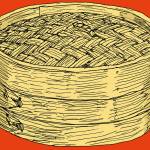
My husband and I live in a rural village about an hour from London. The nearest grocery store is a twenty-minute drive. I haven’t ordered takeout in six years. I spent a good few years craving Thai and Chinese food, and then we stumbled across a recipe in the Daily Telegraph for homemade dim sum. “But we don’t have a bamboo steamer,” I said. This seemed an insurmountable hurdle. “We can just get one on Amazon,” said my husband. And so we did. Making dim sum at home has been a pleasure beyond my expectations. They are surprisingly simple to make, and once you get the hang of it, not too laborious. The recipe we use is a classic combination of pork and steamed cabbage.

dim sum

The wonder of cooking with coal

The grandest compliment ever paid me came near the end of a small dinner party last winter from guest and friend Jeffrey who, on settling into an old wing chair as his host stoked the fire with coal, remarked: “I feel like I’ve just stepped into an Evelyn Waugh novel.” It was, he said, the coal. About as close as anyone these days will have come to a domestic coal fire is the screen image of one in Downton Abbey or its predecessor, Upstairs Downstairs. Those television “fires” were all actually gas ones made to imitate the look of coal. In Waugh’s time in houses like that, they all would have burned the real thing.

coal

The possibilities of gluten and dairy-free cooking

My sister recently gave up gluten and dairy on doctor’s orders. In a show of support, my whole family has been exploring ways to make shared meals more tolerable for the poor woman, suddenly deprived of the two best food groups. We’re revisiting family recipes for breakfasts, sides and desserts: my grandmother’s strata, with its layers of cheese-soaked bread, is out altogether, while mashed potatoes go without butter and pie goes without crust. It’s easy to make your first GF/DF meal. The first time my sister came over for dinner after starting her new lifestyle, we smoked a pork shoulder and ate it with mayo-based coleslaw and baked beans: a classic BBQ! Meat and potatoes are GF/DF, as are stir-fried veggies and rice, and bacon and eggs.

gluten

Cooking for busy people

What do I cook when I don't feel like cooking? Scrambled eggs. Beans on toast. Canned soup. But Caro Chambers, recipe developer, Substack author and mom of three little boys, might instead go for Jerk Chicken with Coconut Rice and Strawberry Salsa, or Lamb Pita with Dilly Minty Yogurt Sauce, or some other recipe with prepositions in the title, from her popular Substack “What To Cook When You Don’t Feel Like Cooking.” Once a week, she releases a new recipe to her 112,000 subscribers, who pay $5 per month for fifty-two new recipes per year plus access to the archives. “If you want something done, ask a busy person,” said either Benjamin Franklin or Lucille Ball. This could be Chambers’s slogan.

cooking

A one-pan, one-pot Thanksgiving

Our first Thanksgiving together, my now-husband, then-medical-resident-boyfriend worked a shift during the family feast. I made it up to him with Melissa Clark’s one-pan, one-pot Thanksgiving for two. The recipe went off flawlessly and made the constraints of my tiny apartment kitchen feel more like a game-show challenge than a life-or-death struggle. Clark’s 2022 cookbook Dinner in One makes the same promise about 100 different meals. The game-show, can-it-be-done? energy made the Thanksgiving method fun, but could feel tedious on a Tuesday night. Is “one-pot” a theme or a gimmick? Does this constraint serve the cook and the recipe, or is it arbitrary, artificial and unnecessarily limiting?

thanksgiving

With Diana Henry

From our UK edition

41 min listen

Diana Henry is a critically acclaimed, multi-award winning cook, food writer and author of 12 books including the classic cookbook 'Roast Figs, Sugar Snow', which has just been updated and re-released twenty years after it was first published. Diana also writes for newspapers and magazines, and presents food programmes on TV and radio. On this podcast Diana shares childhood memories of her mother's baking, how 'Little House on the Prairie' influenced her writing and when, on a French exchange trip, she learned how to make the perfect vinaigrette. Presented by Olivia Potts. Produced by Linden Kemkaran.

The best cooking podcasts

There comes a time in every home cook’s life when she is separated from her craft. This may be due to illness, incapacity, repairs, renovations or, worstof all, moving house. This month, I moved from Texas to Pennsylvania. Between packing up my utensils and appliances, waiting for the moving truck to make its halting way across the nation, and finally unpacking and reorganizing my tools, I lost my kitchen for four weeks. But benched cooks like mehave a surprisingly satisfying alternative: cooking podcasts. The first podcast I tried is most similar to traditional cooking shows: Food 52’s Play Me a Recipe. Chefs and cookbook authors host episodes in which they introduce a favorite recipe and talk through its ingredients and method, encouraging listeners to pause and rewind as needed.

podcasts