Cooking

Girlbossing with the Ambitious Kitchen

I occasionally come across a social media account — usually run by a conservative male — claiming to great fanfare that young women these days don’t know how to cook. They’ve been too busy girlbossing to learn. In my experience, this is wrong. The ambitious women I know are ambitious in every part of their lives. They get the promotion while moving up the Peloton leaderboard, planning their dream wedding and creating flavorful, photogenic meals that Betty Crocker hadn’t dreamed of. For these women, there’s the Ambitious Kitchen. The Ambitious Kitchen was created in 2011 by a Chicago woman named Monique Volz. It has since amassed more than 700,000 followers on Instagram and a cookbook deal for 2024.

ambitious
flour

Flour power: a single ingredient can be life-changing

Growing up in a “mixed” American household, of Indian, Puerto Rican and Italian descent, was deeply confusing during my formative years. I came of age in a mostly white suburb just outside New York City. In addition to my foreign-sounding name, I looked nothing like any of my classmates or the kids around the neighborhood. My olive skin, bushy eyebrows and curly hair were more reminiscent of children you’d find in the more ethnically diverse neighborhoods of Queens or the Bronx. My family spent most of our weekends visiting family and doing our grocery shopping in such areas. The array of ingredients that my Puerto Rican and Italian-American mother, Loretta, was searching for didn’t exist in our local Pathmark.

The growing appeal of the outdoor kitchen

From our UK edition

For most of us the main ingredients of outdoor cooking are a smouldering barbecue grill, slabs of alternately under- and over-cooked meat and a light sprinkling of frustration. But these days, it seems, there is another option on the menu. Ever since the pandemic, more and more homeowners have been investing in lavish outdoor kitchens – keeping up with the Joneses with garden wine fridges, rotisserie grills, pizza ovens and professional-quality prep areas so they can cook and eat outside in comfort. The concept has been enthusiastically adopted by the likes of David and Victoria Beckham, who are reportedly awaiting a verdict on a planning application for an all-singing, all-dancing outdoor kitchen at their Cotswolds barn.

How chefs cut costs in the kitchen

From our UK edition

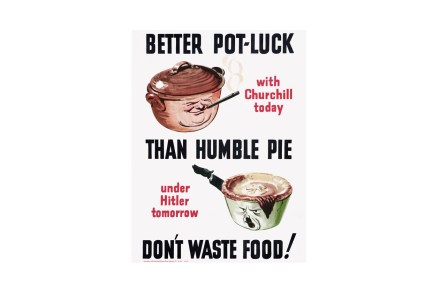
My grandmother, and many like her, kept an account book for household spending. This was not the product of an overbearing marriage or mistrust on anyone's behalf – it was simply how things were done at a time when habits had been formed during rationing after the second world war, and banking was manual and slow. I spent a lot of time observing her kitchen on childhood visits. It was where my lifelong obsession with cooking began, and I can still recall a sense of balance in how she shopped and cooked; she was fond of naughty treats and lavish cuts, but she kept a stock pot, knew her way around basic butchery and was reluctant to let anything go to waste.

Cooking with a country music star

A few years ago, I came across a delightful bit of Americana in Hobart Book Village in the Catskills: Naomi’s Home Companion, a 1997 cookbook/ scrapbook from Naomi Judd, the late matriarch of the famous country music family. Because I’m not a country listener and I don’t eat a lot of meatloaf, I didn’t buy the book, its kitsch appeal notwithstanding. Nineties fashion may be back, but its nutritional standards are permanently out of style. Right? I thought of that old Naomi Judd book when a new cookbook landed on the New York Times bestseller list: Y’all Eat Yet? Welcome to the Pretty B*tchin’ Kitchen by country music star Miranda Lambert. The book purports to share recipes from Lambert’s downhome roots and humble upbringing in East Texas.

Lambert

Heidi Swanson, the whole food revolutionary

Heidi Swanson started her vegetarian food blog, 101 Cookbooks, in 2003. At the time, the Atkins Diet was sweeping the nation, even as schoolchildren still learned the carb-heavy Food Pyramid. It would take another year for a landmark study to link high-fructose corn syrup to the obesity epidemic, and another fifteen for the FDA to ban trans fats. Back then, granola was for tree-huggers, like organic produce, Whole Foods Markets and the Pacific Northwest. Times have changed. These days, everyone outside the Lion Diet community agrees that a plant-based diet is best, preferably free of hormones and artificial sweeteners. 101 Cookbooks is still active and popular, if less countercultural than at its inception.

Swanson

Italian cooking lessons in the home of a Venetian chef

My mother advised that I get a plain wedding ring. Diamonds, she said, interfere with a woman’s ability to knead dough. “But I don’t knead dough,” I protested. “You will when you’re married.” I guffawed. And yet there I was, four days into my marriage, in an Albanian chef’s Venetian home, being told in no uncertain terms that while my husband Nick could keep his ring on, mine would need to come off. We had arrived in Giudecca, an island in the Venetian lagoon, by water bus, having spent the day in Padova. There, we’d visited the Basilica di Sant’Antonio, home to first-class relics of the great saint — bones, lower jaw, incorrupt tongue and cartilage from his larynx.

Venetian

Surviving the summer with no-bake desserts

Summer comes early to San Antonio. I moved here in January, dodging the worst excesses of the northeastern winter, but by March, the temperature had already reached into the nineties. By the time you read this column, summer will be approaching the rest of the country as well. It’s no-bake dessert season. I’ve always been intrigued by this genre of dessert recipe, which involves a vast spectrum of quality. The worst can be appalling — think of gelatin salads, gloppy pudding pies, packets of flavored powders and demeaning names like “mess” and “fool.” On the other hand, some no-bake desserts are transcendent: for example, panna cotta and the Magnolia Bakery banana pudding.

no-bake
food porn

The trouble with food porn

Food porn, an exaggerated photographic representation of how food supposedly looks, has been with us since the 1970s. Today, it is as ubiquitous as “traditional” porn and just as sad. It disorders our senses. Food tastes and smells, only thirdly does it look. Youthful gazing through the bakeshop window is one thing; seeing food mediated through the photographic image is quite another: it titillates but does not nourish. It has been a steep fall from the innocent old days of “Oh boy, that looks good!” exclaimed in the real presence of home-prepared meatloaf or macaroni-and-cheese, not in response to a picture of it. This disordering of our senses manifests in two ways.

Don’t spare us the asparagus

Asparagus inspires gentle thoughts, or so said Charles Lamb in an essay about grace before meals. Other vegetables had come to pall on him, but a noble affection for asparagus still lingered in his heart, a reminder of simpler and more innocent times. One can only surmise that he didn’t much care for the vegetable. Who feels melancholically virtuous when eating greens? People who don’t really like them, that’s who.

asparagus

The wonder and mystery of Mexican cooking

Mexican food is my comfort food. My devotion stems from memories of my mother’s enchiladas. I used to love watching her fry the tortillas in oil. They would bob about like lily pads, sizzling gently. Then when the bubbles formed with little pops, Mom would lift each tortilla out of the hot oil and place it on a paper towel. At the same time, she’d be heating salsa roja on the gas stove and, when it was ready, she would dip a spoon in the pan and put a dollop on a tortilla, swirling the spoon to coat the whole tortilla, then turn it over and do the same on the other side. She was such a careful cook, and neat. The bowls of fillings sat ready and waiting on the kitchen island, each with its own spoon.

mexican

Cost-cutting in the kitchen with Budget Bytes

Have you heard about the latest food trend sweeping the nation? It’s called “whimpering over your grocery bill.” In the early days of 2023, Americans are spending 70 percent more on eggs than one year ago. Chicken, dairy and bread prices outpaced inflation as well, increasing by double-digit percentages. What’s an adventurous home cook to do? The answer is Budget Bytes, a website I first turned to as a broke twenty-two-year-old with a galley kitchen in Queens. I didn’t know, before an acquaintance tweeted a link to a coconut vegetable curry, that you could make a tasty, filling meal, complete with leftovers, using almost entirely canned or frozen goods. Budget Bytes taught me to cook.

budget

Why bother cooking?

From our UK edition

In a world of ultra-convenience, I think making the argument for home cooking is important. Because a lifestyle of takeaway delivery apps, ready meals or eating out every day is not a recipe for health and happiness, no matter how easy the modern world makes it.   One of the downsides of the cult of the ‘foodie’ is that it can make food and cooking more intimidating than they need to be. If you’re a Londoner, invite friends over for a dinner of lasagne and garlic bread and you’ll have one guest asking if the pasta is fresh or dried and the other telling you to try roasting the garlic for 24 hours in a low oven next time to unleash its inner umami. It’s enough to put anyone off.

Has the air fryer fad burnt out?

From our UK edition

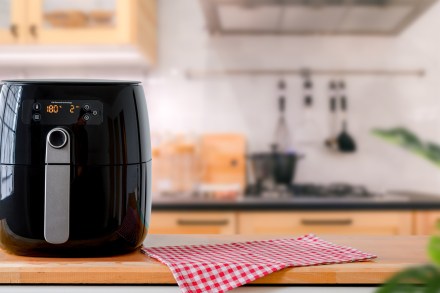
Are you – along with nine million other households in Britain – the proud owner of an air fryer? Amid promises that it could cut energy bills in half, slash cooking times and turn French fries into a bona fide health food, the kitchen gadget soared in popularity last year, with sales increasing by 3,000 per cent on 2021. At one point – much to the consternation of social media chefs, TikTok-ing their every interaction with the machine – there were even fears of a national shortage (mercifully, this never came to pass).

Why do we expect to buy tomatoes and cucumbers all year round?

From our UK edition

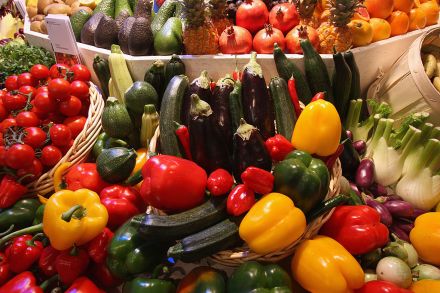
When did it become an inalienable human right for 65 million Britons to have a cucumber in March? When did we suddenly regard the possession, weekly, of a half kilo or so of vine-ripened tomatoes as fundamental to our very being, when our corner of the northern hemisphere is still essentially frozen and has been for months? If we were in southern Italy or if London were transposed with Madrid – so 800 miles closer to the equator – then one might begin to think that a leafy salad or a few tomatoes could or should be a daily staple, even in these darker days. But up here, at 52 degrees north, in an archipelago off the last landmass before you have the void of the swirling Atlantic?

Confessions of a TikTok tradwife

Estee Williams was studying meteorology at college when she dropped out to follow her dream: being a stay-at-home housewife. Now, while spending her days packing her husband’s lunchbox and scrubbing the skirting boards, she films videos for TikTok in flowy dresses where she promotes a return to "traditional" values. Think Betty Draper minus the melancholy. She is the figurehead of the #tradwife movement. If you’re not familiar, the online tradwives are the product of a marriage between Instagram models and Fifties TV moms. They reject however many waves of feminism there are now and long for a return of the traditional nuclear family that once existed in America (for maybe forty years).

tiktok tradwife estee williams skibidi tradwife

Dips: Chef Andrew Gruel’s answer to your Super Bowl party food dilemma

Does it seem these days that everyone you know suffers from a food allergy, sensitivity or intolerance (don’t ask me to explain the difference)? It seems inevitable that eating out in a group entails someone in the party requesting a menu item be made vegan, keto, gluten-free, dairy-free, tree nut-free, sulfite-free, etc. (I usually just hope the meal itself is free). Blame it on seed oils, soil depletion, genius marketing, the Liver King — whatever. The fact is that our toxic world makes party-planning a royal pain. How do you accommodate a bunch of people whose dietary restrictions turn menu-making into a culinary Sudoku puzzle? Fortunately for you, The Spectator associates with a lot of cool, accomplished, clever people — one of whom is Chef Andrew Gruel.

andrew gruel

Ali Slagle’s low-stress supper

Who is Ali Slagle? A fan of New York Times Cooking might recognize the name: nine of their fifty most popular recipes of 2022 are credited to her, the most of any of their contributors, including household names like J. Kenji Lopez-Alt and Melissa Clark. But despite the tremendous popularity of her recipes, Slagle herself is a bit mysterious. She crops up, cheerfully and occasionally, on NYT Cooking channels. Her 142,000 Instagram followers are a mere fraction of the followings of her food-celebrity contemporaries, like Molly Baz, Alison Roman, or Claire Saffitz. She doesn’t appear to be developing a platform; she has no Twitter, no Substack, no YouTube channel. She appears to live in a camper van.

ali slagle

A salt for all seasons

It takes four people, according to the French, to get a salad dressing right: a spendthrift for the oil, a miser for the vinegar, a wise man for the salt and a lunatic for the pepper. A tough cast to assemble, you might think, but the freehanded, the tightfisted and the insane aren’t such rare birds. The true needle in the haystack is the wise man who would have anything to do with a recipe involving four chefs. Cooks, broth, too many — enough said. Most wise men would be out of town before you could say “smoked oak salt flakes” ten times fast. But the point stands: getting the salt right isn’t a walkover. The rookie has to steer a tight course between undersalted Scylla and oversalted Charybdis.

salt

The best cookbooks to give this Christmas

From our UK edition

I love a good cookbook. In an age where endless variations on any recipe are no more than a few clicks away on the internet, there is still a certain magic to buying, or receiving, a physical, curated collection.  Cookbooks can teach you something in a way that individual online recipes can’t. Whether exploring a new cuisine or trying a new technique, cooking from a cookbook means you can build up a whole repertoire of dishes and hone new skills. I love that you can annotate the pages, and it doesn’t matter if they get mucky (I find you can always tell the best recipes in a book by how dog-eared and food-splattered the pages are).