Conservatives

Boris’s tetchy Marr interview showed the risks he is taking

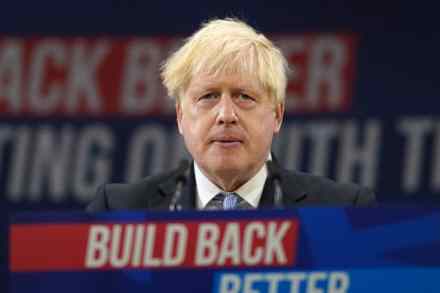
Boris Johnson's rather testy interview with Andrew Marr this morning revealed the political gamble that he is taking. Johnson is calculating that the electoral benefits of higher wages will cancel out the public irritation with supply chain issues caused by labour shortages. During the interview, he repeatedly stressed that he thought that the UK’s low wage growth and stagnant productivity was, in part, because of the UK’s use of cheap, imported labour and that he wasn’t going to go back to that ‘old failed model’. https://www.youtube.com/watch?

We’re living through eerie reminders of the 1970s

There are eerie parallels with 1970s at the moment, I say in the Times today. The inflation of that decade was principally caused by the abandonment of the gold standard in 1971 and the oil shock of 1973-4, which saw the price of a barrel of oil go from $3 a barrel to $12. Today, we have seen huge amounts of quantitative easing from central banks to keep the economy going through Covid – and unlike the post-financial crash QE, which was largely used to repair banks’ balance sheets, it has gone into the real economy. On top of that, we have now seen the gas price rise fourfold. There are other supply issues too; just look at how the shortage of lorry drivers is affecting petrol deliveries.

Kemi Badenoch is right about colonialism

Kemi Badenoch, the equalities minister (and, now, for Levelling Up) has come under attack for an off-hand remark she made on colonialism some years ago. In a leaked WhatsApp exchange, according to VICE World News, Badenoch wrote, ‘I don’t care about colonialism because [I] know what we were doing before colonialism got there. They came in and just made a different bunch of winners.’ What did she mean? The reporter from VICE offers an interpretation:, ‘The British Empire and its European counterparts believed in the superiority of white people, and indigenous groups experienced extreme exclusion, displacement and violence in order for the British to take control.

Tory MPs are changing their minds on Universal Credit

Tory MPs will not get the chance to force the government into a U-turn on scrapping the £20-a-week Universal Credit uplift this afternoon after the Speaker didn't select their rebel amendment. Sir Iain Duncan Smith and Damian Green had tabled the motion refusing to give a second reading to the bill on the basis that the money saved by breaking the pensions triple lock should have been diverted towards keeping the uplift. The motion would not have reinstated the uplift, but would have blocked the legislation process enabling the government to suspend the triple lock so that the state pension rises in line with inflation or 2.5 per cent, rather than wages. This was an attempt to hold legislation to ransom, which speakers do not like.

Javid avoids Tory fightback – for now

Tory MPs were not happy when Sajid Javid unveiled the Covid winter plan in the Commons this afternoon. They’re dissatisfied with the government holding so many powers – such as vaccine passports, further lockdowns and other restrictions – in reserve as part of its Plan B, which will be activated this winter if cases breach what the NHS can cope with. The Health Secretary explained Plan B thus: ‘It is absolutely right that the government have a contingency plan, and the trigger, so to speak, for plan B, as I mentioned in my statement, would be to look carefully at the pressures on the NHS.

Why didn’t Tory MPs oppose Boris’s tax hike?

Boris Johnson has just announced his plans to increase National Insurance by 1.25 per cent for both workers and employers to fund extra spending on the NHS and social care. Johnson framed the measure as necessary to deal with the backlog that had built up during Covid. He claimed that without action hospital waiting lists would reach 13 million. He said that he didn’t break his manifesto promise lightly but that a ‘global pandemic was in no one’s manifesto’.  Of course, the problem with this argument is that the tax promise, as well as the commitment that no one would have to sell their house to pay for social care, were always going to be incompatible.

How MPs can make the Afghanistan debate matter

It is very easy to dismiss Wednesday’s recall of Parliament as a pointless exercise in handwringing that sums up the way most MPs approach foreign policy. There will certainly be plenty of frustrating hindsight on offer from politicians who haven’t taken a blind bit of notice of Afghanistan right up until the point where they scent an opportunity to bash the government. But there are also important questions to be answered that cannot wait for the normal return of the Commons in September. The first is whether there is any likelihood of British and NATO troops returning to the country.

The failure of the right

Sometimes things that don’t happen are as important as those that do. In the Sherlock Holmes story Silver Blaze, about the theft of a racehorse, the failure of a dog to bark is the central fact that allows the crime to be solved. Holmes mentions this 'curious incident of the dog in the night-time' to a Scotland Yard detective who is puzzled and tells him: 'The dog did nothing in the night-time.' Holmes replies: 'That was the curious incident.' There is a strong case for regarding the failure of a dog to bark as the central fact of British political life today.

The rise of the unwhippable Tories

When the government announced a Commons vote on its decision to cut the foreign aid budget from 0.7 per cent of GNI to 0.5, the expectation was that the vote would be tight. In the end, the government won comfortably: it had a majority of 35. But despite their success, the whips would be wrong to be feeling triumphalist about this, I write in the magazine this week The usual whips’ line — if you keep your nose clean preferment might come your way — is ineffective Twenty-four Tories voted against the government, 14 of which were former ministers. The overwhelming majority of these are either uninterested in returning to ministerial office or are only interested in doing so on their terms.

The callousness of the Conservative foreign aid cut

A billionaire who reduces his or her charity is a billionaire asking to be judged and found wanting. When they do so, not on the basis that their charity is squandered but because they fancy keeping more of their wealth for their own purposes, they demand to be judged and found wanting all over again. This morning, the United Kingdom and its government is that billionaire. The government has won its campaign to reduce Britain’s foreign aid contributions. As so often, a much-vaunted Tory rebellion delivered rather less than it promised. As a consequence, money will be withheld from some of the world’s poorest peoples and kept instead by some of its wealthiest. Of course voters — from across the political spectrum — hate foreign aid. But what of it?

The Tories should ignore the Amersham by-election

Chesham and Amersham has fallen. The once uber-Tory Chilterns citadel has been snatched by the Lib Dems, with local campaigners citing planning reform and HS2 as the main drivers for their success. After the ginormous swing — from a 16,000 majority to an 8,000-vote deficit — fears are growing that the Tories' planning reforms might become a victim to demographic subsidence. Many of the government’s backbenchers are keen to undermine the party's house-building efforts. They fear Amersham-style retribution from similar voters, eager to punish them for devaluing their most-prized asset and adding congestion to their quaint country lanes.

Rishi Sunak: I’m a fiscal Conservative (unlike Boris)

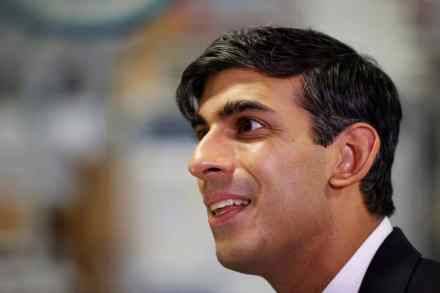
When Rishi Sunak told Andrew Neil this evening that he had his eyes on the future, he was ostensibly talking about the nation's finances. But it was difficult not to conclude from his interview on GB News that he wasn't also keeping at least one eye on his own future, too. A particularly striking exchange came when Neil asked him what kind of Conservative he is: Andrew Neil: 'Beyond the pandemic are you a One Nation conservative, are you a big Government Conservative like the Prime Minister or are you a small government, fiscal Conservative?

Could the Tories lose the South?

The coming Batley and Spen by-election — triggered by the incumbent MP's election as the first mayor of West Yorkshire — is currently attracting a lot of attention. It is a northern constituency that Labour won at the last election with less than 50 per cent of the vote and that voted to Leave, which has led people to wonder if the Tories can repeat their by-election success there. (It is, though, worth noting that the 2019 Labour share of the vote in Batley and Spen was 43 per cent compared to 38 per cent in Hartlepool).  But there is a group of Tory MPs who’ll be watching the Chesham and Amersham by-election even more closely. On paper, the seat looks as safe as houses for the Tories.

The return of Tory sleaze?

‘It’s the return of Tory sleaze’: so said Keir Starmer at Prime Minister’s Questions on Wednesday. His was an assertion immediately echoed by various leading Labour figures across social media. Former prime minister David Cameron’s questionable relationship with Greensill Capital is the immediate occasion for this potentially toxic claim. But Labour clearly hopes to drag Boris Johnson, Rishi Sunak and many other ministers into the mix. For, as Starmer went on, ‘sleaze’ is ‘at the heart of this Conservative government’. In contrast, Johnson is seeking to protect himself against the taint of 'sleaze' by announcing an inquiry into claims of impropriety. Perhaps it will protect him.

Gove hints at vaccine passport app

It wasn't so long ago that ministers were lining up on broadcast to insists vaccine passports were out of the question when it came to the UK. While they could be used for travel abroad, the UK was — as Matt Hancock put it — not a 'papers, please' country. Instead, the UK appears to be turning into an 'app, please' nation. On Monday, Michael Gove met with MPs across the House for a private 'listening exercise' on immunity IDs. Although the purpose of the session was supposedly to gather MPs' thoughts on the issue of vaccine passports, attendees were left with the distinct impression that they would be going ahead regardless of their views.

The delightful humiliation of David Cameron

Say what you like about David Cameron, the man never stops trying to exceed expectations. I once thought that he’d never do anything sadder than giving his wife’s stylist an honour then running away from parliament like a child. Then he proved me wrong by publishing his memoirs. And now, demonstrating his unstinting commitment to the cause of his own humiliation, he has reinvented himself as a shoddy lobbyist. When he naffed off after making a horlicks of the referendum, Cameron warbled the usual shiny words about duty to the nation. It turns out he meant it: in these dark times, we all need a laugh, so we should thank him for cheering up a gloomy nation by means of his own embarrassment. Public service takes many forms.

Could Richard Tice win Hartlepool for the Tories?

The Hartlepool by-election is a big moment in British politics. If Labour retains the seat, it will take a lot of heat off Keir Starmer, whose rocky patch as leader continues. If the Tories win, it would likely be politically fatal for the Labour leader. He would either continue on, wounded almost certainly beyond repair, or Labour would get rid of him and replace him with someone much worse. In terms of red wall dominance, the Tories taking Peter Mandelson’s old seat would be highly symbolic as well. Therefore, the prize at stake here for the Conservatives is huge. Capture Hartlepool and the next general election looks to be theirs for the taking.

In defence of Shaun Bailey

It’s possible I am alone in not minding about Shaun Bailey’s observations during the hunt for poor Sarah Everard. Before her body was found, he tweeted that ‘as a father and husband it breaks me to think that my wife and daughter have to live in fear in their own city. It doesn’t have to be this way. As Mayor, I‘ll ensure that we are working to deliver for the safety of women and girls in London.’ Was that wrong? We saw last night at that catastrophically mismanaged vigil at Clapham Common that women’s safety is a live issue. The subject of women living in fear was all anyone could talk about at the time, and ever since.

What’s the point of Nigel Farage?

Nigel Farage is in some ways a victim of his own success. It was the political threat he posed during the coalition era that more than anything else caused David Cameron to pledge to hold an in-out referendum on EU membership if he won a majority. It is safe to say that without his persistence, we would never have left the European Union. Yet Farage is now politically redundant and what’s so strange about that is that he did it all to himself. When Farage declared that the Brexit 'war is over' after the government announced its trade deal with the EU on Christmas Eve, my first thought was that he must have decided to pack the whole Reform party project in.

The Tory split over universal credit

Today's papers are splashed with good news on the pace of the vaccine rollout, with over-70s now being invited for a jab. However, the issue currently causing angst in the Tory party is universal credit. Last week, Labour attacked the government over free school meals, today they will put the government under pressure over the universal credit uplift. At the start of the pandemic in April last year, Rishi Sunak increased the payment by £20 a week.  The issue of whether that increase will continue will be discussed at opposition day debate this evening. Boris Johnson is being urged to extend the benefit increase beyond 31 March when it is currently set to come to an end. This is an idea that has won support with many Tory MPs.