Conservative party

Revealed: the Tories' plan to up their ground game in the final 10 days with ‘Battlebus 2015’

Membership of the Conservative Party has halved under David Cameron, leaving him with fewer activists to help him in this election than were available to any of his modern predecessors. So how to fight a Labour Party that has not suffered from the same hollowing out? One answer is to bus in activists, which is being done via Roadtrip2015 — a traveling ensemble of young volunteers who move around the country en mass for a day of campaigning in a key seat. This morning, a new phase of Roadtrip is kicking off as the election campaign enters into the final 10 days. Tory activists are being persuaded to sign up to ‘Battlebus 2015’, a plan to bus

Have the Tories given up on taking seats from Labour?

David Cameron and George Osborne’s campaigning is focused on seats the Tory party wants to hold onto, while Ed Miliband is taking the fight to seats Labour wants to win from them. That’s the view in Labour HQ, and they’ve got figures to back it up: Since 30 March, when the ‘short campaign’ began, Cameron and Osborne have made 61 campaign visits between them, Labour says. More than half have been to Tory-held seats, many of them on the ‘40/40’ list of seats that the Tories need to keep and win in order to end up with a majority. Here’s where they’ve been: Ed Miliband and Ed Balls, Labour says,

Plutarch and Aristotle vs Lynton Crosby

Attack Ed Miliband and sing up the long-term economic plan: that is the now obviously useless scheme devised by the Tory party’s strategy adviser Lynton Crosby, against the best advice of Plutarch and Aristotle. The Greek biographer Plutarch (c. ad 100) could have advised him against the attack-dog tactic. In an essay entitled ‘Turning enemies to one’s advantage’, he pointed out that the presence of enemies kept one sharp; to distress the enemy who hated you, ‘be a man, show self-control, tell the truth, treat those who come into contact with you with generosity and fairness’. Likewise, by understanding what it was about you that gave enemies the chance to

Portrait of the week | 23 April 2015

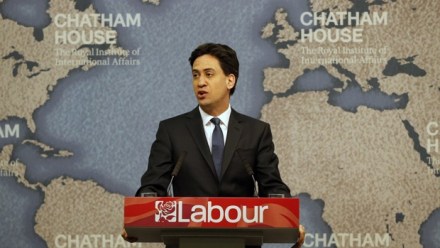
Home The prospect of a parliamentary alliance between Labour and the Scottish National Party injected an element of fear into the election campaign. The SNP manifesto promised to increase spending and to find a way to stop the renewal of the Trident nuclear deterrent. Nicola Sturgeon, the SNP leader, said she wanted to make Labour in government ‘bolder and better’. Lord Forsyth, a former Conservative Scottish secretary, said that the building up of the SNP, to take seats in Scotland, was a ‘dangerous view which threatens the integrity of our country’. Ed Miliband, the Labour leader, said the Tories should not be ‘talking up’ the SNP. Even the Democratic Unionists

The Conservatives are strategising regional media out of the grid – and it won't help their cause

This has, I think we can all agree, been the most stage-managed election ever. Nobody on a soap box, no punches thrown, no bigoted women. Just a seamless marathon of national messaging that starts with the Today programme and ends with Newsnight. It is the regional media, however, that feels the iron grip of the parties’ media machines the most. We work where voters actually live. So how we are treated during political visits can be revealing. And Labour, most regional reporters seem to agree, seem to have chilled out. Ed Miliband and other senior Labour figures are freely giving up their time. We do get asked what sort of

Breaking: Politician spotted talking to a real voter

I’ve just witnessed an extraordinary moment on the campaign trail in Edinburgh. No, it’s not this, but a political party leader talking to a real voter. This is Ruth Davidson, Tory leader, talking to a random voter in Edinburgh. I know he was a random voter because I ran after him to check. You never know, after all. He wanted to ask Davidson some questions about migrants drowning in the Mediterranean. So he wandered up to her and asked them. And she answered. What’s more, the answer seemed natural, he said. Well, this is strange. Strange, at least, for this campaign. The reason the Tories in Scotland are doing these

Why identikit lines on the SNP are important for the Tories

This morning when George Osborne defended the way the Tories were fighting the election campaign, there was something slightly odd about what he said in response to John Humphrys’ first question: ‘We’re two weeks to go to this election and it’s coming down to a very clear choice on the economy, and on 8 May we can either get straight back to work with a clear plan that is delivering for our country or we face this deeply unstable Miliband/SNP government committed to much more borrowing, and that leads to a dangerous cocktail which increasingly, international investors say will lead to higher mortgage rates, higher taxes and lost jobs, and

The boy David

I can claim a milligram of credit for David Cameron’s first star billing. In early 1991, standing in for the late John Junor on the Mail on Sunday and seeking a weekly instance of some Labour frontbencher making an eejit of himself, I inquired who was the best sniper in the Conservative Research Department. The answer was David Cameron. I phoned him and, for the next three weeks, one sheet of paper arrived with brief quotes, all of them firecrackers. Week four: the boy David is on leave, so his boss, Andrew Lansley, the then director of CRD, stands in. I receive 20 sheets of very damp squibs. Around that

Cheap shots and uncosted bribes are drowning out vision, wisdom and optimism

The interesting thing about Labour’s pledge to abolish non-dom tax status — a squib designed to trap Tories into expressing sympathy for the rich, in the knowledge on the part of Ed Miliband and Ed Balls that it might cause loss of tax revenues and inward investment — is that it has been welcomed by influential voices in the City. The Eds must be astonished to find Sir Roger Carr, chairman of BAE Systems and former deputy chairman of the Bank of England, bang on message: he told the FT that non-dom rules are ‘a relic of the past that unfairly favours the few at the expense of the many’.

Boris hits the campaign trail — and admits being Tory leader would be a ‘wonderful thing’

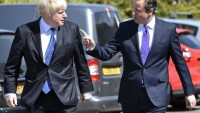
The Tories’s not-so-secret weapon has finally been deployed. Boris Johnson hit the campaign trail with David Cameron today, solving a jigsaw puzzle, painting with some children (above) and exuding a bonhomie missing from the campaign so far. But the dangers of letting Boris loose were also seen in an interview on Sky News. When asked, multiple times, by Kay Burley if he would like to succeed Cameron as Tory leader, Boris edged a scintilla closer to saying ‘yes’. At first, the Mayor of London deflected: ‘By 2020, I hope I will still be alive and still in Parliament but kaleidoscope of politics will have changed and rotated. There will be

Tired Tories call for 'pizzazz' in election campaign

Are the Tories having a bad campaign? It certainly doesn’t seem to be as slick and upbeat as some had expected. Many Tories had expected the polls to stay right where they are until polling day, but others had assumed that there would at least be some signs of a public panic about Ed Miliband by now. Instead, normally gloomy Labour types say their leader is becoming less of a problem on the doorstep. That’s damning with faint praise, still, but the Tories had assumed things would be getting worse for Labour now, not better. The Tories I’ve spoken to over the past couple of days talk of the need

Revealed: Why the Tories have a big London problem

This afternoon something rare will happen in this election campaign. David Cameron will campaign in London. While bus-ing and jetting all around the four countries that make up the United Kingdom, the capital has all but been forgotten by the Prime Minister during the short campaign. Like so many aspects of this general election campaign, Wednesday’s event will be closed to journalists. So what’s going on? Tory worries in the capital are growing. Polls have Labour out ahead by double digits, and many of Miliband’s expected gains will likely come from greater-London marginals. Mr S is repeatedly hearing complaints from Tory activists that the data they have in London is massively skewed

Campaign kick-off: 15 days to go

The general election campaign is beginning to feel a little staid. Maybe there was too much excitement over the attacks and TV debates, or maybe the parties are running out of big policies. But there are still some announcements: Labour will continue its ‘NHS week’ with promises of more health care spending while the Tories will talk up their caring side. To help guide you through the melée of stories and spin, here is a summary of today’s main election stories. 1. Vote Labour, save the Union The Tories’ attacks on the dangers of voting Labour and getting the SNP have hit a road bump. Two senior former cabinet minsters have

David Cameron: Andrew Marr was talking 'bollocks' about foxhunting

So both the BBC and Andrew Marr have admitted to misquoting David Cameron as having said that foxhunting was his favourite sport. But what did Cameron himself think of Marr’s self-described ‘cock up’? Well, The Spectator caught up with the Tory leader earlier today and asked him about it – and here’s his answer: ‘The old mental filing system, you’re going ‘drrrrrr’ through, and thinking… but I knew the article because I wrote it myself… I just thought maybe there’s something else. You never know, something might have been written by someone else. So I thought it was bollocks. And it was bollocks.’ Was there perhaps a spot of truth

Andrew Marr and the BBC misquoted David Cameron – but how did they get it so wrong?

After yesterday’s piece, in which I called out Andrew Marr for attributing an entirely incorrect quote to the PM on his Sunday morning show, two things have happened. Firstly, as Mr Steerpike reported, Andrew Marr replied on Twitter, saying it was an ‘honest mistake’ and ‘cock up not conspiracy’. @laidmanr @spectator @millsswift oh yes it is: honest mistake – I was wrong – sorry. Cock up not conspiracy, but wrong on my part — Andrew Marr (@AndrewMarr9) April 20, 2015 Secondly, the BBC press office have issued a statement. It explains that Marr wanted to question Cameron about the section of the Conservative manifesto that refers to hunting, shooting and fishing.

Exposed: the BBC's 'foxhunting' smear against David Cameron

The Prime Minister’s interview on the Andrew Marr Show yesterday showed that despite claims to the contrary, Cameron isn’t lacking in passion; the PM was full of fight and his normal self-confidence. But there was one question he did falter over. ‘You told the Countryside Alliance magazine recently that your favourite sport was foxhunting’, Marr declared. ‘Is that really true?’. Cameron looked utterly bemused, but Marr was so keen on the question that he repeated it: ‘You said: “It’s my favourite sport which I love.” Is that true?’ Perhaps unsurprisingly, a Twitter-storm erupted at the news that Cameron had apparently ‘admitted’ to his favourite sport being foxhunting. But where on earth did

John Major to enter the electoral fray this week

David Cameron’s inner circle are always keen to talk up the parallels between this campaign and 1992. This week, the winner of that election will enter the fray on their behalf. As I report in the Mail on Sunday, John Major will give a speech warning of the dangers to the Union itself if the United Kingdom ends up with a Labour government propped up by the SNP. The Tories hope that Major’s intervention will elevate this point above the usual party political knockabout. They also believe that a former Prime Minister speaking out will make voters pay attention; they were much struck by how much coverage Tony Blair’s speech

Feisty Cameron warns English voters of the 'frightening prospect' of the SNP propping up a Labour government

David Cameron has just delivered his feistiest performance of the election campaign yet. In a combative interview with Andrew Marr, the Tory leader repeatedly described the prospect of a Labour government propped up by the SNP as ‘frightening’, telling English voters that the SNP wouldn’t ‘care’ about them and their needs. He implicitly warned that SNP MPs supporting a Labour government would result in less money for English constituencies. He had been given this opening by Nicola Sturgeon, who in her interview had made clear how the SNP would use the fixed term parliament act to give them maximum influence on a Labour government. Her point was that the fixed term