Conservative party

Prime Minister’s rambling speech revives Johnson jitters

After three torrid weeks, Tory MPs were hoping for a better start to this one. Alas, it has got off to a rather bizarre start. The kindest thing that can be said about the Prime Minister's speech this morning to the Confederation of British Industry is that it was peculiar.  The main thrust of the speech was meant to be about green growth as part of the government's levelling up agenda — with an announcement that new homes and buildings will require electrical vehicle charging points from next year. But the announcements are not what is leading the coverage. Instead, it's the Prime Minister's confused manner as he had to stop and start before going off on a tangent about childrens' television cartoon Peppa Pig.  https://www.

Johnson is making the sleaze row worse

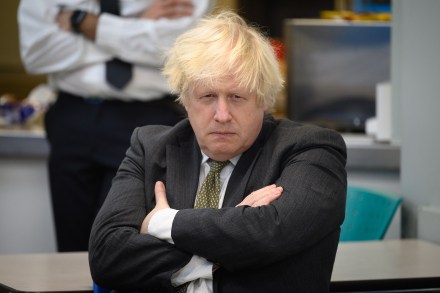
Is there anyone left in the Conservative party who is happy with Boris Johnson? The Prime Minister has now managed to wind up pretty much every single Tory MP with his handling of the second jobs row, opening up still more fault lines in the past 24 hours. His letter to the Speaker yesterday saying he wanted a ban on MPs taking paid work as parliamentary strategists, advisers or consultants — and that outside work should also be within 'reasonable limits' — has upset the many backbench Tories. They now worry that they'll suffer a big drop in income thanks to the mishandling of the Owen Paterson case.

The sleaze row isn’t finished yet

Number 10 will have been relieved that the weekend did not bring new stories about Conservative MPs raking in lots of money from second jobs. There were still sleaze angles in the Sunday papers, including regarding the Prime Minister's own dealings, but the air seems to be going out of the story a little. The past two weeks has opened up a chasm between the 'red wall' MPs elected in 2019 and more traditional Tories The trouble is that this week brings a whole host of new chances for the row to blow up once again. There's the Liaison Committee hearing with the Prime Minister on Wednesday, which will include questions on 'propriety and ethics in government'. Labour also has an opposition day debate in the afternoon, arguing for a ban on paid directorships and consultancies for MPs.

Boris Johnson will struggle to contain this sleaze row

A week ago today, Tory MPs were getting increasingly nervous about Downing Street’s plan to stay the guilty verdict against Owen Paterson. Despite warnings from various senior MPs, the government pressed on – and the result has been a firestorm about second jobs, with Geoffrey Cox now facing Labour calls for an inquiry into his conduct. We are a week in and the scandal shows no sign of abating It is hard to see how Boris Johnson gets off the hook he has caught himself on. If he tries to resolve this scandal with a set of strict new curbs on outside interests he will infuriate a considerable number of his own MPs.

Paterson resigns. Johnson is diminished

What are the long-term political implications of the government’s clown show over Owen Paterson? My guess is that voters won’t pay too much attention, but MPs certainly will. And that could matter at least as much. Start with the public. Do voters feel angry that their Prime Minister doesn’t play by the rules — written and unwritten — of politics and government? There’s a lot to be angry about, and ripping up the rules against cash-for-lobbying certainly justifies rage. And maybe in time, the idea of the PM as leader of a privileged clique who don't play by the same rules as the rest of us will indeed prove harmful to the Conservatives’ vote.

Three little words that could cost Boris

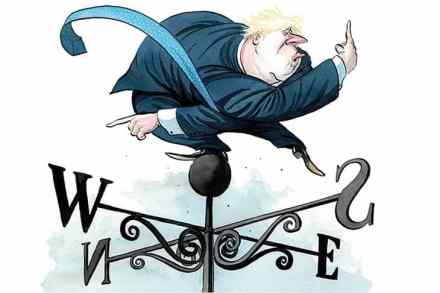
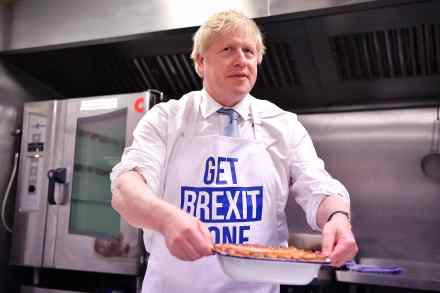
Boris Johnson knows the value of three-word slogans. ‘Take back control’ and ‘get Brexit done’ helped propel him to his two greatest electoral triumphs. But another three words that no one would ever put on a campaign poster might determine the success of his premiership: public service reform. Johnson has taken an unusual decision for a Tory prime minister. He has chosen to raise personal and business taxes to put more money into public services. This gamble may pay off if people feel that services have improved. If they do not, he risks an angry electorate who are paying more tax yet not getting anything extra in return. No. 10 is aware of this danger, which is why Johnson puts such an emphasis on delivery. But this is more difficult than it sounds.

The Tory blame game over COP26 has already started

Just a few months ago, the view inside Downing Street was that the COP26 summit would be a national morale booster. The Coldplay singer Chris Martin was mentioned as a potential headline act and there were excited discussions about giving the event a cute mascot. Now, the headlines are about rail strikes, bin men running away from rats on rubbish-strewn streets in Glasgow and the Prime Minister declaring that recycling doesn’t work. Even the mascot, Bonnie the seal, has been called ‘rat-like’ by government sources. ‘It’s hideous,’ says a member of a foreign delegation. Just as the technical climate negotiations have hit stumbling blocks, so too have No. 10’s other ambitions for COP.

Rishi Sunak’s low tax pitch to MPs

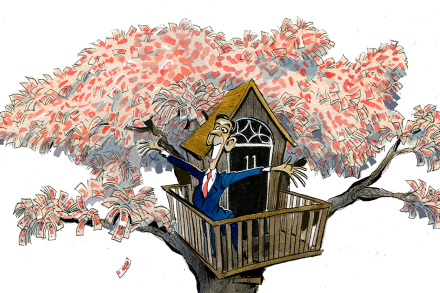
Is Rishi Sunak a low tax chancellor? He certainly likes to tell anyone who will listen that he is. Yet his actions tend to suggest the opposite. The tax burden is currently on track to reach its highest level since the early 1950s, and while Sunak unveiled one big tax slash in the Budget in the universal credit taper rate cut, the main thrust of Sunak's announcements was spend, spend, spend. Tonight Sunak addressed Tory MPs at a meeting of the 1922 committee. After announcing £150 billion in extra public spending, Sunak sought to convince his party that, despite this, he was committed to lowering taxes.

It’s no wonder young people don’t understand levelling up

There are two ways Number 10 can look at new polling which shows only 14 per cent of Britons understand the slogan ‘levelling up’. The first: the government has utterly failed to communicate its signature policy. The second: at least they didn’t poll the Cabinet. The findings, which come in research by Redfield & Wilton Strategies for PoliticsHome, are interesting for what they tell us about now much the slogan has cut through (66 per cent have heard of it) versus how much it's been understood (one in three haven’t the foggiest what it refers to).

A matter of Truss: the unlikely rise of Lizmania

If Boris Johnson were to vanish tomorrow, who should replace him? The American pollster Frank Luntz asked this of about 200 people at The Spectator’s live podcast last week, and the answer was Liz Truss. This took me by surprise – I’d have said Rishi Sunak – but there’s no doubting the Lizmania that was in the air in Manchester.  The new Foreign Secretary was pulling in the crowds, flirting with the right-wing think tanks (it’s time for her to be ‘reinfected with sound ideas’ she told them) posing for selfies and – later, in the nightclubs – dancing with her army of admirers. Her events were the ones with the biggest queues on the way in and the biggest smiles on the way out.

The Tories will pay a price for Boris’s housing strategy

One of the themes of Conservative conference was that the government has dropped plans for a radical reform of the planning system, which was designed to get more houses built in the south east. Both Boris Johnson and the new party chairman Oliver Dowden were keen to stress this point. But, I say in the Times today, this is a mistake. The Tories are the party of the property-owning democracy, and live and die by this The Tories have been spooked by the Chesham and Amersham by-election where the Liberal Democrats ran hard against planning reform and took the seat on a 25 per cent swing from the Tories. Boris Johnson will pay little immediate electoral price for this U-turn. Indeed, at the next general election he’ll probably benefit from it.

Sunak faces the free-marketeers

Rishi Sunak didn’t give too much away tonight when he spoke in the 'ThinkTent' at Conservative Party Conference. The Chancellor is known for being cautious with his words, and has been increasingly tight-lipped in the weeks leading up to his October Budget. But his presence at the fringe event was telling in itself. Sunak was only billed for one public fringe event this year, co-hosted by the Institute of Economic Affairs and Taxpayers’ Alliance. Their ‘ThinkTent’ boasts some of the most free-market, libertarian events you’ll find at conference: both organisations are strong advocates for a low-tax, smaller state. So, not necessarily an obvious place to find the Chancellor who has overseen record peacetime spending over the past 18 months.

Priti Patel strikes a bullish tone

The theme of Priti Patel's party conference speech this afternoon was very much 'large and in charge'. She devoted much of her address to talking about the immigration system, as you'd expect, promising stronger crackdowns on people being smuggled across the Channel in boats. Patel focused on the Vote Leave favourite: taking back control Whereas Boris Johnson and Michael Gove have talked about Britain 'voting for change' in 2016, Patel focused on the Vote Leave favourite: taking back control. She told the conference hall this was the key theme of her reforms to immigration, saying: 'My new plan for immigration is already making its way through parliament. At the heart of this plan is a simple principle. Control. That is not unreasonable.

What’s on today at Conservative conference

It's day three of four here in Manchester at the Conservative party conference. Expected highlights of the day include the recently demoted Dominic Raab making his first speech as Justice Secretary while Priti Patel and Sajid Javid will be well worth watching too. Elsewhere Raab's axed predecessor Robert Buckland appears at Policy Exchange while The Spectator again has a full day of fringes events.

Running on empty: the government is out of fuel – and ideas

The Prime Minister is thought to thrive on chaos. If so, then he should be in his element. Wholesale gas prices have risen sixfold, winter heating bills are set to be the highest on record. Millions of people across the country are wondering what they might have to forgo to pay for heat. Supermarkets are warning of food shortages. There are 100,000 missing HGV drivers. The army has been called in to help, but has only 150 tanker drivers available. Queues for petrol jam the roads, and medics can’t get to work. The Prime Minister might thrive on chaos, but Tory members do not. ‘Tory grassroots are furious,’ says one MP. Not just about the prospect of energy bills rising, but about the increase to National Insurance too.

Tories brace for more tax rises to fund NHS

Any Tory rebellion on social care is unlikely to be very big this evening when the Commons votes on a resolution introducing it. There are a number of reasons for this, not least that voting against a money resolution, particularly one on an issue that is as big as a budget, is a much bigger deal than rebelling on normal legislation. Then there's the prospect of a reshuffle, with everyone in Westminster busily trying to read runes about whether Boris Johnson will move around his front bench tomorrow. If it doesn't happen, disappointed MPs are hardly going to complain in public that they'd supported the policy in the hope of career glory. If the NHS won't willingly stop spending money, and the new care policy requires that money after three years, what's going to happen?

The Tories aren’t in party mood

Nearly two years on from the general election and 11 years since the Tories took office, they remain comfortably and consistently ahead in the polls. This is remarkable. In September 2008, when Labour was in power, it was almost 20 points behind the Conservative party. Eighteen years before that, when the Tories were in power, they regularly trailed by double digits. You might think this Tory lead, and the poor numbers for the leader of the opposition — Keir Starmer’s latest approval rating is minus 39 — would have led to Tory triumphalism. However, when Tory MPs return to parliament next week, they will do so in a strikingly subdued mood. In part this is because of the issues at the top of the agenda.

Why isn’t the Tory party helping desperate leaseholders?

Marwa al-Sabouni is a Syrian architect who watched her home city of Homs destroyed during the Syrian conflict between 2011 and 2014. Out of that experience, she penned an  intensely moving and haunting account of what the idea of home means. She writes of how the dwellings we live in are intimately connected with our own sense of self: ‘Our homes don't just contain our life earnings, they stand for what we are. To destroy one's home should be taken as an equal crime to destroying one's soul.’ It’s a statement that echoes the biblical vision of every person able to ‘live in safety, under their own vine and under their own fig tree.

How do we stop the next David Cameron?

One of the enduring charms of British politics is how slight the pecuniary rewards are for taking up the job of prime minister. American presidents can look forward to stonking great advances on their memoirs. (Barack and Michelle Obama received a joint up-front payment of £47 million from Crown publishing group.) They claim rock-star appearance fees in exchange for a few platitudes to sandalled Silicon Valley execs. (Bill and Hillary Clinton raked in £110 million in speaking fees between 2001 and 2015.) A stint in the White House boosted George H W Bush’s net worth by 475 per cent and Richard Nixon’s by 650 per cent, pocket change compared to Bill Clinton’s 6,150 per cent. Unlike 1600 Pennsylvania Avenue, no one enters No.