PMQs live blog | 11 January 2012
PMQs 11 January.
PMQs 11 January.
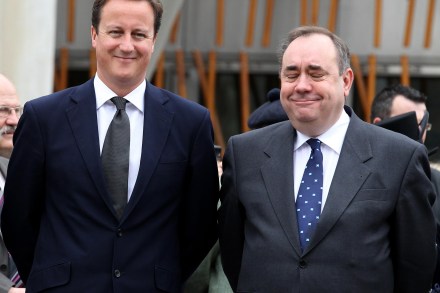
As much as I dislike the phrase ‘the third way’, it sums up what the coalition has done today. Given the choice between hobbling or accommodating Alex Salmond and his referendum on Scottish independence, it has decided to do neither and both. In the words of the Scottish Secretary Michael Moore, speaking in the House just now, the referendum will be ‘made in Scotland, by the people of Scotland’ — just so long as Westminster okays it first. Maybe that'll make more sense if we look at what, specifically, was announced today. Moore's main point was that any referendum held by the Scottish government, without the approval of the UK government, would be ‘unconstitutional’.
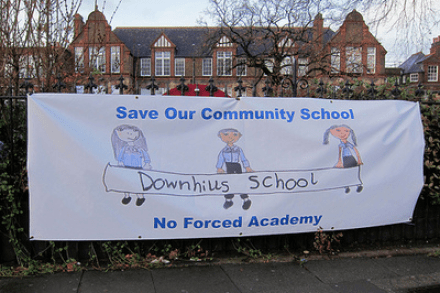
‘Anyone here from the Spectator?’ Last night a packed meeting at Downhills Primary in Haringey began with this ominous query from the chairman, Clive Boutle, who leads a local campaign against academies. Seated at the side of the hall I kept quiet. ‘No one?’ said Boutle, ‘Great, we’re safe.’ The meeting had attracted about 800 protesters and activists who oppose Michael Gove’s decision to force Downhills – a failing multi-ethnic school – to become an academy. ‘Michael Gove really hates us,’ continued Boutle, his manner urbane rather than menacing. ‘The government doesn’t like Haringey. There hasn’t been a Tory here since Noah was in short trousers. So we’re no risk.
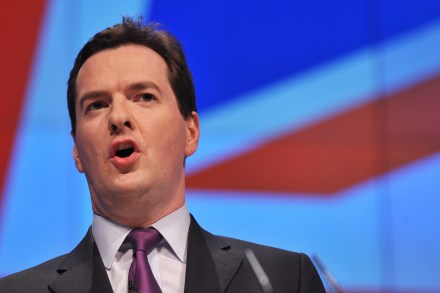
There’s much chatter in Westminster today about the fact that George Osborne is chairing the Cabinet committee on Scotland. Osborne is, of course, the Conservatives’ chief electoral strategist as well as the Chancellor of Exchequer. This has led to some suggestions that he wouldn’t be too upset by a referendum defeat that would make it an awful lot easier for the Tories to win a majority at Westminster. This is unfair: Osborne is a Unionist. What those around Osborne have long been interested in is the option that the coalition seems to be ruling out: fiscal autonomy. The circle around Osborne have long believed that it is only when Scottish politics is about how to raise money as well as how to spend it that the Tories will revive north of the border.
James has already blogged the Sunday Telegraph's interview with David Cameron, but some other things stand out from it — and not just the PM's unthinking attack on Ed Balls either, for which he has since apologised. Take these paragraphs on tax, for instance: ‘The Prime Minister effectively rules out any move towards a “mansion tax” — a levy on high-priced properties proposed by the Liberal Democrats — or indeed any new tax on wealth. “I don’t believe, generally speaking, we should be looking at endless additional taxes.
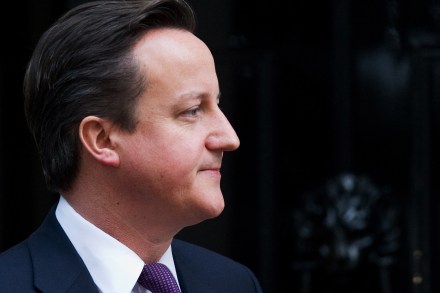
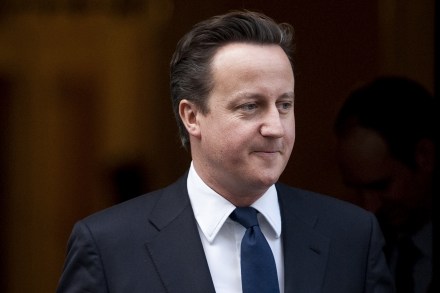
The politics of the ‘undeserving rich’ is again dominating the news this morning. David Cameron tells the Sunday Telegraph that ‘The market for top people isn’t working, it needs to be sorted out’. While the Mail on Sunday reports that George Osborne is planning to create a new criminal offence of ‘criminal negligence’ that could be used against those bankers who endanger the financial system. Perhaps the most significant aspect of Cameron’s Sunday Telegraph interview, though, is his attempt to redefine ‘fairness’. Cameron has tried to do this before, arguing that it isn’t just about redistribution but about people getting out what they put in.
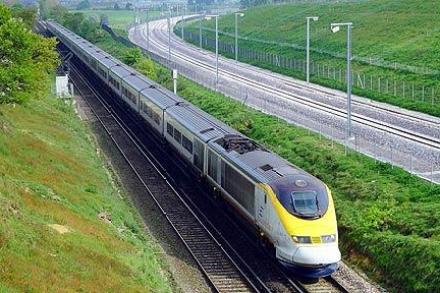
The decision on whether or not to proceed with the HS2 rail link is expected on Tuesday. Given all the legal issues involved, the government is not making any public comment on the matter. But all the signs are that it will get the go-ahead. There will be quite considerable opposition to the projects from parts of the Tory party. It is highly likely that Cheryl Gillan, the Welsh Secretary who represents one of the seats that will have the line running through it, will resign over the matter. If she does, expect Maria Miller to replace her. Number 10 are keen not to see the number of women in the Cabinet fall and Miller is regarded as a safe pair of hands and Welsh enough to do the job.
Tucked away on page 15 of today's Times, there's an insightful story about Lords reform (£) by Roland Watson. And it's insightful not just for the new information it contains, but also for the familiar truth it confirms: reforming the House of Lords is going to be one helluva difficult task. You see, while both halves of the coalition committed to a fully- or ‘mainly-elected’ upper chamber in their respective manifestos, only one half of the coalition is particularly eager to force it through now.
It was the second of the Today Programme's New Year's interviews with the three party leaders today; this one with David Cameron. And there was plenty to digest from it. So much, in fact, that we thought we'd bash out a transcript, so that CoffeeHousers can read it through for themselves. That's below, but before we get there it's worth highlighting a couple of things that Cameron says. First, his point that ‘we've seen a level of reward at the top that just hasn’t been commensurate with success’, which is another volley in the battle against the ‘undeserving rich’ that James mentioned yesterday.
Who can be toughest on the ‘undeserving rich’ is shaping up to be one of the main political battlegrounds of 2012. David Cameron and Nick Clegg’s comments today on tax avoidance are an attempt to get ahead of this debate. Clegg, though, is keen to make this issue his own. As I say in the politics column this week, he is planning a big speech later this month on ‘responsible capitalism’. He will use it to argue that there need to be more checks and balances within companies and call for more shareholder power over executive pay. One Cleggite tells me, in reference to the Labour leader’s conference speech trying to sketch out a new capitalism, ‘it is the speech Ed Miliband should have given.
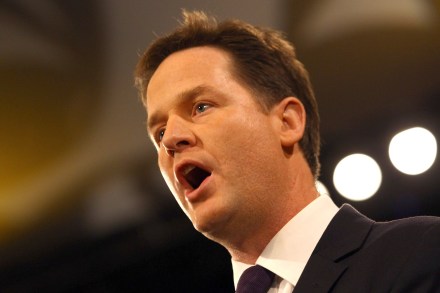
Alex Salmond has a soft spot for horse racing, and I've just seen some odds that could make the First Minister a very rich man: William Hill is offering 9/1 on Scotland being independent by the end of the decade. The SNP is traditionally bold in its predictions: ‘Free by '93’ being one of the more memorable. Salmond himself predicted that the Union of 1707 would not live to see its 300th birthday. But if he holds a referendum by 2015 then Hill's say a 'no' result is the 2/5 favourite. And 'yes' is 7/4. Money would be refunded if Salmond bottled out of holding a referendum within the next four years. So how seriously should we take the bookies? David Cameron may take the fight to Salmond, framing the argument in a different way: do you want to stay in the union?
Immigration will remain at the heart of political debate in 2012. Economic downturns tend to heighten concerns about migrants competing for jobs and depressing wages, and spending cuts tend to sharpen resentment over migrants claiming benefits or adding to pressure on public services. The latest e-petition to garner a hundred thousand signatures will get its reward of a day in parliament, debating the effects of immigration on Britain’s growing population. And while Labour and the Liberal Democrats might be reluctant to talk about immigration, the Tory leadership clearly see it as useful in handling those on the right who are unhappy with life in coalition — commentators as well as backbench MPs.

Whenever politicians talk about social care, they tend to promise ‘cross-party talks’. It's their little euphemism for ‘we don't want to commit to a policy by ourselves.’ Don't get them wrong, it's not that they don't have ideas for fixing a system that is straining under the weight of an ageing population; the Dilnot report, released earlier this year, gave them plenty of recommendations to work with. It's just that they don't want to be the ones to implement the tax hikes or spending cuts that will be necessary to fund it. If they can talk it through with the other parties — the thinking goes — then this crucial policy area can be detoxified, the blame spread more or less evenly.
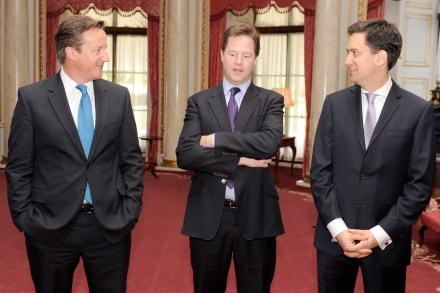
Under cover of discussing the Open Society and its enemies, Nick Clegg today set out his personal agenda for the next year of this government. Indeed, Clegg's speech to Demos earlier was perhaps the purest distillation of his politics since the big set-piece number he delivered at the Lib Dem conference in 2008. It contained many of the same themes as that earlier speech: ‘social mobility’, ‘civil liberties’, and ‘democracy’. And it added a couple more for good measure: ‘political pluralism’ and ‘internationalism’. The Deputy Prime Minister described these five political impulses as ‘the source of my liberalism’.


That was easy. Only a few months after Sir John Vickers released his final recommendations for reforming the banking sector — and after much less intra-coalition struggle than we might have expected — the government is set to announce that it will adopt them ‘in full’. Vince Cable revealed yesterday that he and George Osborne have reached common agreement on the matter. And, for his part, Osborne will appear before MPs today with further details. As Robert Peston has already explained, ‘in full’, in this case, doesn't quite mean 100 per cent — but it's close. The main proposal to ringfence retail banking off from riskier investment banking will be fully implemented.
A few months after the coalition was formed, I went for lunch with a close ally of Nick Clegg. After an hour or so of discussing what the coalition’s agenda would be, this Liberal Democrat said to me: ‘now, David Cameron can’t really be serious about this marriage stuff, can he?’ When I replied that I thought he was, he looked at me with total incomprehension. He then launched into a speech about how no ‘liberal’ could possibly want to see the state promote marriage. This is the thinking that lies behind Clegg’s latest attack on the idea of tax breaks for married couple; it has become an identity issue for the Liberal Democrats.


While we're on the subject of LibCon divide, it's worth noting Vince Cable's remarks to Andrew Marr this morning. The headline above is merely a paraphrase, but it's pretty close to what the Business Secretary actually said: ‘It was largely political. Certainly the Prime Minister’s got a sort-of short-term boost from it, but it doesn’t actually deal with the long-term fundamental problems in Europe.’ Seems to me that there have been harsher words deployed this week, but few harsher sentiments. In the spirit of, erm, ‘getting on with my job as I always do’, Cable is going especially far in attacking his coalition partners. Vince, as always, remains One to Watch in 2012 — and mostly for the wrong reasons.

It was not so long ago — the run-up to last May's AV referendum, to be exact — that we heard the coalition would be entering a new phase. Gone was the happy synthesis of the Tories and Lib Dems that prevailed after the election, and in its place would be a government that spoke more openly, more angrily about its differences. But even if Phase 2.0 had the appearance of being more fractious, it was actually designed to keep the parties together. The idea was that, by highlighting the essential differences between the two sides, their supporters could more easily be kept on board with the overall project. I mention this, this morning, because it looks as though that strategy is either being ramped-up or taken in a new direction. During Phase 2.
The Prime Minister does God. At least, that's the gist of his first major speech on religion. Actually, the interesting thing is that a Tory Prime Minister feels that he has to make the point that he is a Christian. Other than Michael Howard, who was Jewish, most other Tory leaders could have assumed we’d take it as read that he or she was more or less CofE, including Mrs Thatcher, who was, of course, a Methodist. Following Richard Dawkins' remark that the Prime Minister may 'not really' be a Christian, Mr Cameron responded: 'I am a committed – but I have to say vaguely practising – Church of England Christian, who will stand up for the values and principles of my faith'.

Coalition tensions over Europe are again threatening to be the story this morning. Nick Clegg has told The Guardian's Patrick Wintour that Britain has 'signalled we are happy for them [the Eurozone plus group of countries] to use EU institutions' to enforce any new treaty they agree between themselves. This is a striking claim given that David Cameron has not publicly said that he would accept this. If the Deputy Prime Minister's summary of the coalition position is accurate, then Cameron will face criticism from eurosceptics that he is backsliding on his veto. But for all Clegg's criticism of Cameron handling off the summit, he remains unconvinced by the plans that the eurozone plus countries are now pursuing.