Conservative party

Wrestling over cuts

Britain’s economic debate has been reduced to WWE-style wrestling, where two figures adopt semi-comic personas and have at each other for the entertainment of the crowd — while not doing any real fighting at all. So it is with Osborne and Balls. Rhetorically, they are poles apart; one championing cuts, the other spending. But you’ll notice that neither quantifies the cuts. That’s because Osborne is simply enacting an only-slightly-souped-up version of Darling’s plan and the real difference between the two parties is tiny. This was the point of last night’s Newsnight, where David Grossman filed a report (in which yours truly was interviewed) about the great pretend fight between two

A Clegg-up for young workers?

There was a time when Nick Clegg was the most agile and persistent defender of the coalition’s deficit reduction programme. But now — although he’s still got it in him — he is more often wheeled out to announce some spending wheeze or other. A couple of weeks ago, it was the next instalment of the government’s regional growth fund. Today, it’s a £1 billion scheme, spread out over three years, to encourage companies to take on young people. This latest scheme is one of those that looks very neat on paper. Put aside questions about how it will be funded, and what we have is a plan whereby £2,275

Miliband’s opportunity in the economic debate

Political debate is going to be dominated by the economy between now and the autumn statement. Ed Miliband is trying to use this moment to persuade the public that the Coalition’s economic policies have failed. By contrast, the Tories want to highlight how much deeper trouble the country would be in if it did not have the confidence of the bond markets. The Tories hope that this ‘stay close to nurse for fear of something worse’ approach will eventually deliver an election victory for them in 2015, given how hard Labour is finding it to regain credibility on the economy. As Ben Brogan wrote the other day, this strategy worked

In PMQs, a preview of next week’s battles

Today’s PMQs was a preview of the debate we’ll be having after next week’s autumn statement. Miliband, struggling with a bit of a cold, tried to pin the economy’s problems on Cameron. The Prime Minister’s retort was ‘who would want to put the people responsible for the current mess back in charge’. It was a simple message and one that carried him through the session. The other feature of today’s joust was also a preview of next week: a tussle over the strikes. Cameron said strikes were the ‘height of irresponsibility’. He also made sympathetic noises when Tory MPs asked about imposing minimum thresholds for strike ballots. Afterwards, we learnt

Party funding reforms won’t happen

The recommendations of the Committee on Standards in Public Life’s review into party funding are not going to happen. Both the Labour and Tory members of the review have issued notes of dissent to it. Nick Clegg has, on behalf of the government, issued a statement gently rolling the report into the long grass. Interestingly, the Tory party – which was for a while attracted to additional state funding – has now ruled it out completely. Unlike Clegg’s statement saying it shouldn’t be done while economic times are so tough, the Tory rejection of it is not time limited. One other thing worth noting is that Labour, via Margaret Beckett’s

There’s merit in the Coalition’s housing proposals

The government’s announcement on housing today is an attempt to square the circle. On the one hand, a return to excessive lending and sub-prime mortgages is clearly not a good thing. Critics say, with justification, look where government backed mortgages got America. But on the other, there are clearly problems when people who aren’t fortunate enough to have parental help aren’t getting on the housing ladder until well into their thirties. Conservatives who understand the importance of a property-owning democracy should be concerned about this. The Coalition’s solution — and this is the most genuinely coalition piece of policy we’ve seen in months — is partial government indemnities for people

How ambitious is Cameron on Europe?

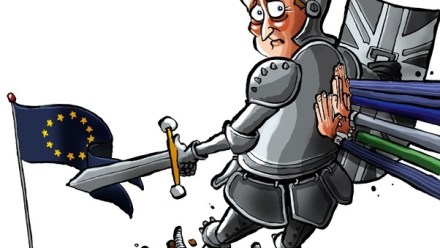
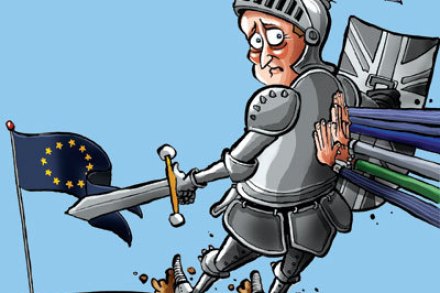
Someone forgot to pack his handbag. We heard yesterday that David Cameron has agreed to let Merkel pursue full fiscal union – and in return she will… drum roll please… let him repatriate parts of the Working Time Directive. There’s nothing official from Number 10, but the well-informed Ben Brogan suggests this morning that this could well be Britain’s price for agreeing to Merkel’s deal. If so, this would be an opportunity squandered on a massive – perhaps historic – scale. Let’s recap. Cameron is in an incredibly powerful position: leading a government which is, in defiance of public opinion, giving £9 billion of overseas aid to EU member states each year.

Are the Lib Dems pro-EU?

This might seem a very odd question. A pro-EU position is part of the party’s internationalist DNA. Listen to any EU-related speech by the likes of Nick Clegg or Paddy Ashdown and heartfelt support for the European project is apparent. The Liberal Democrats have also made a virtue of reining in Tory euroscepticism, for example rejecting a call for repatriation of powers in the Coalition Agreement. The Deputy Prime Minister remains, in private and public, pro-EU. And to many activists and MPs, the party’s European stance is what makes it different to the Tories – and is the reason why they are Lib Dems. They see in Tory euroscepticism a

Miliband’s ‘responsible capitalism’ requires deregulation

Despite yesterday’s gloomy unemployment figures there is, it turns out, good news for the government buried in current labour patterns: the total number of hours worked in the last three months has risen by three million. The bad news is that employers are currently filling this demand by getting current employees to work longer hours (average weekly hours over this time period rose by 0.3 to 31.5), rather than taking on new workers. Presumably this is because it is so much cheaper, and less risky, to do so.   This should come as an encouragement to the government, as they search for ways to bring about growth. Scrapping or regionalising

The Tories may have left it too late for that realistic debate about border security

Another day of bad headlines about border security is, in the end, a bad day for the Home Secretary, whoever ends up getting the blame. Yesterday morning brought further revelations in the newspapers; and then at lunchtime, Brodie Clark, the senior official who was first suspended and then resigned over the affair, made his much anticipated appearance before the Home Affairs Select Committee. Meanwhile, over in the House of Commons, the immigration minister Damian Green had been summoned to answer an urgent question about further alleged border lapses. By the evening, the story was once again leading the national news. Nevertheless, as the dust settles, Theresa May is still there

Cameron stamps on the SpAds

David Cameron summoned all Tory special advisers to Downing Street for a meeting this afternoon. He wanted, I understand, to warn them that too much of the coalition’s internal workings were being briefed out to journalists. He made it clear that he wants an end to process stories appearing in the papers.   Downing Street has been infuriated by recent reports of tensions between Steve Hilton, Cameron’s senior adviser, and George Osborne and is keen to stamp on anything that keeps this — rather misleading — story going. There are also worries about the party being seen as divided again, a return to the old Tory wars stories of the

Cameron shows his eurosceptic side

David Cameron’s speech at the Lord Mayor’s Banquet last night was a significant moment — the clearest articulation yet of his European Policy. In the crucial paragraph, he declared: ‘we sceptics have a vital point. We should look sceptically at grand plans and utopian visions. We’ve a right to ask what the European Union should and shouldn’t do and change it accordingly. As I said, change brings opportunities. An opportunity to begin to refashion the EU so it better serves this nation’s interests and the interests of its other 26 nations too. An opportunity, in Britain’s case, for powers to ebb back instead of flow away and for the European

Cameron’s frustration with ‘quick fix’ critics

No columnist is closer to David Cameron than Bruce Anderson. The Spectator’s former political editor spotted Cameron’s potential back in 1992 during the general election campaign and ever since he has been an advocate of the Cameron cause. In 2003, he wrote a piece for The Spectator in which he tipped Cameron for the premiership.    The two remain in close touch and Bruce has, I’m told, been a recent guest at Chequers. So, it seems reasonable to assume that Bruce’s rebuttal of Cameron’s right-wing critics is, to some extent, a reflection of the Prime Minister’s own thinking.    Bruce’s main message is that neither Europe nor the economy can

Alexander drags Labour closer towards the Tories on Europe

You know, having read through Douglas Alexander’s Guardian article a couple of times now, and listened to his appearance on the Today programme earlier, I’m still not sure how Labour’s new stance towards Europe is particularly different from the official Tory one. The shadow foreign secretary tries to suggest that Dave and George’s position is reckless — ‘they seem worryingly complacent about the prospect of a two-speed Europe’ — but he goes on to echo much of it himself. And so, he suggests, ‘We should engage now with the fact that Germany is seeking treaty change and seize this opportunity to safeguard the rights of non-euro members.’ And we read elsewhere

Why Cameron can’t laugh off the Mercer story

And the most eyebrow-raising story of the day has to be this one in the People. It’s their account of what Patrick Mercer is supposed to have said about David Cameron whilst being taped at a party last weekend — and it makes for perversely hilarious reading, whomever’s side you take.    CoffeeHousers have probably read some of the quotations already. But if you haven’t, then their tone is captured in this exchange from the People’s transcript: GUEST: Where did David [Cameron] go wrong? MERCER: Well, he was born. Beyond that, Mercer allegedly described Cameron as arrogant; called him an ‘arse’ and the ‘worst politician in British history since William

The Conservatives: A History by Robin Harris

If David Cameron and his friends wish to know why they and their policies are so despised by some Conservatives of high intellect and principle, they should read Robin Harris. His book is a marvel of concision, lucidity and scholarship, with penetrating things to say about Peel, Disraeli, Salisbury, Baldwin, Churchill, Macmillan and the rest. But much of its savour derives from Harris’s disgust — the word is not too strong — with the various forms of bogusness, including intellectual cowardice veiled by complacent politeness, which recur so often in the history of the Conservative party. Harris recognises the ‘note of genius’ in Disraeli, but scorns the pious, posthumous ascription

Miliband’s immigration attack no threat to Cameron

Ed Miliband broke with his post-conference policy of always asking about the economy at PMQs to devote all six questions to the whole Brodie Clark/Theresa May border dispute. Miliband, though, had no new killer fact or question. Instead, he stuck to general criticisms of the government’s approach. This gave Cameron an easy ride. He simpy backed the Home Secretary unequivocally before turning on Labour’s immigration record. By the end, Cameron was at his most disdainful towards Miliband. Indeed, the most interesting element of the exchange was how the Liberal Democrats looked at their feet as Cameron rattled off the coalition’s greatest hits on immigration. The rest of the session was

Immigration headlines spell trouble for Cameron

So soon after taking on the right over the European Union, David Cameron didn’t want to be seeing negative headlines on another of their hot-button issues. But that’s just what he’s woken up to this morning, thanks to the revelations that the Home Secretary authorised the relaxation of border checks. As James said, May’s performance in the House of Commons yesterday left her looking safe for the time being – not least because of Cameron’s support for her, as evidenced by his sitting alongside the Home Secretary during her statement. But immigration is as potent an issue as ever. Unlike the EU, it’s one that the general public does think

Britannia waives the rules

Today’s immigration headlines have a familiar feel. Twenty four hours after embarrassing revelations about a hundred thousand asylum case files being quietly written off, we now learn that at certain times over the summer, UK Border Agency staff were told not to bother checking people’s passports, or checking them against watch lists for crime and terrorism. The media are understandably dusting off old headlines about our borders being “out of control”, and the Home Office being “not fit for purpose”. The strategy of Conservative ministers in the Home Office is already clear: on the first story, blame the previous government, and on the second, blame the officials, with a number