Concentration camps

Why Hitler’s suave architect escaped the noose at Nuremberg

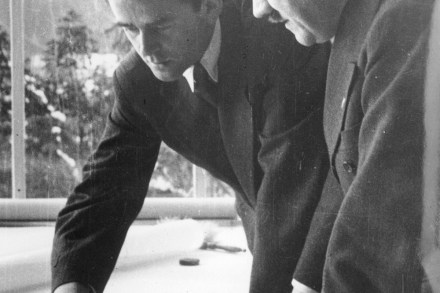
At the Nuremberg trial of the main Nazi war criminals, one man stood out: Hitler’s favourite architect and later armaments minister, Albert Speer. He cut a gentlemanly figure in a gallery of rogues. The strutting, smirking Hermann Goering reminded Rebecca West, who attended the trial, of ‘a tout in a Paris café offering some tourists a chance to see a black mass’. Julius Streicher, the Jew-baiting brute, was like ‘a dirty old man of the sort who gives trouble in parks’. On the same bench, all declaring their innocence in the face of overwhelming evidence of monstrous crimes, were the lantern-jawed SS leader Ernst Kaltenbrünner, the sour-faced ex-champagne salesman Joachim

Fractured loyalties: The Tribe, by Michael Arditti, reviewed

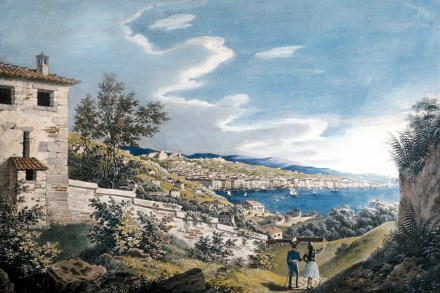
Michael Arditti’s impressive and immersive family saga begins in Salonica (now Thessaloniki) in 1911 and follows the fortunes of the wealthy, powerful Carrache family who are part of the Sephardic Jewish community. They have lived in the city for two centuries and employ more than 1,000 people. The father of the family, Jacob, is ‘a well-known liberal’ who ‘would never compel his children to do anything against their will’; but he is outraged by his daughter Esther’s flirtations with socialism. So what will happen when he discovers his son Leon’s relationship with a nightclub singer? He also worries about his other three children: Ruben is reckless, Bella is artistic and

The agony of making music at Auschwitz

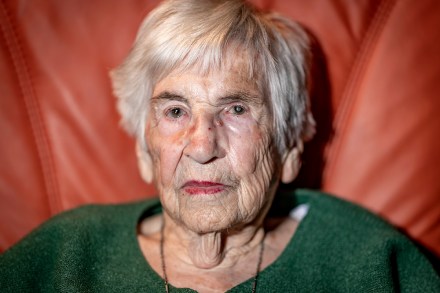
Anita Lasker survived the Holocaust because, as a Berlin teenager, she had enjoyed her cello lessons. The Hungarian Lily Mathé’s violin performances had once impressed the man who became the Auschwitz concentration camp commandant. Alma Rosé, among Europe’s most talented musicians and the niece of Gustav Mahler, became the conductor who kept these young women and more than 40 others alive through ‘ferocious discipline’ and determination. In The Women’s Orchestra of Auschwitz, Anne Sebba recounts these intertwined stories with great sensitivity. She also explores the ethical questions that haunted the survivors who were once forced to play melodies in the darkest moments of the 20th century. The ash from human

‘It was all a fairy tale’: Lina Heydrich’s description of the Holocaust

There have been many biographies of Reinhard Heydrich, the cold, cynical head of the SS in the Third Reich, but none quite like this one. Nancy Dougherty, an American film critic and biographer, died in 2013 before finishing a very large manuscript. The book was put into shape by Christopher Lehmann-Haupt, an old friend of hers, who died in 2018. It now sees the light of day years after the research and writing was carried out, but it is a fine posthumous monument to both author and editor. What makes this biography different is not the life of Reinhard but his wife Lina. Dougherty spent three long sessions in the

Pre-crime has arrived in China

The idea of ‘pre-crime’ was popularised by Philip K. Dick’s story ‘The Minority Report’ and the 2002 Steven Spielberg film based on it. Here was a vision of a shudderingly paranoiac technological dystopia in which you could be arrested for something you haven’t even done yet. Not so science-fictional as all that. ‘Pre-criminal’ is the phrase — apparently one in official currency — that’s used of the protagonist of the story with which Darren Byler begins his chilling short book. Vera Zhou was a student of Byler’s at the University of Washington. A member of the Chinese Muslim Hui population, she was walking through a crowded street in her home