Communism

A great awakening

From our UK edition

One afternoon in August 1978, Geoffrey Howe and Leon Brittan were flying from Beijing to Shanghai. They were on the last leg of what was for both of them the first of many official visits to China. Soon they would be ministers in Margaret Thatcher’s first government, but at the time they were still in opposition. As first secretary in the British embassy, I was accompanying them, and I told them that I had heard on the grapevine that Holy Trinity’s Anglican cathedral in Shanghai was in the process of being reopened after 12 years in which every place of worship in China had been closed, and every faith persecuted. ‘Roger, that cannot be right,’ Geoffrey Howe declared; ‘this is a communist country.

Hollywood goes East

From our UK edition

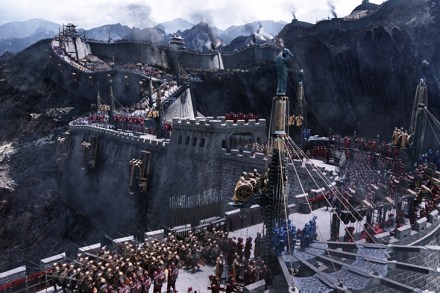
It’s kind of surreal being here.’ The general sentiment, no doubt, of most people on planet Earth right now, but the specific words of Matt Damon at the world première of his latest film earlier this year. The reason for his befuddlement? The film was The Great Wall, for which he had moved to China for half a year with his family. But the première was taking place beneath the extravagant pagoda of Grauman’s Chinese Theatre on Hollywood Boulevard. From actual China to Los Angeles’ idea of China — no wonder Damon found it weird. Yet, as so often happens in Hollywood, the weird could well become the way of things.

High life | 23 March 2017

From our UK edition

A cloudless sky, crunchy spring snow, longer, warmer days. I’ve finally got in some good skiing, twisting around moguls like an arthritic champ. It’s all in the mind, as my old wrestling coach used to tell me. If you think the other guy’s better, you’re bound to lose to him. The same goes for the slope. If it scares you, stay in the club and have another drink. Otherwise, attack it with gusto and feel like a champ again. The same applies to the fairer sex. If you’re too nervous to speak to her, keep moving. We have four of the prettiest young women at The Spectator, all taken alas, and I’ve managed not to make a fool of myself with any of them (well, a tiny bit with one of them, but what the hell, no one’s perfect).

The good, the bad and the ugly

From our UK edition

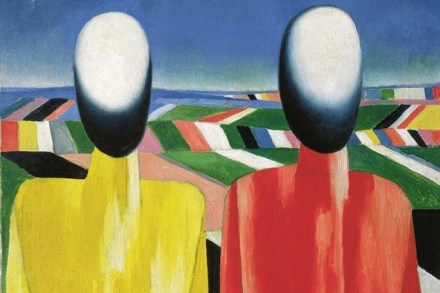
Vladimir Putin notoriously declared the collapse of the Soviet Union in 1989 to be one of the greatest disasters of the 20th century. However, as Revolution: Russian Art 1917–32 — an ambitious exhibition at the Royal Academy — helps to make clear, the true catastrophe had occurred 82 years earlier, in 1917. Like many of the tragedies of human history, the Russian revolution was accompanied, at least in the early stages, by energy, hope and creativity as well as by murderous cruelty and messianic delusion.

Still giving peace a chance

From our UK edition

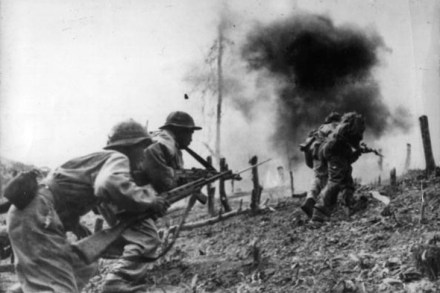
Tibetans were once fabled warriors. Their empire, at the summit of its power in the eighth century, extended to northern India, western China and central Asia. The Arabs, making inroads into central Asia, were in awe of them. And China, according to an inscription commissioned to memorialise Tibet’s conquest of the Tang Chinese capital of Changan in 763, ‘shivered with fear’ at their mention. But the Tibet annexed by Mao Zedong in the 20th century bore no trace of its imperial past. When the People’s Liberation Army struck in 1950, Tibet, having metamorphosed over a millennium into a reclusive hagiarchy, possessed neither the vocabulary to parley with the communists nor the strength to resist them. Its response to this worldly threat was to retreat into ritual.

A Berlin Wall moment for political correctness

From our UK edition

Because we’re all so obsessed with what it was that made the Nazis tick, we tend to overlook the bigger mystery of how hundreds of millions of people, for a period considerably longer than the lifespan of Hitler’s Germany, remained under the spell of communism. This is a question that Czeslaw Milosz set out to answer in his 1953 classic The Captive Mind. Milosz was a Polish poet, prominent in the underground during the Nazi occupation, who served as a cultural attaché with Poland’s post-war communist regime before quitting in disgust and fleeing to the US, where he taught at Berkeley and achieved eminence as a Nobel-prize-winning dissident exile.

Adult entertainment | 26 January 2017

From our UK edition

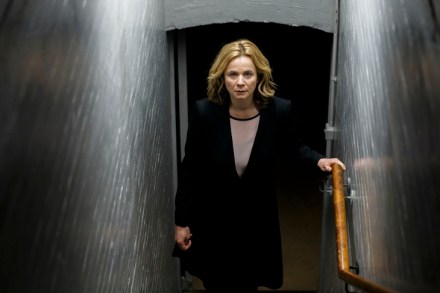
The mid-life crisis novel, I think it’s fair to say, is traditionally a male form. But in Louise Doughty’s Apple Tree Yard, the person feeling a bit trapped in what might seem a pretty nice life — while also fretting about how much (or how little) sex the rest of it will contain — is fiftysomething Yvonne Carmichael: wife, mother and all-round radiator of female competence. In BBC1’s adaptation of Apple Tree Yard (Sunday), Yvonne was first heard giving us a brief meditation on the provisional nature of civilised behaviour — a voiceover, it turned out, being delivered as she travelled in the back of a prison van.

Red with the people’s blood

From our UK edition

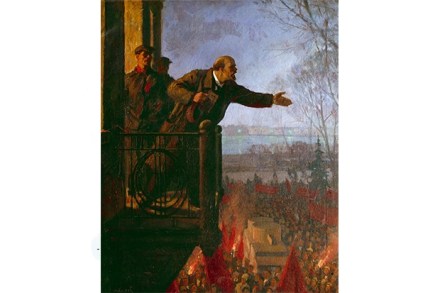
Few 20th-century historians doubted that the 1917 Russian revolution was one of the most influential events of their time, indeed of all time. As the centenary commemoration approaches, however, it seems remarkable how far and how fast the ideology that inspired Lenin and millions of his worldwide followers has receded in significance. Many are the imperfections of capitalism, but almost nobody outside Jeremy Corbyn’s office any longer supposes that communism, least of all the old Soviet brand, offers a credible alternative. This would amaze our grandparents’ generation on both sides of the struggle. The novels of C.P. Snow are indifferent fiction but intriguing middle-class social history.

On the road | 1 December 2016

From our UK edition

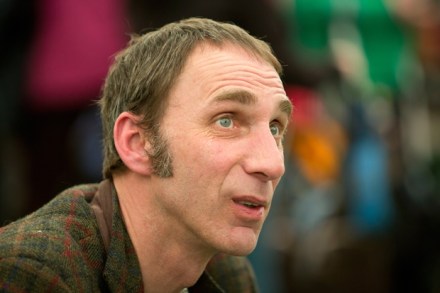
‘We’re going to get lots of negative attention from environmentalists,’ he cackled, great puffs of blue-grey smoke emerging from the exhaust of his two-stroke car. Will Self was crossing Tower Bridge in a Trabant, that most potent symbol of the East German socialist state, bending almost double to fit himself round the steering wheel (he’s six foot five inches in his socks) and cursing the lack of wing mirrors. Things could only get worse as he and his old friend Michael Shamash set off on their 700-mile trek across the Channel to Zwickau, in the former GDR, home of the Trabant car. Imagine trying to merge on to a German autobahn in a car made of resin and cotton that has no mirrors and starts vibrating in an ‘ugly way’ as soon as you reach 80km/h.

Jeremy Corbyn’s celebration of Castro proves that he’s not a serious leader

From our UK edition

Just when you thought the story of the Labour Party in the 21st century couldn’t get any more tragic, Jeremy Corbyn decided to issue a statement celebrating the life of a totalitarian leader who tortured and murdered his opponents. I wonder how many people will be ripping up their membership cards after Corbyn's comments on Fidel Castro. Perhaps not many, because Castro’s Cuba acted for so long as a lodestar for those who still see the United States as the greater evil in the region: a predatory colonial force holding the poor of Central and South America as hostages to neo-liberalism. A country without adverts, but with a functioning health service, 99 per cent literacy, the Buena Vista Social Club and Carlos Acosta: now that, they say, is surely something to admire.

The Marx Memorial Library

From our UK edition

There’s a small corner of Clerkenwell where the communist dream never died. The Marx Memorial Library has been in its big, classical 1738 building — originally a school for children of Welsh artisans living in poverty — for 83 years. The library was set up in 1933, the 50th anniversary of Karl Marx’s death. British Marxism and communism have faded, but the library still has a brigade of staunch supporters. Jeremy Corbyn, whose constituency is just up the road in Islington, is a regular visitor. To tour the library is to return to the 1930s when communism was at its height — when Philby, Burgess, Maclean and Blunt were full of gleaming-eyed optimism about the wonders of Soviet Russia.

Enemies of history

From our UK edition

At the start of the 21st century, no one felt the need to reach for studies of ‘third-period’ communism to understand British and American politics. By 2016, I would say that they have become essential. Admittedly, connoisseurs of the communist movement’s crimes have always thought that 1928 was a vintage year. The Soviet Union had decided that the first period after the glorious Russian revolution of 1917 had been succeeded by a second period, when the West fought back. But now, comrades, yes, now in the historic year of 1928, Stalin had ruled that we were entering a ‘third period’ when capitalism would die in its final crisis. As the Wall Street crash was only months away, this was not as fanciful as it seemed.

Why do we indulge the crimes of the Left?

From our UK edition

What a strange human being the historian Eric Hobsbawm was. I was reminded of this the other day while reading a new report by the New Culture Forum on attitudes to Communism almost a century after the Russian Revolution. It includes this exchange between Michael Ignatieff and Professor Hobsbawm: Ignatieff: In 1934 ... millions of people are dying in the Soviet experiment. If you had known that, would it have made a difference to you at that time? To your commitment? To being a communist? Hobsbawm: ... Probably not. Ignatieff: Why? Hobsbawm: Because in a period in which, as you might say, mass murder and mass suffering are absolutely universal, the chance of a new world being born in great suffering would still have been worth backing ...

Death metal

From our UK edition

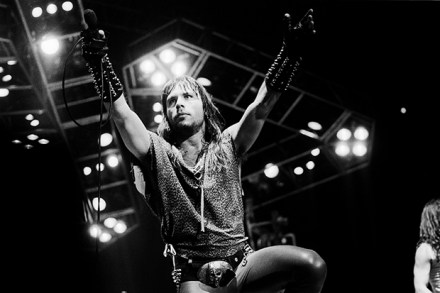
With its loud guitar riffs and even louder fashion, heavy metal has always been ripe for ridicule. In its mid-1980s heyday, it was epitomised by the fictional rock group Spinal Tap prancing on stage next to an 18-inch polystyrene model of Stonehenge while clad in ball-crushingly tight trousers and floor-length capes. In some parts of the world, however, metal is no laughing matter. In the Middle East, for instance, the potential punishment for wearing all black while wielding an electric guitar is death. These days, against a backdrop of authoritarian suppression in countries such as Iran and China, heavy metal’s trademark theatrics and widdly guitar solos have become less an opportunity for gentle mockery than a rallying cry for artistic freedom.

The bane of Albania

From our UK edition

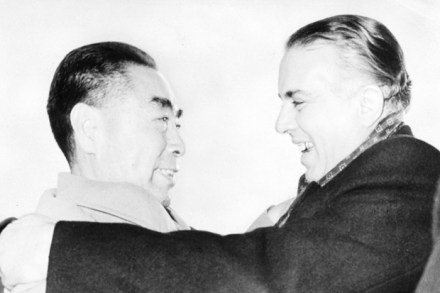
In his final public appearance, the Albanian dictator Enver Hoxha addressed a Tirana crowd to commemorate the capital’s liberation from German invaders on the 28 November 1944. The Hoxha who had entered the city as a communist partisan was now a weak old man. He was often confined to a wheelchair, had to be hoisted on to his podium using a custom-built lift and was only prevented from falling by camouflaged safety rails. The dictator was deeply vulnerable but still formidably powerful.

A topsy-turvy world

From our UK edition

‘A crane fell on top of me in Kladno in 1952, after which my writing got better,’ Bohumil Hrabal (who died in 1997) once wrote, with typical self-deprecation and comic timing; but there are other versions of what made him change from being an almost rococo engineer of magic realism (‘building my house from the roof on down’, as he put it) to the flawlessly brisk comic writer he became. (Another story: a dry-cleaner’s receipt which said ‘some stains can be removed only by the destruction of the material itself’). He was sent, along with tens of thousands of other white-collar workers, to a factory; in his case, the steel mill in Kladno (named, curiously enough, after Wittgenstein’s mother).

Communism kills

From our UK edition

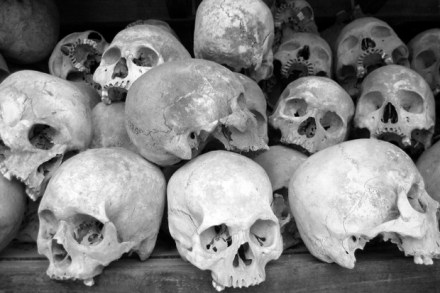
I went to Budapest last year and did the usual touristy things. I climbed up the hill to the fantasy castle walls in Buda. I took a boat ride. I went to the Turkish baths — edging cautiously into scalding hot water and then summoning up the courage to tip a bucket of cold water over myself. Finally, I reached the grim end of the tourist trail: the so-called House of Terror. On the outside, it looked like every other Hungarian house on the boulevard. Inside, it was a museum set up in the actual place where first Nazis, then communists, inflicted imprisonment, terror and murder. Visiting it was a powerful emotional experience. You see the actual basement cells where prisoners were tortured or hanged.

Left without pleasures

From our UK edition

At a party recently I started talking to a friendly, charming woman and we established early on that she was left-wing. We chatted about this and that and for some reason I asked her if she played golf. ‘Oh no,’ she replied. ‘As I’m left-wing, I am not allowed to play golf.’ I was taken aback. Here was a soul who would go to her grave without ever experiencing the thrill of watching her drive soar into the air and race more than 200 yards down the middle of a fairway. A feeling akin to pity brushed across my mind. Concerned, I asked if there was anything else she was not allowed to do. ‘I suppose I am not allowed to play bridge, either.

Sixty years on

From our UK edition

The book of the year has long been a favoured genre in popular history, and is a commonplace today. While a book of hours endlessly recycles, the point of the book of the year is change, the more the better. There is an implied contest between years — you say 1917 is the most important; I trump you with 1940, or 1968 or 1979…. It is at once a rather silly genre, potentially nothing more than a dreary compendium of novelties, and one with distinct possibilities, as illustrated by both these books taking on 1956, one globally, one for Britain. Simon Hall’s approach is to write the story of a year in global history, by moving through the Americas, Africa and Europe, taking up the story of particular events as they happen at the rate of over one a month.

Class of ’83

From our UK edition

No one remembers this now but there really was a period, not so long ago, when the Eighties were universally reviled as the ‘decade that style forgot’. For a time it got so bad that none of us survivors could even bear to look at old photos of ourselves: mullets, feather cuts, Limahl-style bleaching, pastels, legwarmers, unflattering suits so boxy they made you look broader than you were tall... But try telling this to the kids today and they won’t believe you. The Eighties, as far as they’re concerned, are so achingly, incredibly, bleeding-edge cool that there’s no way their parents could possibly have lived through them and, ‘Oh, by the way, Dad, do you mind if I take that old jacket of yours back to school?