Communism

The rotten legacy of communism in Albania

From our UK edition

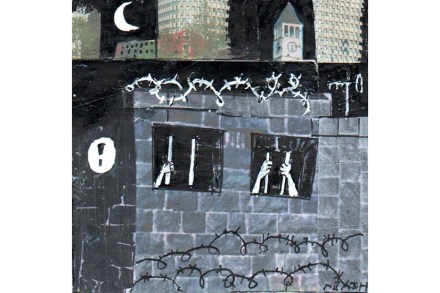
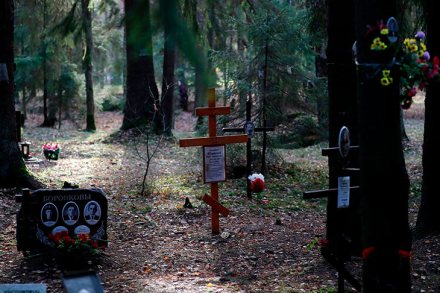
Our heavily laden taxi turned off the main highway from Tirana and started to negotiate the rough, one-track road. The road wound its way around the edges of the mountains until we reached the ruins of Spaç prison, once a slave labour camp in the communist era of Albania. Two three-storey buildings housed the large cells where 54 men at a time had lived and slept. They were required to work gruelling shifts, filling metal wagons with copper ore and pushing the along uneven rails, some of which were under water. If they failed to fulfil their quota, they would have to do a second shift. And if they failed again, they would be put in a punishment cell. That meant sleeping half-starved in a tiny cell on a concrete floor. The temperature could fall to minus 18˚C.

Biden’s Brezhnev vibes

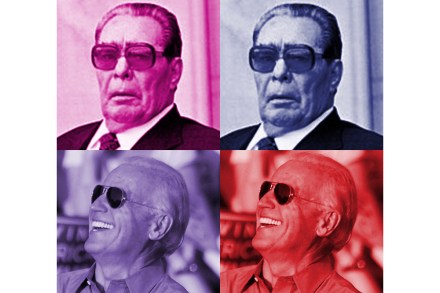
Like many other Americans who had the misfortune to live under socialism, I’ve been having lots of flashbacks lately. In particular, I find that the presumptive President-elect Joe Biden gives out serious Brezhnev vibes. The general secretary of the Soviet Union from 1964 to 1982, Leonid Brezhnev was not a healthy man. He was a chain-smoking workaholic who’d been appointed to a series of very stressful positions — you try to rise in ranks under Joseph Stalin. He served in World War Two, when he was wounded, and suffered a concussion. Brezhnev’s mind and body took a toll; his first, minor stroke happened in 1951, when he was still in his forties.

brezhnev

Are liberal conservatives now history?

From our UK edition

It was a luminous late August sunset, and we were in France, dining outdoors with some friends who have a magical, charming place in the countryside there. We were discussing audiobooks of the kind you could listen to on a long car journey and I mentioned how Julian, my partner, and I had enjoyed my Times colleague David Aaronovitch’s memoir of childhood and youth, Party Animals: My Family and Other Communists. If you haven’t read it, do. David’s family were hardline members of the British Communist party. He was brought up to believe that ‘God Save the Queen’ was an anthem of imperialist oppression, and the revolution, hopefully peaceful, was perhaps just around the corner.

Welcome to authoritarian Hong Kong

From our UK edition

The national security law in Hong Kong has been passed for just over a month, but the scope of Beijing's plans are now clear. This is a constitutional coup. The safeguards which have historically defended human rights in Hong Kong have been shattered. Rule of law has been replaced with rule by law – and the Communist Party's word is law. Thursday 30 July brought home the reality of the new status quo. Hong Kongers woke up to the news that four young people aged between 16 and 21 years old – representing a small group of students who campaigned for Hong Kong independence last year – heard a midnight knock on the door and were arrested. Their crime? Posting on social media, or ‘organising and inciting secession’ in the new dystopian Hong Kong.

The forgotten victims of communism

From our UK edition

I just read a piece by Scott McConnell in the American Conservative, a magazine we co-founded 18 years ago. He writes about how the victims of communism are less commemorated than those of fascism. The death toll under communism was 100 million (see the Black Book of Communism). And as the mass murders continued, your Cambridge Joseph Needhams and his fellow apologists insisted that Maoism represented mankind’s best hope. Maoism never received the moral obloquy that Nazism did. The United States Holocaust Memorial Museum, which documents the horrific enormity of the Nazi project, has had 40 million visitors since 1993; the victims of communism are marked by a ten-foot statue in a tiny park near Union Station, tended by private donations.

It was Bevin, not Bevan, who was the real national treasure

From our UK edition

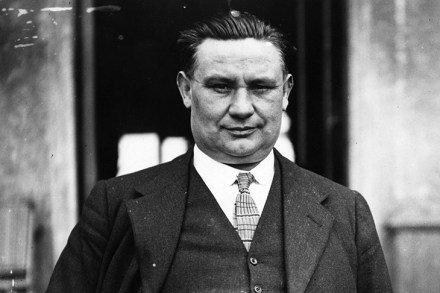
On a family holiday almost 40 years ago I visited Winsford, the village on the edge of Exmoor where Ernest Bevin was born (and Boris Johnson was raised). Having read the first book in Alan Bullock’s scholarly three-volume biography, I’d become a convinced Bevinite (not to be confused with the followers of Nye Bevan, his near namesake and bête noire). As it was the centenary of Bevin’s birth I expected to find some kind of commemoration, but there was nothing apart from a faded plaque on the cottage he was born in. I asked the woman serving in the Post Office opposite if I’d missed anything, but she’d never heard of the great man.

The future will not follow any of the already imagined Hollywood movie scripts

From our UK edition

We often hear that what we are going through is a real life case of what we used to see in Hollywood dystopias. So what kind of movie are we now watching? When I got the message from many US friends that gun stores sold out their stock even faster than pharmacies, I tried to imagine the reasoning of the buyers: they probably imagined themselves as a group of people safely isolated in their well-stocked house and defending it with guns against a hungry infected mob, like the movies about the attack of the living dead. (One can also imagine a less chaotic version of this scenario: elites will survive in their secluded areas, as in Roland Emmerich’s 2012 where a couple of thousand selected survive – with the admission price of $1 billion per person.

The bloody decade: think America’s divided now? Try the 1970s

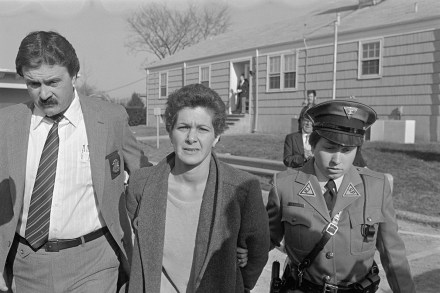
Late on the afternoon of November 29, 1984, Susan Rosenberg and Timothy Blunk were loading boxes into a blue Oldsmobile Cutlass sedan and a U-Haul trailer parked at a self-storage facility in Cherry Hill, New Jersey, not far from Philadelphia. The boxes were heavy, so despite the autumn chill and the wind, Rosenberg and Blunk were working up a sweat. Both wore glasses as part of their disguises. Blunk had an ill-fitting wig that he barely managed to keep on his head. An FBI wanted poster called Rosenberg armed and extremely dangerous, and the Bureau wasn’t wrong. On the front seat of the Olds, purses held semiautomatic pistols — an Interarms Walther PPK .38 caliber and a Browning Hi-Power 9mm. They were both fully loaded.

susan rosenberg

Anglo-Chinese misunderstanding: an Oxford don visits 1960s Beijing

From our UK edition

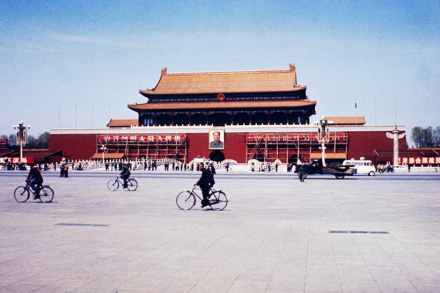
This book is a rather startling depiction of Hugh Trevor-Roper’s involvement with the Society for Anglo-Chinese Understanding (SACU), his sponsored visit to China in October 1965 (just months before the Cultural Revolution got under way) and his efforts to find out who actually controlled and funded SACU. Having been induced to be a sponsor of the society on legitimate grounds of interest in China and its history, Trevor-Roper was a last-minute addition to a delegation visiting Beijing and Xian. He was promised freedom of movement and access, though the reality turned out quite differently.

I’d rather live under communism than the tyranny of social media

From our UK edition

At the time it felt like a century, but it was only 12 years. I began this column in 1977 and the Berlin Wall came down in 1989, which meant an end to the anti-communist tracts that my first editor, Alexander Chancellor, described as quasi-fascist efforts to subvert democracy. By 1977 I had been trying to get something published in The Speccie for a couple of years. I only achieved it when I abandoned right-wing politics and wrote about how one could always tell an Englishman abroad. (Brits would use flashlights to check their bill in dark and crowded Parisian nightclubs, making them persona non grata with waiters at Jimmy’s.

He saw it all

From our UK edition

Apart from a passionate relationship with the common toad, what do George Orwell and David Attenborough have in common? H.G. Wells is the answer. The self-consciously ‘great’ old man’s bad, yet gripping, writing about utopias profoundly influenced Orwell. And Attenborough, as a lad, was entranced by Wells’s extravaganza A Short History of the World — biology,  space science, archaeology, the past and the future, all delivered for children in digestible weekly parts. Attenborough said he derived from it the idea that you ought to know about everything. This ambitious lack of boundaries that they received from Wells liberated both men.

The New Republic’s useful idiot tour

'To live in Havana', Graham Greene once wrote, 'was to live in a factory that turned out human beauty on a conveyor belt.' To work as Cockburn does, as an underfed Grub Street hack, is to work in an industry that turns out pointless emails on a conveyor belt. Every now and then though a real diamond rolls out of the coal chute. On Friday The New Republic invited its readers on a Caribbean jaunt – to Raúl Castro’s Cuba. Under the heading 'Discover Cuba and Support the Cuban People' the email read: 'While Trump petulantly restricts travel to Cuba, The New Republic invites you to discover the culture, society and politics of the island, and most of all bolster the people of Cuba when they need it most.

cuba the new republic

How to fight Bolshevism

From our UK edition

From 10 May 1919: The heart of the country is always for moderation. Nothing could show this more plainly than the recent by-elections. It was felt that the Prime Minister had been given too clean a sheet of paper to write his policy on, and that it would be good for him to feel that the country had criticism to offer, and was, moreover, able to put on the curb. But this balancing process was not, and never is, a violent swoop towards pulling down everything that exists. There was certainly nothing revolutionary in it.

Eric the Red

From our UK edition

Sir Richard Evans, retired regius professor of history at Cambridge, has always been a hefty historian. The densely compacted facts in his books, the evidence of an inexorable mind incessantly at work, the knock-out blows that he has dealt to adversaries from David Irving upwards — they all characterise authoritative books by a hard-man among scholars. But in retirement, it seems, the great man is mellowing. His latest book — a biography of his friend, the historian Eric Hobsbawm — is a masterpiece of gentle empathy. Hobsbawm was born in 1917 in Alexandria, where his father (a naturalised British citizen of Polish origins) worked for the Egyptian Post & Telegraph service. His mother’s family were jewellers in Vienna.

Europe ‘resurgent’

From our UK edition

When I reviewed the first volume of Sir Ian Kershaw’s wrist-breaking history of the last 100 years of Europe, To Hell and Back, in these pages exactly three years ago, I compared our continent in 1945 to a punch-drunk boxer rising from the canvas with both eyes blacked. How, I wondered, would Kershaw handle the battered old bruiser coping with a not-so-brave new world in which he was no longer the undisputed champ? The image of the wounded fighter, I think, was apt, for the red thread running through Europe in the first half of the century, as Kershaw rightly saw, was violence. States waged catastrophic war on each other and on their own citizens. Belonging to the ‘wrong’ race, religion, or political persuasion could mean imprisonment, torture and violent death.

No apology is ever enough for the digital mob

Promoting physical fitness, the left has developed a bracing set of competitive callisthenics. Participants vie over who can complete a marathon crawl on the belly like a reptile, who can flop onto the floor in a pose of the greatest prostration, and who can bend over the farthest, pants down, while begging to have large pieces of furniture shoved up the backside. Athletic displays of public remorse also constitute an increasingly popular spectator sport. The young American poet Anders Carlson–Wee was excited at first about getting ‘How-To’ published in a July issue of the Nation, a storied New Statesman-style weekly.

No apology is ever enough for the digital mob

Promoting physical fitness, the left has developed a bracing set of competitive callisthenics. Participants vie over who can complete a marathon crawl on the belly like a reptile, who can flop onto the floor in a pose of the greatest prostration, and who can bend over the farthest, pants down, while begging to have large pieces of furniture shoved up the backside. Athletic displays of public remorse also constitute an increasingly popular spectator sport. The young American poet Anders Carlson--Wee was excited at first about getting ‘How-To’ published in a July issue of the Nation, a storied New Statesman-style weekly.

The rebirth of Radical Chic

From our UK edition

Are we witnessing the rebirth of Radical Chic? That was the term coined by Tom Wolfe in his 1970 essay about the party given by Leonard and Felicia Bernstein for the Black Panthers at their 13-room penthouse apartment on Park Avenue. It described a weird trend, beginning in the late 1960s and peaking in the early 1970s, whereby the crème de la crème of New York’s moneyed elite embraced radical left-wing causes, such as the anti-war movement and black power. They did so without irony, seemingly oblivious to the absurdity of trying to ‘stick it to the man’ while living on trust funds established by their robber baron forefathers.

The Spectator Podcast: Trump’s peace plan

From our UK edition

Earlier this week, Trump met Putin. But beneath the outcry against Trump’s press conference, a peace plan for Syria was slipped out. Is America withdrawing its troops and leaving Assad in place? We also ask – should we push back the March 2019 deadline for Brexit negotiations? And last, why is communism still chic? While the Twittersphere obsesses over Trump’s Helsinki press conference, a peace plan for Syria was designed, one that would see President Assad stay in place after years of civil war. Middle East expert John R Bradley explains the complex regional relations in this week’s cover – Israel and the US both want Iran out of Syria, and Russia has agreed to help with that, provided it gets access to the warmwater ports in Syria it has always wanted.

Does Teen Vogue understand what it means to be ‘literally a communist’? | 17 July 2018

If anyone wanted an encapsulation of the screwiness of our times just consider the following straight question being asked of an interview subject. ‘How does being a communist impact your view of the US presidency, whether it’s Obama or Trump?’ And then consider that this pleasant question was being asked by Teen Vogue. It was posed to a young woman called Ash Sarkar who writes for an obscure blog named Novara Media.  Last week Sarkar had her 15 seconds of fame when she managed the impossible and appeared to out-arrogant Piers Morgan in a television shouting-match ostensibly about Donald Trump’s visit to the UK.