Communism

Gorbachev was no saint. But he was a kind of hero

From our UK edition

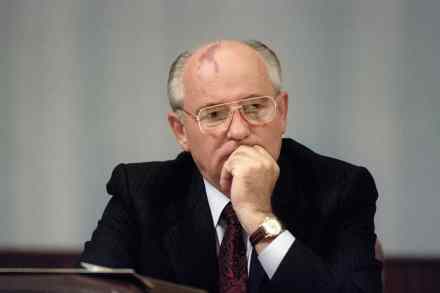
Mikhail Gorbachev is dead at the age of 91, and in a way I feel orphaned. I became fascinated by what was still then the Soviet Union in its late years of sclerosis, when one moribund geriatric at the top of the system succeeded another (the dark joke at the time went as follows: a KGB guard stopped someone at one of the state funerals and asked him if he had a pass – ‘oh,’ came the reply, ‘I’ve got a season ticket’). But my early years as a Russia-watcher were during his time as General Secretary, and if my seniors had become used to the idea that the USSR was a stagnant, unchanging police state, for us, the thought that there could be change, even change for the good, was baked into our assumptions.

Is self-loathing the British disease?

From our UK edition

Whatever one thinks of the government’s plans to send refugees to Rwanda, it was amusing to see this country’s left suddenly finding all sorts of reasons why only the UK – ‘a cake-filled, misery-laden, grey old island’ according to Emma Thompson, patron of the Refugee Council – would do as a final destination for these poor people. It was especially ironic that the place which the great and the good decreed unfit for humane habitation was a country of which liberals have historically approved: France. The phrase ‘French flu’ was coined in the 1950s to describe the cultural cringe of British progressives towards France as the source of all things civilised.

The sin of neutrality

From our UK edition

Yet again, millions of civilians across the Horn of Africa are starving. The world blames the crisis on drought and climate change, which nowadays is the way we excuse these countries for environmental mismanagement. But as ever, war is really the single greatest reason why people are killed year after year in this region. And while western countries pour billions of dollars of food aid into Ethiopia, Somalia and South Sudan, the weapons flooding those states originate mainly from Russia, China, Belarus – and Ukraine. In response to an article I recently wrote in The Spectator about why I think so few African governments condemn Russia’s invasion of Ukraine, I have had the usual deluge of ad hominem attacks so familiar to anybody who dares to criticise African governments.

Why Russians celebrate monsters

From our UK edition

Nobody knows how long people live in Dzerzhinsk – life expectancy statistics for the Russian city, 250 miles east of Moscow, aren’t released to the public. In the days of the Soviet Union, it was closed to outsiders and left off official maps, but those in neighbouring Nizhny Novgorod joked that residents must have purple skin and second heads because of the emissions from its secretive chemical weapons plants. In recent years, however, it has gained notoriety as one of the most polluted places on the planet, with a study after the fall of the Iron Curtain reporting locals usually died in their mid-forties.

The strange ideology that could be driving Putin

Vladimir Putin’s motives in attacking Ukraine have become the subject of many deep and searching speculations. Is he seeking a personal legacy by attempting to reassemble the parts of the Soviet Union that fell asunder? Is he pursuing Russian national security by making sure Ukraine never becomes the frontline of NATO? Is he gleefully taking advantage of a weak and incompetent US president? Is he vindicating the glorious history of the KGB? These theories are not mutually exclusive, and there are many more possibilities. I want to enter the discussion from my nearly pristine ignorance of Russian geopolitical designs.

eurasianism

Russia is the West’s great tragedy

The books written about the tragedy of the Russo-Ukrainian War will be legion. In the meantime, there's another book that ought to have been written 20 years ago about a previous tragedy concerning Russia: how, following the collapse of the Soviet Union in 1991 and with it the demise of the communist regime, Russia and the West failed to “converge” in some way. Why did the two did not come to embrace each other politically, economically, and culturally? The rivalry between East and West has since 1917 been fundamentally an ideological and not a nationalist one. Historically, before the Bolshevik Revolution, Washington had been on cordial terms with Moscow, from which it had purchased the Russian territory of Alaska in 1867.

us-russia

Putin’s neo-communism is doomed to fail

From our UK edition

It is responsible for inequality. For financial instability. And probably for poverty, racism and global warming as well. We have heard a lot about neoliberalism over the last 20 years. But now Vladimir Putin’s Russia is going in completely the opposite direction. The world is about to witness an experiment in what can only be described as neo-communism. The twist is that, unlike its liberal counterpart, it will be a complete failure – and the best thing the West can do is wait for it to implode. A Big Mac is not going to be any better when it is grilled by the Russian government Over the last three weeks since Russian soldiers moved across the border into Ukraine it has become clear that Putin is trying to recreate a Soviet empire.

The truth about my father, Philip Guston

From our UK edition

Philip Guston’s later work is — and I say this with love — nails-down-a-blackboard weird. The vapid pinks and flat reds lend a nightmare cheerfulness. The menacing American figure wearing Mickey Mouse gloves is rendered in cartoonish style. The clock shows it is time to panic, challenging you to call out the hood for the Ku Klux Klan symbol it appears to be. By the time he started making these paintings, in 1968, Guston was pretty much post-everything: post-realism, post-abstract expressionism, post-criticism (he and his wife Musa sailed to Italy the day after the show’s opening night, and when a review found him in Venice, poste restante, he dropped it in a canal).

What the Russians thought of James Bond in the 1960s

From our UK edition

Last year I wrote a piece about James Bond for the ‘Freelance’ column of the Times Literary Supplement. All true Bond lovers — of the novels, I mean — know that he lived in a ‘comfortable flat in a plane-tree’d square off the King’s Road’, as Ian Fleming described it in Moonraker. Further internal evidence in Thunderball indubitably established that it was Wellington Square — but there was considerable mystery and doubt about exactly which house contained the Bond apartment. In my article I claimed to have identified it as No. 25, based on a certain amount of sleuthing and, I thought, convincing circumstantial evidence. No.

Who won the Cold War, anyway?

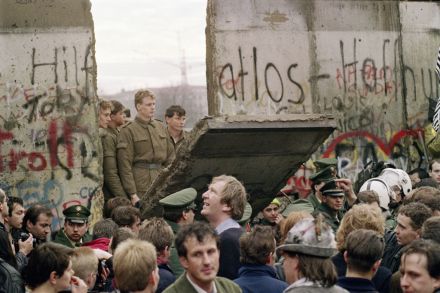
Thirty years ago this December 26, the impossible happened. One of the bloodiest states of the twentieth century (a horrific and highly competitive category) dissolved without violence. The Union of Soviet Socialist Republics had all but ended months earlier, when Russians took to the streets to defy the communist hardliners who had seized the government from an impotent Mikhail Gorbachev. That popular countercoup was itself largely bloodless: the soldiers called upon to enforce the hardliners’ rule refused to shoot their own countrymen. The Cold War is often said to have ended with the toppling of the Berlin Wall in 1989. Had things turned out differently in Moscow two years later, the struggle might well have resumed.

Cold War
lévy

What Bernard-Henri Lévy sees for the West

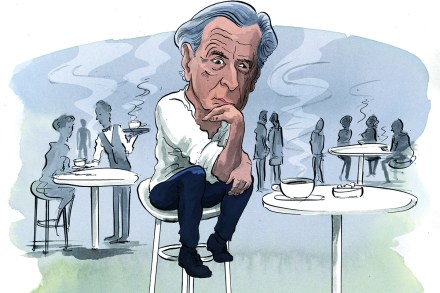
I meet Bernard-Henri Lévy at his apartment in central Paris on a chilly autumn afternoon. Considerations of security prohibit me from revealing its location. A French Jew who is a public and vocal enemy of both Islamism and some of the world’s worst regimes, Lévy is both perhaps the most important public intellectual in Europe, and a man with enemies. I have come to ask him about the future of the West — if, that is, he feels there will be one. Lévy, internationally known by his initials BHL, is a philosopher who has been at the heart of French — and international — society for half a century. But he remains an idiosyncratic figure.

Was the US involved in neo-fascist Italian terrorism?

From our UK edition

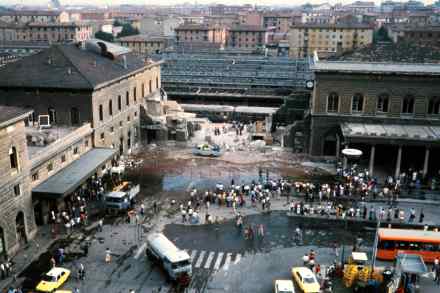
Last month, Italy’s Prime Minister Mario Draghi promised to declassify government documents involving two organisations: Gladio, an anti-communist paramilitary group linked to Nato and the CIA, and a masonic lodge known as P2. These two groups are believed by some to have been involved in the darkest moments of post-war Italian history. For much of the latter half of the 20th century, Italy had the unenviable position of being the epicentre of European terrorism. The blast at the Bologna train station in 1980, which left 76 people dead and more than 200 wounded, was at the time the bloodiest terrorist attack ever suffered by a European country. The bombing was pinned on a small neo-fascist militia called Armed Revolutionary Nucleus.

Tales from the Gulag: why I’m helping survivors tell their stories

From our UK edition

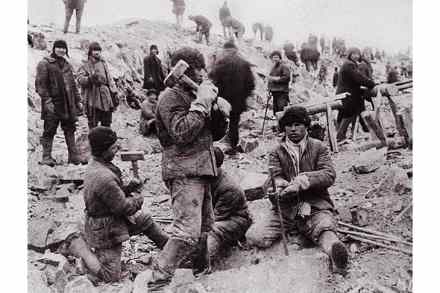
I trudge up the concrete stairs of a council block of flats in west London. Up three floors. Then along one of those outside corridors, past several doors until I reach the final one. It is already open and there she is — smaller than I remember and with a charming, friendly smile. I guess that is because Ivanna knows me better now. She trusts me more. After what she has been through, it’s not surprising that it takes time to gain her trust. She welcomes me into her little one-bedroom flat and before long, I am in a different world — a world of Ukrainians, Poles and Soviets, deportations, helping resistance fighters, being arrested… it is a world of memories which mean so much to her. She is 96, and the people she was closest to are long gone.

Communism dies at Current Affairs

Cockburn understands the appeal of communism. There are times when even he has dreamt of holding property in common — that ill-fated purchase of a timeshare in Cancun, for instance. So he understands the plight of the young idealists at Current Affairs, a magazine founded in 2016 with the mission to ‘help usher in a glorious era of democratic socialism’. Like the Soviet Union under Stalin, Current Affairs is the private kingdom of one man, in this case the dandy communist Nathan Robinson. For five years, Robinson has been all over Current Affairs like a cheap suit, while a small team of deluded volunteers has labored in his salt mine, generating content for the greater glory of the revolution, and their leader, the Potemkin page-turner. But even five-year plans go awry.

current

Hollywood’s vacuous moral turn

On today's market, we find a whole series of products deprived of their malignant property: coffee without caffeine, cream without fat, beer without alcohol... The list goes on: virtual sex as sex without sex, the art of expert administration as politics without politics, up to today’s tolerant liberal multiculturalism as an experience of 'Other' deprived of its disturbing Otherness. We should add to this series another key figure from our cultural space: a decaffeinated protester, a protester who says all the right things, but somehow deprives them of their critical edge.

black widow hollywood

The American descent into madness

Nations have often gone mad in a matter of months. The French abandoned their supposedly idealistic revolutionary project and turned it into a monstrous hell for a year between July 1793 and 1794. After the election of November 1860, in a matter of weeks, Americans went from thinking secession was taboo to visions of killing the greatest number of their fellow citizens on both sides of the Mason-Dixon line. Mao’s China went from a failed communist state to the ninth circle of Dante’s Inferno, when he unleashed the Cultural Revolution in 1966. In the last six months, we have seen absurdities never quite witnessed in modern America. Madness, not politics, defines it. There are three characteristics of all these upheavals. One, the events are unsustainable.

madness

Has Xi Jinping overplayed his hand?

The Chinese Communist party’s origin story, like so many of its official lines, appears to be an apocryphal tale. But a month-long patriotic extravaganza leading up to its centennial celebration has featured military parades, skyscrapers emblazoned with hammer-and-sickle decor and propaganda blitzes on TV. None of the agitprop raised eyebrows as much as the main speech delivered by the Chinese president and general secretary of the party, Xi Jinping, in which he marked the milestone and praised China’s ‘tremendous transformation’ and the historical inevitability of its ‘national rejuvenation’.

xi jinping

Is communism authoritarian capitalism?

On July 1, 1921, the founding congress of the Chinese Communist party was held in Shanghai, when 12 men gathered in a villa in the richest part of the city. Today, the party has over 90 million members. It has transformed not only China but the history of the entire world. The main stages in its development are well-known. In late 1920, Mao Zedong took over and reoriented the party from city workers to poor farmers. In the mid-1930s, the Long March, although a retreat, established a link between the party and the people across China. In 1949, revolution won. From 1958 till 1975, the Great Leap forward and the Cultural Revolution tried to enforce fast economic and social change.

china communism capitalism

Why the far-right flourishes in East Germany

From our UK edition

A spectre is haunting Germany — the spectre of the AfD. Having come to prominence on a wave of anti-migrant sentiment, most German commentators believed that the Alternative für Deutschland was now a spent force. The party had been able to attract centre-right voters following the 2015 migrant crisis, many of whom may not have agreed with its entire manifesto but sought a political outlet for their scepticism of Merkel’s handling of the crisis. But last year, its national polling dropped to just over half the level of support it enjoyed in late 2018. The pandemic has brought to the surface many of the AfD’s most extreme members and activists, including anti-vaxxers and conspiracy theorists. This seemed to have made them unelectable — or so we were told.

Riveting: Dear Comrades! reviewed

From our UK edition

Andrei Konchalovsky’s Dear Comrades! is based on a true event and set in 1962 in the Russian city of Novocherkassk where the local factory, the Novocherkassk Electric Locomotive Plant, went on strike. This doesn’t sound especially sexy, I know, but it is superbly acted and so rivetingly told my concentration did not waver for an instant which, given how hard it has been to concentrate lately, is high recommendation indeed. (It wouldn’t be fair to list the films I couldn’t concentrate on, as the problem is likely mine, but… Mank!) Konchalovsky certainly has a wild CV. He has worked with Tarkovsky. He made the wonderfully hypnotic The Postman’s White Nights, about a remote Russian village whose only contact with the outside world is their postman.