Communism

The United States cannot afford a 10 a.m. to 4 p.m. president

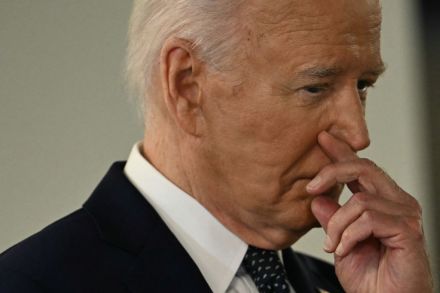
In 1927, Sigmund Freud published a book about religion called Die Zukunft einer Illusion (The Future of an Illusion). As a contribution to the understanding of religion, it is, like much of Freud’s work, both banal and outrageous. But it occurs to me that its catchy title as well as its main thesis — religion, Freud wrote, was invented to fulfill “the oldest, strongest and most urgent wishes of mankind” — has a certain pertinence to the large-scale entertainment now being offered to the public by Democrats eager to salvage the reputation of President Joe Biden.

president biden
shein

The useful influencers of Shein

The Soviets had a problem. On March 5, 1940, Stalin had given the order to massacre 14,700 Polish officers, which his vicious secret police NKVD happily did. Job well done; until they lost Poland to the Nazis, who discovered some mass graves in the Katyn forest. Goebbels began using this to paint Britain’s ally as monsters (which, in hindsight, was fair).  This was a disastrous public relations problem! And so, they turned to the press, and those like Ralph Parker of the Times of London, who traveled by caviar-supplied trains to Katyn, bedded Soviet honeypots and came back repeating the Soviet line.

The Karakachan sheepdog is a match for any bear – but not for modern society

From our UK edition

Kapka Kassabova is celebrated for her poetic accounts of rural communities dwelling at the margins of modernity, but also along a border zone in the southern extremity of her native Bulgaria. In her previous book, Elixir, her chosen people were the Muslim Pomaks of the Rhodope Mountains, with their ancient herbalist traditions. In Anima, she explores the world of transhumance pastoralists, known in Bulgarian as the Karakachan and in Greek as the Sarakatsani. It is not so long ago that the Greek component of this extraordinary sheep-herding tribe acquired cultural cachet in this country. American and English anthropologists hurried off to study and write about them (notably J.K. Campbell in Honour, Family and Patronage, 1964).

China’s role in Soviet policy-making

From our UK edition

Why should we want to read yet another thumping great book about the collapse of the Soviet empire? Sergey Radchenko attempts an answer in his well-constructed new work. Based on recently opened Soviet archives and on extensive work in the Chinese archives, it places particular weight on China’s role in Soviet policy-making. The details are colourful. It is fun to know that Mao Tse-Tung sent Stalin a present of spices, and that the mouse on which the Russians tested it promptly died. But the new material forces no major revision of previous interpretations. Perhaps the book is best seen as a meditation on the limitations of political power.

Why Tucker Carlson should have been less excited about his groceries

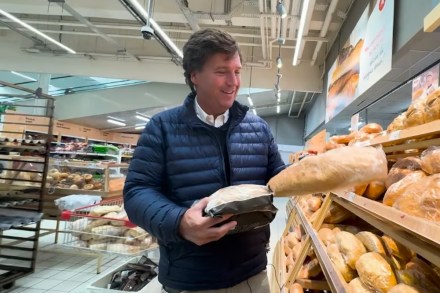
Tucker Carlson has been radicalized by a Russian supermarket. There’s a sentence you never expected to read. As part of his tour of Moscow, the week before Putin critic Alexei Navalny “died in prison,” the firebrand commentator visited a grocery store and was stunned by the low prices. “That’s when you start to realize,” Carlson marveled: …that ideology maybe doesn’t matter as much as you thought… Corruption… If you take people’s standard of living and you tank it through filth and crime and inflation, and they literally can’t buy the groceries they want, at that point maybe it matters less what you say or whether you’re a good person or a bad person, you’re wrecking people’s lives and their country.

tucker carlson groceries

Four dangerous visionary writers

From our UK edition

‘The production of souls is more important than the production of tanks... And therefore I raise my glass to you, writers, the engineers of the human soul.’ The quote is usually attributed to Stalin, though the phrase ‘engineers of human souls’ most likely came from someone else. Who’s to argue? Purges, executions, deportations – what’s a little light plagiarism in comparison? Whoever coined the phrase, it certainly struck a chord and indeed continues to ring various alarm bells whenever one comes across writers who deliberately set out to influence politics and ideas – and not just the big beasts, the Nobel Prize winners, say, or the shopfront-filling non-fiction authors hawking their wares, or the endless novelists with their little axes to grind.

An insider’s account of the CCP’s stranglehold on China

From our UK edition

All families have secrets, but few family histories are classified by the state. After the death of Snow’s father, his study is cleared out by officials from the Chinese Communist party; but Snow discovers letters and unmarked hard drives hidden in hollowed-out dictionaries that they’d missed. The material reveals that her father was a high-ranking intelligence officer in the party, handpicked to build China’s intelligence service after the founding of the new People’s Republic. He’d hidden them for his family to find. Jie provides a rare insider account showing just how much the CCP knew and how much it covered up This isn’t the set-up for a new spy novel, but a true story.

The travails of Britain’s first Labour government

From our UK edition

Once the working classes were allowed to vote it was inevitable that sooner or later they would elect a government which reflected their interests. That moment came with the appointment, in January 1924, of the first Labour government.    The circumstances could hardly have been less auspicious. There had been three general elections in as many years. No party had an overall majority. Labour, with 191 seats, was not even the largest, with the result that, throughout its short life, the government was entirely dependent on the goodwill of the Liberals, which soon ran out. With a couple of junior exceptions during the wartime coalition, no Labour MP had any experience of government.

The freedom fighters who dared to take on a communist superpower

From our UK edition

In May 2020, as the planet grappled with the pandemic, China’s state media declared that there were ‘obvious deficiencies’ in Hong Kong law enforcement needing to be addressed. Any delusions this might have referred to intensifying police brutality in response to massive pro-democracy protests, let alone the unleashing of Triad thugs to attack participants, were dashed rapidly. Details emerged days later of a draconian new security law that criminalised any form of dissent, whether at home or abroad, with threat of life imprisonment. ‘When the world is not watching, they are killing Hong Kong,’ said Dennis Kwok, a lawyer and pro-democracy legislator. He was right.

The Americans who defected to North Korea

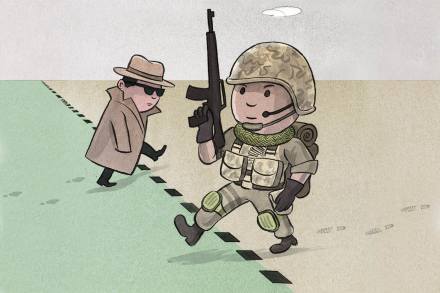
Last summer, US Army soldier Travis King ran across the Korean Demilitarized Zone into the arms of the North Koreans. It wasn’t because of some mental break or as part of a spy operation. North Korean state media claims he was motivated by racism and mistreatment — of course they would. The DPRK’s outlets have previously criticized the US for its treatment of African Americans, around the same time they compared former president Barack Obama to a “wicked black monkey.” Like the six American servicemen who crossed the DMZ before him, King probably had a mixture of reasons for his flight. Unlike in the previous cases, however, King’s detention was a short one.

North Korea

New York Times sweetheart Calla Walsh turns violent

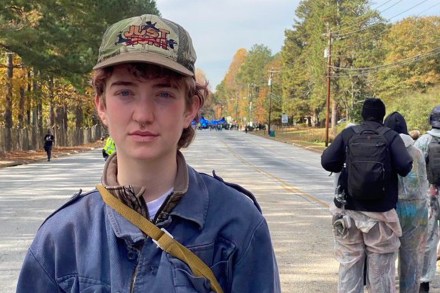
It's not often that the New York Times has a prophetic vision. In 2021, the paper ran a fawning profile of Calla Walsh, a high-schooler leading an "army of sixteen-year-olds" against Massachusetts's Democratic establishment. Now all grown up, Walsh has become a general to a fierce group of agitators. Walsh, now a committed communist, was arrested on Monday morning at a defense contractor facility in New Hampshire along with two other women. The three were arraigned on Tuesday on charges of riot, sabotage, criminal mischief, criminal trespass and disorderly conduct.   The women, along with a larger group of pro-Palestine protesters, had surrounded the Elbit Systems facility, which is allegedly involved in Israel's military campaign.

calla walsh

Is China still a Confucian country?

From our UK edition

29 min listen

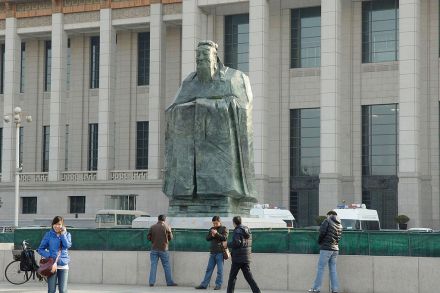
For thousands of years, Confucianism has run through the fabric of Chinese society, politics and culture. Decades of Communism has taken its toll on China, so can it still be considered a Confucian country? Joining the episode is one of the world’s leading experts on the philosophy, Professor Daniel Bell. In 2017, he was appointed the dean of Shandong University, an unusual appointment for a foreigner in China but one based on his expertise in Confucianism, in the province of Confucius’s birth. His new book, The Dean of Shandong: Confessions of a Minor Bureaucrat at a Chinese university, details some of the ups and downs of his time in that position.

Milan Kundera’s ‘transcendental buffoonery’

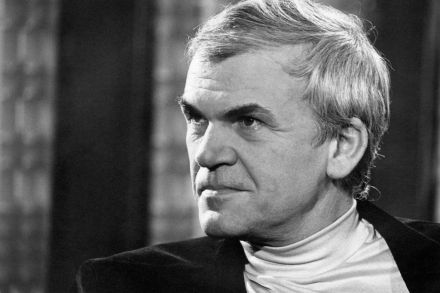
I was just leaving France when I got the news that that the Czech novelist Milan Kundera had died, aged ninety-four. He had emigrated to Paris in 1975, when he was forty-six, a refugee from the crackdown in Prague following the Russian obliteration of the Prague Spring in 1968. He died in his adopted city on July 11, full of honors but also, or so it seems to me, largely forgotten.  I had not been following Kundera’s work for many years. But there was a moment, in the 1980s, when he was the talk of the posh, intellectual literary town. I wrote a longish essay about him for the New Criterion in 1986. I draw on that work here.  Kundera was in his late thirties when he published his first novel, The Joke, in Prague in 1967.

milan kundera

The Polish miracle

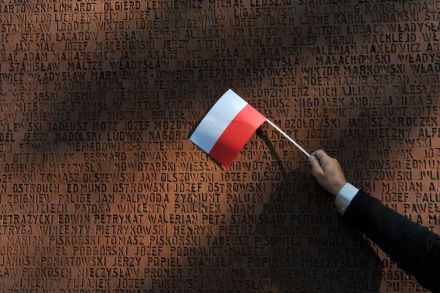
Poland’s Third Republic entered the world in 1989, after a dark period of occupation and oppression at the hands first of the Nazis and then the Soviets. As democracy was taking its first tentative steps in Warsaw, the USSR still had two years left to live and Germany was not yet unified. Yet somehow, over the next thirty-four years, Poland went from a poor post-communist state to a rapidly rising economic powerhouse and serious geopolitical force. Nothing about this rise was inevitable. Human agency, unforeseen events and providence play into every historical development — and Poland’s remarkable progress is no exception. It took leadership, will and luck. A central desire of the Polish people since long before 1989 has been to become a part of the West’s vision of Europe.

poland

Poland, 1968: the last pogrom

From our UK edition

‘Are you Jewish?’ the officious-looking Dutch diplomat asked my dad. ‘Yes’, he said, realising at that very moment, everything had changed. He was no longer Polish; the culture he had been born in, the citizenship he held, the language he spoke, the country he loved – it all meant nothing. He was just Jewish. He couldn’t be both. The diplomat stamped my father’s papers and he left for a new life in western Europe. Up to 20,000 Jews, including my mother, were hounded from Poland at the end of the 1960s. They were accused of supporting Israel in a virulent anti-Semitic campaign led by the communist government. This anti-Jewish campaign was ostensibly sparked in 1967 by the Six-Day War between Israel and its Arab neighbours, supported by the Soviet bloc.

Oneida: the nineteenth-century sex cult behind the flatware giant

If ever I write a sex farce — the demand so far has been muted — I need only head east 150 miles and detour back 150 years to the Oneida community, the utopian experiment in free love that thrived from 1848-80 before the colony’s unorthodox sexual arrangements led to its collapse — and, in a characteristically American turn of events, its road to riches. Headquartered in a sprawling mansion house — open today to visitors of all carnal habits — Oneida was a cerebral nineteenth-century soap opera awash in high-minded American radicalism and directed by the brilliant and charismatic megalomaniac John Humphrey Noyes. As a Yale Divinity School student, Noyes had declared himself free from sin: a perfected Christian.

Oneida

If Sister Nijole can be happy, so can you

From our UK edition

In the past five years I’ve met many people who’ve had direct, sometimes horrific, experience of communist rule. But I was more excited about doing a recent interview than I had been about any of the previous ones. It was going to be with a nun in a convent in Lithuania. I had imagined the scene: we would enter a large, gloomy, medieval stone convent. We would be cautiously admitted into a cavernous hallway and then ushered by a silent nun into a small, bare room for visitors. Then, dressed in black nun’s garb, Sister Nijolė Sadūnaitė would enter the room, head bowed, and sit in a plain wooden chair, her face lit only by a candle.

We love you, Uncle Xi!

From our UK edition

In 2015, I had lunch with an old chum of Xi Jinping. He described how China’s most powerful leader since Chairman Mao was born into the Communist party’s ‘red aristocracy’ but had to toughen up fast when his father was jailed in the Cultural Revolution. The young Xi briefly became a street hoodlum who swore like a trooper, smoked like a chimney and drank like a fish. He survived by turning ‘redder than red’, climbing the party ladder from a branch secretary in a lowly village all the way up to the top job in Beijing. ‘I am fond of Xi, but he is isolated from his old friends and there is a danger of emperor syndrome,’ the friend warned me. ‘I think Xi will want to rule for 20 years.

Will Russians soon realise how remarkable Mikhail Gorbachev was?

From our UK edition

Mikhail Gorbachev, the final president of the Soviet Union who died last night, was remarkable both as an international politician and as a domestic reformer. I first met him when he came to London in December 1984, when Mrs Thatcher said that she liked him and could do business with him. He was open, friendly, and spoke without notes: the opposite of his predecessors. Some of Thatcher’s own officials suspected that he was merely an old-fashioned communist who had learned new tricks, and that his charm was seducing her from her clear view of the Soviet threat. Thatcher was right, and the sceptics were wrong. By that time, the Soviet system was in serious trouble. It could just about keep up with American military technology.

Gorbachev was no saint. But he was a kind of hero

From our UK edition

Mikhail Gorbachev is dead at the age of 91, and in a way I feel orphaned. I became fascinated by what was still then the Soviet Union in its late years of sclerosis, when one moribund geriatric at the top of the system succeeded another (the dark joke at the time went as follows: a KGB guard stopped someone at one of the state funerals and asked him if he had a pass – ‘oh,’ came the reply, ‘I’ve got a season ticket’). But my early years as a Russia-watcher were during his time as General Secretary, and if my seniors had become used to the idea that the USSR was a stagnant, unchanging police state, for us, the thought that there could be change, even change for the good, was baked into our assumptions.