Comedy

In the wrong club

From our UK edition

Groucho Marx was delighted when he heard that the script for one of his old Vaudeville routines was being reprinted in H.L. Mencken’s The American Language. ‘Nothing I ever did as an actor thrilled me more,’ he said. Indeed, argues Lee Siegel in his brief biographical study of the most verbal Marx Brother, Groucho’s ‘greatest regret in life … was that he had become an entertainer rather than a literary man’. How else to explain that excruciating evening in June 1964 when Groucho and his wife dined at the home of Mr and Mrs T. S. Eliot and Groucho thought to lecture Eliot on King Lear? To be fair, it was Eliot who, three years earlier, had written to the then 71-year-old Groucho requesting a photograph of his favourite funnyman.

Being and nothingness

From our UK edition

Florian Zeller has been reading Pinter. And Pinter started out in repertory thrillers where suspense was created by delaying revelations until the last minute. He tried an experiment. Suppose you delay the revelations indefinitely. The results were interesting. Pinter’s characters were vague, stark silhouettes lacking background and substance. Audiences found them inscrutably suggestive. Zeller follows suit. He presents us with a bourgeois marriage. The father works. The mother sits at home being stylishly empty-headed. Their grown-up son lives with his girlfriend. No other details are offered. It’s evening. Mother, disported on an all-white sofa, greets her husband and languidly interrogates him about his day’s activities and casts aspersions on his fidelity.

Laughter and tears

From our UK edition

The Yacoubian Building, the first novel of the Egyptian writer Alaa Al Aswany, sold well over a million copies in 35 languages, was made into a film, and turned him overnight into one of the most listened to voices in the Arab world. What followed — Chicago, set in the city in which Al Aswany did his masters degree in dentistry, and some short stories — did not have quite the charm of his sprawling houseful of driven, troubled, passionate characters trying to survive in a country of extreme social ills. The Automobile Club of Egypt is a second Yacoubian, a saga built around an institution, rich in absurdity and colour and at the same time an important social satire and a harsh criticism of modern Egypt.

Losing the plot | 31 December 2015

From our UK edition

On the face of it, ITV’s Peter & Wendy sounded like a perfect family offering for Boxing Day: an adaptation of J.M. Barrie’s novel, with a framing story about how much Peter Pan can still mean to children today. In fact, though, the programme suffered from one serious flaw for any Boxing Day entertainment — if you were slightly drunk, slightly hungover or both, it was almost impossible to understand. Then again, I suspect that even the most weirdly sober of viewers might have struggled with a drama that never seemed to know the difference between the intriguingly suggestive and the utterly baffling. The opening sequence played to one of its undoubted strengths, with an introductory cameo from Stanley Tucci’s Captain Hook.

Tricycle’s Ben Hur is magnificent in its superficiality – a masterpiece of nothing

From our UK edition

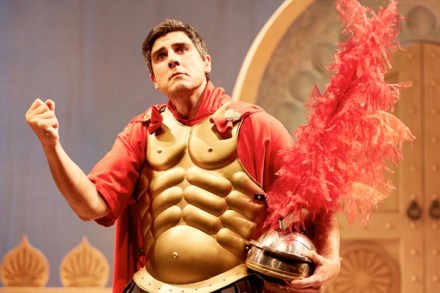
It’s the target that makes the satire as well as the satirist. Is the subject powerful, active, relevant and menacing? Patrick Barlow’s new spoof, Ben Hur, must answer ‘No’ on all four counts. The show takes aim at two principal irritants: vain actors and the Hollywood epics of the 1950s, whose titanic scale was offered as bait to audiences besotted with their cosy new TV sets. Old Hollywood is a spent ogre these days and the foibles of the acting trade are hardly a threat to civilised life, so the show can’t embrace our immediate concerns. But the execution is compellingly assured.

Beyond a joke | 3 December 2015

From our UK edition

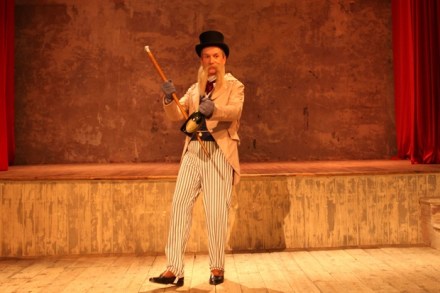
Let’s start this week with a joke: ‘You know Mrs Kelly? Do you know Mrs Kelly? Her husband’s that little stout man, always on the corner of the street in a greasy waistcoat. You must know Mrs Kelly. Well, of course if you don’t, you don’t, but I thought you did, because I thought everybody knew Mrs Kelly.’ No, I can’t claim my sides are entirely split either. Yet, according to the first episode of What a Performance! Pioneers of Popular Entertainment (BBC4, Thursday), this sort of material by the Victorian music-hall star Dan Leno marked the birth of stand-up comedy as we know and are perhaps overburdened by it today. The series’ stated aim is to explore mass entertainment from the days before television.

Shakespeare at his freest and most exuberant: The Wars of the Roses reviewed

From our UK edition

The RSC’s The Wars of the Roses solves a peculiar literary problem. Shakespeare’s earliest history plays are entitled Henry VI parts (I), (II) and (III), which is thought to put people off. If you see one why not see all? If you miss the opener will the sequels confuse you? The solution is to condense the material and to reconfigure it as a single theatrical event. The result is a revelation. Here we have Shakespeare at his freest and most exuberant cramming the stage with every blockbusting trick he can contrive. Sex, battles, conspiracies, sword fights, gorings, cuckoldings, lynchings, beheadings. And there’s a constant stream of jibes aimed at the faithless French. The action opens with the death of Henry V.

Why I won’t be celebrating Have I Got News For You’s 25th anniversary

From our UK edition

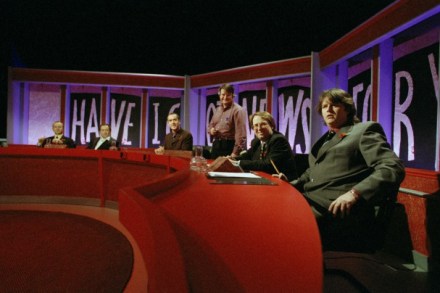
America, we're told, has been enjoying a golden age of news satire. This is largely attributed to Jon Stewart and The Daily Show, less largely to the show that followed it on Comedy Central, The Colbert Report, hosted by Stephen Colbert. The two shows developed a unique rivalry: Colbert the showman to Stewart's slightly more dour news anchor. It was a rare pairing in which two shows worked as a double act. Often the jokes of one show continued into the next, the hosts appearing in each other's studio on a regular basis. They worked beautifully together. Yet beyond Comedy Central, American satire had already been doing well. For decades, Bill Maher has been hosting shows that have been harder, meaner, and often funnier than his mainstream rivals.

Love, loneliness and all that jazz

From our UK edition

Woody Allen (born Allan Stewart Konigsberg), the prolific, Oscar-winning auteur, New Orleans-style jazz clarinettist, doyen of New York delicatessen society, moralistic nihilist and icon of nebbishes everywhere, will be 80 on 1 December. He says he hopes to sleep through the occasion, but he is already completing next year’s film, his 47th, and preparing a series of programmes for television. In the meantime, here, in homage, are two magnificently illustrated catalogues raisonnés. Both books incidentally tell the story of his life, including the time when he courted his former partner Mia Farrow’s adopted daughter, Soon-Yi Previn, and caused all media hell to break loose. He survived disapproval by working, married the girl in 1997, and they still live happily together.

A captivating prospect

From our UK edition

What could happen in literature to a young couple — or a pair of young couples — who fall off the beaten track and enter a magical place not quite of this world? They might end up, like Adam and Eve, in paradise. Or, like The Tempest’s Miranda and Ferdinand, under the control of powers greater than they can hope to understand. Or, like the lovers in A Midsummer Night’s Dream, they could find themselves unsure who they love, or whether they can ever trust what they see, or feel. Or, like Charmaine and Stan, the star-crossed heroes of Margaret Atwood’s dazzling and hilarious new novel The Heart Goes Last, which plays effortlessly with tropes from Shakespeare and Milton, they could take shelter from a world ravaged by economic crises in a prison.

Why the Reggie Perrin novel deserves to be considered a classic in its own right

From our UK edition

It was eerie the first time I watched The Fall and Rise of Reginald Perrin because it all felt so familiar. Suddenly my parents’ baffling banter made sense. When I thought they were speaking gibberish they were in fact quoting Perrin. My mother would say ‘great’ and my father would say ‘super’. My father would say things like ‘I didn’t get where I am today’ and my mother would say ‘I’m not a committee person.’ If lunch was going to be late my father would say ‘bit of a cock-up on the catering front.’ It’s difficult to overstate how thoroughly Perrin has seeped into popular culture and language.

Comic relief

From our UK edition

Mum’s, or to use its full title, Mum’s Great Comfort Food, is a restaurant in Edinburgh designed to soothe itinerant performance artists. For, in the fag days of August, as the Fringe dies — it will be reanimated next year by the blood of Citizen Puppet and Nicholas Parsons — assorted actors and comics and cabaret artists and mime artists and circus artists and ballet dancers and tap dancers and flute players and face painters and sketch performers and one-woman-show specialists (expiating rejection by standing in bins) and the guy who dresses up as Darth Vader are more ulcer than human being; and that is before we get to the clowns, who are in a special sub-section of desolation, even if Puddles Pity Party did get five stars.

Edinburgh on Thames

From our UK edition

Showstopper! The Improvised Musical offers a brand new song-and-dance spectacular at every performance. It opens with a brilliantly chaotic piece of comedy. A theatre producer on stage telephones Cameron Mackintosh and pitches him a new musical. Mackintosh answers and the producer invites ideas from the audience. ‘What’s the setting?’ Someone yelled ‘Late-night sauna’ at the performance I saw. The producer, without missing a beat, told Mackintosh that the show would be called, Sweat, Sweat, Sweat. If that was improvised it was world-class. The show develops along the lines suggested by the crowd and a number of hit musicals are parodied. The audience, I suspect, enjoyed this more than me.

Chekhov by numbers

From our UK edition

Chekhov so dominates 19th-century Russian drama that Turgenev doesn’t get much of a look-in. His best known play, A Month in the Country, was written before Chekhov was born but Patrick Marber’s adaptation, with its new nickname, feels like Chekhov scripted by a Chekhov app. Turgenev’s characters, his atmosphere and his scenarios feel entirely familiar but they lack the tragicomic gestures that give Chekhov his unique appeal. There are no fluffed murders or dodged duelling challenges. No one tries and fails to blow his brains out. We’re on a rural estate where a group of crumbling, damaged sophisticates pootle around falling in love with each other. Every affair is doomed.

Your problems solved | 30 July 2015

From our UK edition

Q. I have learned that someone I much admired in youth is about to become single again. I only have the sketchiest details but am single myself and keen to know more. The one person who knows everyone and would know everything is a valued and highly amusing friend of mine, but she is also massively indiscreet and interfering. How can I find out more without arousing her suspicions re my own interest? Were she to guess it she would overplay my hand for me. — Name and address withheld A. Look around for a newly single man of your own vintage, then mention to your gossipy friend that he seems depressed but you are not sure why. Say no more. She will start speculating and conclude that the man is in need of a partner.

Is no one having fun?

From our UK edition

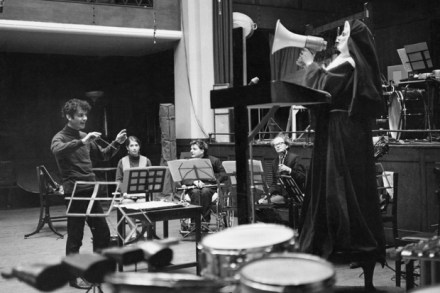
Who’d be young? Not 25-year-old Tamsin, if her behaviour is anything to go by. A classical pianist who’s never quite going to hit the heights, she devotes herself to playing for the residents of an old people’s home. She’s also acquired a boyfriend, Callum, a teacher several years her senior, for whom, when Christmas comes round, she buys an electric vegetable slicer that he’s had his eye on. The couple holiday in a run-down B&B in Ilfracombe. They are not exactly living la vida loca. But Tamsin is also suffering from a kind of arrested development — still occupying her childhood bedroom in Holland Park, where she keeps a watchful eye over her mother, Roz, since Tamsin’s father, a celebrated conductor, quit the family home for another woman.

Maestro maker | 25 June 2015

From our UK edition

The writer and director Peter Bogdanovich has made three of my favourite films of all time (The Last Picture Show, Paper Moon, What’s Up, Doc?) but I don’t think I’ll be adding his latest, She’s Funny That Way, to the list. It’s a screwball comedy of the old school and, although it is slightly intriguing at first, where is all this manic activity going? You get your answer after 96 minutes. The answer is: absolutely nowhere. Set in New York, it stars the British actress Imogen Poots laying on a Brooklyn accent with several trowels and also a spade. (Oh, how one yearns for just the one trowel.) She plays Izzy Patterson, a ‘call girl’ — never ‘prostitute’ in these instances — and straight off I’m in trouble.

If comedians can’t take a politically incorrect joke, who can?

From our UK edition

Jerry Seinfeld’s takedown of the political correctness of today’s youth should give us all pause for thought. In an interview on US radio, the sitcom and stand-up star said that college campuses have become a no-go area for comedians. ‘I don’t play colleges, but I hear a lot of people tell me, “Don’t go near colleges. They’re so PC”' he said, before launching into a story about the time his 14-year-old daughter accused his wife of being ‘sexist’ for suggesting that she may soon want to start seeing boys. ‘They just want to use these words. That’s racist. That’s sexist. That’s prejudice. They don’t know what the fuck they’re talking about.

Are you being funny?

From our UK edition

Monday saw the return of possibly the weirdest TV series in living memory. Imagine a parallel universe in which Are You Being Served? had starred Laurence Olivier, John Gielgud and Janet Suzman, and you might get some idea of what ITV’s Vicious is like. Alternatively, I suppose, you could just watch the thing and realise that no, you’re not drunk — you really are seeing Derek Jacobi, Ian McKellen and Frances de la Tour acting their socks off in a sitcom that would have been considered rather creaky in 1975. Jacobi and McKellen play Stuart and Freddie: a pair of gay actors who’ve been living together for decades despite the fact that their main mode of communication is to trade personal insults while the studio audience laughs dutifully.

Funny business

From our UK edition

A lot of people ask what it takes to be a stand-up comic — I’ll be honest, I have absolutely no idea. What I do know is that whatever it is, a lot of people love to think they’ve either got it or they can get it. I was honoured to be in six Royal Command Performances and so of course I met Her Majesty the Queen a few times. After about the third time, she started to talk like me, tell a few jokes. Now, I’m not saying she owes her popularity to me — God forbid — but let’s be honest, when you add together the number of people who come to see her when she’s touring the world and the crowds that come to watch my show ...that’s a lot of people.