Colombia

How a Trump-loving lawyer nicknamed ‘The Tiger’ became Colombia’s president

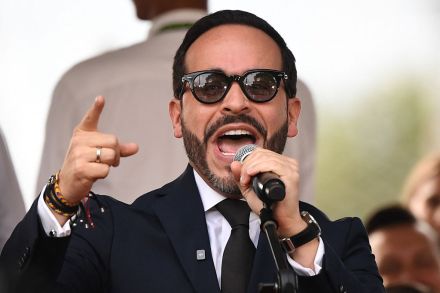
Abelardo de la Espriella was never going to be a typical Colombian presidential candidate. Nicknamed "The Tiger," the defense lawyer who has represented a string of controversial clients is also a businessman and owns a number of clothing and alcohol brands, a Miami restaurant and even music albums. De la Espriella campaigned on a radical and robust security agenda, vowing to rid Colombia of its violent and criminal woes. “I will wipe out narco-terrorism..I will unleash the wrath of God upon them as never seen before,” de la Espriella said “I will wipe out narco-terrorism, those I have sentenced and declared military targets, like cockroaches, like rats. I will unleash the wrath of God upon them as never seen before,” de la Espriella said during his campaign.

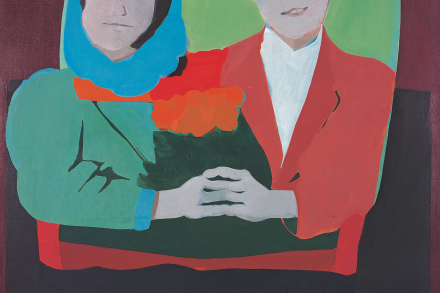
A parade of monstrous and toxic generals: Beatriz Gonzalez reviewed

You might be forgiven for thinking that a charity sale of particularly kitschy furniture has been set up just past the entrance of the Barbican Art Gallery. There’s a chunky brown dressing table, an ornate table several decades out of fashion and a trio of bedside tables. They are piled haphazardly and on each is a garishly painted picture, invariably a pastiche of a historical painting or a Biblical scene. Raphael’s 1512 ‘Madonna and Child with St John’ rendered slightly sloppily where the mirror of the bureau once was; ‘The Last Supper’ on the table top; three popes in profile staring impassively from the tops of the nightstands.

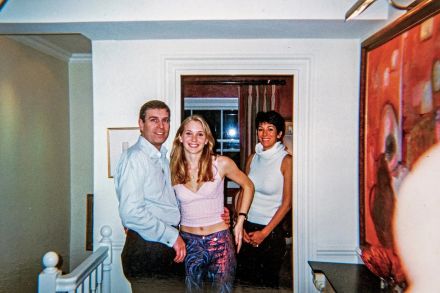
Prince Andrew asked Ghislaine for ‘bed for the night’ – on week of alleged Virginia Roberts Giuffre sexual encounter: emails

From our US edition

Cockburn takes a keen interest in the correspondence between former prince Andrew Mountbatten-Windsor and Ghislaine Maxwell, Jeffrey Epstein’s ex and consigliere. Back in 2019, readers will no doubt recall, Andrew took part in a disastrous interview with the BBC’s Newsnight in an attempt to smooth over the reports of his ties to Epstein and his alleged sexual encounters with a teenage Virginia Roberts Giuffre. Specifically, Andrew denied ever having stayed at Epstein’s house on New York’s Upper East Side on April 11, 2001 – during the trip when Roberts Giuffre says she had sex with the prince for a second time, when she was aged 17. “I wasn’t staying there.

Colombia can’t give Trump the cocaine crackdown he wants

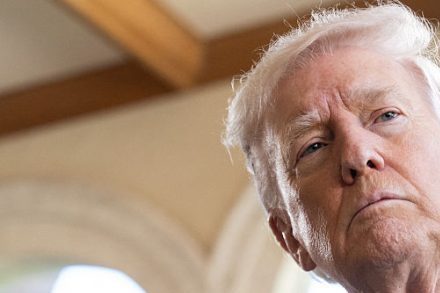
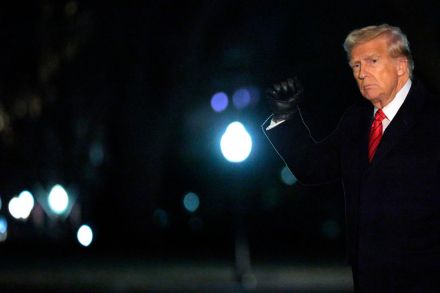
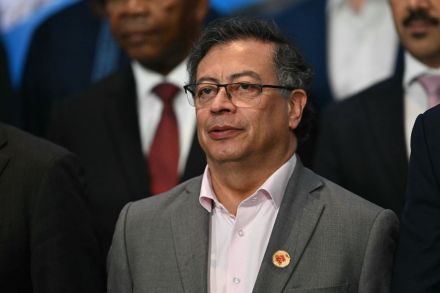
When President Donald Trump hurled abuse at Colombia’s President Gustavo Petro last month, branding him a "sick man who likes making cocaine and selling it to the United States," it was strikingly audacious. Trump leaned into bombastic provocation: there is no evidence to suggest Petro himself makes cocaine. And yet, Trump’s claim didn’t come as a shock – the two leaders have spent the past year locked in a volley of barbs with one another. Petro, Colombia’s first left-wing leader, likes to fire back with ideological, often sermonizing lectures on imperialism and US hypocrisy. But tangled up in the rancorous exchanges – many of them about drugs – is a stubborn fact: Colombia is the world’s largest producer of cocaine.

America’s new war on drugs will be tough to win

From our US edition

On New Year’s Eve a few years ago, I was in Medellín, Colombia, the city that gave its name to one of the world’s most notorious drugs cartels. Our taxi driver offered us some cocaine to fuel the party we were heading to: $10 for a gram; $15 for the “luxury” product. Our group decided to splash out and get a gram of the really good stuff. I’d tried coke a couple of times in London. It was like snorting drain cleaner. Whoosh… I found that half a line of Medellín’s best was enough to keep you going until sunrise. But the next day it was difficult to be within six feet of another human being, the coke having burned up all the dopamine in my brain. Coke is evil. I imagine a lot of other people were feeling the same in Medellín that New Year.

Trump’s big Bolivia opportunity

From our US edition

After nearly two decades of reign over Bolivia, the Movement Toward Socialism (MAS) party was banished at the ballot box on August 17. Its fall is a dramatic political realignment to the right for Bolivians, and a rare opportunity for the United States to reform relations with a geopolitically critical nation. As one expert, Leonardo Coutinho, told us, “The Trump administration can not only contribute to the restoration of democracy but also play a central role in dismantling a fully functioning narco-state.” Despite its 25 percent inflation rate and a 93 percent debt-to-GDP ratio, Bolivia is rich in natural resources, boasting some of the world’s largest lithium reserves, making it an attractive target for both American and Chinese grand strategies.

Will Venezuela crisis spill into conflict with US?

From our US edition

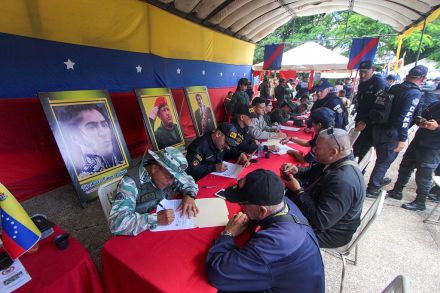
The authoritarian left wing regime of Venezuelan President Nicolás Maduro has mobilized his ruling Socialist party’s paramilitary militia in response to US President Donald Trump sending a task force of warships into Venezuelan waters as part of a US crackdown against alleged cocaine trafficking by the poverty-stricken country.Declaring that “no empire will touch the sacred soil of Venezuela “ Maduro sent his militia to reinforce the country’s borders with neighboring Colombia, who he has accused of collaborating with America in a pincer movement against his country.

Venezuela

Is Colombia reverting to chaos?

From our US edition

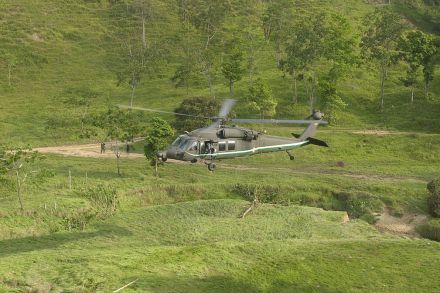
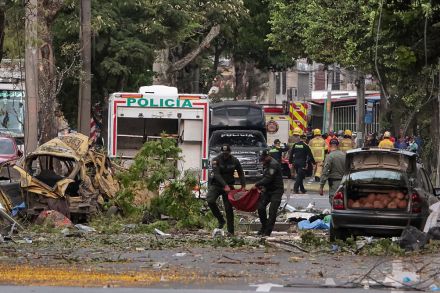
Two terror attacks which hit Colombia on Thursday revealed a scary new level of sophistication among the country’s ever present narco-terrorists – and threatened to return the country to the violence and chaos that many had hoped it had finally escaped.The double terror strikes killed 18 people and involved a car bomb in Colombia’s third most populous city of Cali in which at least six people died, and an earlier drone downing of a police helicopter near the city of Medlllin – long notorious as Colombia’s drugs capital – in which 12 people died.

Colombia

Why Washington should make Latin America a priority

From our US edition

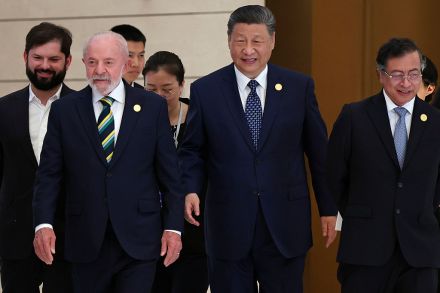
As American eyes remain fixed on the Middle East — understandably so — China has been rolling out the red carpet for Latin America, and we have barely noticed. While Xi Jinping welcomes Colombia, one of Washington’s historically reliable allies, into the controversial Belt and Road Initiative, he’s also introducing visa-free entry for South America’s largest economies and greeting regional leaders in Beijing with billion-dollar credit lines and lavish, all-expenses-paid political junkets. Washington, meanwhile, was… busy. If this sounds familiar, it’s because it is. The US has been snoozing through Latin America’s strategic realignment for years, occasionally waking up to mutter something about narcos or illegal migration, then hitting the snooze button.

washington

Colombia is a better place to watch football than Loftus Road

I’ve just returned from Colombia, where I’ve been visiting my daughter. She’s doing a modern languages degree and has to spend her third year in a Spanish-speaking country either working or studying. Instead of opting for a university in Barcelona or Madrid, which would be the normal thing to do, she decided to get a job in Medellin. Can’t think where she gets that rebellious streak! So that’s why I’ve spent the past week in South America. Colombia is quite a long way to go for such a short trip. To get to Medellin, I flew via Madrid, which meant departing from Gatwick at 10 a.m. and arriving at about 8 p.m. local time, a 13-hour journey. If you factor in getting to and from the airport either side, as well as faffing about with security, it took the best part of 24 hours.

Get ready for Trump’s ‘FAFO’ foreign policy

From our US edition

President Donald Trump posted an AI-picture of a gangster version of himself on Instagram at around 3 p.m. Sunday. Behind the fedora-clad figure, the text “FAFO” — short for “fuck around and find out” — appears alongside a smiling face.  What happened earlier that Sunday, and the machine-made picture that followed, tells us a lot about how Trump 2.0. will deal with the world.  After two planes carrying Colombian illegal aliens departed the United States this weekend, self-proclaimed humanist and former guerrilla fighter Gustavo Petro, Colombia’s president, refused to allow the plane to land. “I deny the entry of American planes carrying Colombian migrants into our territory,” Petro said on X.

Colombia yields to Trump’s tariff threats

From our US edition

President Donald Trump and Colombian president Gustavo Petro feuded yesterday over the return of immigrants living illegally in the US, but after Trump’s threats of tariffs, Petro agreed to send his own plane to pick up the criminals. Trump’s plans to return the immigrants back to their country of citizenship were temporarily thwarted by Petro, who denied the flights permission to land. He claimed he rejected the repatriation flights because of the lack of “dignity and respect” shown to these Colombians, as they would have arrived on military planes while handcuffed. Petro stated, “We will receive our fellow citizens on civilian planes, without treating them like criminals.

Copa América’s finale fiasco casts doubt on the US’s soccer gambit

From our US edition

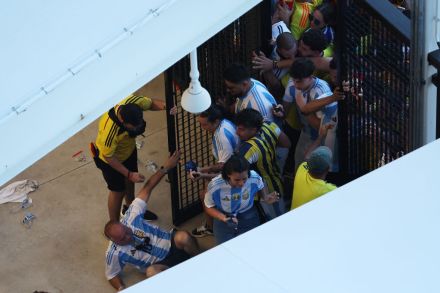
This year’s Copa América soccer tournament in the US was a dress rehearsal for the 2026 World Cup, which will also be hosted by the US, along with Canada and Mexico. And to put it mildly, folks appear to hate the dress. With the US group opener against Bolivia barely attracting 48,000 fans to an 80,000-capacity stadium and players voicing frustration over the conditions of the fields, public opinion already seemed to not be on the host’s side. What transpired last night, however, likely caused more anti-US sentiment in the western hemisphere than any military intervention.

copa ameria

Katy Balls, Gavin Mortimer, Sean Thomas, Robert Colvile and Melissa Kite

31 min listen

On this week’s Spectator Out Loud: Katy Balls reflects on the UK general election campaign and wonders how bad things could get for the Tories (1:02); Gavin Mortimer argues that France’s own election is between the ‘somewheres’ and the ‘anywheres’ (7:00); Sean Thomas searches for authentic travel in Colombia (13:16); after reviewing the books Great Britain? by Torsten Bell and Left Behind by Paul Collier, Robert Colvile ponders whether Britain’s problems will ever get solved (20:43); and, Melissa Kite questions if America’s ye olde Ireland really exists (25:44).  Presented by Patrick Gibbons.

The day I met a sun priest

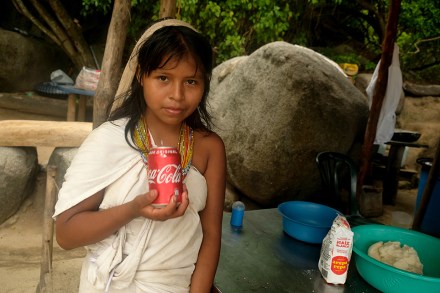
Palomino, Colombia I’m in a truly wonderful place: the Caribbean coast of Colombia. It’s got more bird species than most of Europe, exquisite cotton-top tamarin monkeys that hop through jungles, and one of the world’s highest coastal mountain ranges. There are empty beaches, shimmering lakes, colonial townscapes and a recent folk memory of terrible gangsters. Some male babies are largely kept in caves from birth, in the darkness, until they are nine  It also boasts several indigenous tribes, one of which – the Kogi – I had never heard of until I got here. But the more I read about them from my hammock on the beach, the more I become determined to encounter them – and to talk to one. A Kogi. Why? Because they are so strange.

The secret to taking ayahuasca

Antioquia, Colombia If you’ve ever wondered what happened to drug lord Pablo Escobar’s enormous cocaine and occasional execution palace, as featured in the Netflix series Narcos, I can tell you. These days – following the violent death of Escobar in 1993 and the consequent escape of his pet hippos from his private zoo – the estate is now a garish, plasticky, hippo-themed children’s waterpark called Hacienda Nápoles. I have just driven past it. I am deep in the Colombian province of Antioquia.

Why Joe Biden’s Latin America policy is failing

From our US edition

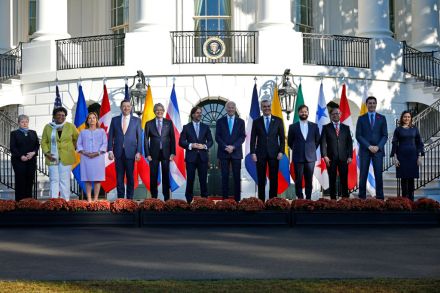
At the opening ceremony of the Summit of the Americas in Los Angeles last year, President Joe Biden announced the Americas Partnership for Economic Prosperity, which the White House described as “a historic new agreement to drive our hemisphere’s economy recovery and growth and deliver for our working people.” The plan has become the administration’s signature Latin America policy. As noted by the White House, the region matters not solely because it’s where the US is situated, but because it also accounts for 32 percent of global GDP. Even more so, the region is rich in resources that are crucial in the development of emerging technologies.

latin america

Are hallucinogenic drugs losing their stigma?

We are in the midst of a ‘psychedelic renaissance’. Not since the 1950s and early 1960s has there been so much interest in researching the therapeutic potential of psychedelics. The FDA approved a ketamine derivative for medicinal use in 2019, and has given both MDMA and psilocybin (the psycho-active ingredient in magic mushrooms) ‘breakthrough therapy’ status, putting the drugs on a fast track to approval in the US, with the UK likely to follow suit. Professor David Nutt is a neuropsycho-pharmacologist (say that three times fast) and head of the Centre for Psychedelic Research at Imperial College, London. He was the UK’s ‘drug tsar’ before getting sacked in 2009 for claiming that LSD and Ecstasy are less dangerous than cigarettes, alcohol or horseback riding.

An exposé of drug smuggling and terrorism reads like a first-rate thriller

The crucial moment in this vivid exposé of the murky world of transnational crime comes in 2015. Mustafa Badreddine, one of two Lebanese Shia cousins who for three decades had led the deadliest Iranian-linked terrorist network in the Middle East, was finally indicted by a UN special tribunal investigating the assassination of the Lebanese prime minister Rafic Hariri a decade earlier. After an extraordinary career of mayhem, Badreddine had spent the previous three years leading an elite Hezbollah militia shoring up President Bashar al-Assad’s regime. But the tide had turned, and in July 2015 Qasem Soleimani, the commander of the Iranian Quds force in Syria, secretly flew to Moscow to beg for Russian military support.

The Pink Tide returns to Latin America

From our US edition

As the dust settled on Jair Bolsonaro’s seismic victory in Brazil back in 2018, one might have spared a thought for those dedicated to the cause of international socialism. Having bathed in the glory of the so-called "Pink Tide" and the commodities boom of the early 2000s that allowed socialist governments such as Hugo Chávez's Venezuela to seemingly prosper, any hopes that Latin America would forever unify in the cause of left-wing anti-imperialism seemed well and truly dashed. In many of the continent’s wealthiest countries, right-of-center politicians had swept to power with a view to restoring their nation’s former glory. These included Bolsonaro in Brazil, Sebastian Piñera in Chile, Ivan Duque in Colombia, and Mauricio Macri in Argentina, among others.