Cold war

Reminders of the Cold War in Vienna and Budapest

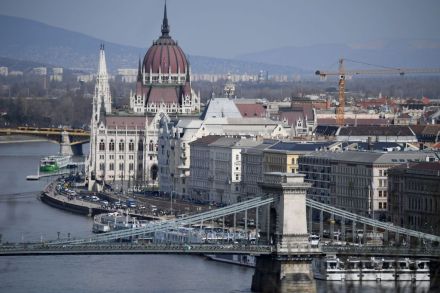
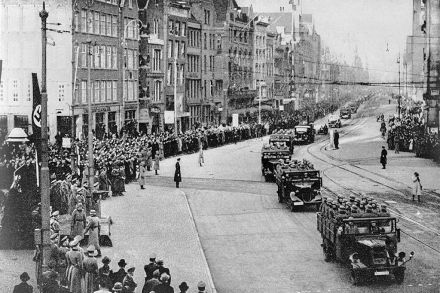
Apparently an acquaintance has dubbed me the “Kremlinologist of the right.” Redolent as it is of the Cold War-era drama surrounding the Kremlin, when the West was desperately trying to suss out what Winston Churchill called a riddle wrapped in a mystery inside an enigma, I could hardly object to this quip upon learning of it. Indeed, I recently traveled to two hot spots of the Cold War, Vienna and Budapest. I went full immersion in Vienna, where I attended a screening of Orson Welles’s The Third Man, a humdinger of a movie if there ever was one. Graham Greene set it in postwar Vienna, which was divided between the four occupying powers, France, Great Britain, America and the Soviet Union.

Cold War

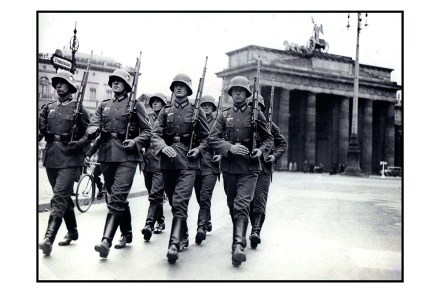
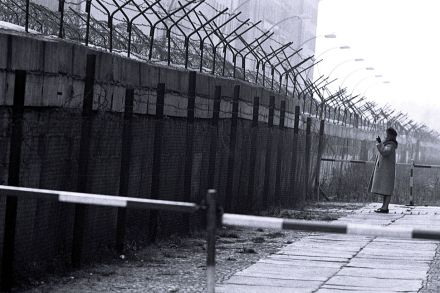
Following the seam of the Iron Curtain

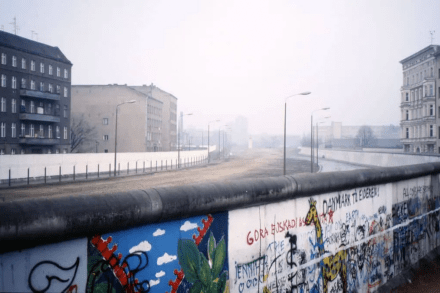
Just before the pandemic, I spent several months traveling through Europe, from the north of Norway to Istanbul and beyond to Azerbaijan. I saw unforgettable sights: the endless daylight of the Arctic summer; the vast Hammershus castle on the Danish island of Bornholm; Vienna’s ornate Prunksaal library; and the sandy beaches of Corfu. But the focus of my journey was precisely those things that most travelers to these places often ignore. I was following the route of the Iron Curtain. My aim was to visit every part of that old great divide, all the places where NATO once abutted the Warsaw Pact, where overwhelming military might stood constantly primed for apocalypse.

How to win the war that everyone is losing

Russia is losing the war in Ukraine. So is Ukraine. And so are we. Imagine the good guys win tomorrow. What exactly will we have won? Ukraine was the poorest country in Europe even before the war. Afterward it will remain as dependent on American dollars as it is now — and on American arms. Russia will not have disappeared, after all. The last war-torn and impoverished country that required open-ended American support was Afghanistan. Yet all the weapons and funds we lavished on Hamid Karzai and Ashraf Ghani failed to keep the Taliban at bay after we left. The money also didn’t help with Afghanistan’s corruption problem. Will it help with Ukraine’s? In 2021, Transparency International ranked Ukraine second only to Russia as the most corrupt country in Europe.

war

Why South Africa is cozying up to Russia and China

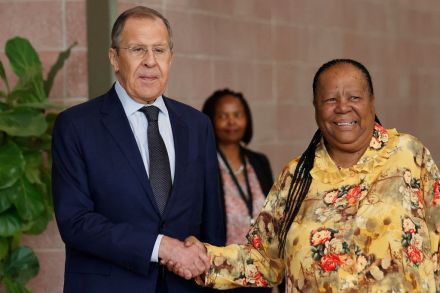
Vladimir Putin’s invasion of Ukraine opened the most dramatic divide between East and West since the Cold War. Most of these divisions were clear beforehand — Hungary and Turkey were longtime thorns in the side of NATO, for example. Yet South Africa’s warming ties with Russia and China seemed to come out of nowhere. South Africa's initial reaction to the invasion was the same as much of the Western world, demanding that Russia leave Ukraine. That did not last, however. South African President Cyril Ramaphosa said on March 17 that “The war could have been avoided if NATO had heeded the warnings from amongst its own leaders and officials over the years that its eastward expansion would lead to greater, not less, instability in the region.

When the moon brought America together

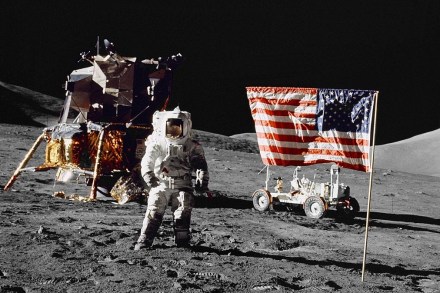
The Artemis rocket is back from the moon. Within a couple of years, if all goes to plan, it will bring men to the moon’s surface. It is a great loss that a bigger deal hasn’t been made of this expedition. I was only three when John F. Kennedy died, and his famous 1962 pronouncement that we would go to the moon not because it was easy but because it was hard was already history. The picture books I got on birthdays always included him in the history of space exploration. Those books made sure every kid knew how “we” were going to get to the moon. They changed us, and with us, America. We started with Mercury, baby steps mostly proving we could launch men into space. Then Gemini, a long proof-of-concept program to try out the technology of docking.

South Korea toys with developing nuclear weapons

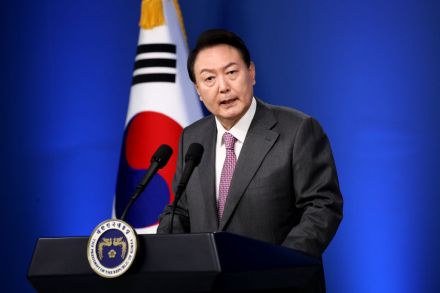
Yoon Suk-yeol isn’t a household name in the United States, but his comments this week have put him in the international spotlight. Speaking at a press briefing on Wednesday, the South Korean president openly surmised that if North Korea’s nuclear weapons program continued unabated, Seoul may have to explore an option the United States wouldn’t like: producing nuclear weapons of its own. Referring to Pyongyang’s weapons programs, Yoon said, "It’s possible that the problem gets worse and our country will introduce tactical nuclear weapons or build them on our own. If that’s the case, we can have our own nuclear weapons pretty quickly, given our scientific and technological capabilities.” The remarks generated immediate pushback from nuclear security experts.

The myth that Hiroshima was necessary

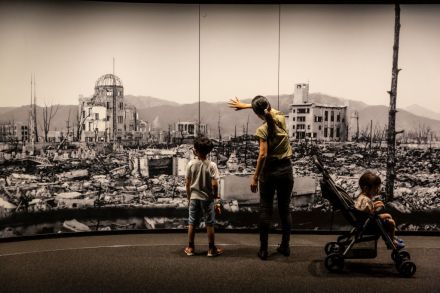
If you think the falsehoods spilling out of Ukraine about casualties and atrocities are shocking, meet the greatest lie of modern history. August 6 marks the seventy-seventh anniversary of the nuclear destruction of Hiroshima and death of some 140,000 non-combatants. Yet the only nation in history to employ a weapon of mass destruction on an epic scale, against an undefended civilian population, shrugs off the significance of an act of immorality. Beyond the destruction lies the myth of the atomic bombings, the post-war creation of a mass memory of things that did not happen. This myth has become the underpinning of American policy ever since, and carries forward the horrors of Hiroshima as generations pass.

Berlin as the unreal city

"Berlin has too much [history]." Sinclair McKay cites this rueful observation in the preface to his new book about the city. Given that he is not simply discussing Berlin between the wars, or during the second of those wars, or in the Cold War that followed, but all of it, this may come off as a cry for help. History may — in those words attributed to, well, take your pick — be “one damned thing after another,” but when it came to Berlin, those things hurtled through time in a horde, colliding, overlapping and refusing to form an orderly line. And, in Berlin’s case, they had a way of mattering. Not for nothing does this book’s subtitle refer to Berlin as “the city at the center of the world.” Bad news for a writer aiming, presumably, at a degree of concision.

berlin

Springtime for Cold War nostalgics

My favorite spy movie cliché of all time is the secret agent stuck in the 1980s. The threats have gone asymmetrical, terrorists slip across borders, but our hero longs for the simple days when the world was divided between good Westerners and bad Russians. “You’re a fossil!” sneer his girlboss department administrator, his vegan drone pilot, his tech whiz who has just hunted down a non-state actor by crosschecking the latest SIGINT with a Yelp! review of an Iraqi yoga studio. Cut to him muttering under his breath à la Judi Dench in Casino Royale: “Christ, I miss the Cold War.” Now, suddenly, those who miss the Cold War are having a moment.

Cold War

How to turn the tide against Russia

The abrupt eruption of the worst military conflict in Europe since World War Two has naturally left the world in a state of shock, perhaps only comparable in living memory to that felt on 9/11. But as responses are considered and argued over, there will be more blows to come — as well as recriminations over how this could have been avoided. Naturally, much depends on which side emerges victorious, and at the time of writing the end result has yet to be determined. Certainly any assumption that the might of Russia's military machine would roll into Ukraine and quickly overwhelm the defenders has been categorically proven wrong; Russia's Blitzkrieg-style offensive failed to achieve its first-day objectives in the face of fierce Ukrainian defense.

vlad invader empire

No, China isn’t about to invade Taiwan

I have a medal for winning the Cold War. And I'm not alone — they were awarded to all members of the military and federal civilian employees who served during the Cold War. That included me, at the tail end, with the State Department. Ironically, my so-called Cold War service was in Taiwan. I probably should return the thing; the Cold War is far from over. Part of the Cold War's real conclusion is playing out in Ukraine in real time. Is Taiwan, another hanging chad from that era, next? Is President Xi watching a weakened America giving in to the Russians and seeing his chance to seize Taiwan? Nope. Taiwan is not Ukraine is not Taiwan. The two places only exist next to each other in articles like this one because both are the results of American policy.

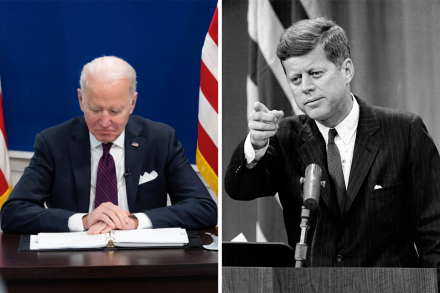
Joe Biden is no Jack Kennedy

As the Ukraine situation heats up, you can already picture the insider account Vice President Kamala Harris will publish one day in her 2025 bestseller Thirty-One Days in February. But then, as any survivor of the Cuban Missile Crisis is bound to tell President Joe Biden, “I knew Jack Kennedy, Jack Kennedy was a friend of mine, and you, Joe Biden, are no Jack Kennedy.” One of the clichés if not the myths about the Cuban Missile Crisis was that President Kennedy and Soviet leader Nikita Khrushchev were playing chicken and Khrushchev “blinked." Under threat of potential nuclear war, he then decided to withdraw the Soviet nuclear missiles from Cuba. We now know that what really happened was more complicated than the initial reports made it appear.

Our enemy’s enemy

After Nazi Germany attacked the USSR, Winston Churchill had no qualms about entering into an alliance with Stalin, whose regime he understood all too well: “If Hitler invaded Hell, I would make at least a favorable reference to the Devil in the House of Commons.” Similar thinking does much to explain the enlistment of former (and not so former) Nazis by the Western allies in intelligence work against the Soviets after 1945. With the Red Army in the heart of Europe, co-opting suitably qualified veterans of the fallen Reich — some of whom had very dirty hands indeed — made some sense, according to that Churchillian logic, but mainly when those selected were anti-Communist and now aligned with a democratic Germany.

fugitives

Ukraine’s plight paints a bleak vision of Europe’s future

From our UK edition

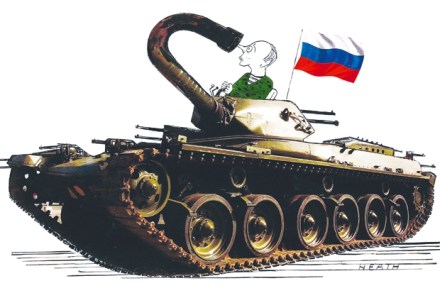
It is tempting to view Vladimir Putin as a Cold War relic: a former KGB officer who hasn’t got over the fall of the Soviet Union, which he called the ‘greatest geopolitical catastrophe of the century.’ But, as I say in the Times today, what is happening on Ukraine’s border isn’t a throwback to the Cold War. Rather, it is a preview of Europe’s future. Since Nato’s creation, European security has rested on America’s involvement. But Europe is now a secondary concern for the US; Asia and competition with China is the most important challenge facing Washington now. The horribly messy US withdrawal from Afghanistan was justified on the basis that it would free up resources to focus on China.

When will the Nineties revival end?

From our UK edition

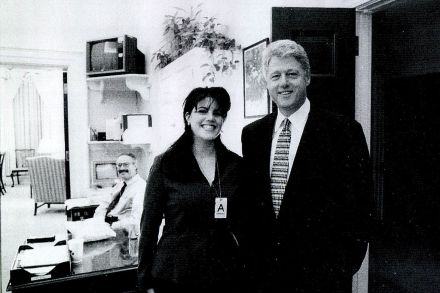
We’ve been living through a nostalgia for the 1990s that has lasted longer than the decade itself. That was back when music was cool, the only Batman movie wasn’t a fascistic fantasy of surveillance and control, and dresses over jeans looked good. Podcasts and documentary series have really dug into the decade to reinvestigate and reappraise everything that went down in those ten years. I’ve listened to a podcast that takes the top hits of the decade one by one and defends each song, I’ve watched specials on why every maligned woman of the era (Lorena Bobbitt or Tonya Harding or Monica Lewinsky) was good actually and the only bad thing here is patriarchy actually.

Who won the Cold War, anyway?

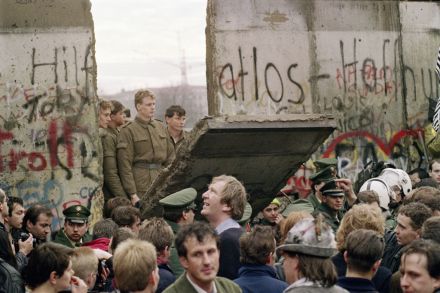
Thirty years ago this December 26, the impossible happened. One of the bloodiest states of the twentieth century (a horrific and highly competitive category) dissolved without violence. The Union of Soviet Socialist Republics had all but ended months earlier, when Russians took to the streets to defy the communist hardliners who had seized the government from an impotent Mikhail Gorbachev. That popular countercoup was itself largely bloodless: the soldiers called upon to enforce the hardliners’ rule refused to shoot their own countrymen. The Cold War is often said to have ended with the toppling of the Berlin Wall in 1989. Had things turned out differently in Moscow two years later, the struggle might well have resumed.

Cold War

Here come the Nineties

Everyone is bullish on natural gas, but I think America’s most inexhaustible resource might be 1990s nostalgia. Every time it seems our BuzzFeed badlands have run dry, another Friends reunion or reassessment of Francis Fukuyama comes gushing through the soil. So it is that the most hyped series on TV right now is American Crime Story, dedicated this season to Ryan Murphy’s telling of the Clinton impeachment. Legends of the Hidden Temple, perhaps the most beloved children’s show from the Nineties (and that’s saying something), is being remade for adults. Even the recent death of comedian Norm Macdonald elicited callbacks to the days of cynical wiseasses and O.J. Simpson cracks. What is it about the Nineties that remains stuck in America’s craw?

nineties

Congress’s defense budget is pure madness

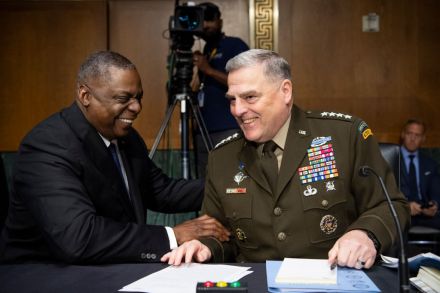
The United States Congress is divided on pretty much everything these days. But there is one agenda item that traditionally brings lawmakers together: the defense budget. Usually Pentagon funding amounts to a pro-forma love-fest with a result — higher military spending — that is basically baked in. The defense budgeting process is usually like a boring movie, where the conclusion is foreseen about 10 minutes into the flick. Last week, the House of Representatives passed its own version of the National Defense Authorization Act by a resounding 316-113 vote. It's a mammoth 1,362-page bill that piled an additional $25 billion onto what President Joe Biden had submitted in his own $753 billion budget request.

congress defense budget

Central Asia’s geography after America’s defeat

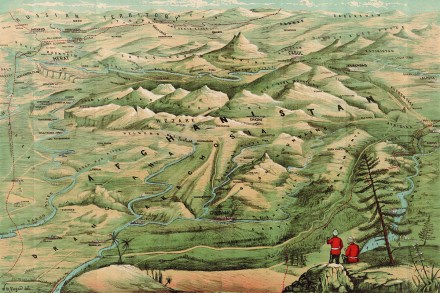
However much it is denied, we still live in an imperial age, at least metaphorically. Just as the withdrawal from Afghanistan registers the momentary decline of the American empire, it registers the momentary rise of the Russian and Chinese ones. America failed in Afghanistan because its military, while capable of fighting high-tech wars on land and sea, could not fix complex Islamic societies on the ground. Indeed, Afghanistan demonstrated how the deterministic elements of geography, culture and ethnic and sectarian awareness can vanquish Western ideals of democracy and individual liberty.

central asia

Russian spies and the return of the Cold War

From our UK edition

Last week’s arrest of a security guard employed at the British embassy in Berlin, on suspicion of spying for Russia, serves as a stark reminder that the UK and its allies are in the thick of a new Cold War. With the fall of the Berlin Wall in 1989 and the subsequent collapse of communist regimes, it appeared that the East-West stand-off had come to an end. Nato allies breathed a collective sigh of relief and looked to new horizons, believing their principal objective had been achieved and that Russia’s days as a superpower were consigned to the history books.