Cold war

Cold War collation

From our UK edition

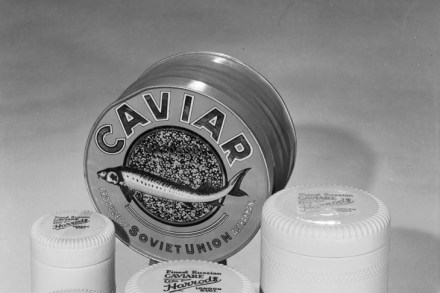
I know an immensely grand aristocratic lady, impeccably mannered, with a regal grace and presence, who cannot be trusted near a tin of caviar. Apart from scoffing far more than her share, she will eventually make off with the tin itself, to lick it clean. Those of us from lesser social milieux should not only treat this as a lesson in etiquette. There are sound environmental arguments for her behaviour. Caviar is so precious, so rare, that it is an ecological crime to waste a single egg. When her ladyship is on the prowl, there is no danger of that. Such thoughts came to me over the weekend, while musing on large themes over a small tin. It brought back memories and also made one think about the unforeseen consequences of political change.

Licence to kill | 12 January 2017

From our UK edition

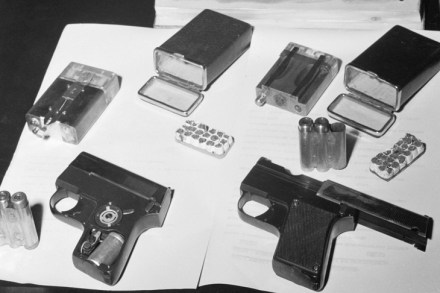
As I read the last chapter of this book, news broke that the Russian ambassador to Ankara, Andrey Karlov, had been shot multiple times at close range by an off-duty Turkish police officer. Despite shocking live footage of the incident, it was unclear immediately whether this was political assassination or terrorist attack, or who was ultimately behind it. The assassin was quickly ‘neutralised’. Speaking from the Kremlin, Putin praised the slain ambassador, ordered security at Russian embassies to be stepped up, and said he wanted to know who had ‘directed’ the gunman’s hand. This is the crucial question. Not who the killer was, but for whom he was acting and with what intent.

Soldiers of the Queen

From our UK edition

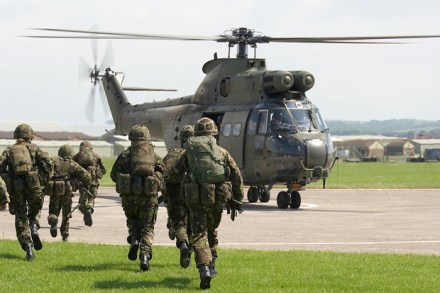
It’s not immediately obvious, but the silhouette on the dust jacket — soldiers advancing in single file, on foot (‘boots on the ground’) isn’t one squad, but five soldiers from different campaigns. From left to right, first comes the British infantryman of the second world war; next is a ‘jock’ from (I think) the Korean war; then a jungle fighter from the Malayan Emergency or the Borneo ‘Confrontation’; then, unmistakably, the long-suffering foot soldier of Operation Banner, the 38-year counter-insurgency (or police action, no one ever quite knew which) in Northern Ireland; and finally, the technology-festooned warrior of Iraq and Afghanistan.

Stop the sabre-rattling

From our UK edition

I have been wondering these last few weeks whether it would be cheaper to excavate a basement and buy a Geiger counter and iodine tablets, or emigrate to New Zealand. Call me frit, but I don’t like the way things are heading. Probably the second option is easier: Armageddon outta here, etc. I can re-enact Nevil Shute’s On the Beach from some rocky cove near Dunedin, waiting for the fallout to arrive. I was sentient only during the latter stages of the Cold War but from what I can remember, the two sides, them and us, behaved for the most part with a degree of rationality and common sense. (I like my politicians to be pragmatic rather than charismatic, which is why, if you were to ask who my favourite Soviet despot was, Brezhnev would always be the answer.

Putin’s next move

From our UK edition

The old KGB headquarters in the Lithuanian capital, Vilnius, is a sinister place, full of ghosts. It is a solid 19th-century neoclassical building with walls thick enough to have muffled the screams of those under interrogation. The cells in the basement are as cold and damp as they were in Soviet times and there are stone steps down to an airless, claustrophobic chamber where prisoners were executed, a thousand of them, the wall still pock-marked with bullet holes. You can imagine people hurrying by on the other side of the road in the old days, not daring to look up at the pale grey façade, knowing what took place behind it.

Syrian nightmare

From our UK edition

'We are used to death,’ said Ismail. He had been to the funerals of four friends in a single week, all killed by aerial bombs. ‘We’re used to bloodshed. We’re adapted to the situation and this style of life now. It’s normal. If you lose someone, then the next day you say, OK, life must go on.’ Ismail spoke to me from eastern-Aleppo, where as many as 250,000 people are under siege by the Syrian regime and ‘living on rice’, as he described it. He is in his late twenties and is one of the White Helmets, the civil defence volunteers who dig people out of the rubble after an attack. He could not endure the despair on the faces of the injured who knew they would not survive, he said.

No regrets, really?

From our UK edition

Never speak on the same platform as Sir Malcolm Rifkind. I tried it once, at a Spectator debate held during the Scottish independence referendum campaign in 2014, and I will not be repeating the experience. The former Foreign Secretary spoke as usual without notes, and with such ringing clarity and confidence that all the other panelists were easily eclipsed. That included Kelvin McKenzie, the former editor of the Sun, speaking in favour of Scottish independence. Sir Malcolm might just as well have recited the Edinburgh phonebook from memory, in his Jean Brodie tones, and the audience would still have cheered him to the echo. It was a magnificent performance from one of the best speakers of his generation. And yet, for all the brilliance, I can’t recall a single word he said.

Listening in to the Russians

From our UK edition

There are now enough books about Bletchley Park for it to become part of national mythology, along with the Tudors, Trafalgar, Waterloo, the Somme and Winston Churchill. Rather than rehearse the Enigma story, however, Sinclair McKay describes what happened to the organisation that became GCHQ (Government Communications Headquarters) during the immediate postwar years. This was the crucial period when intelligence effort was redirected from fighting a hot war against Germany and Japan to beginning a Cold War against the Soviet Union. It is a neglected period in popular history and McKay does well to bring it to life. When the second world war ended, what we now know as GCHQ was part of MI6, under whose wing it had been since the early 1920s.

Wishful thinking | 19 May 2016

From our UK edition

Deirdre McCloskey has been at work for many years on a huge project: to explain why the world has become so much richer in the past two centuries, and at an accelerating rate since 1945. This is the third and final volume in the series. In it she argues that ‘our riches were not made by piling brick on brick, bank balance on bank balance, but by piling idea on idea’. The Great Enrichment, which she dates from 1800 to the present, depends on the spread of ideas of liberty, seeded in a series of ‘egalitarian accidents’ in European politics between 1517 and 1789.

Brothers grim

From our UK edition

One of the more obscure winners in recent years of the Berlin film festival’s Golden Bear was a version of Shakespeare’s Julius Caesar by the esteemed Taviani brothers, Paolo and Vittorio. The film, called Caesar Must Die, consisted of prisoners staging the Roman drama in their own high-security jail in Italy. The most dedicated Shakespearean or, indeed, lover of Italian cinema will have found it quite hard to enjoy. It was a tough, depressing watch. But that’s the Berlinale all over. It favours a certain toughness and prides itself on films that engage politically, that are nakedly ‘art’ rather than obviously mainstream. Often it goes out of its way to be controversial. Berlin itself has long been controversial.

Portrait of the week | 18 February 2016

From our UK edition

Home David Cameron, the Prime Minister, spent time in Brussels before a meeting of the European Council to see what it would allow him to bring home for voters in a referendum on Britain’s membership of the European Union. The board of HSBC voted to keep its headquarters in Britain. Sir John Vickers, who headed the Independent Commission on Banking, said that Bank of England proposals for bank capital reserves were ‘less strong than what the ICB recommended’. The annual rate of inflation, measured by the Consumer Prices Index, rose to 0.3 per cent in January, compared with 0.2 per cent in December. Unemployment fell by 60,000 to 1.69 million. A dental nurse from Bradford who gave her friend a facelift was struck off the dental register.

What David Aaronovitch’s brilliant memoir tells us about British communism

From our UK edition

Like most trade unionists in the 1970s and 80s I worked with a fair few communists. Men like Dickie Lawlor, Jock Cowan and Maurice Styles, postal workers for whom all events were viewed through the prism of ‘scientific socialism’. Communism gave them a philosophy by which to live their lives, and they were respected as men of principle even by those who abhorred their politics. Marx may have disparaged religion as the opiate of the people (and, in an even more memorable phrase, the sigh of the oppressed), but it was difficult to avoid the term ‘religious zeal’ when describing the way men like Dickie, Jock and Maurice approached their union work. By the time I knew them they’d long passed the stage of seeking converts.

A choice of crime novels | 7 January 2016

From our UK edition

It’s often the case that present-day crimes have their roots in the past. Ian Rankin’s Even Dogs in the Wild (Orion, £19.99, Spectator Bookshop, £16.99) uncovers abuse and ill-treatment in a care home in the 1980s, and the murder of a teenage boy. That terrible act echoes through the years. When three people receive threatening notes, and two of them end up being murdered, the Edinburgh police fear that more will become victims. Enter John Rebus in his 20th outing. Retired now, but as canny as ever, he picks at the connections between the present and the past with a sure, unblinking eye. The search for justice gives him life. Rankin puts his books together in a methodical way; line by line, idea by idea, the story builds up and takes you over.

Everything you always wanted to know about Sixties pop —and more

From our UK edition

It might seem an odd choice, but after reading Jon Savage’s new book, I think if I had a time machine I’d now be tempted to set its controls for 13 January 1966 and the annual dinner of the New York Society for Clinical Psychiatry. Andy Warhol had been booked to give a speech, but instead he put on a gig by the Velvet Underground and Nico at full uncompromising blast, with a couple of Factory favourites dancing alongside them. One shrink described the evening as a ‘torture of cacophony’; another — no less disapprovingly — as an ‘eruption of the id’. A third left hurriedly, with the explanation that ‘I’m ready to vomit.

The four men who averted the Apocalypse

From our UK edition

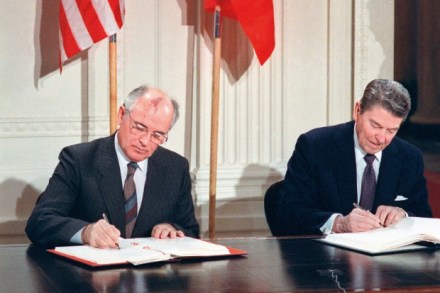
In March 1987, as Professor Robert Service records in his new account of the end of the Cold War, Margaret Thatcher visited Moscow. She had been reluctant to do so, largely out of fear that such a visit would only make it easier for a credulous Reagan — as she saw him — to offer Gorbachev even more concessions. She had also been worried that it would produce nothing for British interests. Her hesitation to travel to Russia, let alone, as her advisers had urged, solicit an invitation, was perhaps surprising. She and Gorbachev had got on famously — shoes off, in front of a blazing fire — when she had entertained him, then only the Politburo member responsible for agriculture, at Chequers just before Christmas 1984.

Intelligent design | 29 October 2015

From our UK edition

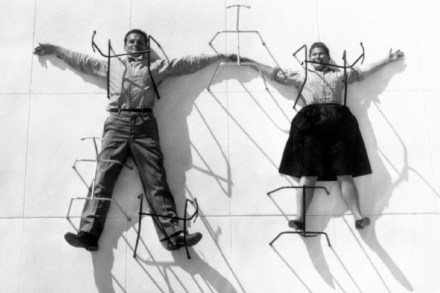
Peter Mandelson, in his moment of pomp, had his portrait taken by Lord Snowdon. He is sitting on a fine modern chair. Mandy would no doubt have been aware of the ancient historic associations, through bishoprics and universities, that chairs have with power. Since it is a chair much admired by architects, Mandy also looks quite cool, although these things are relative. The chair and its footstool are known as Eames Lounge 670 and Eames Ottoman 671, and they were first manufactured in 1956 by Herman Miller of Zeeland, Michigan. Curved plywood shells are veneered with Brazilian rosewood, upholstered with shallow black leather-studded cushions and supported, at a meaningful tilt (suggestive of relaxed authority), on a stellar metal support.

King of Kings: The Triumph and Tragedy of Emperor Haile Selassie I of Ethiopia

From our UK edition

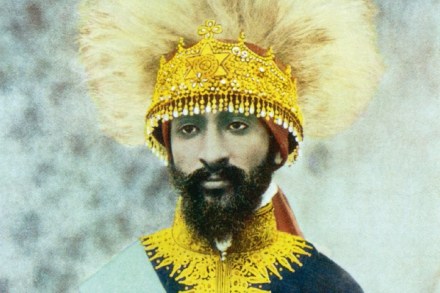
Great men rarely come smaller than Haile Selassie. In photographs, the golden crowns, pith helmets and grey felt homburgs he often donned can’t conceal the fact that he is the shortest man in the room. It didn’t matter: for the 44 years of his reign — with a five-year interruption engineered by Benito Mussolini’s invading troops — he was effectively lord of all he surveyed. Ethiopia’s current government, established by a former Marxist rebel group, has always harboured mixed feelings towards Tafari Makonnen, as he was baptised.

There’s no substitute for human intelligence

From our UK edition

Spying may be one of the two oldest professions, but unlike the other one it has changed quite a lot over the years, and continues to do so. During the quarter-century since the end of the Cold War, the main preoccupation of our intelligence agencies has not been with classic espionage by the Soviet Union, or with identifying new Philbys operating on their behalf. Espionage still goes on, but it is small beer compared to the terrorist threat that commands no less than 75 per cent of our agencies’ time and resources. Stephen Grey takes us through the transformation in the recent past experienced by MI6, MI5 and GCHQ, as well as their counterparts in the United States.

How to fix our defence budget mess

From our UK edition

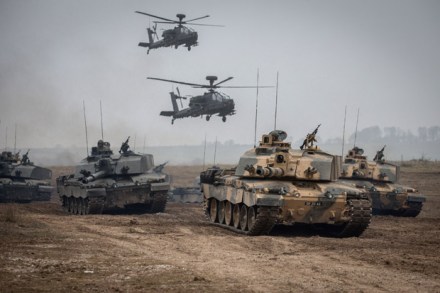
With the exception of 1983, when Michael Foot promised unilateral nuclear disarmament, defence has played little role in modern election campaigns. This is not least because the two main parties appear to have developed a non-aggression pact. They have agreed to heap praise upon the armed forces and commit them to ever more frequent foreign campaigns — while simultaneously nibbling away at the defence budget to fund programmes which offer more instant gratification to the electorate. This week, as the news emerged of Russia’s plan to lease 12 long-range bombers to Argentina, the Defence Secretary, Michael Fallon, announced the results of the latest review into how we protect the Falkland Islands.

Leonid Yakobson: the greatest ballet genius you’ve never heard of

From our UK edition

On YouTube there’s a brief dance video of a Viennese waltz so enchanting that not even Fred and Ginger in ‘Cheek to Cheek’ can outcharm it. A dandy in top hat and a captivatingly pretty girl in bonnet and white frills do ecstatic jumps and twirls in each other’s arms to the seething Rosenkavalier waltz. That it’s Soviet is almost unbelievable — still more so that it dates from the still Stalinist 1954. But this is a gem by Leonid Yakobson, a choreographer who was one of the USSR’s most arresting modern voices, yet of whom you will find rare mention in the West or Soviet ballet histories.