Cold war

How Grandma Moses’s art shaped American history

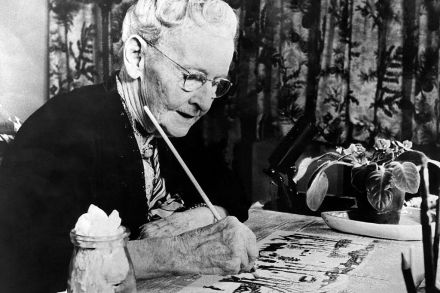
Growing up on the border of Pennsylvania and Ohio, I am well acquainted with a good country fair – that uniquely rural convergence of rodeo games, fried food, barnyard smells and arts and crafts. Washington DC too is now relishing the American-ness of state fairs by hosting the Great American State Fair in the weeks leading up to the semi-quincentennial. And the Smithsonian American Art Museum has prepared a temporary exhibition celebrating a quintessential American artist who first debuted her works at state fairs in rural New York. That gallery is Grandma Moses: A Good Day’s Work, a collection of 88 paintings which will be in DC until July 12, and then heads on tour.

Grandma Moses

My annual pilgrimage along the route of the Berlin Wall

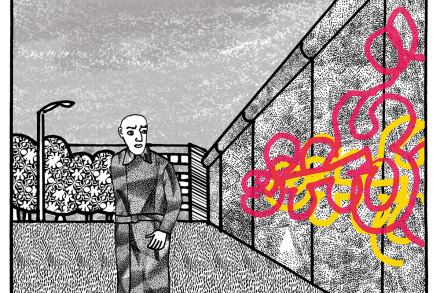
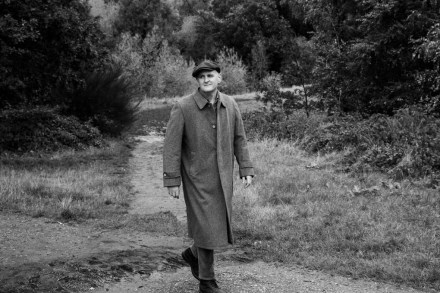
Each time I return to Berlin – that wonderful, awful city where I whiled away the best days of my misspent youth – I take a walk along the cobbled path that marks the route of the Berlin Wall. Half a lifetime since it came tumbling down, there isn’t much left to see. A few stretches have been preserved as memorials, but it’s mainly an absence not a presence – a ghostly gap between the backs of buildings, a fissure between past and present, between the hard truths of the last century and the uneasy ambiguities of today. Why do I persist with this melancholy Wanderung, year after year? Because a walk along the Mauerweg (as Berliners call that zigzag footpath) is the best way to take the temperature of this Faustian metropolis.

Berlin Wall

When, why and how came the fall – the success and sorry decline of the British Army

From our UK edition

I wonder how many people appreciate what a remarkably capable army we had for the first three decades of this book’s range – and how incapable that army has become. Forward defence in Germany during the Cold War (56,000 troops); keeping the peace in Northern Ireland; bringing Rhodesia/Zimbabwe back into the fold; liberating the hostages at the Iranian embassy in London; retaking the Falkland Islands; ejecting the Iraqis from Kuwait; bringing order to the Balkans; halting the civil war in Sierra Leone – the ‘rise’ part of Ben Barry’s book is indeed inspiring.

Hiroshima and the continuing urgency of the atomic age

From our UK edition

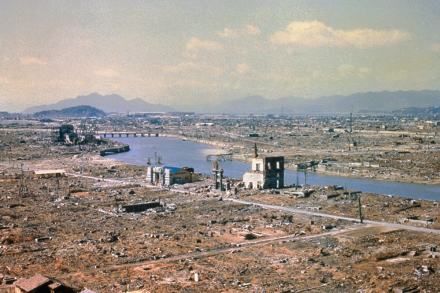
In August 1945, Group Captain Leonard Cheshire was stationed on the Pacific island of Tinian as an official British observer of the dropping of the atomic bombs on Hiroshima and Nagasaki. Two decades later, he wrote for The Spectator about his experience. For him, the attack on the two cities represented ‘the ‘destruction of the impotent by the invincible’. Nevertheless, he argued that the Allies had been ‘undeniably’ right to carry out the bombings since the attack ended ‘the most terrible war’ and prevented an extremely bloody invasion of Japan.

Was Zbigniew Brzezinski a Cold War prophet?

From our UK edition

30 min listen

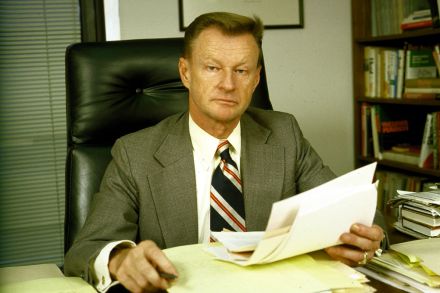
Polish émigré Zbigniew Brzezinski – known as ‘Zbig’ – rose to prominence in America during the Cold War as a key intellectual architect of US foreign policy. He was National Security Advisor to President Carter and was a trusted advisor to many US presidents from John F Kennedy onwards. Yet, despite helping to shape American foreign policy during critical moments, he is not as well-known or celebrated as his lifelong rival Henry Kissinger.   The Financial Times’ chief US columnist Edward Luce joins Freddy Gray on this episode of Americano to talk about his new book Zbig: The Life of Zbigniew Brzezinski, America's Cold War Prophet.

How America enfeebled Europe

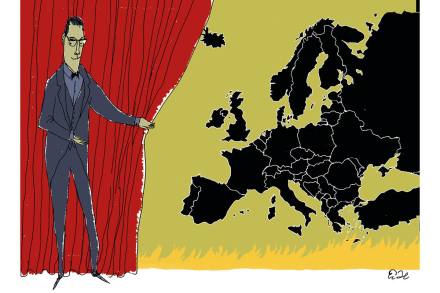
Fighting to “rebalance” NATO, American leaders now look on the old continent with dismay. Europe cannot seem to muster the physical resources — and, still more, the cultural ones — to provide for its own defense. Even American liberals now mark this down to a late social democratic decadence, or civilizational ennui. To a certain kind of Elon Musk outrider, “Europe is cooked,” or, “Europe is a museum.” The go-to explanation is that America has spoiled these countries rotten for too long. Sheltering under Article 5 of NATO, European nations were able to run down military budgets and use the dividend to pay for generous welfare states. US overspending had allowed Europe to live in a post-historical dreamworld, but reality would have to intervene sooner or later.

europe museum america
putin

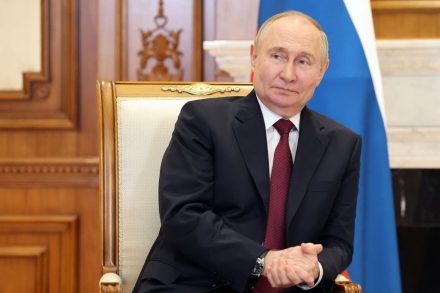
Will Putin give peace a chance?

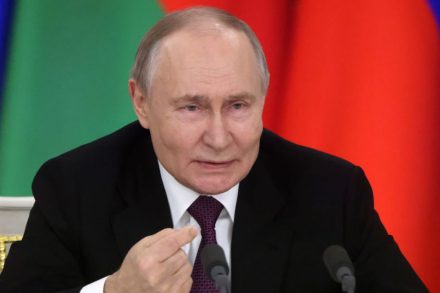
At a summit meeting in Moscow, Ronald Reagan was asked about his basic approach. He famously answered, “Here’s my strategy on the Cold War: we win, they lose.” Vladimir Putin has the same strategy for Ukraine. That is certainly his first response to President Trump’s offer to mediate an end to the war and bring a reluctant Ukraine to the negotiating table. If “we win, they lose” is Putin’s final response, then the war cannot end without Ukraine’s surrender or Russia’s collapse. Putin’s initial reply, filled with his maximalist demands, indicates he is still committed to the conquest of his neighbor, whose independence and sovereignty he has long rejected.

Europe learns the facts of MAGA life

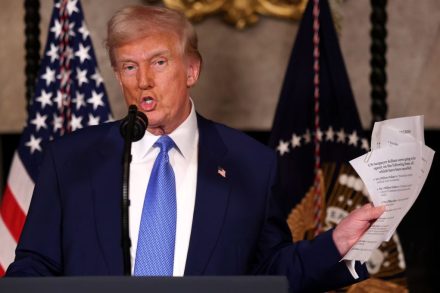
Panic, even hysteria, has swept Europe. Its leaders realize that in their case Trump should be taken literally as well as seriously, and he seems prepared to trade the transatlantic alliance for détente with Russia. Eight decades of good times for the continent might be coming to a dramatic end. Trump demonstrated contempt for Europe during his first term; however, his top aides moderated his antagonism, carrying on policy as normal. While out of office he evidently decided never again. Today he is firmly driving American foreign policy. As ever, Trump’s tactics are often dubious, even counterproductive. However, only shock treatment is likely to cause Europe to take its own defense seriously.

europe

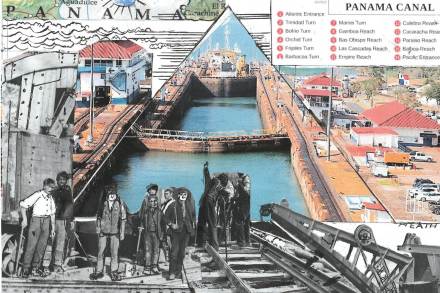
Panama celebrates a quarter-century’s ownership of its greatest asset

New Year’s marked the twenty-fifth anniversary of the collective freakout known as Y2K, when overwrought tech aficionados joined forces with Luddites to warn the world of the pending apocalypse of computer infrastructure that could run the global economy but was evidently incapable of resetting to “00” in date codes. Those chiliastic projections obviously did not come to pass, which is why we can spend 2025 reflecting on the twenty-fifth anniversary of the day’s other Chicken Little situation — consternation over the transition that would, some skeptical parties feared, have catastrophic consequences for infrastructure central to the daily functioning of global markets, the final turnover of the Panama Canal.

Panama

Nick Harkaway: Karla’s Choice

From our UK edition

32 min listen

My guest in this week’s Book Club podcast is the novelist Nick Harkaway, whose new book Karla's Choice sees him pick up the mantle of his late father, John le Carré, in writing a new novel set in the world of George Smiley. He tells me why, having spent a career trying to put clear blue water between his own work and that of his father, he’s now steering in the opposite direction; about growing up with Smiley; about his relationship with the man so many outsiders have seen as secretive and opaque; about seeking advice from Stephen King’s son, Joe Hill; and why moving from his own style to that of his dad is just a ‘turn on the dial’.

RNC ends on a high note

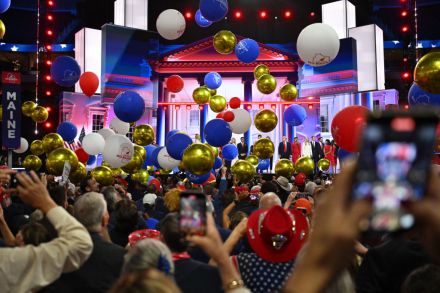
The Republican National Committee’s memorable four-day convention came to an end in Milwaukee last night. With an unusual performance from Kid Rock, a shirt-ripping Hulk Hogan and dozens of Trump-humanizing speeches, the RNC managed to throw a party that drew some attention, some laughs and certainly some tears — from worried Democratic strategists and enamored Trump-fans alike.It was, as The Spectator’s James Heale put it, “the first convention in twenty years where polls suggest the Republicans are on course to win the White House, producing an air of expectation and excitement.

Why Russia is flaunting its ships in the Caribbean

Two Russian ships docked Tuesday in Venezuela’s La Guaira port, twenty miles away from Caracas. The stop comes after military exercises were conducted in the Atlantic, with four vessels stopping in Havana late last month. This is all part of a decades-long “look-at-us” operation, also known as a “show the flag” move, as Russia’s defense ministry puts it. While Russia’s presence in Cuba and Venezuela is not a new phenomenon, conflict in the East has only accelerated their muscle-flexing in the West. These movements mark Russia’s first extensive military exercises in the hemisphere in five years, as well as their first deployment of a nuclear submarine in close proximity to the US since the Cold War.

Russia

Was China’s economic boom ‘made in America’?

From our UK edition

53 min listen

Today, the US and China are at loggerheads. There’s renewed talk of a Cold War as Washington finds various ways to cut China out of key supply chains and to block China’s economic development in areas like semiconductors and renewables. There’s trade, of course, but the imbalance in that (some $370 billion in 2022) tilts in China’s favour and only serves as another source of ammunition for America’s Sinosceptics. China, on the other hand, is also decoupling in its own way, moving fast to cut its reliance on imported technology and energy. At this moment, it seems like US-China tensions are inevitable – but look into the not so ancient history, and you’ll find a totally different picture.

The Americans who defected to North Korea

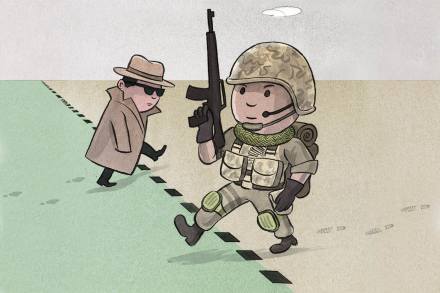
Last summer, US Army soldier Travis King ran across the Korean Demilitarized Zone into the arms of the North Koreans. It wasn’t because of some mental break or as part of a spy operation. North Korean state media claims he was motivated by racism and mistreatment — of course they would. The DPRK’s outlets have previously criticized the US for its treatment of African Americans, around the same time they compared former president Barack Obama to a “wicked black monkey.” Like the six American servicemen who crossed the DMZ before him, King probably had a mixture of reasons for his flight. Unlike in the previous cases, however, King’s detention was a short one.

North Korea

The man who made Reagan

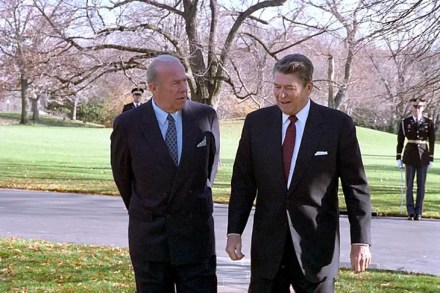
Ronald Reagan has been dead for nearly twenty years, but sometimes it still feels like he’s still the head of the Republican Party. The fortieth US president has been etched in American folklore as one of the country’s most effective and historic statesman, the man who stared down the Soviet Union and pursued policies that ultimately brought down the so-called “Evil Empire” in December 1991. Republican politicians of all stripes, from presidential aspirants to local councilmembers, utter his name at every opportunity. The first GOP presidential debate took place at the Reagan Library in Simi Valley, California, where multiple candidates looked back at the 1980s as a time when the mighty US shook off the cobwebs from the Vietnam War and rediscovered its self-confidence.

President Reagan walking with George P. Shultz outside the Oval Office (Wikimedia Commons)

How the CIA interfered in the Congo

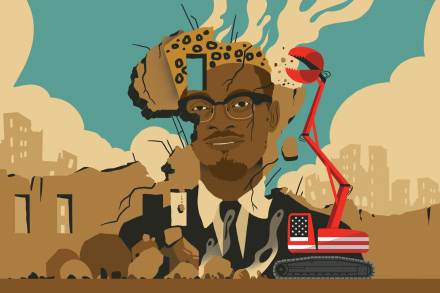
As everybody knows, as soon as you start to talk to any historian of postwar life in any Latin American or African or Southeast Asian country, the discussion quickly turns to the role of the CIA in subverting democracy. From the Truman-era coups in Syria and Egypt, through regime change in Guatemala, assassination in the Dominican Republic, the fomenting of industrial unrest in Guyana, and both the military and covert US involvement in Vietnam, it seems overseas intrigue was the rule and long periods of benign neglect the exception.

congo

Unfinished business in Berlin: The Secret Hours, by Mick Herron, reviewed

From our UK edition

During the summer, I noticed a new noise coming from the crowd whenever Ben Stokes or another English player bashed or stroked the ball to the boundary. It wasn’t quite the cheer you’d expect; more an ahhhh of appreciation, as you would deliver to someone who is offering a masterclass in how to win a game when it has, to all intents and purposes, already been won. By the time I was about halfway through The Secret Hours, that was the noise I was making in my head, as new twists kept unfolding. And they did keep unfolding, if twists can be said to unfold, right up until the last page. Never has a work of popular fiction delighted me more.

Too in thrall to today’s dogmas: ITV1’s A Spy Among Friends reviewed

From our UK edition

In 2014, Ben Macintyre presented a BBC2 documentary based on his book A Spy Among Friends: Kim Philby and the Great Betrayal. The programme managed to shed new light on a familiar but still irresistible story by concentrating on Philby’s relationship with his old chum – and fellow Cambridge man – Nicholas Elliott. Elliott was sent in 1963 by the Secret Intelligence Service (SIS) to question Philby in Beirut where Philby had become the Observer’s foreign correspondent after a long and successful career betraying his countrymen to the Soviets. Elliott did elicit some sort of confession, but a few days later, Philby absconded to Moscow.

Reminders of the Cold War in Vienna and Budapest

Apparently an acquaintance has dubbed me the “Kremlinologist of the right.” Redolent as it is of the Cold War-era drama surrounding the Kremlin, when the West was desperately trying to suss out what Winston Churchill called a riddle wrapped in a mystery inside an enigma, I could hardly object to this quip upon learning of it. Indeed, I recently traveled to two hot spots of the Cold War, Vienna and Budapest. I went full immersion in Vienna, where I attended a screening of Orson Welles’s The Third Man, a humdinger of a movie if there ever was one. Graham Greene set it in postwar Vienna, which was divided between the four occupying powers, France, Great Britain, America and the Soviet Union.

Cold War

How to win the war that everyone is losing

Russia is losing the war in Ukraine. So is Ukraine. And so are we. Imagine the good guys win tomorrow. What exactly will we have won? Ukraine was the poorest country in Europe even before the war. Afterward it will remain as dependent on American dollars as it is now — and on American arms. Russia will not have disappeared, after all. The last war-torn and impoverished country that required open-ended American support was Afghanistan. Yet all the weapons and funds we lavished on Hamid Karzai and Ashraf Ghani failed to keep the Taliban at bay after we left. The money also didn’t help with Afghanistan’s corruption problem. Will it help with Ukraine’s? In 2021, Transparency International ranked Ukraine second only to Russia as the most corrupt country in Europe.

war