Coalition

Clegg tries to reassure his troops

Only a few weeks ago, a statement from Nick Clegg in firm support of the coalition wouldn't have been noteworthy at all. It's just what he, as Deputy Prime Minister, did. But now, after his very public palpitations over Europe, the New Year's message that Clegg has broadcast today is a little more eyecatching than it would otherwise have been. This is no provcation to rile the Tories, but a more or less sober assessment of what the Lib Dems have achieved in government, along with a few lines about how fixing the economy ‘remains the number one priority for our party and the coalition.’ Most strikingly of all, Clegg doesn't include Lords reform in his list of government policies coming next year.
Tim Loughton versus the adoption bureaucracy

Parliament has decamped for midwinter, but the business of government goes on. Today's announcement, by the children's minister Tim Loughton, is contained within a Times article here. ‘An expert panel,’ it reveals, will be tasked with designing a new system for assessing prospective adoptive parents by March next year. That new system, making it easier for suitable folk to adopt, should then be in place by the end of 2012. In many respects, adoption is perfect Cameroonian territory; being, as it is, at the intersection of social responsibility, family, deregulation, etc, etc. But politics isn't what should concern us here. A lot of unmitigated good can be done in fixing a system that has been strangled and subverted by years of bureaucratic interference.

A sliver of Christmas comfort for George Osborne

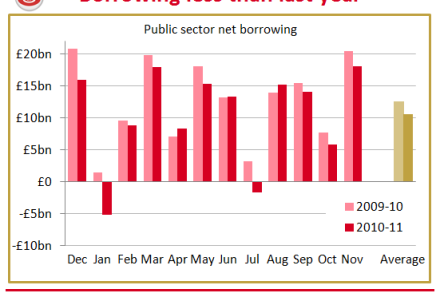
There's some rare good news for the government in today's public finance statistics. Public sector net borrowing in November is estimated at £18.1 billion, down from £20.4 billion last year. This means that total borrowing for the first eight months of this financial year is £88.3 billion, down 11 per cent on last year. That's lower than expected, and puts us on target to undershoot the OBR's forecast of £127 billion in 2011-12. That'd be a relief for the coalition, after Labour hit them hard when the OBR upped their borrowing forecasts last month. But this deficit reduction cannot be put down to spending restraint in Whitehall. In fact, central government is spending around £1 billion a month more than it did last year.

An early Christmas present for the coalition

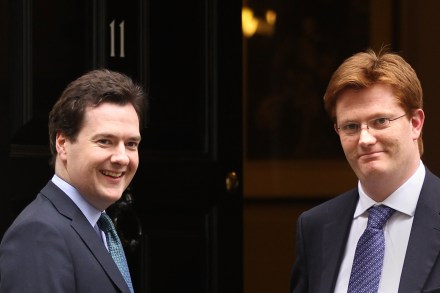
It has only taken several months of bitter negotiation and a national strike to get here, but a deal between the unions and the government over public sector pensions could finally be in sight. Danny Alexander has just announced the details in Parliament, but basically it seems that, across a range of schemes, the coalition has offered kinder accrual rates than it did in November. And this more generous proposal has now been accepted in principle, or at least not turned down, by 26 of the 28 relevant unions. Among those who still oppose it outright are the PCS, led by everyone's favourite union malcontent, Mark Serwotka.

Another fine mess at HMRC

Today's report by the Public Accounts Committee hasn't so much been released as detonated onto the Westminster scene. The Exchequer is owed around £25 billion, it suggests, from major companies that have been handled too leniently, or just plain wrongly, by HM Revenue & Customs. And much of the blame is attached to Dave Hartnett, the outgoing civil servant in charge of revenue collection. Interviewed on the Today Programme earlier, the chair of the committee, Margaret Hodge, implied that Hartnett had too ‘cosy’ a relationship with big business.

Who is the British foreign secretary?

Officially, of course, the answer to that question is William Hague - who has put in some decent work since assuming office, particularly during the Arab Spring. But, still, I ask it because, following the European Council, Nick Clegg seems to have usurped the Foreign Secretary's role in a number of key areas. It was the Deputy Prime Minister who engaged the newly-elected Spanish leader, for example. It was also Clegg, not Hague, who was instrumental in bringing German foreign minister Guido Westerwelle to Britain on a 'we still love you' visit yesterday. And when it comes to phoning European leaders to press a UK position, it is the Deputy Prime Minister who is asked to put in the hours, not the veto-wielding Prime Minister or Britain's chief diplomat.

Obsorne’s banking reforms are only the start of a solution

‘The most far-reaching reforms of British banking in modern history.’ That's how George Osborne called it in Parliament this afternoon, in a statement that contained few surprises. What the government's doing, in large part, is to follow exactly the recommendations contained in September's Vickers Report. But is that really as far-reaching, or as radical, as the Chancellor would have us believe?   Certainly, many of these reforms are encouraging: measures such as ‘bail-ins’ and ‘living wills’ should facilitate the orderly winding-up of insolvent institutions, and reduce the necessity for taxpayer bailouts. But other parts of the government's reform package are less convincing.

Clegg sets out his stall for 2012

Under cover of discussing the Open Society and its enemies, Nick Clegg today set out his personal agenda for the next year of this government. Indeed, Clegg's speech to Demos earlier was perhaps the purest distillation of his politics since the big set-piece number he delivered at the Lib Dem conference in 2008. It contained many of the same themes as that earlier speech: ‘social mobility’, ‘civil liberties’, and ‘democracy’. And it added a couple more for good measure: ‘political pluralism’ and ‘internationalism’. The Deputy Prime Minister described these five political impulses as ‘the source of my liberalism’.

The coalition tees up its banking reforms

That was easy. Only a few months after Sir John Vickers released his final recommendations for reforming the banking sector — and after much less intra-coalition struggle than we might have expected — the government is set to announce that it will adopt them ‘in full’. Vince Cable revealed yesterday that he and George Osborne have reached common agreement on the matter. And, for his part, Osborne will appear before MPs today with further details.  As Robert Peston has already explained, ‘in full’, in this case, doesn't quite mean 100 per cent — but it's close. The main proposal to ringfence retail banking off from riskier investment banking will be fully implemented.

The coalition’s marriage troubles

A few months after the coalition was formed, I went for lunch with a close ally of Nick Clegg. After an hour or so of discussing what the coalition’s agenda would be, this Liberal Democrat said to me: ‘now, David Cameron can’t really be serious about this marriage stuff, can he?’ When I replied that I thought he was, he looked at me with total incomprehension. He then launched into a speech about how no ‘liberal’ could possibly want to see the state promote marriage. This is the thinking that lies behind Clegg’s latest attack on the idea of tax breaks for married couple; it has become an identity issue for the Liberal Democrats.

Cable: Cameron put political gain ahead of national interest

While we're on the subject of LibCon divide, it's worth noting Vince Cable's remarks to Andrew Marr this morning. The headline above is merely a paraphrase, but it's pretty close to what the Business Secretary actually said: ‘It was largely political. Certainly the Prime Minister’s got a sort-of short-term boost from it, but it doesn’t actually deal with the long-term fundamental problems in Europe.’ Seems to me that there have been harsher words deployed this week, but few harsher sentiments. In the spirit of, erm, ‘getting on with my job as I always do’, Cable is going especially far in attacking his coalition partners. Vince, as always, remains One to Watch in 2012 — and mostly for the wrong reasons.

What phase of the coalition are we in now?

It was not so long ago — the run-up to last May's AV referendum, to be exact — that we heard the coalition would be entering a new phase. Gone was the happy synthesis of the Tories and Lib Dems that prevailed after the election, and in its place would be a government that spoke more openly, more angrily about its differences. But even if Phase 2.0 had the appearance of being more fractious, it was actually designed to keep the parties together. The idea was that, by highlighting the essential differences between the two sides, their supporters could more easily be kept on board with the overall project. I mention this, this morning, because it looks as though that strategy is either being ramped-up or taken in a new direction. During Phase 2.

Another sign of coalition splits over Europe

Coalition tensions over Europe are again threatening to be the story this morning. Nick Clegg has told The Guardian's Patrick Wintour that Britain has 'signalled we are happy for them [the Eurozone plus group of countries] to use EU institutions' to enforce any new treaty they agree between themselves. This is a striking claim given that David Cameron has not publicly said that he would accept this. If the Deputy Prime Minister's summary of the coalition position is accurate, then Cameron will face criticism from eurosceptics that he is backsliding on his veto. But for all Clegg's criticism of Cameron handling off the summit, he remains unconvinced by the plans that the eurozone plus countries are now pursuing.

Clegg tries to rebuild EU bridges

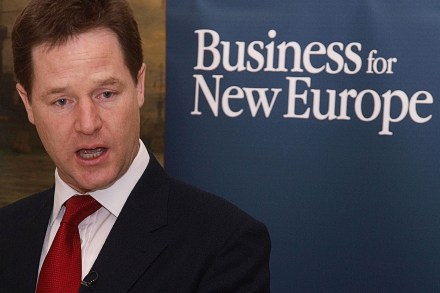
What are the Lib Dems up to? On Tuesday, Clegg, Cable, Alexander, Huhne and Laws met with 'Business for New Europe', a group of pro-European business leaders, in what the FT describes as as 'a very public display of engagement with business over Europe' and the front page of today's Mail calls 'plotting to rally business chiefs against Cameron over Europe'. It is, of course, not surprising to see senior Liberal Democrats talking to pro-EU business people and advocating more engagement with Europe. But it does highlight what will be a key goal of the Lib Dem leadership over the next few months: building bridges with Europe, particularly to reconnect with traditional, europhile Lib Dem supporters following the PM's veto last week.

The veto arguments rumble on

The Times has a very interesting story (£) today on page 17. It claims that David Cameron had agreed to inform Nick Clegg if it appeared that Britain was going to be isolated at last week’s European Council. The significance of this is that it suggests that the Lib Dems believed they would be consulted before the government vetoed anything. This news emerges after senior Liberal Democrats have privately questioned why their leader did not insist that Cameron only use the veto once he had Clegg’s explicit agreement. The Times also reports that this negotiating protocol did not envisage a situation where Britain was left in a minority of only a couple of countries.

Dave’s ‘troubleshooters’ policy is right — but it needs working on

David Cameron has finally announced the way forward on his pledge to ‘turn round the lives of 120,000 of Britain’s troubled families’ — and it is good news. These families combine behaviour that is harmful or disruptive to the rest of society with reliance on benefits, social housing and other services, reinforcing the sense that they are taking a lot from their fellow citizens while giving nothing positive back. And although dealing with their problems is expensive, they already cost government and society a lot of money, as the Prime Minister is rightly emphasising today.

The growth script still needs writing

The Times is being a bit harsh on Cameron in its leader this morning. 'On the economy', it says, 'Cameron has contracted out policy to George Osborne and then followed the usual (although not invariable) practice of postwar prime ministers of supporting his Chancellor's decisions. But he has not added to this a convincing contribution of his own.' Yes, Cameron has not done very well articulating his government's growth policy. I've also noticed that he is not much good at describing the Loch Ness Monster and for the same reason. Unconfirmed rumours of its existence whirl around now and again. Grainy photos of something supposed to be a UK growth agenda surface. But when expeditions are sent out to prove its existence, they invariably fail.

Cameron targets his resources at problem families

The Prime Minister's message today is, basically, that he hasn't forgotten about the riots. In a speech this morning, he's going to announce his biggest new policy in response to them so far: a network of 'troubleshooters' who will work with 120,000 of the country's most unstable families, with the aim, of course, of stabilising them. The idea is that the troubleshooters can help coordinate various services — from police to Job Centres –— to focus on these people. According to the Sun, the families will, in turn, face 'tough penalties' if they don't cooperate. Some of you may be wary of this scheme — and it's easy to see why. I mean, yet more local authority lackeys swarming through the streets?

Clegg in the spotlight

All eyes at PMQs will be on a man who isn’t speaking, Nick Clegg. His refusal to attend the Prime Minister’s statement on the European Council means that today he will be the centre of attention. Labour will attempt to embarrass him as much as possible, trying to highlight both the divisions in the coalition and the impotence of the deputy PM. For its part, the press will read an awful lot into his body language every time Cameron mentions the E or V words.   The worry for the coalition is that this split over Europe is just going to keep repeating. There are going to be many more European summits where Britain will be in the minority between now and 2015.