Climate change

Has dead aid taken on a green hue?

We've got £800 million to spare, haven't we?  Don't be so cynical – of course we do.  After all, it's the amount of UK cash that Gordon Brown is prepared to sign over to a new £10 billion climate change fund that he's proposing.  The idea is that the money can be used to encourage poorer countries to move towards greener economies.  Brilliant. More seriously, I'd have thought that the money would be better spent on developing those green technologies which could create jobs and clean up the environment, both home and away.  Especially as we don't have much money to spare, and this fund contains so much potential for waste.  After all, will it make any real difference when set against the richer countries who are the main emission offenders?

Osborne’s recycling giveaway is actually an Age of Austerity measure

I don't want to be a stick-in-the-mud when it comes to an idea which is actually quite promising, but it's worth pointing out that George Osborne's plan to pay people to recycle – featured in quite a few of today's papers – was first mooted by him back in July 2008.   The difference between then and now?  That this particular nudge was worth up to £360 a year for families who took advantage of it – whereas now the figure has come down to £130 a year.  In which case, it's probably better to regard at least this part of Osborne's announcement today as an Age of Austerity-inspired cutback, rather than new policy.  Not that that's a bad thing, of course, given the desperate state of the public finances… P.S.

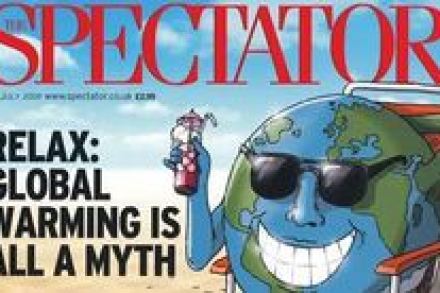
Is the world cooling or not – and what is to blame?

The Financial Times supplement this weekend contained profiles of the world’s leading climate experts, including - the magazine promised - the world’s leading sceptic. I quickly leafed through the pages to see who had been picked as the whipping boy, expecting to see a Danish name. No, not that of Bjørn Lomborg, who became (in)famous for his book The Sceptical Environmentalist, but that of Professor Henrik Svensmark. In the end, it was Richard Lindzen. But it is Svensmark’s research that may prove the greatest challenge to the prevailing consensus on climate dynamics. The Danish scientist, author of The Chilling Stars, become noted because of his research into cosmic rays and their effect on cloud formation.

A wild goose chase

The conventional view of global warming originates in the environmentalism of the Sixties. Alone, the Green movement might have done little more than raise awareness among consumers and legislators of the need to limit pollution and conserve natural resources. But in the Seventies environmentalism joined forces with the continuing backroom campaign of international bureaucrats for world government. At the time, temperatures had been falling, sparking fears of a new Ice Age. By the Eighties the trend had reversed. Runaway warming and cities submerged by rising seas replaced the spectre of Chicago and Rome buried under miles of ice. No matter.