Climate change

Climate change, Bruegel-style

From our UK edition

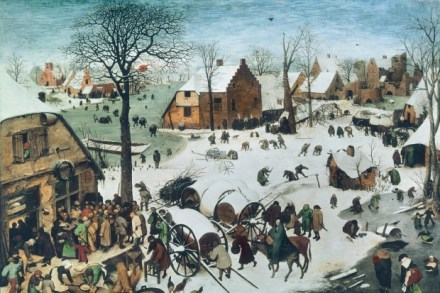
It is cold, but not in a cheery, robin-redbreast kind of way. The sky is slate blue; the sun, a red ball, is slipping below the horizon, figures carrying heavy burdens trudge across the frozen water. Yet this far- from-festive painting, ‘The Census at Bethlehem’ by Pieter Bruegel the Elder, is one of the earliest — perhaps the very first — to set the Christmas story in a northern winter landscape. There is no attempt to pretend that this is the Holy Land. The setting is a village in the southern Netherlands. The houses are brick-built, one with a northern European crow-stepped gable. In the foreground, a pig is being slaughtered, an improbable sight in Palestine. In his poem ‘Musée des Beaux Arts’ W.H.
Why don’t we hear about the beneficial side of climate change?

From our UK edition

Two headlines on successive days speak volumes about the scaremongering which is endemic in the way in which learned bodies disseminate information on climate science. Yesterday, the Royal Society published a report, Resilience to Extreme Weather, predicting that by 2090 four billion people around the world each year will be subjected to heatwave events, with dire consequences for the health of older people. This morning, the Office of National Statistics published its latest figures on ‘excess winter deaths’. They show that last winter there were 18,200 more deaths between December and February than would be expected during the three summer months. Dramatic though this sounds, it is the lowest recorded in 65 years.

Maria Eagle is talking nonsense about floods and climate change

From our UK edition

The Shadow Environment Secretary Maria Eagle headed off to Woking today, where she addressed an audience of environmentalists at WWF’s swanky new headquarters. Her speech, which was widely trailed, was full of silly season fare, and her superficial understanding of the climate debate shines through. Take this for example: ‘The Met Office, the Committee on Climate Change and the overwhelming majority of the scientific community all tell us that last winter’s floods are consistent with the projected consequences of climate change.’  ‘Consistent with’ is one of those gloriously weasel phrases that the more disreputable kind of climate scientist likes to use when speaking to politicians.

Letters: Lord Lawson is not banned from the BBC, and Wales is wonderful

From our UK edition

No ban on Lawson Sir: You write that the BBC ‘has effectively banned’ Lord Lawson from items on climate change unless introduced with ‘a statement discrediting his views’ (Leading article, 12 July). There’s a lot of muddled reporting of this story. Lord Lawson hasn’t been in any sense ‘banned’, and the Editorial Complaints Unit finding didn’t suggest that he shouldn’t take part in future items.

Australia’s Tony Abbott has made history by abolishing the hated carbon tax

From our UK edition

A few years ago, the conventional wisdom down under held that Tony Abbott and his centre-right Liberal Party were crazy to oppose the notion of carbon pricing. The view was so commonplace among Canberra press gallery pundits that it seemed reckless to contradict it. Those were the days, remember, when global warming alarmism was all the rage around the western world. From Sydney to Southampton, Al Gore’s An Inconvenient Truth was a blockbuster. An Australian prime minister, Kevin Rudd, had declared that climate change was the world’s ‘greatest moral challenge.’ Nigel Lawson’s book, An Appeal to Reason, was rejected by every British publisher, to whom it was submitted.

Fear and libertarianism in Las Vegas

From our UK edition

Great God, Vegas is an awful place. I realised this the moment I arrived. My cab driver — who’d been perfectly agreeable en route from the airport — mistook my post-flight sluggishness for reluctance to give him a tip, and drove off angrily cursing me as I fumbled in my pockets. The line just for the check-in desk was about a mile long. Everyone was fat and drunk and dressed for the beach. Outside it was too hot: 105°F at 5 p.m. Inside, it was too cold from the relentless air-conditioning. Everywhere had the style and charm and tastefulness of Redditch. By day three I’d had enough. ‘Don’t stay in Vegas more than three days,’ people had warned me. And people were right. It’s more than enough. Four days would definitely drive you mad.

In apologising for having Nigel Lawson on to discuss climate change, the BBC has breached its charter

From our UK edition

Listen to ‘Is climate change a factor in the recent extreme weather?’ on Audioboo It is only a matter of time before Nigel Lawson — if he is allowed on the BBC at all — has to have his words spoken by an actor in the manner of Gerry Adams at the height of the IRA’s bombing campaign during the 1980s. In the case of Mr Adams, whose voice was banned from the airwaves by the government, the BBC stood up for free speech. But it is quite a different story with Lord Lawson. The BBC has effectively banned the former chancellor (and former editor of this magazine) from appearing on its programmes to debate climate change, unless he is introduced with a statement discrediting his views.

In defence of Nigel Lawson, and his fellow climate sceptics

From our UK edition

Some people find climate change ‘deniers’ the most irritating people on God's green earth. On her Telegraph blog Martha Gill equates them with flat-earthers, which says a lot for the depth of her analysis. She points to a piece on the Huffington Post by Bob Ward of the Grantham Research Institute on Climate Change and the Environment (funded by billionaire Greenpeace contributor Jeremy Grantham, who also sponsors an $80,000 prize for environmental reporting – which this article will stand no chance of winning) and says it demolishes the deniers’ arguments. The problem is that it doesn't. Those who think ‘deniers’ are a problem and seek to put them down are in doing so misrepresenting the science they want to uphold.

There is something very wrong with climatology

From our UK edition

In the last few days climate scientists have found themselves back on the front pages, and once again it’s for all the wrong reasons. The furore this time has been prompted by an eminent climatologist named Lennart Bengtsson, who agreed to join the Academic Advisory Council of the Global Warming Policy Foundation, Nigel Lawson’s sceptic think tank. Within days of his agreement, Bengtsson felt obliged to resign, apparently having been subjected to a wave of protests and threats of ostracisation from colleagues, one of whom publicly insinuated that the 79-year-old Bengtsson was senile.

David Cameron’s sacred cows exposed by Freakonomics

From our UK edition

There's an interesting bit in the first chapter of Think Like a Freak, (Allen Lane, £12.99), from the Freakonomics duo, Steven D Levitt and Stephen J Dubner in which the two Steves get to meet David Cameron and a few dozen of the team just before he takes office. They are there to do what freethinkers do, viz, cut through the guff and muddled thinking that surrounds the big issues. Well, I can tell you for free that Mr Cameron is unlikely to sue for his name check. They observe breathlessly that "everything about him radiated competence and confidence. He looked to be exactly the sort of man whom deans at Eton and Oxford envision when they are first handed the boy.

Spectator letters: How schools fail boys, Jonathan Croall answers Keith Baxter, and why atheists should love the C of E

From our UK edition

Why girls do better Sir: Isabel Hardman notes that girls now outperform boys at every level in education (‘The descent of man’, 3 May), implying that this is a symptom of a wider cultural malaise. In fact, boys lost their edge in 16+ exams in 1970, long before their advantages in other areas began to disappear. ‘Child-centred’ reforms were already well advanced when the infamous Plowden report was published in 1967, and informal practices such as ‘discovery learning’ and ‘whole language’ gave girls a decided edge. This was conclusively demonstrated in trials conducted between 1997 and 2005 by the Scottish Office.

National Trust trusting in green dogma

From our UK edition

Strange happenings at a place that many people think of as one of Britain’s National Treasures: the National Trust. As we point out in our leading article this week, the Trust and their director-general, Dame Helen Ghosh, seem to have done a 360 on fracking. Last year, Dame Helen had an ‘open mind’ when it came to fracking. But in an interview with the Guardian this week, Dame Helen revealed that she has turned her back on shale. She explained that the decision was made because: ‘We don’t believe anyone understands the environmental impacts, and because we as far as possible would want to avoid anything that encourages the continued use of fossil fuels.

The lefty liberals may be losing their hold over the arts world

From our UK edition

If you happen to be reading this column at breakfast, I’d recommend you skip to something more agreeable like Dear Mary and save mine till a bit later. It concerns the ugly details of one of the most revolting mass murderers in US history. His name is Kermit Gosnell — a doctor who ran a particularly dodgy clinic in Philadelphia specialising in late-term abortions for mostly poor black women. When police raided it in 2010, they encountered a scene of quite appalling horror. In a flea-ridden, blood- and faeces-stained basement, Gosnell had been operating on women using unsterilised equipment, killing babies well over the legal term limit, sometimes by sucking out their brains with a machine.

If you really hate wind farms, David Cameron won’t help you

From our UK edition

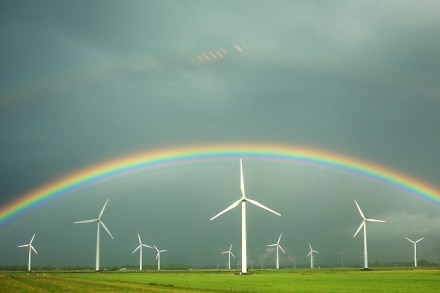
The Prime Minister is planning to cap the total number of onshore wind farms in Britain. But what would limiting the number of wind farms to those in existence or already in the planning system mean? The UK already has 7.1GW worth of turbines spinning away. There are 1.8GW under construction and some 4.3GW approved but not yet built. Once all these are up and running it will bring the total to 12.2GW. The government plans to install between 11GW to 13GW of onshore wind by 2020. If they were to limit turbines to those built or in the process of building, it would make precisely no difference at all. And, while we are number crunching, there is a further 8.3GW in the planning system but not yet approved. According to the industry, 1GW is enough to power 535,000 homes.

The potential of shale – in the fight against climate change…

From our UK edition

The United Nations’ Intergovernmental Panel on Climate Change published a report earlier this morning which contains a remarkable insight. Ottmar Edenhofer, head of the IPCC working group, told a press conference that shale gas might work as a bridge between fossil fuel dependence and renewable energy. (The report also mentions carbon capture and storage, nuclear and biofuels alongside shale as alternative energy sources.) The IPCC is not endorsing shale or rejecting renewable energy, far from it; but it is saying that shale could be a short term measure in the long-term battle against climate change.

Podcast: Adapting to climate change, monogamy in gay marriage and new forms of electioneering

From our UK edition

Is the world finally realising it has to adapt to, rather than halt, climate change? On this week’s View from 22 podcast, Matt Ridley discusses this week’s Spectator cover on the IPCC’s latest climate change report with Fraser Nelson. What do the findings mean for climate sceptics and the green lobby? How has the received wisdom on climate change shifted over the past eight years? And how big of a political issue is climate change? Julie Bindel and Douglas Murray also discuss gay marriage and the new responsibilities that come with it. Should gay marriages follow the same monogamous virtues as heterosexual marriages? Has the gay rights movement been taken over by too many conservative ideals? Is marriage a failed institution anyway?

How green policies hurt the poor

From our UK edition

[audioplayer src="http://traffic.libsyn.com/spectator/TheViewFrom22_3_April_2014_v4.mp3" title="Matt Ridley and Fraser Nelson discuss the IPCC's latest report" startat=67] Listen [/audioplayer]Advocates against global warming often frame the issue in terms of helping the poor. ‘You’re right, people dying thanks to climate change is some way off...’ ran one fairly typical advert recently, ‘about 5,000 miles, give or take.’ Indeed, the United Nations agrees that, looking toward the future, climate change ‘harms the poor first and worst’. And the logic stacks up: the poorer you are, the less able you’ll be to afford the resources to adapt to a changing climate. However, climate policies also have a cost, and these predominantly hurt the poor.

The end of snow? Not in Gstaad

From our UK edition

 Gstaad The American newspaper that prints only news it sees fit to poison good things recently announced ‘The end of snow’. ‘The planet has warmed 1.4 degrees Fahrenheit since the 1800s, and, as a result, snow is melting...’ Bring on the Pulitzers, snow melts! The Big Bagel Times also thundered that Europe has lost half its Alpine glacial ice since the 1850s — yes, the 1850s, when private jets ferried people such as Abe Lincoln around America, Otto von Bismarck polluted German resorts in his supercharged Mercedes-Benz, and young Taki steamed around the Med in a 100 mph speedboat powered by black slaves. Well, I for one don’t believe a word the Times writes, and, as I live in Gstaad, I have something of a first-hand knowledge of snow.

Why has Britain signed up for the world’s most expensive power station?

From our UK edition

‘As part of our plan to help Britain succeed, after months of negotiation, today we have a deal for the first nuclear power station in a generation to be built in Britain.’ That was David Cameron in October, announcing that his government had reached an agreement with the French power giant EDF over the construction of two reactors at Hinkley Point in Somerset. The Prime Minister must have a funny idea of success, because the more we learn about the Hinkley deal, the more we can see that it is one of the worst ever signed by a British government. Even the European Union can smell a rat. Last month, the European Commission published an initial report suggesting that the contract involves illegal back-door government subsidies to EDF, and will now carry out a full investigation.