Christianity

Romney’s continuing religious troubles

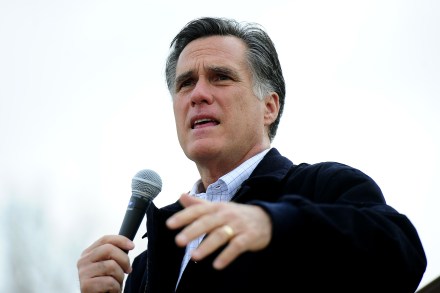
Some well-informed people — Rupert Murdoch among them — have suggested that Mitt Romney could exploit Obama’s increasingly fractious relationship with America’s Catholics to win the presidential elections in November. The so-called 'Catholic vote' is often said to be the crucial swing factor in American democracy. Romney, however, may be facing a bigger socio-religious stumbling block than Obama's: evangelicals. They don’t like him. Mainstream Protestant Republicans in the north have plumped for Mitt, generally speaking, but he has been far less successful in the evangelical south. ‘As a county’s evangelical population expands,' says Real Clear Politics analyst Sean Trende, 'Romney’s vote share declines.

Sentamu for Canterbury!

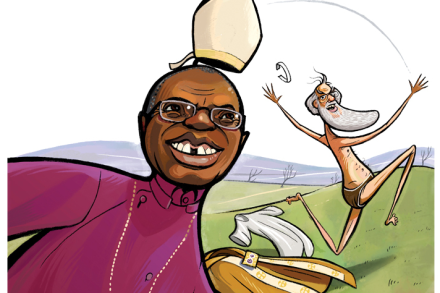
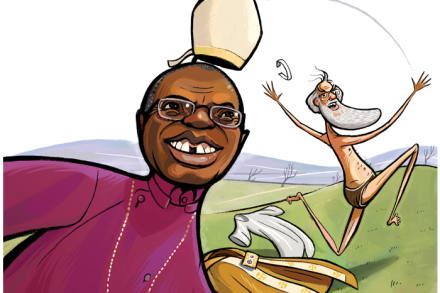
John Sentamu, the Archbishop of York, is our cover boy this week. It's the Church of England Synod next week, word is that Rowan Williams will be standing down soon, and Rod Liddle is backing Sentamu as his successor. When planning the headline, I thought about calling him the 'British Obama'. We didn't use this, as it's not a compliment — but if Britain is to have a figure who epitomises our country's inherent tolerance and open-mindedness I'd pick Sentamu above anyone else in public life. If he was made Archbishop, I really don't think there would be an uproar about the fact that he's black, or even that he came here as an Ugandan asylum seeker and still speaks with an accent.

The evil being perpetrated against Christians in Nigeria

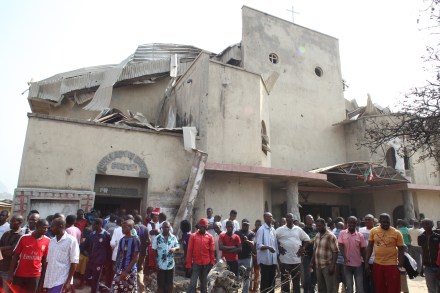
The religious cleansing against Christians is intensifying in Nigeria, where Christians have been told they have until Friday to leave the country or face attacks by Islamic extremists. As I wrote recently in the Daily Telegraph, this is a trend sweeping the Middle East. Thousands are fleeing Iraq and Egypt, but Nigeria is the scene of the most ferocious attacks. Its government condemns the attacks, but seems unable to respond to the Boko Haram menace. This from the National Review: ‘Catholic archbishop John Onaiyekan, of Abuja, Nigeria’s capital city, appealed for help. “It’s a national tragedy. We are all unsecured. It’s not only Catholic. Today it’s us. Tomorrow we don’t know who it will be,” he said.

We can’t ignore the persecution of Christians in the Middle East

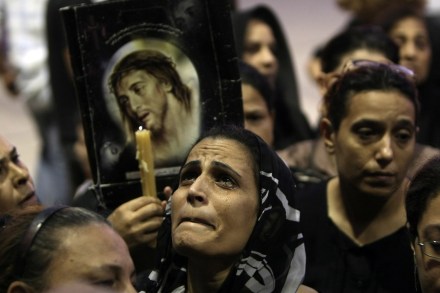
William Hague has transformed the Foreign Office in his 18 months in charge. He inherited a system hardwired with the dynsfunctionality of the Labour years, and it’s almost fixed. But not quite. It has not yet woken up to the wave of what can only be called ‘religious cleansing’ in the Middle East, which I look at in my Telegraph column today. Here’s a rundown of my main points. 1) The killing has begun, and could get worse. In Iraq, about two thirds of its 1.4 million Christians have now fled — being firebombed by the jihadis. Last year, gunmen entered a Baghdad church and killed 58 parishioners. To go to church in Iraq, which Christians have been doing for two millennia, now means risking your life.

Cameron’s missing the point: Christian values require Christianity

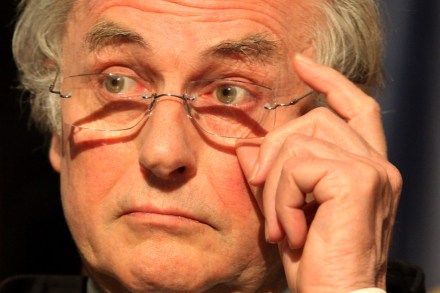
The Prime Minister does God. At least, that's the gist of his first major speech on religion. Actually, the interesting thing is that a Tory Prime Minister feels that he has to make the point that he is a Christian. Other than Michael Howard, who was Jewish, most other Tory leaders could have assumed we’d take it as read that he or she was more or less CofE, including Mrs Thatcher, who was, of course, a Methodist.  Following Richard Dawkins' remark that the Prime Minister may 'not really' be a Christian, Mr Cameron responded: 'I am a committed – but I have to say vaguely practising – Church of England Christian, who will stand up for the values and principles of my faith'.

A fierce debate on a religious matter

The Spectator hosted a debate at the Royal Geographic Society yesterday evening with a rather meaty motion: “Secularism is a greater threat to Christianity than Islam”. We have two reviews of the occasion. The first, by Kate Maltby, is below. Lloyd Evans' can be found here. Last night’s Spectator debate on the motion “Secularism is a greater threat to Christianity than Islam” was marked by a highly personal level of investment from the speakers, a sudden swing in the vote, and the uncharacteristic sight of Chair Rod Liddle acting as the most conciliatory person in the room.

The threat to Christianity

Is secularism now a greater threat to Christianity than Islam? This is the title of our next Spectator debate, to be held at 29 June, and it grows more topical by the week. In tomorrow's Mail on Sunday, we learn that a Christian electrician could be sacked after displaying a crucifix in his white van. His name is Colin Atkinson, and he works for Wakefield and District Housing Association who ordered him to remove the cross because it may offend non-Christians. They picked the wrong guy. Mr Atkinson is a former soldier and thinks this is a battle worth fighting for. He tells the newspaper, “The treatment of Christians in this country is becoming diabolical. I am determined to stand up for my rights.

O come all ye faithless

The Spectator understands the work pressure on vicars at this time of year. We know it is tempting simply to read out the diocesan Christmastide message. So here, for all clerks in holy orders, we offer this cut-out-and-preach sermon for use at carol services: May I speak in the Name of the Father, Son and Holy Ghost — though for many of you it might as well be in the name of the heathen god Thor. Interesting chap, Thor. Red-headed. Liked to hurl bolts of lightning and cause mayhem. A Norse Simon Heffer. I come not in peace. I will not wring my hands and speak to you in the voice of a primary school teacher. I am not going to employ some drippy parable while smiling at you like a flatulent goat. The Britain of Jeremy Paxman demands something ruder.

Robbing Peter to pay Paul

Two hundred years ago Jeremy Bentham wrote a tract which purported to demonstrate that the Christian religion was in effect manufactured by St Paul and not by Jesus. This was actually quite a common ploy at the time: a means by which freethinkers could assail Christian tenets without being prosecuted. And because St Paul’s writings occupy such prominence in the New Testament, and are plainly a major authority for so much Christian theology and understanding, there was reason well in excess of mere subterfuge to justify the procedure. In his restrained and in many ways compelling Introduction to his translations of the New Testament Rabbi Brichto (who died last year) adds a distinctive voice to what is therefore a fairly established debate about the place of Pauline theology.

The greatest puzzle of all

Philip Pullman’s trilogy, His Dark Materials, is one the best works written in English in my lifetime. Philip Pullman’s trilogy, His Dark Materials, is one the best works written in English in my lifetime. He is a truly great storyteller, and the details of his myth, as well as the rich gallery of characters, live forever in the reader’s memory. It upset many religious readers, especially in America, because of the fact that the central villainy of the Gobblers, child-stealers controlled by the Magisterium, are a Blake-inspired vision of Church Christians. (And rather a prophetic picture of what is now revealed on a daily basis in the papers about the activities of the Roman Catholic clergy).

The Loved Ones

It's not something I'd thought about but, in a certain way or looked at from the right perspective, it's a good question: What happens to your pet when the Rapture comes? Happily, After the Rapture Pet Care are here to help: It's only $10 a month! Now it's true that cynics might say that this is either a joke or a scam but I prefer to admire the considerate (and considerable) piety behind the scheme and take my hat off to the entrepreneurial spirit that accompanies it. (Relatedly, there are parts of the internets that Mencken would love. Waugh too, of course.) People say this will be the Chinese century but I tell you there's life in America yet. Until the Rapture, anyway, at which point the unbelievers will inherit, well, everything... [Hat-tip, SM via Twitter.

Apologies, but no apologetics

This is a massive work, 1,132 pages long, not counting the index. This is partly because the author, Professor of the History of the Church, at Oxford, seems anxious to downgrade the importance and uniqueness of Jesus of Nazareth in founding the religion which bears his name, and therefore deals first with the millennium which preceded his birth, tracing the roots of the religion in Greek and Hebrew culture. This takes up 73 pages, but is too cursory to be effective and should be skipped. The section on Jesus is not much more than 20 pages, and reflects all the most irritating aspects of modern Anglican New Testament criticism. The personality of Jesus never emerges, and one is left with the thought that if so little of it is true, what was all the fuss about?