China

Buying power: how China co-opts the UN

From our UK edition

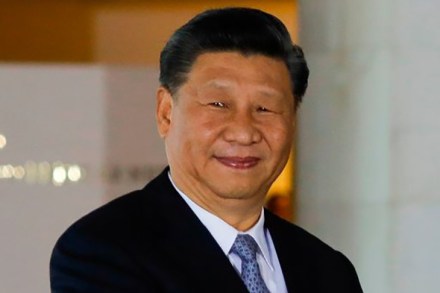
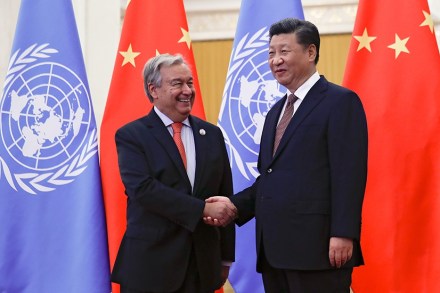
It was one of those forgettably historic moments at the United Nations. The year was 2015, the UN’s 70th anniversary, and China’s President Xi Jinping was in New York, speaking in person to the UN General Assembly. In festive spirit, Xi announced that China would set up a $1 billion trust fund to be dispersed over ten years to ‘support the UN’s work’ and ‘contribute more to world peace and development’. So began the Peace and Development Trust Fund, one of China’s more insidious projects to co-opt the UN, its logo and its global networks.
Cold war: Russia’s bid to control the Arctic

From our UK edition

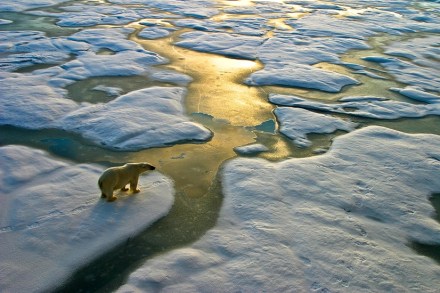
It may be time for Father Christmas to look for a new home, before the Russians kick him out. ‘This is our Arctic,’ declared the Russian explorer Artur Chilingarov when he went to the North Pole in 2003. Four years later, another Russian expedition, again led by Chilingarov, planted a titanium flag on the seabed 2.5 miles below the Pole. It was a symbolic gesture of a geopolitical ambition. The jingoistic Chilingarov proclaimed: ‘Our task is to remind the world that Russia is a great Arctic and scientific power.’ Since 2013, Russia has invested heavily in seven military/naval bases along its Arctic coast to strengthen the country’s power and influence.

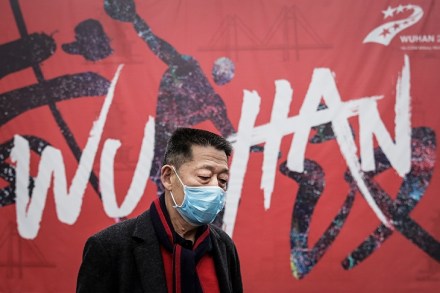
Why is China keeping quiet about its vaccine programme?

From our UK edition

While Britain is the first country in the world to approve a vaccine, it is not the first to start vaccinating people. A million people in China have already been inoculated with Sinopharm and Sinovac jabs. The vaccines, however, have not completed phase three trials, which assess potential side effects. In other words, they have not yet been granted regulatory approval. Could this be the reason that Beijing – never usually shy when it comes to good news – is keeping quiet? The vaccinations first started in July, when a legal provision for ‘emergency vaccinations’, based on the WHO’s response to Ebola, was introduced.

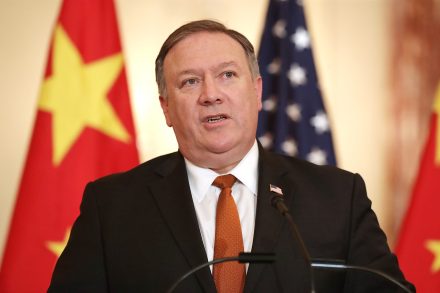
Pompeo to governors: China is watching you

This is an edited transcript of Mike Pompeo's speech to state governors at the National Governors Association 2020 Winter Meeting: Thank you Gov. Hogan, Gov. Cuomo, and all of you for being here today. It is hard to follow the President's State of the Union the other day. I am not passing out copies of my speech, so you cannot tear them up at the end. I have got to know some of you as I traveled throughout the states. I have probably traveled more throughout the country than other secretaries of state. I think it is important that the American people know what our diplomats are doing around the world and why we are doing it. Last year I received an invitation to an event that promised to be 'an occasion for exclusive dealmaking’.

pompeo

The case for Chinese reparations

From our UK edition

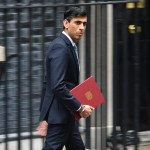
It is time we started to talk about reparations. I am not of course referring to the demands made by certain communities to be given vast cash payouts for things that happened before they were born, to people they never knew, by people they never met. I am talking about the need of the citizens of the world to be given reparations by China for what it did to us all this year. Before proceeding further, perhaps it is worth putting a few things in perspective. Delivering his spending review before the House of Commons last week, the Chancellor Rishi Sunak cited figures from the Office for Budget Responsibility explaining that the UK economy is due to contract by more than 11 per cent this year.

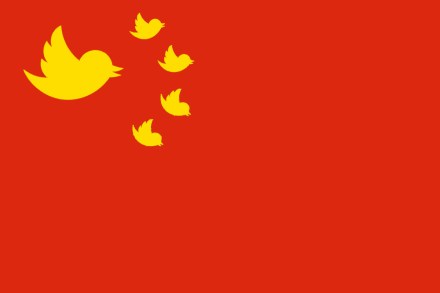
Twitter is in China’s pocket

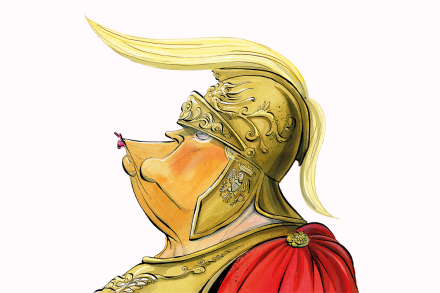
Twitter has been quick on the draw when responding to tweets by President Trump in the last month, as he furiously and mistakenly attempts to make his case for winning an election he did not win. Within minutes, Trump’s tweets are flagged as containing disputed information regarding the election. Twitter is very invested in babysitting the President of the United States, sometimes with cause. But the tech giant’s scrutiny of spurious posts from other governments is not as close: if Twitter will not label a tweet as containing false or ‘disputed’ information, it is by default suggesting that it is accurate. This is the dilemma Jack Dorsey has created for himself in assigning his company to be the absolute arbiter of truth.

chinese twitter china

China has a friend in Jesus

From our UK edition

Last week, I wrote about ‘Frost & Lewis’ (David and Oliver), leaders of our country’s team at the Brexit negotiations, guarantors of our Brexit intentions. It is they who have throughout maintained the essential position — that we are becoming an independent state and therefore will not trade sovereignty for market access. It is them, therefore, whom the EU wishes to neutralise. Hopes have risen in Brussels after the Downing Street ‘Carrie coup’ against Dominic Cummings. Frost & Lewis now lack a close friend at the court of King Boris except, possibly, the King himself. So it may be a good thing that Covid isolation forced them to return to London at the end of last week. They are negotiating from their base, close to their leader.

Portrait of the week: Cummings goes, Corbyn returns and pigeon sells for £1.4m

From our UK edition

Home Dominic Cummings, the chief adviser to the Prime Minister, Boris Johnson, left Downing Street after a week in which the public learnt that Lee Cain was the director of communications at No. 10, and that he had resigned after his appointment as chief of staff was withdrawn. The imbroglio directed focus on the performance of the Prime Minister and gave an opportunity for politicians to air their grievances. Mr Johnson then went into 14 days of quarantine, having been contacted by the national Test and Trace system after breakfasting with Covid-ridden Lee Anderson, MP for Ashfield. Mr Johnson’s own Covid test proved negative. He had intended to set out his ‘personal ambition’ for the country (such as making it carbon neutral by 2050).

If taxes must rise, Sunak should pick on private equity instead

From our UK edition

It’s not axiomatic that taxes must rise to pay for the pandemic, if you seriously believe the surge in growth, jobs and prosperity that will follow the rollout of a hyper-efficient national vaccination programme will generate sufficient revenues for Rishi Sunak to stabilise the public finances, albeit at the highest level of debt ever seen in modern times. On the other hand, the Chancellor is surely pondering this question: in the current mood of public gratitude for the NHS and government support for the economy, there must be taxes I can tweak that won’t lose sackloads of Tory votes and might chip the peak off the debt mountain — so where are they?

How the UK can help Hong Kong

From our UK edition

Those of us who spent our formative China-watching years reading Chinese Communist party publications learnt early on that the word ‘basically’ was a synonym for ‘not’. ‘The party has basically succeeded in…’ meant that there was a problem. Hong Kong is basically an autonomous region. Xi Jinping is satirised by liberal Chinese as the ‘Accelerator-in-Chief’, whose policies are hurtling the CCP’s regime towards collapse. This could be wishful thinking on their part. Certainly, he has sped up the demise of the ‘one country, two systems’ concept.

The next American empire

Americans have never been sure of their standing in the world, and the world has never been sure of Americans’ standing. In their first century as a nation, Americans believed that their principles made their civilization not just different but also better than Europe’s. Meanwhile, the intellectual and political leaders of Europe were unconvinced that America was a civilization at all. In their second century as a nation, other, older civilizations were obliged to admit that Americans were not just different: they were better at modern life. The Americans achieved this recognition first by the force of their industrial and military power, and then by the flattery that other civilizations could become equally forceful and seductive by adopting the American way of life.

empire

The strangeness of voting in the Lords from my bed

From our UK edition

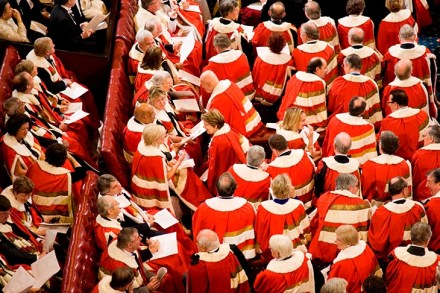
Having only recently entered the House of Lords, I must tread with caution, but I had always understood that it is chiefly a revising chamber. By strong convention, it does not reject legislation arising from the election manifesto of the party victorious in the House of Commons. Yet on Monday night, faced with the Internal Market Bill (which helps provide for a full Brexit), it attempted no revision at all. The House was sitting in committee, whose very purpose is revision, but the anti-government majority was on such a high horse that it happily let an amendment from critics of the government fall. It refused to engage. A key feature of the Bill is to ensure that Northern Ireland should maintain ‘unfettered access’ to trade with the rest of the United Kingdom.

China has taken control of Hong Kong’s legislature

From our UK edition

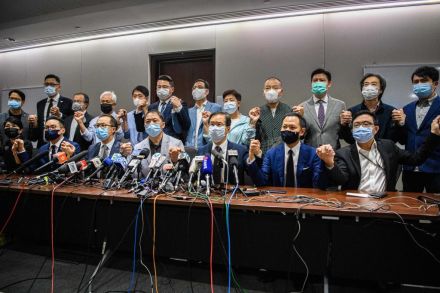
Hong Kong’s legislature has today moved one step closer to becoming a local branch of the Chinese Communist Party, after the disqualification of four of the most moderate, mainstream pro-democracy legislators resulted in the resignation en masse of every single pro-democracy legislator in protest. For the first time since 1997 the body now has no pro-democracy voices, marking yet another nail in the coffin of ‘one country, two systems.’ The four legislators who were ousted by Beijing – Alvin Yeung, Kwok Ka-ki, Dennis Kwok and Kenneth Leung – are hardly radical pro-independence activists.

Britain must learn from Asia’s pandemic response

From our UK edition

Across Europe, more and more states are imposing stricter and stricter restrictions to try and slow coronavirus’s spread. The Irish, despite having initially rejected the advice of their scientists to move to the highest level of restrictions, have now done so. Emmanuel Macron set himself against another national lockdown, but then announced one on Wednesday night, albeit with schools staying open. But, as I say in the Times this morning, life in Asia continues to return to normal. Case numbers are pancake-like in Japan, China, South Korea, Vietnam, Thailand and Singapore, while Taiwan has gone 200 days without a locally transmitted case.

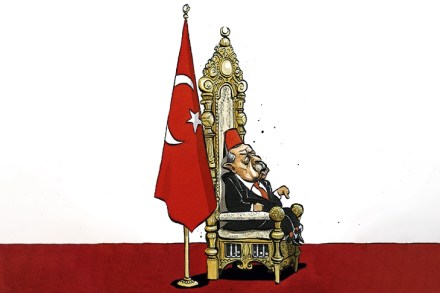
Erdogan’s game: why Turkey has turned against the West

From our UK edition

Six years ago, at the celebratory opening match of the new Basaksehir Stadium in Istanbul, an unlikely football star emerged. The red team’s ageing, six-foot tall centre-forward lumbered toward the white team’s goal; a delicate chip over the advancing keeper brought a goal that sent the stadium into ecstasy. The scorer was Prime Minister Recep Tayyip Erdogan. It was the run-up to an election in which he expected to become his country’s 12th president. For Erdogan, a former semi-professional footballer, it was brilliant self-promotion.

A toast to Tim Beardson

From our UK edition

I am in an Eliot mood, not a Keatsian one. ‘Season of mists and mellow fruitfulness’ is a surprisingly… mellow poem. There must have been a brief ceasefire between poor Keats and the advancing forces of premature mortality. But I have just heard of the appallingly premature death — by today’s standards — of a fascinating fellow. So it is more a matter of ‘Under the brown fog of a winter dawn… I had not thought death had undone so many’. At 69, Tim Beardson died of the ultimate effect of a tick bite, which compounds the sadness. At the beginning of the 1970s, he read history at the House.

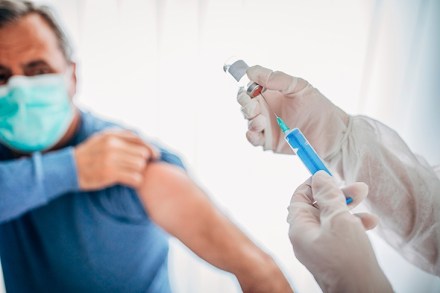
Who’d want the job of vaccinating the nation?

From our UK edition

Is that a light at the end of the tunnel — or a second lockdown thundering unstoppably towards us? News of a viable vaccine is the one development in the Covid drama that could drag the national mood out of the current despair that’s pulverising economic recovery; it would also provoke a euphoric stock market rally. And it’s clearly getting closer. But how close? The chance of a magic potion for Christmas remains ‘slim’, according to Vaccine Taskforce chair Kate Bingham; spring next year is a safer bet, says chief scientific adviser Sir Patrick Vallance, adding that ‘we should not overpromise’.

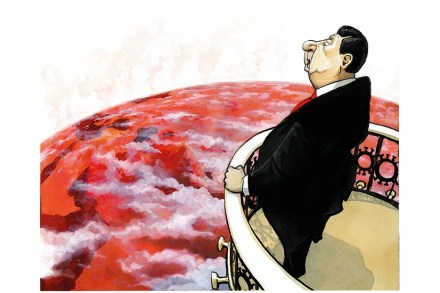
Xi’s world: Covid has accelerated China’s rise

From our UK edition

Back in February, the Chinese state appeared to be in trouble. A terrifying virus had infected thousands of people and the country’s social media exploded in anger against the authorities faster than Chinese censors could scrub away the critical comments. Like governments elsewhere, the Chinese Communist Party (CCP) turned to the emergency analogy of choice, the second world war. Channelling Mao Zedong’s guerrilla campaign against the Japanese in the 1930s, state media declared that China was fighting a ‘people’s war’ against the virus. As in that earlier war, China’s conflict with the virus has shifted from a defiant retreat to a declaration of victory. Nor is this just bluster.

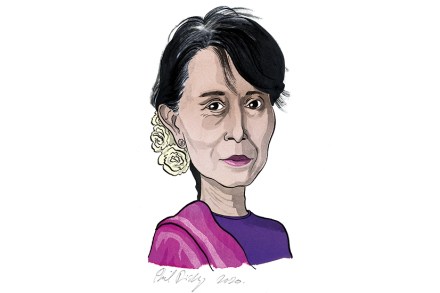
The truth about Burma’s ‘imprisoned princess’

From our UK edition

As Perseus was flying along the coast on his winged horse Pegasus, he spotted Andromeda tied to a rock as a sacrifice to Poseidon’s sea monster Cetus. It was love at first sight. Perseus slew Cetus and married Andromeda. Thus began the damsel-in-distress archetype that has been a mainstay of western culture ever since. Riffs on the archetype have been used by Chaucer, Shakespeare, Dickens and Wagner. Perhaps it was these examples that inspired the global liberal establishment (the BBC, Hollywood and the Nobel Peace Prize committee among others) to create, in the 1990s, the mythical version of Aung San Suu Kyi, Burma’s ‘imprisoned princess’, the saintly spiritual heir to Mahatma Gandhi, as Time magazine described her.

Can China be trusted on climate change?

Xi Jinping was widely praised on Tuesday after he told the United Nations General Assembly via videolink that China would ‘achieve carbon neutrality before 2060’. Environmental activists, academics and government leaders in the West hailed the move as a big deal, a significant step toward addressing climate change. The New York Times couldn’t resist framing this story as a ‘pointed message to the US’ which under Trump has increasingly diverged from the growing scientific and political consensus on climate change. President Trump, famously, initiated the process of withdrawing the country from the 2015 Paris Climate Accords.

china climate xi jinping thought