China

Letters: Lockdowns ruin lives

From our UK edition

Lockdown damage Sir: I am sick and tired of people taking the moral high ground and looking down on ‘lockdown sceptics’ like me as if we don’t care. It’s ironic, because while there is no clear evidence to date that national lockdowns actually save more lives (contra the interview with Matt Hancock, 9 January), there is plenty of evidence that lockdowns ruin lives. If anyone should take the moral high ground it is those, like myself, who witness this ‘collateral damage’ on a daily basis. Yes, the health issues are complex. And who would want to govern at this time?

We’re starting to see a new foreign policy for Brexit Britain

From our UK edition

What will Brexit Britain do differently? This is going to be the most important question in our politics for the next decade. If the answer is that nothing much will change, it would be hard to argue that the disruption of the past four and a half years has been worth it. But if Brexit means the country becomes quicker at adapting to changing circumstances, then the electorate’s decision in 2016 will have been vindicated. The quick decision to remove VAT from tampons and sanitary towels is a small, early sign of how Brexit enables parliament to respond more directly to public pressure. The decision not to join the EU’s vaccine procurement programme let us move faster with immunisation: the UK has currently vaccinated more people than France, Italy and Germany put together.

How should Britain respond to the takeover of Hong Kong?

From our UK edition

The veteran British diplomat the late Sir Percy Cradock said that Chinese leaders may be ‘thuggish dictators’ but ‘they were men of their word and could be trusted to do what they promised’. Well, the past year has put an end to the latter half of that statement. From coronavirus to the brutal treatment of Hong Kong, the behaviour of the Chinese Communist party has made it clear that the approach of liberal democracies to China must change. Last week, when the West’s media was distracted by the chaos in the US Capitol, police in Hong Kong arrested 55 pro-democracy activists on the charge of subversion. It is the latest example of the consequences of the national security law imposed by Beijing on the city in June.

China’s human rights crackdown is getting worse

From our UK edition

The Chinese Communist Party regime’s repression is pervasive and intensifying. Over the past five years, Xi Jinping’s brutal assault on basic human rights has accelerated with horrifying ferocity and speed.  But while the incarceration, forced sterilisation and enslavement of millions of Uyghurs is increasingly recognised as a genocide, and the dismantling of Hong Kong’s promised freedom and autonomy a grave breach of an international treaty, it is worth remembering that numerous groups in China are under attack.

Beijing revels in Washington’s chaos

From our UK edition

The events on Capitol Hill were always going to be met with schadenfreude — perhaps even glee — amongst autocracies in one-party states. They suddenly had the best ammunition they could have hoped for. From Turkey and Zimbabwe to Russia and Iran, state media and spokespeople latched on, turning the language often thrown at them back at America — calling for ‘restraint’ and ‘dignity’. For the Chinese government, which has been no stranger to violent mass movements in recent years, the analogy was obvious. Hong Kong’s legislature had been stormed just last year, with pro-democracy activists forcing their way into the building and vandalising the walls with anti-Beijing slogans.

Letters: Is cycling really conservative?

From our UK edition

Veritas vincit Sir: Professor Dawkins eloquently and engagingly defines true truth for us (‘Matters of fact’, 19 December). It seems to me that ‘true’ is a poor little four-letter word with a heavier workload than is reasonable. Historic truth may include ascertainable facts, which I suppose he would pass, but combined with conclusions based on available evidence or ‘true-to-life’ conjecture. Theological truth combines historic fact with unassailable moral principle and a journey of imagination beyond the reach of experience. It cannot be called untrue — only unproven. Perhaps we need to find a word with more gravitas than ‘truth’ for the scientists. I suggest ‘veritas’ — as found in vino.

The EU must ditch its deal with China after the arrests in Hong Kong

From our UK edition

Earlier this morning, 53 democrats from Hong Kong were arrested. Their crime? Trying to win last September’s elections. As absurd as it sounds, the new reality in Hong Kong is that it is now effectively a criminal offence, under the National Security Law, for the opposition to have the audacity to try and boost its representation in parliament. 'The operation today targets the active elements who are suspected to be involved in the crime of overthrowing, or interfering (with)...the Hong Kong government’s legal execution of duties,' said John Lee, Hong Kong’s security minister. But, as he later suggested, in reality this meant that those who were arrested were simply trying to win a majority of seats in Hong Kong's legislature.

Nigel Farage’s China curveball should worry the Tory party

From our UK edition

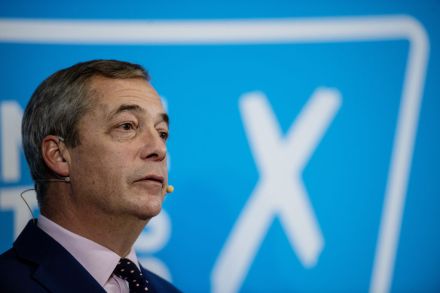
I have lost count of the number of times the Conservative Party has thought it has shot Nigel Farage’s fox. They stretch all the way back to David Cameron’s January 2013 pledge to hold an In/Out EU referendum, and include the party’s as yet unfulfilled summer promise to stop the illegal Channel crossings and its delivery of a trade deal with the EU that honours the fundamentals of Brexit. Given that the Covid vaccines have also taken some of the sting out of the lockdown debate, which the former Ukip leader was poised to exploit, many Tories will have felt able to relax a bit about the challenge on their right-flank.

The EU is taking a gamble with China

From our UK edition

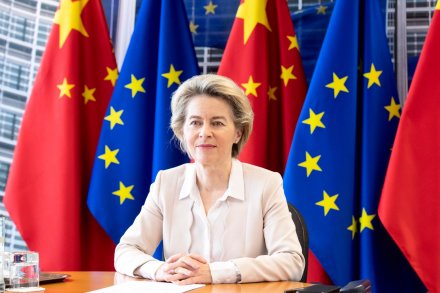
It took Brussels and Beijing seven years to agree an investment deal. A deal that, until its conclusion a few days ago, had been largely eclipsed by the Brexit process. Once the negotiations had concluded, however, the European side suddenly came under intense criticism — China, detractors said, was not the sort of country the EU should be cosying up to. That the deal was finalised on the penultimate day of the year was a sure sign that Angela Merkel was pushing for closure. She had stated before the pandemic that advancing EU-China relations would be one of the goals of Germany’s EU Council presidency (now passed on to Portugal). A goal for Germany perhaps, but there was substantial opposition to the deal among European heads of states.

When democracy worked in China

From our UK edition

Spectator contributors were asked: Which moment from history seems most significant or interesting? Here is Jung Chang's answer: My highlight of history would be the first 16 years of the Chinese Republic — 1912 to 1928 — when China was a vibrant democracy. This fact is generally unknown to the world, and I came to appreciate it fully only while researching my last two books, one on Empress Dowager Cixi, and the other on the three Soong sisters from Shanghai.  The democratisation process began with Cixi in the first decade of the 20th century, when she resolved to turn China into a constitutional monarchy. After her death, the Republic that came into being in 1912 put democracy into practice.

The fight for liberalism

The world has many island nations, and sometimes the United States counts itself among them. We have water on either side of us, and though we share our big island with Canada and Mexico, neither poses any threat. America is immune to invasion, a castle surrounded by the safest of moats. This wasn’t always so, and it isn’t really true today, unless we forget about Hawaii and our Pacific and Caribbean territories, most of which would be easy prey for other states if they weren’t under our sovereignty. In the earliest days of the republic, we shared the North American continent with outposts of Europe’s leading powers: France, Russia, Spain and Britain.

liberalism

Letters: The case for immunity passports

From our UK edition

Joy Sir: Alexandra Coghlan identifies the coincidence between the rise of recording and broadcast technology and the flourishing of the Choir of King’s College, Cambridge (‘Going for a song’, 5 December). Just as the publication of A Christmas Carol in 1843 coincided with cheaper books and a growing readership to forge the modern Christmas, so recent improvements in musical technology have just as firmly established its soundtrack. If Dickens created our modern Christmas, then its musical accompaniment should be accredited to Sir Stephen Cleobury, who served as Director of Music at King’s for 37 years until his retirement in September 2019.

How Britain will counter China’s wolf-warrior diplomacy

From our UK edition

The most significant and lasting change brought about by Covid is that it has woken the West up to the threat posed by Communist China. The fact that the initial severity of the outbreak was covered up by Chinese Communist party authorities did not surprise western governments. It was Beijing’s ‘wolf warrior diplomacy’ as the virus raged round the globe that made them grasp the true nature of President Xi’s China. In March, the UK government was taken aback by the extreme misinformation promoted by the CCP to try to suggest that the US military was somehow to blame for the emergence of the virus.

Biden should embrace Britain’s new Indo-Pacific strategy

While final negotiations on the UK’s relationship with the EU continue to drag, No. 10 is moving rapidly to expand Britain’s role in the Indo-Pacific, returning ‘east of Suez’ after a half-century absence. Tied to this goal, Prime Minister Boris Johnson unveiled a modest, yet real, increase in Britain’s defense spending last month, totaling some $21.25 billion and pledging to once again make Great Britain the foremost naval power in Europe. Johnson’s budget announcement sets the stage for implementation of London’s long-awaited ‘Integrated Review’, which is touted as the most significant strategic reassessment of the UK’s diplomatic and security policies since the end of the Cold War.

indo-pacific

Letters: Eton is failing to protect freedom of speech

From our UK edition

Eton mess Sir: As much as I am a great admirer of Charles Moore, as a former Eton master and head of the Perspectives lecture series (over which Will Knowland has been dismissed), I must disagree with his analysis (‘The Spectator’s Notes’, 5 December). The format of the lecture series is designed for individual speakers to defend an academic point of view on a controversial topic, which is then discussed in class. Perhaps Mr Knowland’s lecture contained certain errors, but that should not have constituted a reason to discipline him. The initial decision not to allow the lecture to be used was lamentable. The headmaster has the right to exert discipline within the school, and masters must do anything he reasonably requests of them.

Buying power: how China co-opts the UN

From our UK edition

It was one of those forgettably historic moments at the United Nations. The year was 2015, the UN’s 70th anniversary, and China’s President Xi Jinping was in New York, speaking in person to the UN General Assembly. In festive spirit, Xi announced that China would set up a $1 billion trust fund to be dispersed over ten years to ‘support the UN’s work’ and ‘contribute more to world peace and development’. So began the Peace and Development Trust Fund, one of China’s more insidious projects to co-opt the UN, its logo and its global networks.

Cold war: Russia’s bid to control the Arctic

From our UK edition

It may be time for Father Christmas to look for a new home, before the Russians kick him out. ‘This is our Arctic,’ declared the Russian explorer Artur Chilingarov when he went to the North Pole in 2003. Four years later, another Russian expedition, again led by Chilingarov, planted a titanium flag on the seabed 2.5 miles below the Pole. It was a symbolic gesture of a geopolitical ambition. The jingoistic Chilingarov proclaimed: ‘Our task is to remind the world that Russia is a great Arctic and scientific power.’ Since 2013, Russia has invested heavily in seven military/naval bases along its Arctic coast to strengthen the country’s power and influence.

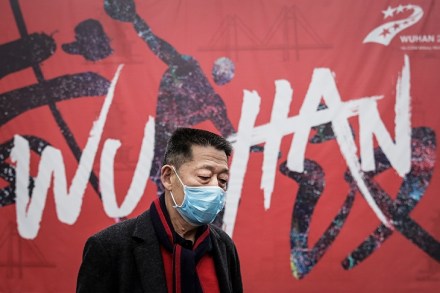
Why is China keeping quiet about its vaccine programme?

From our UK edition

While Britain is the first country in the world to approve a vaccine, it is not the first to start vaccinating people. A million people in China have already been inoculated with Sinopharm and Sinovac jabs. The vaccines, however, have not completed phase three trials, which assess potential side effects. In other words, they have not yet been granted regulatory approval. Could this be the reason that Beijing – never usually shy when it comes to good news – is keeping quiet? The vaccinations first started in July, when a legal provision for ‘emergency vaccinations’, based on the WHO’s response to Ebola, was introduced.

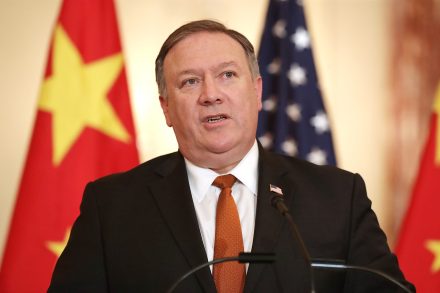
Pompeo to governors: China is watching you

This is an edited transcript of Mike Pompeo's speech to state governors at the National Governors Association 2020 Winter Meeting: Thank you Gov. Hogan, Gov. Cuomo, and all of you for being here today. It is hard to follow the President's State of the Union the other day. I am not passing out copies of my speech, so you cannot tear them up at the end. I have got to know some of you as I traveled throughout the states. I have probably traveled more throughout the country than other secretaries of state. I think it is important that the American people know what our diplomats are doing around the world and why we are doing it. Last year I received an invitation to an event that promised to be 'an occasion for exclusive dealmaking’.

pompeo

The case for Chinese reparations

From our UK edition

It is time we started to talk about reparations. I am not of course referring to the demands made by certain communities to be given vast cash payouts for things that happened before they were born, to people they never knew, by people they never met. I am talking about the need of the citizens of the world to be given reparations by China for what it did to us all this year. Before proceeding further, perhaps it is worth putting a few things in perspective. Delivering his spending review before the House of Commons last week, the Chancellor Rishi Sunak cited figures from the Office for Budget Responsibility explaining that the UK economy is due to contract by more than 11 per cent this year.