China

Farewell, dear Hong Kong

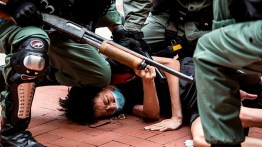
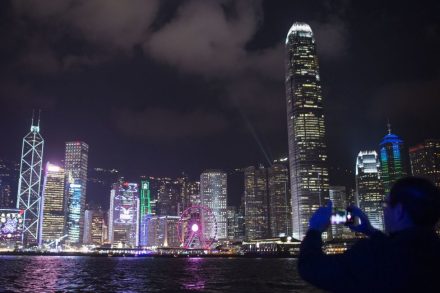
There was no way to know that the last trip I took to Hong Kong just a few years ago would likely be my last. I assumed we still had another 27 years before Hong Kong and China’s ‘one country, two systems’ framework reached its end, but Beijing had other plans. Increasingly emboldened in its domestic social control and assertive in its foreign policy, the Chinese government broke its promise when it sidestepped Hong Kong’s legislature to pass a sweeping national security law targeting ‘secession’, ‘subversion’ and ‘collusion’. These concepts are so broadly-defined as to be easily weaponized against even a nominal critic of the CCP, with a possibility of life in prison as punishment.
Hong Kong skyline

Imperialism is far from over, but gathering force in disguise

From our UK edition

From ancient times, empires have risen and fallen, driven by war, territorial acquisition, trade, plunder, religion, ideology, technology, culture and information. In this ambitious book, Samir Puri — formerly at the Foreign Office, now a lecturer on war and international studies — attempts to analyse how all this has affected the world today. Over eight chapters, he recounts the histories of empires around the globe, omitting only South America and Oceania. He looks at how their very different narratives linger in modern geopolitics. If we are living, as he says, through a ‘great imperial hangover’ it must have been one almighty booze-up.

Portrait of the week: Boris does press-ups, pubs reopen and Leicester locks down

From our UK edition

Home Boris Johnson, the Prime Minister, said he was ‘as fit as a butcher’s dog’ and did press-ups to prove it, as he announced infrastructure initiatives to counter the economic crisis brought on by the coronavirus outbreak. With a slogan ‘Build, build, build’, he made a speech in Dudley promising £1.5 billion for hospital improvements and planning changes to make loft extensions easier. Pubs were allowed to open from 4 July, after a fashion, with table service, as were restaurants. Churches could hold services without singing and newlyweds were told to wash their hands after exchanging rings.

Should we be afraid of this new swine flu?

From our UK edition

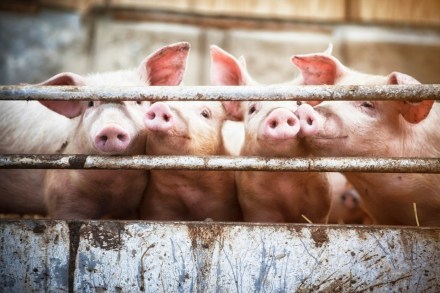
Imagine if a vaccine for Covid-19 was approved tomorrow, and that within weeks we had all been vaccinated. Would life be able to go quickly back more or less to normal? Don’t bet on it. The long shadow of Covid-19 will mean mass panic every time another novel virus comes to light. Indeed, news of such a virus comes today in a paper by a team from China’s Agricultural University published in the Proceedings of the National Academy of Sciences. They say they have identified a flu virus with pandemic potential, which is circulating in the pig population and has already infected significant numbers of humans who work with pigs. Crucially, however, it has not yet demonstrated any ability to be passed from human to human.

The grand names on Huawei’s payroll

From our UK edition

Why is it wrong, some ask, for senior British businessmen, former civil servants etc to work for Huawei UK? After all, it is a major company which needs business experience and advice here. Even now, despite the government’s apparent U-turn, it is not certain it will be excluded from our 5G contracts. Surely the answer is that if a director were to explain frankly to the public how Huawei works, he would have to admit that — whatever its formal ownership structure — it is controlled by and furthers the aims of the Chinese Communist party regime. He would also have to concede that these aims have now become hostile to British and western interests. Ren Zhengfei, the boss, expresses himself in belligerent terms.

Letters: Did Bristol really want to see Colston fall?

From our UK edition

Hong Kong’s success Sir: Carl Heneghan and Tom Jefferson are right to compare the UK’s Covid-19 response with Hong Kong’s (‘Who cared?’, 6 June). We write as UK-trained emergency physicians, who have worked as specialists in both the UK and Hong Kong. In many ways, the economic and healthcare contexts are similar. The majority of care is delivered at minimal cost to the patient at the point of care; we share similar per capita GDP and human development indices. But we responded very differently to Covid. In Hong Kong, initially all patients with possible Covid were admitted to hospital until they tested negative. No one with suspected Covid was transferred to care homes. Healthcare staff, patients and the public routinely wear surgical masks.

China is testing the limits of India – and the world

From our UK edition

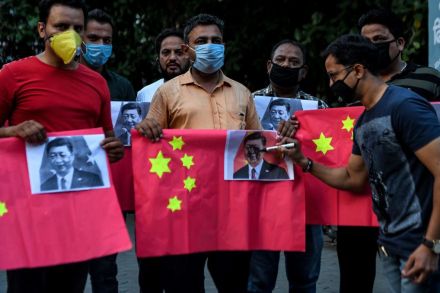
When the Chinese Central Military Commission drew up plans for a ‘war of extermination’ which would ‘gnaw the flesh off the bones’ of Indian forces in the Himalayas in 1962, China’s leaders believed that they were solving a problem. ‘It was India,’ as vice minister Zhang Hanfu said to the Soviet ambassador at the time, ‘that rejected peace talks to solve the Sino-Indian border issue, while China consistently adhered to a peaceful solution.’ And so the China-India Border War began, with Chinese troops sweeping through the disputed Himalayan territories, driving Indian soldiers from their positions. To China’s Communist party, military victory meant that India and China would soon be friends.

Will India and China go to war?

India and China are separated by the longest un-demarcated border in the world. They fought a war in 1962, which India squarely lost, and engaged in a fierce clash in 1967, in which India decisively prevailed. Since then, a tense peace has been maintained in the high and strategic Himalayan passes. The Line of Actual Control (LAC) that divides the two Asian rivals was sustained by a strict adherence to elaborate protocols agreed at the topmost levels by both sides. There have been numerous skirmishes and fistfights between Indian and Chinese soldiers over the years, but with the exception of an ambush by the Chinese in 1975 in which four Indian soldiers were killed, lives were never lost.

india

What is Dominic Raab not telling us about Hong Kong?

From our UK edition

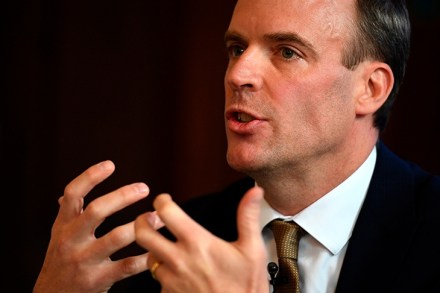
The government’s promised ‘pathway to citizenship’ to Hong Kong people is wonderful, but has the Foreign Office arranged a get-out clause? Last week, Dominic Raab told parliament that ‘if China enacts the [proposed new security] law, we will change the arrangements for British National (Overseas) passport holders in Hong Kong’. He added, however, that ‘We do not oppose Hong Kong passing its own national security law’. Behind this lies the fact that the Basic Law of Hong Kong, arising from the Sino-British Agreement of 1984, prescribes that Hong Kong ‘shall enact its own laws to prohibit any act of treason, secession, sedition or subversion against the Central People’s Government’. So far, it has not done so.

The secret behind South Korea’s Covid success

From our UK edition

At the start of the pandemic, the situation in care homes looked particularly grim. One report on 19 March said: ‘Experts warn that hundreds of substandard long-term care facilities could serve as hotbeds for the contagious coronavirus.’ The alert came not from Wiltshire or Manchester, but from Park Chan-kyong, Seoul correspondent of the South China Morning Post. There was real fear that the residents of the city’s care homes would become victims of the Covid-19 pandemic. Yet three months on, South Korea as a whole — let alone its care homes — has suffered fewer than 300 deaths nationwide. The world is asking: how? Things have looked slightly worse recently — 49 new cases discovered last week — but this is nothing in comparison with Europe.

The Spectator’s proud history of standing up for Hong Kong

From our UK edition

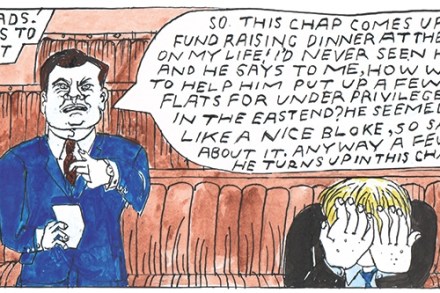
This week in 1989, the Chinese authorities massacred protestors in Tiananmen Square, Beijing. I was editing this paper. It struck me that the people of Hong Kong would suffer huge collateral damage. The Spectator should campaign for them, I thought, and draw attention to the dangers of trusting China to honour the 1984 Sino-British Agreement which Mrs Thatcher and Deng Xiaoping had made to provide for the handover to China in 1997. So we turned the leading article into a two-page affair (a thing unheard-of) and devoted the whole cover to a drawing by Nick Garland of Britannia and the British lion, both kowtowing. The headline was ‘Our Betrayal of Hong Kong’.

Wuhdunnit? We have only suspicions, not proof

We don’t yet know the full story of the coronavirus outbreak in China. Even so, it already has a tragic hero: Dr Li Wenliang. His name is known around the world now, but the details of what happened to him are telling. On December 30 last year, Li warned fellow medics on a WeChat group that seven patients had been quarantined at his hospital in Wuhan. They had some kind of coronavirus. A few days later, after screenshots of his messages were posted to the wider internet, he was summoned by the Wuhan Public Security Bureau. The secret police presented him with a typed confession stating he had lied. He signed it. He had to. The police document was sententious but chilling: ‘Your behavior severely disrupted social order... We advise you to calm down and reflect carefully.

ma jian wuhdunnit wuhan

Prepare for a big Huawei U-turn

From our UK edition

The UK has made a strategic choice to get ‘off the trajectory of ever-increasing dependence’ on China, I reveal in the magazine this week. This is important as the UK was about to go over the precipice in terms of dependence on China with the decision to allow Huawei to construct a lasting part of the UK’s 5G network. That is now not going to happen. Downing Street describes its previous Huawei decision as a ‘legacy issue’, emphasising how no one was particularly comfortable with the compromise they came up with—Huawei’s role would be capped and it would be kept away from ‘the core’ of the network.

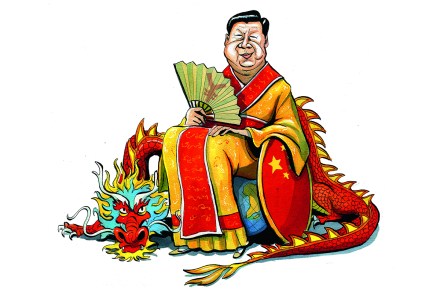
How Xi Jinping plans to crush Hong Kong

From our UK edition

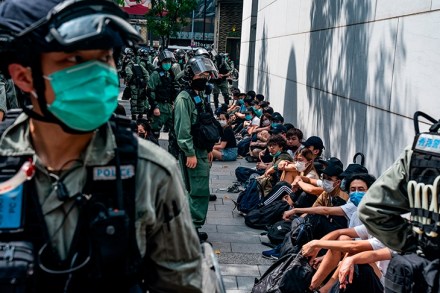
The Hong Kong government has recently extended its Covid regulations banning gatherings of more than eight people until 4 June. How convenient. Last year, according to organisers, 180,000 people gathered to commemorate the anniversary of the Tiananmen massacre on 4 June 1989. In future, being an organiser may well land you in court under a new national security law, which Beijing announced last week at its annual National People’s Congress. Perhaps we should have expected it. After all, the Basic Law, Hong Kong’s ‘constitution’, lays down that the Hong Kong government should enact such a law, and the big party meeting in October told us that the ‘legal systems and implementation mechanisms for protecting national security’ would be set up.

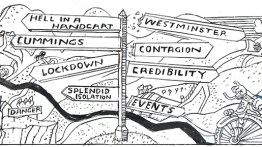
Portrait of the week: Cummings under fire, protests in Hong Kong and a big cat in East Finchley

From our UK edition

Home Open-air markets and car showrooms will be allowed to open from 1 June and other ‘non-essential’ shops from 15 June. Sales of goods in April had fallen by 18 per cent, those of clothing by 50 per cent. Government borrowing rose sharply to £62 billion in April, the highest sum known. The Office for Budget Responsibility predicted borrowing for the year of perhaps £298 billion, more than five times the estimate at the time of the Budget in March. The government announced funding for new long-term housing for 6,000 rough sleepers, of whom more than 14,000 had been given emergency accommodation from the start of the coronavirus lockdown.

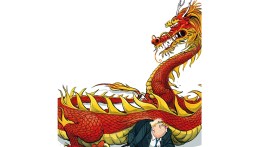
Escaping the dragon: the government’s new approach to China

From our UK edition

How will the world be different after coronavirus? Will everything return to the way it was or will there be lasting change? For this country, there is one thing that will clearly be different: the government’s approach to China. I understand that while Boris Johnson’s grand, integrated foreign policy review has been put on hold because of the pandemic, the work on Anglo-Sino relations has been brought forward as a matter of urgency. One of those heavily involved in the development of this new policy tells me that the aim is to get this country ‘off the trajectory of ever-increasing dependence’ on China. The issue is not that Covid-19 emerged from Wuhan but what the crisis has revealed about the Chinese state and the UK’s dependence on it.

Pompeo: Hong Kong autonomy statement made with ‘great sadness’

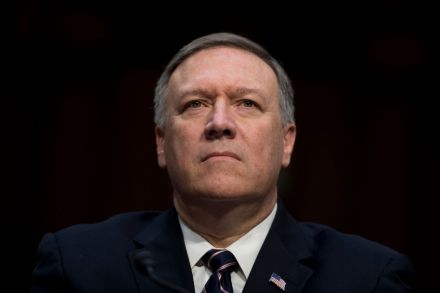
Secretary of State Mike Pompeo said during a press call Wednesday afternoon that his decision to declare Hong Kong no longer autonomous from China was made with ‘great sadness’ but that it merely ‘reflects the facts.’ Pompeo released the statement, which is required annually by Congress, on Wednesday morning. The statement indicated that China had violated Hong Kong’s autonomy to such a point that the United States would likely be forced to strip its special trading status. The move could also severely affect China economically, as they often use Hong Kong as a middleman for international trading. ‘Things have deteriorated significantly in these last months,’ Pompeo said on the call.

lab leak pompeo

Putin needs Xi more than China needs Russia

On May 9, Vladimir Putin had been due to review a parade of troops and military hardware on Red Square alongside Xi Jinping and Emmanuel Macron. Russia’s coronavirus lockdown forced Putin to cancel the elaborate celebrations of the 75th anniversary of the end of World War Two in Europe — as well as to postpone a national referendum that would have extended his personal rule until 2036. But though Putin and Xi have been deprived of the opportunity to make a show of solidarity amid the sea of Soviet flags that bedecks Moscow annually for Victory Day, the coronavirus crisis promises to throw Russia and China closer together than they have ever been. China needs friends; Russia needs money.

putin xi

Taiwan’s balancing act is becoming ever more precarious

From our UK edition

After a landslide victory in January’s election, Taiwanese president Tsai Ing-wen was re-inaugurated on Wednesday at a scaled-down ceremony in Taipei. As ever, Taiwan’s relationship with China was the central issue of the election. This year, though, a greater sense of urgency surrounded the vote, primarily because of the instability in Hong Kong.  Now, polling day feels like it belongs to a distant past, taking place amid rumblings of a new virus infecting residents of Wuhan across the Taiwan Strait. Although Taiwan has rightly received much praise for its response to coronavirus, the past few months have not been without significant difficulties.

Cambridge University is kowtowing to China

From our UK edition

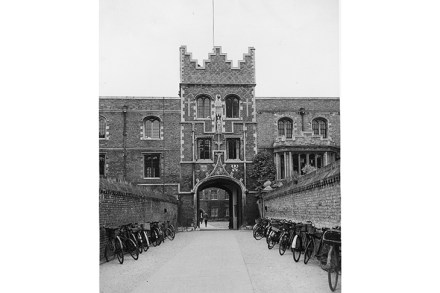
Last month, writing elsewhere, I quoted the website of the China Centre at Jesus College, Cambridge: ‘Under the leadership of the Communist party of China since 1978, [China] has experienced an extraordinary transformation… China’s national rejuvenation is returning the country to the position within the global political economy that it occupied before the 19th century.’ The tone sounded propagandist not academic. This month, all mention of the Chinese Communist party disappeared from the China Centre home page. Now the Centre says it concentrates on ‘mutual understanding between China and the West’, contributing to ‘harmonious global governance’, which should be ‘non-ideological and pragmatic’.