China

Is anywhere in the world still safe for China’s Uighurs?

From our UK edition

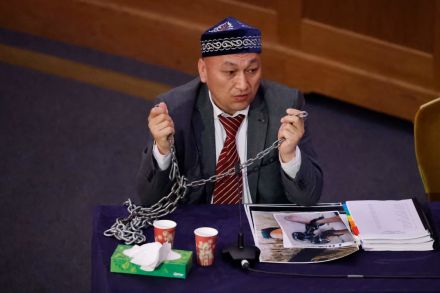
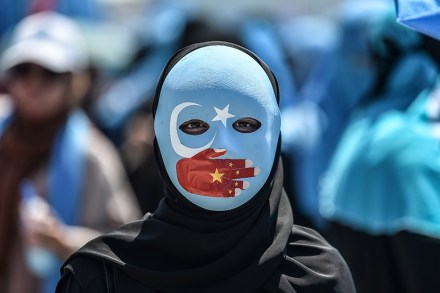
Amannisa Abdullah was in the last weeks of her pregnancy when her husband, Ahmad Talip, was arrested in Dubai. ‘He was on his way to buy a dress for our unborn girl,’ she says. Ahmad, who had lived and worked in Dubai for nearlyten years, never arrived at the shop and his family have not seen him since. He was held at a local police station for several days and then was deported to China in 2018, where he is reportedly in prison. ‘He just disappeared. We don’t know where he is or what he is accused of,’ says Amannisa, who fled to Istanbul. Ahmad is a Uighur Muslim. His story is not exceptional. Hundreds if not thousands of Uighurs, a severely persecuted minority from western China, have been detained in recent years in the Middle East and in Asian countries.
The growing cult of ‘Dada’ Xi Jinping

From our UK edition

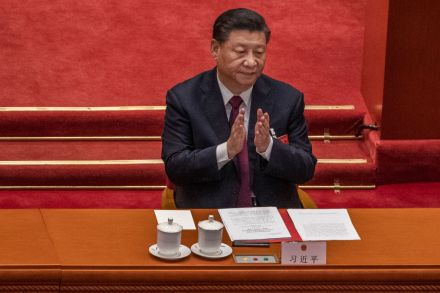
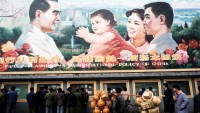
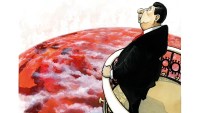
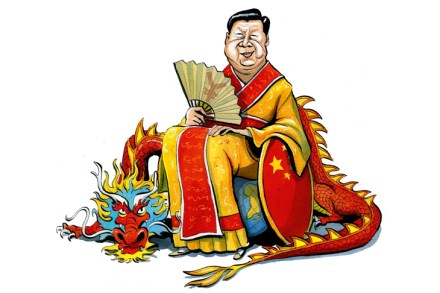
In a defiant speech to mark the Communist party’s centenary today, Xi Jinping warned foreign powers they would ‘have their heads bashed bloody against the Great Wall of Steel forged by over 1.4 billion Chinese people’ if they tried to bully China. Beijing would not allow ‘sanctimonious preaching’, he told a carefully vetted crowd in Tiananmen Square, declaring that ‘only socialism can save China’. At one point military jets flew over forming the number 100 – apparently flown by loyal party members.

Will the American media stand up for Hong Kong before it’s too late?

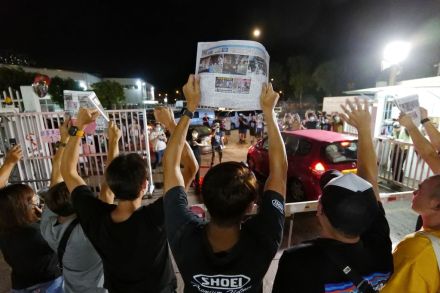
On October 1 of last year, the New York Times printed an op-ed from Regina Ip, executive council and legislative council of Hong Kong, headlined ‘Hong Kong is China, Like it or Not’.  Ip advocated on behalf of China’s new ‘security’ law in Hong Kong. This law employed harsh police and military tactics to crack down on pro-democracy protests and resulted in the arrest of Apple Daily editor Jimmy Lai. This week, Apple Daily itself was shut down and several of the newspaper’s journalists were also arrested. But recent developments in Hong Kong did not happen overnight and did not happen behind closed doors. They happened in full view of the world.

hong kong china apple daily

No, Jon Stewart’s Wuhan lab tirade is not ‘fringe’ opinion

Cockburn is old enough to remember when famous comedians sought to be transgressive. He recalls when they were funny, too. Now, at least on network television, satire has become the mechanism through which politically acceptable opinion is transmitted to the masses. Even when TV comics do ‘edgy’, they are more often than not simply indicating that they understand the direction in which elite consensus is traveling. Take Jon Stewart and his appearance on last night’s Late Show with Stephen Colbert as ‘the first in-studio guest’ in more than a year. Stewart went ‘all-in on the Wuhan lab leak theory’, according to the Daily Beast. He did, in a way. At least he made some quite good jokes about the possible origins of the COVID-19 crisis.

Britain must take China to task for its brutal Uyghur abuse

From our UK edition

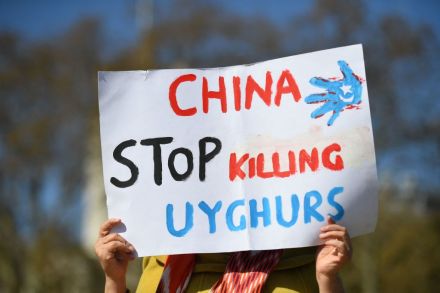
'Horror' conjures up several images; a fanged Dracula or a night at the cinema perhaps. But there’s a deeper kind of horror; the slow, white-hot kind that grips you in its claws.  In hearing, over and over, testimonies to some of the most obscene violations of human rights imaginable. To look, as I have done, at China’s actions in Xinjiang, is to feel that horror in your guts, and to realise that Britain must take firmer diplomatic, economic, and political action against China. Recently, the Uyghur Tribunal heard evidence of rape, murder, mass imprisonment, torture, slave labour, by Chinese authorities in Xinjiang. It’s happening in plain sight – the Uyghur birth rate is plummeting, and manufacturing firms share addresses with prison camps.

Macron is wrong. Nato must stand up to China

From our UK edition

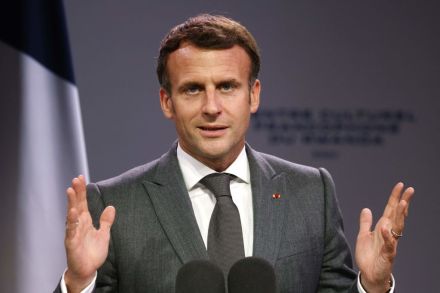
Joe Biden wants to use his visit to Europe for the G7 summit and the Nato meeting to rally democracies to take on the autocratic threat posed by Russia and China. But in a sign of how difficult that will be, Emmanuel Macron made clear last night that ‘the line I’m advocating for France, and I hope for Europe, is not to be made a vassal by China nor be aligned with the United States on this subject.’ He has also said that China should not be a Nato priority. If Nato is to stay relevant, it will have to become more involved in the effort to contain China This is a mistake. If Nato is to stay relevant, it will have to become more involved in the effort to contain China, as I say in the magazine this week.

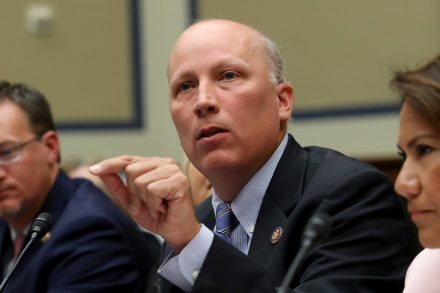
Rep. Chip Roy (R-TX) (Photo by Win McNamee/Getty Images)

Chip Roy seeks to ban China from purchasing US land

Texas congressman Chip Roy is introducing legislation Friday to ban members of the Chinese Communist party from purchasing American land, The Spectator has learned. The bill, ‘called the 'Securing America’s Land from Foreign Interference Act’', aims to curb foreign influence gained through major land purchases throughout the United States, which Roy identifies as a major national security threat. A Chinese-based energy company recently purchased a 130,000-acre wind farm in Texas right next to a US Air Force base. Smithfield, one of the nation's largest meat producers, is owned by a Chinese firm and yet controls nearly 150,000 acres of US land.

How China won over the Middle East

From our UK edition

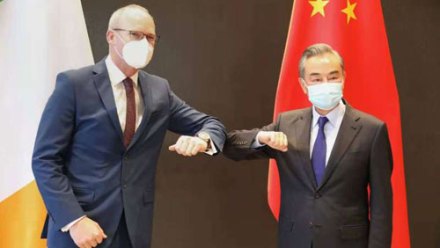
In April, Chinese Foreign Minister Wang Yi embarked on a six-nation Middle Eastern tour to Saudi Arabia, Turkey, Iran, the United Arab Emirates, Bahrain and Oman. ‘Belt and Road’ cooperation, economic development and the Covid pandemic were the topics of discussion. The treatment of China’s Muslim Uighur population in detention camps, which some in the West have described as genocidal, didn’t come up. Both China and Saudi Arabia cleave to the belief that internal affairs are nobody else’s business — or at least as long as there are overriding economic interests at stake. Compare the silence of Muslim countries on the Uighur issue with the loud faux anger when the Danish newspaper Jyllands--Posten published caricatures of the Prophet Mohammed in 2005.

China should be worried about the Uyghur Tribunal

From our UK edition

There have been harrowing stories of cruelty, torture and mistreatment of Uyghurs in Xinjiang province in the news this week, coming from an official-sounding body called the Uyghur People’s Tribunal. But what is it, and what is its status? The answer may surprise you. Although its composition is highly eminent and its chairman the impeccably fair lawyer Geoffrey Nice QC, it has no official status whatsoever. True, it has formal sittings and apes much of legal procedure; true also that it will make formal findings on the question of what is going on in western China and whether it amounts to crimes against humanity or genocide. But these findings will have no more legal effect than your opinion or mine.

Prepare for China’s nationalist turn

From our UK edition

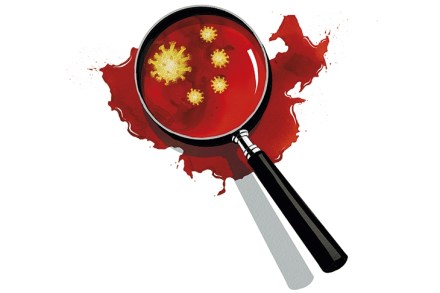
In recent days, it has been striking how many people in Westminster and Whitehall now think the lab leak theory is the most plausible explanation of Covid’s origins. China’s apparent success last year at stamping out the virus at home — with technological competence and sheer brutality — while cases spiked in the West, created a fear that the future belonged to Beijing.  But, as I say in the magazine this week, the growing plausibility that the virus leaked from a lab highlights the Achilles’ heel of the Chinese system: its lack of a mechanism for error correction. It is not that a lab leak couldn’t have happened in the democratic world, but it is far harder to imagine it being covered up here.

Why Hong Kong’s Tiananmen Square vigil will be different this year

From our UK edition

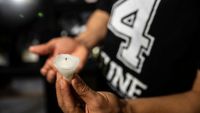
Every year since the tanks rolled into Tiananmen Square on 4 June 1989, Hong Kongers have gathered in their thousands to remember the fallen. The annual Tiananmen Vigil, where candles light up Victoria Park, was an event laden with significance. It was a statement that Hong Kongers would not forget those who had died under the heavy boot of the totalitarian state. It was a symbol of the city’s distinctive history and its autonomy from Beijing. Even last year, despite the authorities banning the protest under the pretext of Covid-19 restrictions, thousands gathered peacefully. It's unlikely the same will happen tomorrow. The organisers of last year’s vigil are in jail. This year’s vigil has been banned.

Why Chinese women don’t want more children

From our UK edition

Years after my mother and I left China, I found out the real reason why. A neighbour had reported my mother for being pregnant with her second child. She was paid a visit by local officials who gave her a choice: she could either take herself to the abortion clinic or they’d take her there themselves. She chose a third option: to move to London to join her husband, who was working in the UK. In August 2004, when six months pregnant, she left her family and friends behind in Nanjing. My brother was born later that year in Kingston Hospital. Other families weren’t so lucky. Beijing demographers were concerned that food production would not keep up with population growth. And it wasn’t just the Chinese who were worried.

China is not as strong as it appears

From our UK edition

The theory that the pandemic began with a leak from a research laboratory in Wuhan is rapidly gaining currency. Since Matt Ridley’s cover piece for The Spectator last week, Joe Biden has ordered US intelligence agencies to ‘re-double their efforts’ and report to him within 90 days on the origins of Covid. The US administration has made it clear that the various intelligence agencies are split on whether they believe the virus is natural or man-made. It is doubtful whether the US agencies will be able to come to a conclusion with any great confidence. Definitive evidence is unlikely to emerge.

Why Russia and China are competing to woo Belarus

From our UK edition

Belarus's president Alexander Lukashenko has been roundly condemned following the arrest of Roman Protasevich, but he still has one ally. Lukashenko spent the weekend at Sochi, on the Black Sea, where he was hosted on president Vladimir Putin’s yacht. The two leaders greeted each other with a hug. After dolphin spotting, the pair wrapped up a deal on the release of a $500 million (£350m) loan to Belarus which will help blunt the effect of fresh western sanctions. The announcement followed a celebration in Minsk earlier in the week for the 100th anniversary of the Chinese Communist party, where ambassador Xie Xiaoyong lauded the bilateral relationship between China and Belarus.

The Covid lab leak theory is looking increasingly plausible

From our UK edition

In March last year, it was widely agreed by everybody sensible, me included, that talk of the pandemic originating in a laboratory was pseudoscientific nonsense almost on a par with UFOs and the Loch Ness monster. My own reasoning was that Mother Nature is a better genetic engineer than we will ever be, so something as accomplished at infection and spread could not possibly have been put together in a lab. Today, the mood has changed. Even Dr Anthony Fauci, the US President’s chief medical advisor, now says he is ‘not convinced’ the virus emerged naturally.

The many failures of China’s vaccine programme

From our UK edition

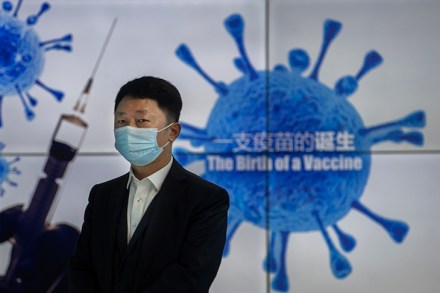
At the start of the year Sebastián Piñera, president of Chile, went to Santiago airport personally to greet a consignment of vaccines from China. ‘Today is a day of joy, excitement and hope,’ he said from a podium on the tarmac. ‘As you see behind me, there is the plane that brought a shipment of almost two million doses of Sinovac vaccines.’ By April, Chile had suffered one of the worst Covid surges in Latin America. The joy and hope, it seemed, had been misplaced. A few weeks ago, Chile’s government announced that, after a real-world study involving 10.5 million Chileans, Sinovac turned out to be only 16 per cent effective at reducing the risk of infection after one shot and 67 per cent effective two weeks after the second dose.

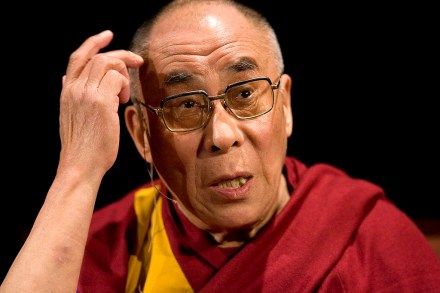
Beijing’s plan to pick the next Dalai Lama

From our UK edition

Imagine for a moment that Cuba picked the next Pope. That is the scenario which Lobsang Sangay, the then-Sikyong (the Tibetan government-in-exile’s head of state), asked the world to consider several years ago in light of growing concerns that the Chinese Communist party (CCP) would seek to select the next Dalai Lama. Now such a possibility – that Beijing will attempt to impose their own man at the top of Tibetan Buddhism – seems increasingly plausible. Last week, China’s State Council issued a white paper on Tibet to mark 70 years since the signing of the Seventeen Point Agreement, which incorporated Tibet into the People’s Republic of China.

Letters: The beauty of brick

From our UK edition

The Union in peril Sir: Fraser Nelson (‘The great pretender’, 15 May) writes that it has never been easier to make a bold positive case for the Union. He suggests the UK government starts to fight. Perhaps the starting point could be the benefits which flowed from 1707 — joint citizenship, a currency union, a customs union and wealth transfer — both individual and national (the Barnett dividend speaks for itself). Without the Union these would not have happened. Without the Union there is no guarantee any of these will continue. It is not Project Fear to point that out.

The Australian trade deal is about more than just trade

From our UK edition

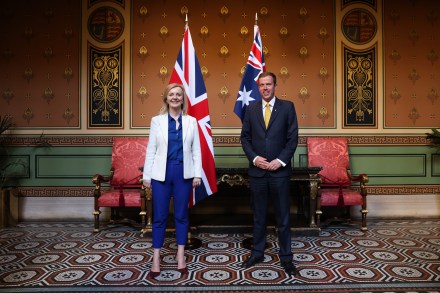
What happens with an Australia trade deal won’t just reveal how serious this country is about free trade but also how committed it is to helping democratic countries stand up to China. China is Australia’s largest trading partner but since Australia called for an independent inquiry into the origins of coronavirus, Australian-Chinese relations have severely deteriorated. Beijing is now trying to use this economic relationship to get Canberra to fall into line.  China has imposed huge tariffs on Australian barley and on wine for the next five years, while technical reasons have been found to bar most Australian timber and beef from the country.