China

The troubling truth about Britain’s nuclear deal with China

From our UK edition

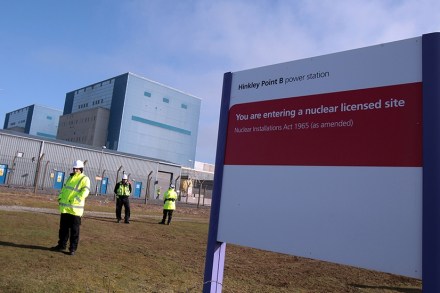
The most shocking thing about the news that the government is looking to remove China from Britain’s nuclear power programme is that it has taken so long. But it will not be a straight-forward process. It will likely provoke tantrums from Beijing, as well as grumbles from a nuclear lobby that will have to find somebody else to stump up the billions needed for their pet projects. China General Nuclear should never have been allowed anywhere near such a critical piece of national infrastructure. The state-owned company has been accused by the US government of stealing technology for military use and placed on a national security blacklist which severely limits US companies from doing business with it. Washington has warned Britain against partnering with the company.
Why is Vince Cable so liberal towards Chinese illiberalism?

From our UK edition

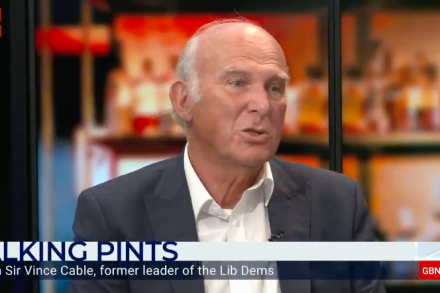
On Monday, Vince Cable appeared on Nigel Farage’s 'talking pints' segment on GB News. This, if you haven’t seen it, is where Farage places a guest in front of a pint of beer while having his own and the two figures talk politics for a quarter of an hour. Really, it’s like any other political segment on a British news channel, only with Farage and alcohol involved. It started off well for Vince. Farage asked him about the coalition, and unlike most Lib Dem politicians who would have unveiled a litany of apologies for that government having ever come into existence, Cable staunchly defended it. ‘As a government, it worked well. We didn’t necessarily like each other politically, but we were grown-ups and we worked well together.

Wang Huning: the man behind Xi Jinping

From our UK edition

At the height of the Cultural Revolution, over a billion copies of Mao’s Little Red Book were distributed across the People’s Republic. This small pocket-sized collection of quotations provided the scaffolding for an era of communist purges. Utopians need theory. And while the Maoist orthodoxies of the last century have faded, China's need for a solid intellectual foundation is as strong as ever. Xi Jinping Thought on Socialism with Chinese Characteristics for a New Era is that new theory. But it is written not by the General Secretary himself but by an unassuming 65-year-old: his supreme theoretician. Wang Huning has quietly shaped China over the last three decades, despite the fact that few of his countrymen could pick him out of a line-up.

The Lancet, China and the origins of coronavirus

From our UK edition

Right from its first issue in 1823, the Lancet was more than just an ordinary medical journal. Its founding editor, the dyspeptic surgeon and coroner Thomas Wakley, purposefully gave the journal the name of a sharp scalpel that could cut away useless, diseased tissue: he used it as a campaigning organ, to push back against injustice, bad ideas and bad practice. What bothered Wakley most was the establishment. Not only did the Royal College of Surgeons care little about quacks and snake-oil salesmen, but its members were also engaged in corruption and nepotism, ensuring that their cronies got the best positions and filling their pockets with lecture fees.

China’s Belt and Road to Damascus

From our UK edition

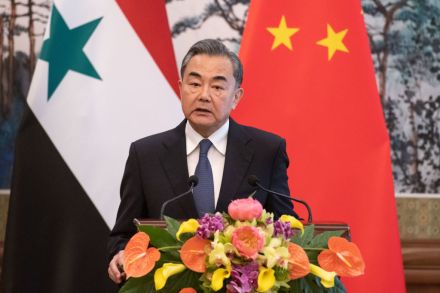
There is, it seems, no regime too odious to be a partner of China. Being repressive and corrupt have long been useful assets for gaining the friendship of Beijing, but its recent embrace of the ‘Butcher of Damascus’, Bashar al-Assad, carries reputational and other risks for China – even when it doesn’t have much of a reputation to lose. China has offered Syria membership of its Belt and Road Initiative (BRI), and with it the promise of munificent investment in Syrian roads, railways, ports, telecoms, hotels and much more. The offer came this week from China’s foreign minister Wang Yi, who was the first high-profile guest in Damascus after Bashar al-Assad’s re-election as president.

What Dominic Cummings gets wrong

From our UK edition

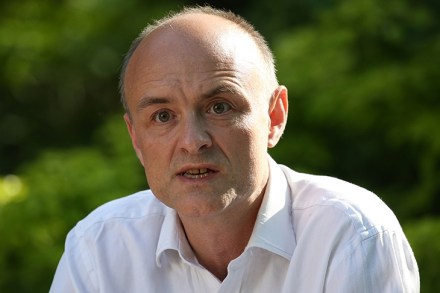
Anyone who thinks Boris Johnson lacks statecraft should pay attention to Dominic Cummings’s attacks on him. They often to seem to show the opposite of what Dom intends. Cummings now reveals that, in January 2020, he and his allies were saying: ‘By the summer, either we’ll all have gone from here or we’ll be in the process of trying to get rid of [Johnson] and get someone else in as prime minister.’ In fact, neither happened. By November, however, Cummings was (to use Mr Pooter’s joke) going; Boris stayed. The winner of the then still recent landslide election victory presumably discovered about his adviser’s seditious conversations and, reasonably, did not like them.

Letters: The clock is ticking in Afghanistan

From our UK edition

Out of Afghanistan Sir: Boyd Tonkin’s review of Anna Aslanyan’s Dancing on Ropes highlights the post-war abandonment of local Afghan and Iraqi interpreters by the US and UK (Books, 17 July). The UK’s response, up until last summer, deserved every bit of Tonkin’s strictures but the past year has seen a ‘strategic shift’. Ben Wallace and Priti Patel were clearly determined to change our approach and to give sanctuary to our former staff. More generous regulations were introduced in December and April but the imminent withdrawal of Nato forces now raises the fearful prospect of a Taleban takeover, or Taleban-induced paralysis of the Afghan government, before the necessary evacuation can take place.

Portrait of the week: Covid in cabinet, pingdemic pandemonium and Ben & Jerry’s boycott

From our UK edition

Home On the eve of the day that most coronavirus restrictions were to be lifted, the Prime Minister and Chancellor of the Exchequer had to react to having been in close contact with Sajid Javid, the Health Secretary, who, despite being doubly vaccinated, had contracted Covid. At first Boris Johnson said that under a pilot scheme he would continue to work at Downing Street. Within hours, during which Labour exploited the idea of privilege, he backtracked, declaring it was ‘far more important that everybody sticks to the same rules’. So he would isolate himself (at Chequers) until 26 July.

China is the latest victim of Pakistan’s Islamist problem

From our UK edition

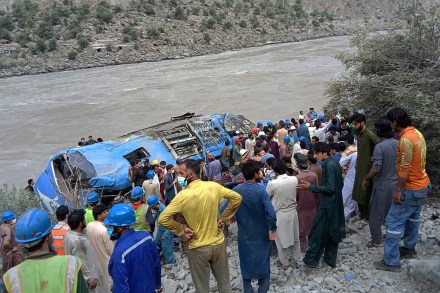
Nine Chinese engineers were killed in an explosion near Pakistan’s Dasu hydroelectric dam last Wednesday. The government initially said that their bus suffered a ‘mechanical failure’ after it plunged into a ravine, but officials eventually admitted that the incident was a terror attack after Beijing decided to send its own investigators. China has now postponed work on the $65 billion (£47 billion) China Pakistan Economic Corridor, a network of roads and infrastructure projects. The programme represents Beijing’s largest overseas investment and is a critical part of its Belt and Road Initiative.

Getting UN help on American civil rights is a great idea

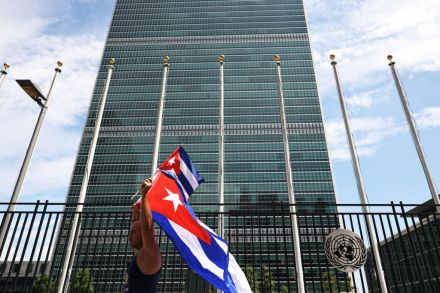
The small-minded people who believe in freedom and democratic self-government have their shorts in a bunch over the Biden administration’s invitation to the United Nations to review our country’s civil-rights record. What a superb idea. Long overdue. The countries filling the human rights bodies at the UN have the kind of expertise you can’t get by reading books or following the rule of law. You have to get that kind of experience in the streets. Police brutality? All you have to do is ask the leading members of the UN Human Rights Council like Cuba, Libya, Pakistan, the Philippines, Russia, Somalia, Sudan and Venezuela. They know a thing or two about protecting civil rights. But why stop there?

un

Could hydrogen power turn air travel green?

From our UK edition

Have you been scanning airline websites for exotic destinations to which your double-jabbed status might allow you to slip away in August? I certainly have, but I’ve ruled out the parts of Canada and the United States that are stricken by record-breaking heatwaves and forest fires — and I’m wondering what impact such extreme climate events will have on the aviation industry as it struggles back to life after the pandemic. Having survived a year of near-total shutdown, I suspect it will now face an onslaught of green rhetoric to which governments — positioning for November’s COP26 climate conference in Glasgow — will be forced to respond.

Letters: How to save Cambridge’s reputation

From our UK edition

Save the parish Sir: The Revd Marcus Walker eloquently describes the crisis that has taken hold in the Church of England (‘Breaking faith’, 10 July). He correctly states that the church belongs to the people of England and not to the archbishops, bishops or clergy. As he wrote, the costs of parish clergy are not a ‘key limiting factor’. They should be the church’s first priority in terms of costs. Stipendiary parish clergy play a vital role in bringing the Christian gospel and pastoral care to their communities. Without properly trained and ordained clergy, there would be no holy communion, no absolution and remission of our sins and no church weddings.

Why is the EU copying China’s Belt and Road initiative?

From our UK edition

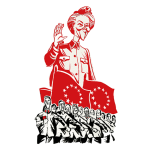
Much like Mark Twain’s apocryphal quote about arguing with idiots who ‘drag you down to their level and beat you with experience,’ Europeans should think twice about whether they want to try to compete with China when it comes to the use of economic power in pursuit of geopolitical ends. ‘It’s useless moaning about it,’ the German foreign minister Heiko Maas (correctly) told journalists last week, when discussing Chinese economic power at a meeting of EU foreign ministers in Brussels. The EU foreign ministers tasked the European Commission on Monday with preparing a European ‘strategic response’ to China’s Belt and Road Initiative (BRI).

North Korea’s cryptic crisis

From our UK edition

For years, the West has tried to cajole the North Korean regime using sanctions, much to the frustration of Kim Jong-un. But now in the era of Covid, Pyongyang has been forced to inflict greater economic harm on itself, entrenching its international isolation and the suffering of its people. The hermit kingdom was one of the first countries to close itself off. The border with South Korea is already one of the most fortified in the world, while the northern Chinese perimeter, a vital point of trade, was sealed in January 2020 before many in the West had even heard of Covid.

Marxism, football and Trump’s demise: Tom Holland and Francis Fukuyama in conversation

From our UK edition

TOM HOLLAND: The title of your latest book, a book of interviews, is After the End of History. This alludes to what I guess must still rank as your most famous book and I wonder: is the fame of that book a burden? Do you feel like a famous rock star whose fans want him to play the greatest hits? FRANCIS FUKUYAMA: You know, it is really only when I meet up for interviews with journalists who want to talk about very general types of topics that the issue comes up. TH: Since it is the title, could we just nail down what you mean by ‘the end of history’? You think of it as kind of a process rather than an end.

Matt Hancock isn’t the only politician who is clueless about cyber security

From our UK edition

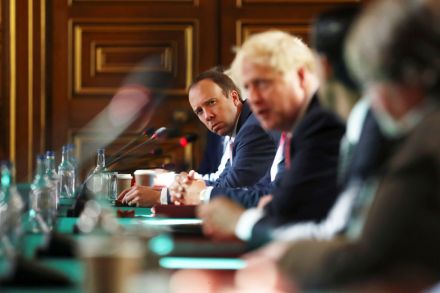
It is widely acknowledged that Britain has some of the world’s finest cyber capabilities. GCHQ is a global leader in those dark arts, and its offshoot, the National Cyber Security Centre (NCSC), is making that expertise available to businesses and others in need of help with their digital defences. All the more shocking, then, that our political leaders seem so utterly clueless. They have pledged to make Britain the ‘safest place in the world to be online’, but instead are running around like stars in a digital age ‘Carry On’ movie. Exhibit number one is Matt Hancock.

Is critical race theory in the US military ‘dangerous’?

After renewing their Cold War-era alliance earlier this week, Beijing and Moscow challenged the US military hegemony by claiming American global dominance was 'over' and threatening to strike back if any 'boundaries are crossed.' GOP lawmakers on the House Armed Services Committee told The Spectator that the Defense Department's focus on critical race theory under the Biden administration is ‘stupid and wacko’ while the Sino-Russian powers are on the march. Xi Jinping and Vladimir Putin met Monday during a virtual summit to extend their cooperation treaty between their respective countries, both of which have strained their ties with the US ever since the treaty was initially signed 20 years ago.

armed services critical race theory

Chairman Xi and the Communist party’s delusional centenary

From our UK edition

The emperor has new clothes. Arriving at a meeting to celebrate the 100th Anniversary of the Chinese Communist Party, China’s supreme leader Xi Jinping came dressed as Chairman Mao. His light grey tunic suit, four front pockets and five buttons to the neck cut an imposing contrast to the Politburo’s Standing Committee in their familiar dark suits and sober ties. This was no subtle message; ludicrous it might seem, but it was fancy dress hiding an iron fist. One can’t imagine Boris Johnson addressing the Conservative party wearing the frock coat, winged collar and white tie stock of Sir Robert Peel.

How Taishan almost became China’s Chernobyl

From our UK edition

Days after a nuclear power plant began spewing deadly radiation, the ruling Communist party pushed ahead with a huge and self-indulgent celebration of the sort that had become a hallmark of its rule. This was no time for bad news, and the party delayed, dithered and hid the truth about the deadly events that were unfolding.  That was the Chernobyl disaster in 1986. Soviet leaders allowed Kiev’s International Workers’ Day celebrations to go ahead. The participants, meanwhile, were oblivious to events at the stricken reactor just 60 miles away.

Has Xi Jinping overplayed his hand?

The Chinese Communist party’s origin story, like so many of its official lines, appears to be an apocryphal tale. But a month-long patriotic extravaganza leading up to its centennial celebration has featured military parades, skyscrapers emblazoned with hammer-and-sickle decor and propaganda blitzes on TV. None of the agitprop raised eyebrows as much as the main speech delivered by the Chinese president and general secretary of the party, Xi Jinping, in which he marked the milestone and praised China’s ‘tremendous transformation’ and the historical inevitability of its ‘national rejuvenation’.

xi jinping