China

China is using the climate as a bargaining chip

From our UK edition

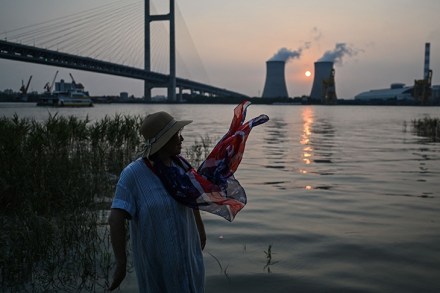
China’s President Xi Jinping has apparently not yet decided whether to travel to Glasgow next month for the big climate conference known as COP26. That is no doubt partly because he’s heard about the weather in Glasgow in November, and partly because he knows the whole thing will be a waste of his time. After all, the fact that it is the 26th such meeting and none of the previous 25 solved the problem they set out to solve suggests the odds are that the event will be the flop on the Clyde. But another reason he is hesitating was stated pretty explicitly by his Foreign Minister, Wang Yi: ‘Climate cooperation cannot be separated from the general environment of China-US relations.
Taiwan could spark a war between America and China

Some time between now and the next 10 years war between the United States and Communist China is certain. The only questions are when and how it will start — and how many millions of people will die. Why would I dare make such a bold prediction? Simple. History has conspired to create the perfect mix: trillions of dollars in trade up for grabs, a geopolitical rivalry, military tensions, bad blood, competing national egos and a quest for tech dominance. Washington and Beijing seem on the way to a world war the likes of which mankind has never before seen. And the most likely spark for this war is Taiwan.

taiwan china

Xi threatens Taiwan because he’s weak

From our UK edition

Over the weekend, China sent waves of warplanes racing towards Taiwan in numbers not seen before, forcing the democratic self-ruled island to scramble fighters and ready its air defence missiles. The United States says it is ‘very concerned’ by Beijing’s ‘provocative’ actions and reiterated Washington’s ‘rock solid’ commitment to the island. According to Taiwan’s defence ministry, 38 Chinese aircraft, including nuclear-capable bombers and J-16 fighter jets, entered its air defence identification zone on Friday, and another 39 did so again on Saturday — the largest incursion to date. Some 16 more were sent on Sunday.

The next real estate crisis could come from China

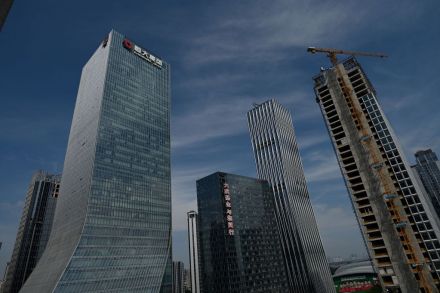
Debt is as much a part of the real estate business as bricks and mortar. And as the great New York builder William Zeckendorf once famously remarked, 'it’s better to be alive at 20 percent than dead at the prime rate.' But the Evergrande Group, the second largest real estate company in China, has taken corporate debt to new heights, with liabilities of a staggering $310 billion, to finance its breakneck growth. In 2010, it had revenues of $7.3 billion and assets totaling $16.7 billion. In 2020, the figures were $81 billion and $368 billion. To be sure, it is a huge company, with 1,300 projects in more than 240 cities in China and 200,000 employees. This year alone, it began 77 new projects.

evergrande

Will China’s ‘digital yuan’ reinvent money as we know it?

From our UK edition

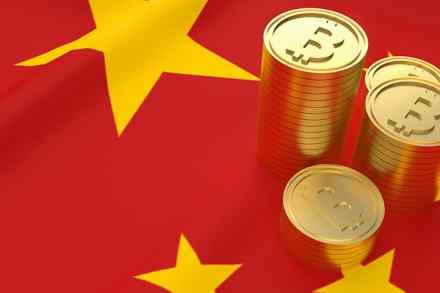
What’s behind China’s latest crackdown on crypto? For some time, Beijing has banned bitcoin and other cryptocurrency exchanges from operating within its borders. Last week, the Chinese Communist party extended the ban to criminalise anyone dealing in crypto. ‘Virtual currency-related business activities are illegal,’ declared the People’s Bank of China. The CCP would ‘resolutely clamp down on virtual currency speculation… to safeguard people’s properties and maintain economic, financial and social order’. China accounts for nearly half of the world’s crypto mining, a process in which high-powered computers are used to generate the digital currencies.

Portrait of the week: Petrol panic, Labour’s meltdown and China’s crypto crackdown

From our UK edition

Home The crisis of the week was a shortage of fuel at garages. ‘There is no need for people to go out and panic buy,’ said Paul Scully, the small-business minister. That set motorists queueing. BP had shut some petrol stations and blamed a shortage of heavy goods vehicle drivers. Grant Shapps, the Transport Secretary, blamed ‘one of the haulage associations’ for leaking details of a government meeting at which fuel industry people expressed concerns that fuel stocks were at two-thirds of normal levels. But Rod McKenzie, the managing director of policy and public affairs at the Road Haulage Association, said it wasn’t him.

Congress’s defense budget is pure madness

The United States Congress is divided on pretty much everything these days. But there is one agenda item that traditionally brings lawmakers together: the defense budget. Usually Pentagon funding amounts to a pro-forma love-fest with a result — higher military spending — that is basically baked in. The defense budgeting process is usually like a boring movie, where the conclusion is foreseen about 10 minutes into the flick. Last week, the House of Representatives passed its own version of the National Defense Authorization Act by a resounding 316-113 vote. It's a mammoth 1,362-page bill that piled an additional $25 billion onto what President Joe Biden had submitted in his own $753 billion budget request.

congress defense budget

Who’s taking the wheel of Trumpism?

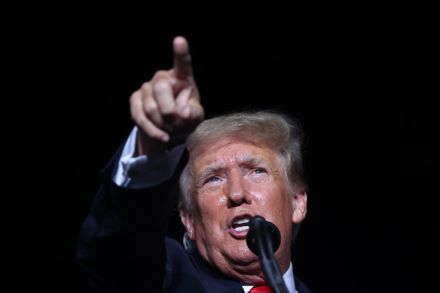
It went virtually unnoticed in April when Donald Trump recruited Susie Wiles to oversee his fundraising operation and create a system for issuing endorsements. Wiles is a veteran political consultant in Florida, having worked for Sen. Rick Scott and Gov. Ron DeSantis and helped with Trump’s campaigns there. 'The president tells everyone around Mar-a-Lago that Susie is now in charge,’ an adviser told Politico. Despite media narratives of Jared Kushner’s withdrawal from Trump’s affairs, one source with knowledge of Mar-a-Lago’s inner workings said Wiles serves a 'buffer to give Kushner distance’. Wiles currently works with Kushner confidant Bill Stepien on endorsements. According to broadcaster Stew Peters, Wiles isn’t taking a paycheck for her work.

trumpism afpi trump

The case against Aukus

From our UK edition

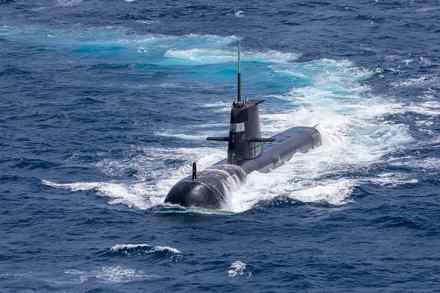
Just weeks after the denouement of the West’s misadventure in Afghanistan, Boris Johnson is again committing Britain to a risky international venture. Aukus, the naval partnership between the United States, Australia and the United Kingdom, appears to tie Britain to an Indo-Pacific strategy that is militarily and geopolitically flawed. In December 1941, the catastrophic sinking of the then imperious new battleship HMS Prince of Wales along with the battlecruiser HMS Repulse off the coast of Malaya led to the loss of Singapore and brought the curtains down on Britain’s Asian Empire. Britain was over-stretched and unable to commit resources to the defence of the Pacific. History rarely repeats itself exactly.

Is government preparing to shake the magic money tree again?

From our UK edition

Will my bath water still be hot by Christmas? That’s not a question I’d normally feel a need to share with you, but shortly after this morning’s ablutions I read that Bulb Energy — the UK’s sixth-biggest energy supplier with 1.7 million customers, including me — ‘is seeking a bailout to stay afloat amid surging wholesale gas prices’. The spike in the global gas-price graph is extraordinary, up 250 per cent since the start of 2021 and steeper in August. It has many causes beyond our shores, including depletion of stocks last winter, restricted supplies from Russia, hurricane-hit US refineries and increased Asian demand post-Covid.

China and the WHO are given an easy ride in the Covid blame game

From our UK edition

Are you ready to relive 2020? That’s what Adam Tooze is offering as he tells the story of Covid-19 through the spectacular and terrifying economic consequences created by the global health crisis. For many, the answer will be a simple no. But for others looking to make sense of an utterly surreal year, Shutdown might seem an obvious place to start. Unfortunately, the book offers less analysis and more ranting than would normally be expected from an economic digest — especially one written about one of the most startling shocks to the economy the world has ever seen. Some readers may like the rant.

The legacy of Stephen Toope

From our UK edition

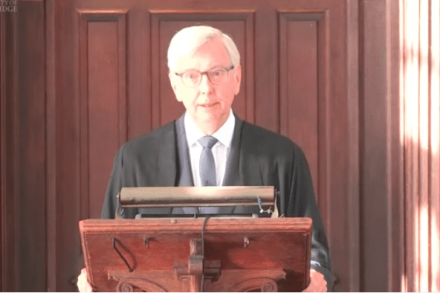
Stephen Toope, Vice-Chancellor of Cambridge University, has begun this academic year by announcing it will be his last in the post. Professor Toope says, no doubt truthfully, that he wants to see more of his Canadian family, dissevered from him by Covid. But I think it reasonable to relate his departure to wider issues. When he arrived in 2017, the ‘Golden Era’ of UK/Chinese relations still, in theory, existed. Cambridge uncritically welcomed Chinese government and business participation. In 2019, speaking in China, Professor Toope hailed the China Development Forum’s ‘Greater Opening Up for Win-Win Cooperation’ and praised President Xi Jinping’s Belt and Road Initiative.

China’s obsessive attempts to subvert the West

From our UK edition

Most people who think themselves well informed know little or nothing about China. They – or I should say ‘we’ for I am just as ignorant – understand what the CIA and FSB are, and what they want. But what is the CPAFFC, and, if it arrives in your neighbourhood, should you worry? How about the United Front, the ‘magic weapon for strengthening the party’s ruling position,’ in the words of Xi Jinping? What does it do and why does China’s dictator praise it so? I am back from the last place I expected to learn about the Chinese Communist Party: the Budapest Forum, a conference of progressive European mayors in Hungary.

Farewell to Cambridge’s disastrous Vice-Chancellor

From our UK edition

So farewell then, Stephen Toope. The undistinguished Canadian lawyer who has spent recent years trying to run Cambridge University into the ground has just sent an announcement to all faculty, alumni and students. In it he informs them that he has decided to step down from his position as Vice-Chancellor at the end of this academic year. The reason he gives is that he has decided to spend more time with his family. You do not have to read between the lines to realise that Toope is leaving because his brief tenure at Cambridge has been an unmitigated disaster, a fact that has become increasingly clear. Among the highlights of his career at Cambridge have been: Overseeing the trashing of academic freedom.

Ticking off the French was strategic genius

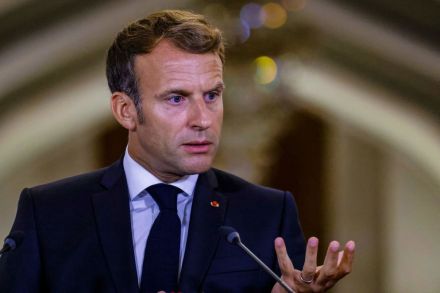
In December 2020, in the aftermath of the presidential election, Jake Sullivan, President-elect Joe Biden’s national security adviser, urged European officials to delay a European Union vote on a proposed economic agreement with China, called the Comprehensive Agreement on Investment. Sullivan, communicating with French and German officials, explained that the incoming Biden administration wanted to have 'early consultation' with the Europeans on China, and urged them to hold off until Biden took office to devise a common approach toward Beijing. Resisting the pressure from Biden, the European Commission announced that the agreement was concluded in principle, pending approval by the European Parliament.

french

Xi Jinping is weaponising China’s sex scandals

From our UK edition

Zhou Xiaoxuan was in tears when she emerged from the Beijing court around midnight on Tuesday. ‘I’m really sorry there wasn’t a better result,’ she said in a video clip shared by supporters after the court threw out a sexual harassment case against one of the country’s most famous television hosts. Zhou claimed she had been forcibly groped and kissed while working as an intern at state broadcaster CCTV in 2014. The case was seen as a test of China’s proclaimed determination to clamp down on abuse, and it galvanized the country’s fledgling #MeToo movement.

Afghanistan and climate change: the West’s twin failures

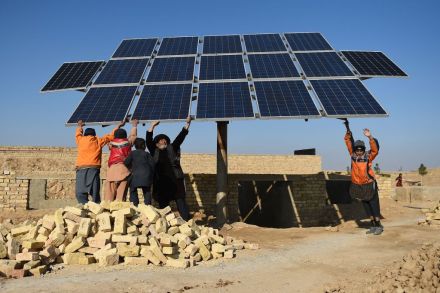
The West’s humiliation in Afghanistan has an older brother: climate change. As siblings, the two share characteristics, most obviously an inability to confront unwelcome facts. In Afghanistan, there was a large constituency led by the Pentagon invested in the mantra of proclaiming progress in the fight against the Taliban. Climate has its own industrial complex of NGOs, climate scientists, renewable energy lobbyists profiting from the energy transition, eager helpers in the media, and politicians posing as world saviors. Energy experts tell us renewable energy is cheaper than building new fossil fuel power stations. If they’re right, why did China build the equivalent of more than one large coal plant a week last year?

climate change

No one elected Mark Milley

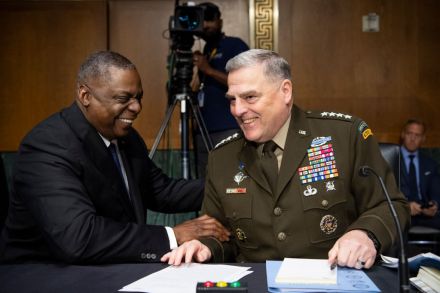
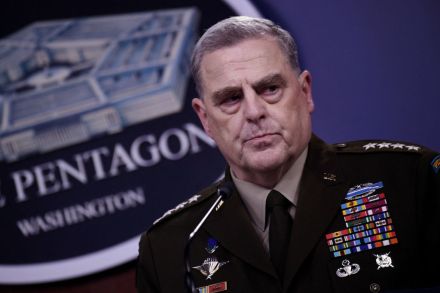
A coup by any other name and maybe even a little light treason. Those are the accusations flying over revelations in a new Bob Woodward book about what Joint Chiefs of Staff Gen. Mark Milley did after the January 6 Capitol riots. Milley reportedly held several phone calls shortly after January 6, with both Speaker Nancy Pelosi and with his counterpart in China. According to Woodward, the general gave assurances to Gen. Li Zuocheng that he would alert the Chinese to any possible coming attack, nuclear or otherwise. There is no evidence President Trump was planning any kind of strike against China, or Iran, or Florida. No battle plans were being drawn. Miller supposedly took these actions after Trump signed an executive order removing US forces from Afghanistan.

mark milley

China tightens its grip on Cambridge

From our UK edition

The revelations this week of the alarming influence of Huawei within the Cambridge Centre for Chinese Management provide the latest evidence of the tightening grip of China on Britain’s leading university. The Times reports that three out of four directors of the centre — part of the university’s Judge Business School — have ties to the telecoms giant, which has close links to the Chinese Communist party. The centre’s ‘chief representative’ is a former vice-president of the company who has been paid by the Chinese government. An honorary fellow of the centre wrote a book praising Huawei’s ‘ability to transform the intellectual elite into a band of soldiers with the same set of values and resolve'.

China’s war on effeminate men

From our UK edition

A rectification notice from China’s state censor earlier this month included a peculiar admonition to ‘resolutely oppose’ effeminate men on television. The note stood out in the otherwise dry document. Its other targets — people with ‘poor morals’ or ‘lacking solidarity with the party and nation’ — make sense within Beijing’s authoritarian logic. But it’s hard to conceive of pretty boys in eyeliner joining the party’s long lists of revolutionary enemies. The term used for effeminate men in the notice — niangpao — is vague, but the National Radio and Television Administration is counting on its broadcast partners to know what it means.