China

The day I was tapped up by Chinese intelligence

From our UK edition

Nigel Inkster, a former director of MI6, has described China as an ‘intelligence state’. This was true even before the Chinese Communist party (CCP) passed laws that all individuals and organisations must help the security forces when asked. Chinese officials, party members and citizens have long been active across a broad front in advancing the interests of the CCP, seeking out political, military, scientific, technological and commercial information. Britain has to be wary of more than just the Ministry of State Security (MSS) — China’s secret police agency — or the military intelligence department.

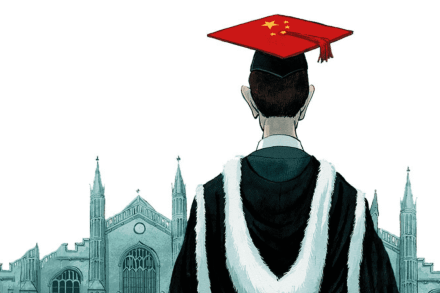
The CCP training programme at the heart of Cambridge

From our UK edition

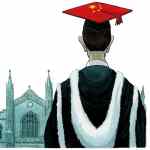
‘Use the past to serve the present,’ declares the website of the China Centre of Jesus College, Cambridge. It seems a sensible motto, until you know that it’s the first half of a maxim of Chairman Mao’s, and that the second half is ‘make the foreign serve China’. The China Centre is directed by Professor Peter Nolan, a fellow of Jesus and an expert on China’s economy. In the 1980s, he studied China’s collective farms and edited a volume that referred to itself as ‘a preliminary attempt to construct a new socialist political-economic strategy for Britain’.

The ghosts that could come back to haunt Blair

From our UK edition

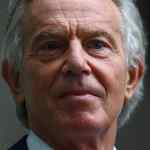
I’m picturing Sir Tony Blair enjoying a fitting of his Garter robes after watching Boris Johnson stagger through PMQs. ‘I’m in the clear these days,’ he’s thinking. ‘So much water under the bridge, what could possibly come back to haunt me?’ Well, here are two items he might like to consider: the application of the 2003 US-UK extradition treaty in the case of Dr Mike Lynch; and Foreign Secretary Liz Truss’s statement that new sanction rules will mean ‘nowhere to hide for Putin’s oligarchs’ and their fin-ancial assets.

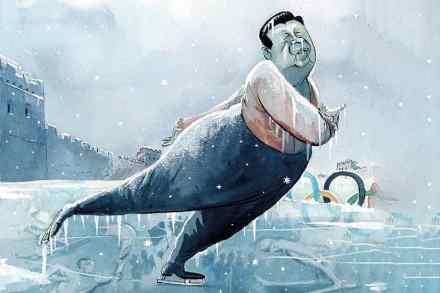
Frozen: can China escape its zero-Covid trap?

From our UK edition

To understand what Xi Jinping wants from the Winter Olympics, look at the man chosen to direct the opening ceremony. Zhang Yimou is one of China’s most famous film directors, but his hits (such as Hero and Raise the Red Lantern) are better loved by foreigners than by the Chinese. His job is to wow the outside world with images of China’s power and culture. In a deeply controversial Olympics — already being boycotted by ministers and officials from Britain, the US and many others — he is Beijing’s secret artistic weapon. But unlike the extravagance of Beijing’s 2008 opening ceremony (also directed by Zhang), this Winter Olympics will be a decidedly pared-down affair.

China’s ‘useful idiots’ keep their honours

From our UK edition

Ministers like to talk a good game on China. But, as the Commons witnessed just two weeks ago, all too often there's a very different reality when it comes to calling out Beijing's abuses. After the Foreign Office declined to describe China's atrocities in Xinjiang as 'genocide,' now it's time for the Department for Education to turn the other cheek. For universities minister Michelle Donelan has ducked the chance to call on Britain's seats of learning to cut their ties with apparatchiks of the communist regime.

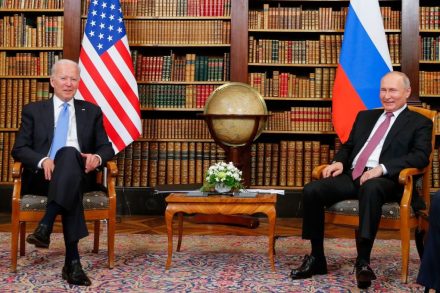
biden putin

America’s control over the international system is slipping

The US-led expansion of NATO in the direction of the Russian border took place when America was at the peak of its power — the "unipolar moment" — and when Russia had hit geostrategic rock-bottom. The global balance of power has changed since then, and that helps explain what is happening now. Vladimir Putin is correct when he argues that, since the collapse of the Soviet Union, the United States and its Western allies have taken advantage of Russian weakness. It may sound simplistic, but back then in the immediate aftermath of the Cold War, American policymakers did a lot of things just because, well, they could do them. And then they created geostrategic narratives to justify what they wanted to do.

The next North Korea crisis has begun

While the world is captivated by all things Omicron and Russia, North Korea is once again back on the world stage. And that can only mean one thing: bigger and badder missile tests. None of this should come as a surprise. North Korea’s leader, Kim Jong-un, has announced to the world on numerous occasions that he will continue to test such weapons, even as his nation suffers from a “food problem.” Kim, his father, and his grandfather have been marching towards a fully viable nuclear deterrent for decades now. What is new is that Kim has declared that he will not abide by the promise he made to not test certain weapons platforms that directly threaten the US homeland — what drove the near-nuclear showdown with President Donald Trump back in 2017.

north korea

The dangerous alliance between Russia and China

From our UK edition

The growing alliance between Russia and China is something we shouldn’t lose sleep over, their long history of mutual suspicion runs too deep – or so we are told. Such a view is too complacent by half. China and Russia’s mutual hostility towards the West and their opportunism also run deep. And even if their burgeoning alliance is a marriage of convenience, it is still a very dangerous one. As Russia has massed more than 100,000 troops near the Ukrainian border, the nightmare for western strategists is that Vladimir Putin’s actions are being coordinated with those of Xi Jinping in and around the Taiwan Strait, where China’s military intimidation of Taiwan has reached new levels of intensity.

No one should celebrate the decline of America

From our UK edition

Where is America? Like an old friend who hasn’t been in touch for years, you wonder if its silence is lost interest or if it just got too busy. America used to be everywhere, the dominant voice in world affairs, a desirable friend and a much-feared enemy. It intervened (and, yes, interfered) whenever it felt its interests or values were threatened. Often its involvement was unwanted and sometimes it didn’t improve matters, but there was a reliable solidity to it, a sturdiness born of military might, prosperity and national self-belief. It could be admired or reviled, but it had to be reckoned with. America shies away from it all now. Observe how Joe Biden alternates between stark warnings and unintelligible ramblings on the prospect of a ground war in Europe.

How China meddles in American academia

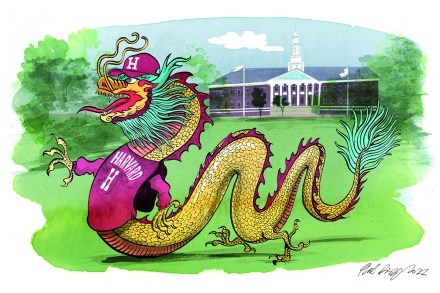
"Congress has dropped language from a must-pass bill governing US defense policy that would have effectively prevented US scientists from participating in Chinese programs aimed at attracting foreign scientific talent,” reported Science, the journal of the American Association for the Advancement of Science (AAAS) in December. The journal cautions, however, that the provision may reappear in another bill. The AAAS is the most authoritative voice for American scientists. It has generally opposed any restrictions on relations between US academics and China, and favored the US government’s stepping back from investigating and prosecuting scientists for lying about their service to China.

china ccp

How working from home threatens authoritarian regimes

One of the few good things to come out of the pandemic has been the option to work from home (WFH). According to a Stanford University study of 17,000 employees, 50 percent of respondents who stayed at their jobs without commuting wanted to keep working from home at least part-time after Covid. And a September 2021 survey by OwlLabs, a video conferencing platform, found that one in three people who have worked remotely since the outbreak would likely quit if they could not continue to do so. While undoubtedly pressured by the current worker shortage to accept WFH as an employment benefit, companies have come to appreciate how decentralized staffing can improve productivity and substantially lower overhead.

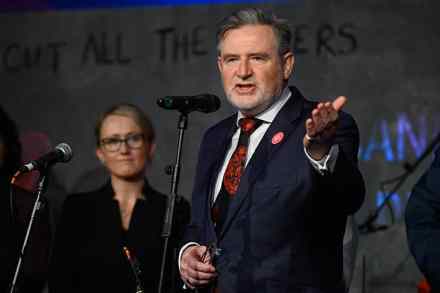
The curious case of Barry Gardiner

From our UK edition

In May 2020, in the wake of the Barnard Castle story, Emily Maitlis delivered her famous Newsnight address to the nation: ‘Dominic Cummings broke the rules. The country can see that, and it’s shocked the government cannot.’ The public felt ‘fury, contempt and anguish’ at what had happened. The Prime Minister was showing ‘blind loyalty’ to a colleague, etc. Now Mr Cummings is chief witness for the prosecution of Boris Johnson of which Ms Maitlis was an early forerunner. It is time for Emily to speak to us via Newsnight once more and, in the interests of the BBC’s Impartiality Action Plan, declare: ‘Dominic Cummings is a brave whistle-blower. Shocked that the Prime Minister has broken Covid rules, he has now spoken out’, etc.

Portrait of the week: Saving Big Dog, scrapping the licence fee and tsunami hits Tonga

From our UK edition

Home Sue Gray, Second Permanent Secretary at the Cabinet Office, having been asked by Boris Johnson to look into accusations of parties held at 10 Downing Street, in turn formally asked him about them. Newspaper reports about such gatherings continued day after day, and Dominic Cummings, the Prime Minister’s former chief adviser, said that he had warned Johnson in advance about one for 40 people in the garden on 20 May 2020, telling him: ‘You’ve got to grip this madhouse.’ ‘Nobody warned me that it was against the rules,’ the PM said. The commentariat at large talked of Operation Save Big Dog, by which officials would take the blame to preserve the Prime Minister.

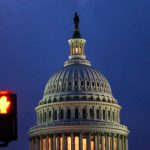
A view of the U.S. Capitol (Photo by Drew Angerer/Getty Images)

Capitol Hill Club falls out with conservative clientele

The Capitol Hill Club, home to DC's most high-profile Republicans since the 1950s, is on thin ice with its conservative members. Cockburn, who has enjoyed many a cocktail inside the oak-lined walls of the club, is hearing that Republican members of Congress are incensed at the Capitol Hill Club for complying with DC mayor Muriel Bowser's vaccine mandate. As of January 15, DC restaurant and entertainment venues are required to check that all of their patrons are fully vaccinated. According to a GOP insider, House Minority Whip Steve Scalise warned the Republican conference at a meeting last week that members should not go to the Capitol Hill Club if they are not prepared to show their papers. In essence, comply or be quiet.

China’s zero-Covid policy is becoming unsustainable

From our UK edition

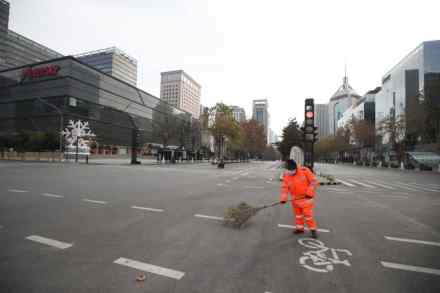
With just three weeks until the opening of the Winter Olympics in Beijing, Covid-19 is creeping ever closer to the capital. The Communist party is seeking to isolate Beijing from the rest of the country to keep the virus at bay and the games on track. But its zero-Covid policy, a desperate game of Whac-A-Mole with the virus, is looking increasingly unsustainable. All routes between Beijing and Tianjin have been closed after an outbreak in the port city, which is adjacent to the capital. Flights and high-speed train services in and out of a city of 14 million people have been cancelled and highways closed after the discovery of 126 cases in recent days, all of them the highly contagious Omicron variant. A third round of mass testing has been ordered.

Britain is finally waking up to China’s influence operations

From our UK edition

The biggest surprise in Thursday’s security warning about a Chinese agent seeking to influence British politicians is that it came as a surprise at all. The Chinese Communist Party operates a vast and growing influence operation in Britain, which has pretty much been allowed free rein. The warning came from MI5 in the form of an ‘interference alert’ sent to House of Commons Speaker, Sir Lindsey Hoyle, which he then passed on to MPs. It warned that Christine Lee, a lawyer, was ‘knowingly engaged in political interference activities on behalf of the United Front Work Department of the Chinese Communist party.

China is the new evil empire

History does not repeat itself, but it does rhyme. In the 1980s, the gravest threat to America’s freedoms came from the Soviet Union, which President Ronald Reagan called the Evil Empire. That rhymes with today’s equally serious threat from Communist China, the New Evil Empire. Xi Jinping rules China with absolute power, like an emperor. He has complete control over China’s sole political party, the CCP, the government, the economy, the military, the police, the judiciary, and the media. Even over religion: Christian churches must display Xi quotes instead of the Ten Commandments.

Was the Kazakhstan uprising an attempted Jihadi takeover?

From our UK edition

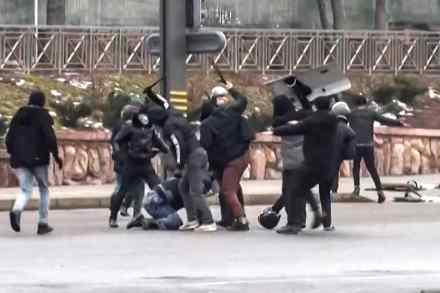
The Kazakh uprising is over. The stench of burnt-out vehicles and bombed out buildings in Kazakhstan’s most populous city and former capital, Almaty, has begun to dissipate. Life is returning to normal. Banks have reopened. Salaries and pensions are being paid. The internet is up and running again. Almaty airport is expected to reopen today. As the fog of war lifts some clarity about these events is beginning to emerge. Officials have reported that 100 businesses and banks were destroyed along with 400 vehicles. Seven policemen died and hundreds more were wounded; 8,000 people have been arrested. Some 164 civilians were killed. The government of President Kassym-Jomart Tokayev has survived and with some ease as it turns out.

The grim reality of being a ‘model Uighur’

From our UK edition

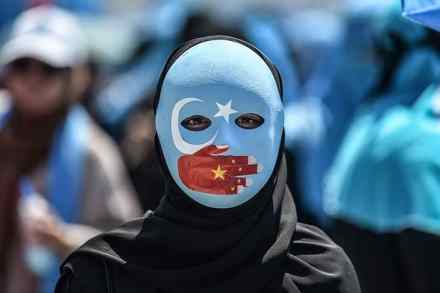
I left China a decade ago when life there as a Uighur simply became too difficult. People know about the ongoing genocide of the Uighurs, but it didn’t come out of nowhere: it followed years of smaller scale persecution, which I experienced daily. I first grew aware of how bad things were in 2009, when I got a job in an inland city that required me to travel — a role that became impossible because hotels would refuse to let me stay. Receptionists would see my identity card, which bore my ethnicity, and curtly reply that there were no rooms available. Once, one smiled kindly and told me to wait in the lobby. Ten minutes later, the police arrived, whereupon she pointed at me and said: ‘That’s the Uighur, sitting there.

The hypocrisy of Elon Musk

From our UK edition

Tesla's sleek, if expensive, electric cars are leading the battle against climate change. Its batteries are moving renewable energy into the mainstream, while its founder Elon Musk, the world’s richest man, likes to present himself as a free-thinking radical. It is hard to think of a company more right on than Tesla — well, okay, perhaps Unilever — or one that depends more on its politically correct credentials. But hold on. There turns out to be one opposed minority that Tesla couldn’t care less about: China’s Uighurs. Most of the corporate world will sooner or later have to make a tough decision: do they care about human rights?