China

The US and India in a new world

The world’s center of gravity is shifting to the Indo-Pacific. The new global order will be shaped by developments in a sprawling region where interstate rivalries and tensions are sharpening geopolitical risks. Building a stable balance of power in the Indo-Pacific has become more important than ever, but China’s territorial and maritime revisionism, and its heavy-handed use of economic and military power, are causing instability and undercutting international norms. Against this background, the expanding strategic partnership between the world’s most powerful and most populous democracies — the United States and India — has become pivotal to equilibrium in the Indo-Pacific.
india
india

Can the India-US relationship last?

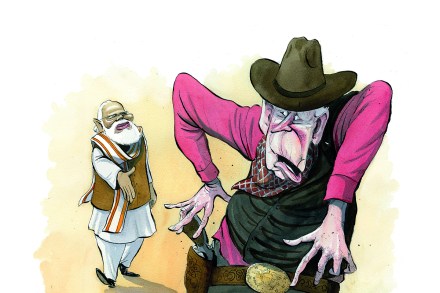
India and the United States have rediscovered each other after the cordial hostility of the Cold War. Those years of isolation have made India’s political and financial elites susceptible to flattery. America’s courtship of India, lubricated by the economics of globalization and the post-9/11 zeal to spread democracy, is now being consummated in the American search for a democratic counterweight to China. But India is a chaotic democracy in a volatile neighborhood. Can it hitch itself to America without forfeiting its autonomy? Foreign strategic experts exhort India, which is non-interventionist to its marrow, to act like a global power.

The Chinese Communist Party always medals in moral corruption

From our UK edition

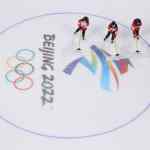
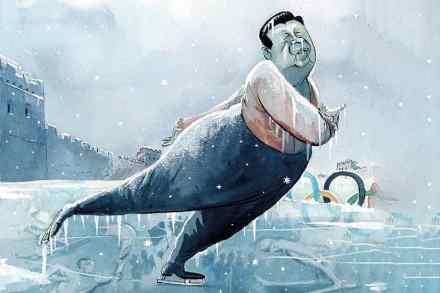
The 2022 Beijing Winter Olympics draws to a close today, and few will mourn its passing. The spectacle of a totalitarian regime mounting a Games while prosecuting a genocide have rightly drawn denunciations, diplomatic boycotts and precious few television viewers. But this Olympiad was instructive in at least one important respect: to remind the free world how the Chinese Communist Party eventually corrupts everything it touches, for its own ends. To be sure, Xi Jinping’s regime had a willing partner in the International Olympic Committee, whose record of rule-bending is well-known. Its extravagant demands alienated the Norwegian public to such an extent that Oslo withdrew its bid in 2014 to host the Games.

‘Xi Jinping Thought’ is taking over China’s classrooms

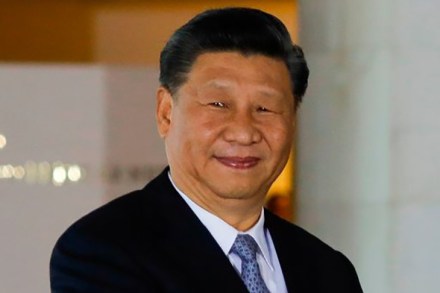
From last fall, in an extension of a personality cult not seen since Mao Zedong, “Xi Jinping Thought” is being incorporated into China’s national curriculum. School textbooks are emblazoned with Xi’s smiling face, together with heartwarming slogans telling readers as young as six that their leader is watching over them. “Grandpa Xi Jinping is very busy with work, but no matter how busy he is, he still joins in our activities and cares about our growth,” reads one. “Xi Jinping Thought” must be taught at all levels of education, from elementary school to graduate programs, and there is special emphasis on capturing the minds of the youngest children.

china climate xi jinping thought

China and Russia are an alliance of disruptors

From our UK edition

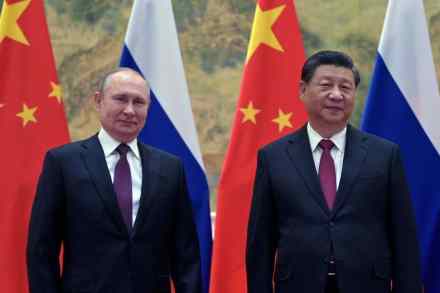
Four years ago, Vladimir Putin and Xi Jinping made pancakes together in Vladivostok while thousands of their military forces conducted joint exercises in Siberia. This month, as China hosted the Olympics, Putin and Xi announced that a ‘new era’ in international relations had begun, one in which the two great authoritarian powers of the 21st century will reshape the liberal international order established in 1945 and reaffirmed in 1991. Some call it Cold War II, yet the blossoming relationship between Moscow and Beijing may best be thought of as an alliance of disruptors.

Is Germany finally standing up to Russia and China?

From our UK edition

When German chancellor Olaf Scholz met Russian president Vladimir Putin yesterday, the visuals said it all. As he had done with Emmanuel Macron, Putin kept his visitor at arm’s length, or rather at five metres’ length. Sitting at opposite ends of the Kremlin’s infamous long table, the two men were as physically far away from each other as they were on content. But Scholz did not seem intimidated by this. On the contrary. At the press conference that followed, he was assertive, even feisty. Are we seeing the beginnings of a post-Merkel foreign policy shift in Berlin?

What really happens if Russia invades Ukraine?

From our UK edition

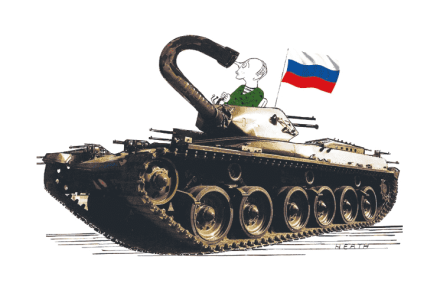
Russia will pay an enormous price if it invades Ukraine, whether it goes for the whole country or only the eastern region around Donbas. Vladimir Putin has already assembled well over 100,000 troops near Ukraine’s borders, moved in tanks, heavy artillery and aircraft, and brought in the medics and blood supplies needed to deal with casualties. Western governments have evacuated all but essential diplomatic personnel and told their citizens to get out now. Still, no one knows what Putin has decided, or even if he has decided. Visits to Moscow by senior western politicians have yielded little information and no diplomatic solution. The message seems to be that Putin remains uninterested in a compromise.

Vince Cable slammed over China (again)

From our UK edition

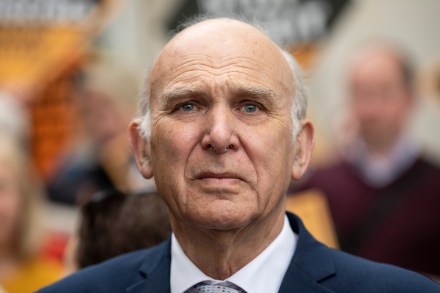
Oh dear. Britain's onetime favourite 'liberal' is at it again. Mr S has chartered the sad decline of Vince Cable in recent months from household name to Beijing's useful idiot. The onetime Lib Dem leader is one of the few mainstream politicians to claim China's treatment of Uyghur Muslims in Xinjiang does not amount to genocide, as part of his bid for the UK to develop closer ties with the country. This is despite reports that the Uyghur persecution there meets all five UN criteria for genocide. Indeed Layla Moran, the party's foreign affairs spokesman, issued a very public slapdown last June when Cable first made these claims. https://twitter.com/nyrola/status/1492919439800639499?ref_src=twsrc%5Etfw Now though, an unchastened Cable has gone even further.

Why Falklanders should fear China

From our UK edition

In a lecture I recently gave to mark the approaching 40th anniversary of the Falklands War, one of the questions I asked was whether Argentina would have another go. I concluded it would not, because the military protection of the islands, neglected in 1982, was now strong. In passing, though, I did note that China now has a close relationship with Argentina, over arms trading, the hog industry, soybeans, help with the pandemic etc. Argentina, I said, was now likelier to support China, not the West, in international forums. This week, Xi Jinping has declared his support for Argentina’s claim to ‘the full exercise of sovereignty’ over the islands. This may be mere game-playing, but our government should scent danger.

Are the Winter Olympics suffering the effects of climate change?

From our UK edition

No snow The pistes are covered with artificial snow and the hillsides are bare. Are the Winter Olympics a victim of climate change? — Skiing events at the games are at Yanqing and Zhangjiakou, north-west of central Beijing. Both have arid climates where a remarkable proportion of rain falls in the summer. Yanqing averages just 10mm of rain between December and February, Zhangjiakou just 11mm. London averages 160mm in the same months. Temperatures in the Chinese resorts have been well below freezing this week. The real snow has not melted — it never fell in the first place. Source: meteoblue.com Jab done What was your risk of dying of Covid, vaccinated or unvaccinated, between July and December last year?

The crazy, corrupt world of the Beijing Olympics

From our UK edition

Gstaad OK sport fans, have you been enjoying the concentration camp Olympics? I’m sure the Uighurs in the Chinese gulag are riveted, especially watching the downhill, the trouble being that most of the one million Muslim prisoners have been issued with Equatorial Guinea-made TV sets, apparatuses that only show crocodiles swallowing humans. Joe Biden, in the meantime, has steered clear of the Games and has sent a message via pigeon to the Chinese: ‘You’re way out of line as far as King Kong is concerned and unless you sign the Schleswig-Holstein agreement do not expect any Americans to attend the première of Madame Butterfly.

Sacrificing the Uighurs to the Olympics

It’s hard to say what was most distressing about the opening days of the Beijing Winter Olympics. The lament of the athletes “injured” by the swabs inserted into their noses for Covid testing? French speed skater Gwendoline Daudet’s anguish under the bubble after she was eliminated from the mixed relay? The embarrassing spectacle of Uighur skier Dinigeer Yilamujiang lighting the snowflake-shaped Olympic cauldron under the gaze of Xi Jinping, an image that the spokespersons of the International Olympic Committee found “charming”? The fact that, unlike in Berlin in 1936 or Moscow in 1980, the matter of a boycott was scarcely mentioned, as “it was shown” that the topic would have a “negative impact” on the athletes’ morale?

China breaks new records in the Surveillance Olympics

From our UK edition

Never before have the participants in a major sporting event been so closely monitored as in this Winter Olympics in Beijing. The 1980 Summer Olympics in Soviet Moscow were nothing in comparison. Athletes are competing under a blanket of observation, ostensibly to keep Covid at bay, yet imposed by a paranoid Communist party for whom critical words or thoughts are as dangerous as any virus. Everyone attending the games, including athletes, support staff and media, must install on their phones an app, My 2022, which harvests a wide range of personal data. It has the ability to censor and track its users, according to cybersecurity experts who have examined the app. The app is used to submit health information such as Covid test results and vaccination status.

Drinking your way through the Chinese Olympics

The thing I am looking forward to the least right now is the Olympics, and I have a colonoscopy scheduled. The only answer is a drinking game. Enough with "politics by sportscasters for those who only care about politics." I threw away my Mao (and Che) T-shirts sophomore year. We all know Beijing is not a democratic regime. So for some sort of balance, can we all agree that for every hundred references to the Uighurs, Tibet and Hong Kong, we make one to where and how Covid all began? Or will the mainstream media continue their coverage détente? Bottoms up for every reference to bats, pangolins and Chinese wet markets. Speaking of Covid, a drink every time announcers insist China's Covid crackdown is autocratic draconianism while ignoring that much of the same was done in America.

Putin and Xi’s Potemkin alliance

From our UK edition

Vladimir Putin very rarely travels abroad these days – and Xi Jinping has not met a foreign leader in person for almost two years. Yet there they were together, just before the opening of the Beijing Olympics, hailing their and their nations’ friendship and concluding $117 billion in oil and gas deals. Although they themselves avoid the word, can we yet talk of a Sino-Russian alliance? Not quite: there’s more here than meets the eye. Certainly the focus was on amity and common interests. This had been signalled in the lead-up to the summit. Chinese foreign minister Wang Yi said that Moscow’s security concerns about Nato were ‘legitimate’ and needed to be ‘taken seriously and addressed.

The day I was tapped up by Chinese intelligence

From our UK edition

Nigel Inkster, a former director of MI6, has described China as an ‘intelligence state’. This was true even before the Chinese Communist party (CCP) passed laws that all individuals and organisations must help the security forces when asked. Chinese officials, party members and citizens have long been active across a broad front in advancing the interests of the CCP, seeking out political, military, scientific, technological and commercial information. Britain has to be wary of more than just the Ministry of State Security (MSS) — China’s secret police agency — or the military intelligence department.

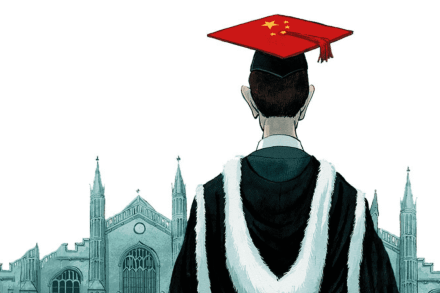
The CCP training programme at the heart of Cambridge

From our UK edition

‘Use the past to serve the present,’ declares the website of the China Centre of Jesus College, Cambridge. It seems a sensible motto, until you know that it’s the first half of a maxim of Chairman Mao’s, and that the second half is ‘make the foreign serve China’. The China Centre is directed by Professor Peter Nolan, a fellow of Jesus and an expert on China’s economy. In the 1980s, he studied China’s collective farms and edited a volume that referred to itself as ‘a preliminary attempt to construct a new socialist political-economic strategy for Britain’.

The ghosts that could come back to haunt Blair

From our UK edition

I’m picturing Sir Tony Blair enjoying a fitting of his Garter robes after watching Boris Johnson stagger through PMQs. ‘I’m in the clear these days,’ he’s thinking. ‘So much water under the bridge, what could possibly come back to haunt me?’ Well, here are two items he might like to consider: the application of the 2003 US-UK extradition treaty in the case of Dr Mike Lynch; and Foreign Secretary Liz Truss’s statement that new sanction rules will mean ‘nowhere to hide for Putin’s oligarchs’ and their fin-ancial assets.

Frozen: can China escape its zero-Covid trap?

From our UK edition

To understand what Xi Jinping wants from the Winter Olympics, look at the man chosen to direct the opening ceremony. Zhang Yimou is one of China’s most famous film directors, but his hits (such as Hero and Raise the Red Lantern) are better loved by foreigners than by the Chinese. His job is to wow the outside world with images of China’s power and culture. In a deeply controversial Olympics — already being boycotted by ministers and officials from Britain, the US and many others — he is Beijing’s secret artistic weapon. But unlike the extravagance of Beijing’s 2008 opening ceremony (also directed by Zhang), this Winter Olympics will be a decidedly pared-down affair.

China’s ‘useful idiots’ keep their honours

From our UK edition

Ministers like to talk a good game on China. But, as the Commons witnessed just two weeks ago, all too often there's a very different reality when it comes to calling out Beijing's abuses. After the Foreign Office declined to describe China's atrocities in Xinjiang as 'genocide,' now it's time for the Department for Education to turn the other cheek. For universities minister Michelle Donelan has ducked the chance to call on Britain's seats of learning to cut their ties with apparatchiks of the communist regime.