China

Letters from Spectator readers, June 2024

The rise of reverse gaslighting Sir — To an otherwise excellent article, I have a small correction. In 1860, the Southern states did not keep Lincoln off the ballot. Unlike today, where voting ballots are printed by the states, in 1860, voters were not presented with official ballots at polling stations that allowed them to check off which candidate they were voting for. Instead, a nineteenth-century ballot or “political ticket” was a slip of paper, provided by each party, listing their candidates for whatever offices were up for election. This allowed voters to easily “vote the ticket” for their party without having to know the names of every candidate and office.

letters

Fools rush in: Mania, by Lionel Shriver, reviewed

From our UK edition

Pearson Converse teaches literature at Verlaine University, Pennsylvania. She exists in an alternative universe to our own in which the Mental Parity Movement holds sway.  There is intellectual levelling, and no ‘cognitive discrimination’. This is high satire, exaggerated, crude, inviting ridicule of the social system portrayed, close to the great satirists of the 18th century in tone if not in style.   Yet Lionel Shriver’s Mania is more than just a satire. It is a study of Pearson’s family life and her ‘unbalanced’ relationship with her best friend from childhood, Emory. Pearson has three children: an intellectually gifted girl and boy by a high-IQ sperm donor, and an averagely intelligent girl conceived with her tree-surgeon partner, Wade.

China’s vendetta against Nato

From our UK edition

46 min listen

Last week, President Xi Jinping visited Serbia. An unexpected destination, you might think, but in fact the links between Beijing and Belgrade go back decades. One event, in particular, has linked the two countries – and became a seminal moment in how the Chinese remember their history. In 1999, the Chinese embassy in Belgrade was bombed by US-led Nato forces. Three Chinese nationals died. An accident, the Americans insisted, but few Chinese believed it then, and few do today. The event is still remembered in China, but now, little talked about in the West. Xi’s visit was timed to the 25th anniversary of the bombing itself.

Why Gaza and not the Uighurs?

The Babylon Bee, “the newspaper of record” for anyone with a sense of humor, posed a more interesting thought about the campus demonstrations than anything you can find in the New York Times or Washington Post. The Bee’s headline proclaimed, “Uighur Slaves Struggling to Keep Up with Demand for Palestinian Headscarves.” Dark humor indeed. The headscarves, like the masks, serve one obvious function: they hide the faces of demonstrators. That’s why bank robbers wear masks, too. Students know they are breaking the rules and professional agitators know they are breaking the law, so it’s smart to hide their faces. But the scarves have one additional advantage that bank robbers’ masks don’t: the keffiyeh is a visible symbol of Palestinian identity.

gaza

What Xi wants in Europe

From our UK edition

On a quiet street in Belgrade, a bronze statue of Confucius stands in front of a perforated white block, the new Chinese Cultural Centre. This is on the former site of the Chinese embassy which in 1999 was bombed by US-led Nato forces during the Kosovo war. Three Chinese nationals were killed. The Americans said the bombing was an accident, but the deaths allowed China and Serbia to share a common anti-Nato grievance. This week, timed to coincide with the 25th anniversary of the bombing, Xi Jinping visited Belgrade and talked about the Sino-Serbian ‘bond forged with the blood of our compatriots’. He had been expected to visit the embassy site but seems to have decided that that would be too provocative against Washington.

The traditional British hedge is fast vanishing

From our UK edition

Five years ago, a documentary about the Duchy of Cornwall featured the then Prince of Wales in tweeds and jaunty red gauntlets laying a hawthorn hedge. It was a brilliant piece of PR. If Charles was a safe pair of hands with a hedge – something as quintessentially English as a hay meadow or a millpond – he was surely a safe pair of hands full stop. A cuckoo in one breeding season needs to eat about 22,500 hairy caterpillars Focusing on a hedge in south-west Wiltshire, Hedgelands combines history, celebration, lament and warning. Christopher Hart is a companionable writer, and makes a powerful case that, at a time of ecological hazard, well-nurtured hedges can play an astonishing role in buttressing the future. First, though, the past.

Are all great civilisations doomed?

From our UK edition

To quote Private Frazer in Dad’s Army, ‘We’re doomed, doomed!’ That seems to be the message of Paul Cooper’s eminently readable series of essays about how and why 14 civilisations rose to greatness and then collapsed. He begins with the Sumerians in the fourth millennium BC, at the northern tip of the Persian Gulf, and he finishes with Easter Island in the 18th century. He then concludes with dark prophecies about how a few centuries from now an overheated planet will look in a simpler post-industrial age. The style is informal, based on a series of popular podcasts, and one can almost hear the spoken word as one reads.

How China is quietly cutting out American tech

From our UK edition

32 min listen

Last week, President Joe Biden finally signed into law a bill that would take TikTok off app stores in the US, eventually rendering the app obsolete there. This is not the end of the saga, as TikTok has vowed to take legal action. In the US, the drive to decouple from Chinese tech continues to rumble on. In this episode, we’ll be taking a look at the reverse trend – the Chinese decoupling from American tech. It’s a story that tends to go under the radar in light of bans and divestments from the US, but you might be surprised at how much China is cutting out American tech too – and doing it much more quietly. Cindy Yu is joined by the journalist Liza Lin, who has been following this story in her detailed coverage for the Wall Street Journal.

Why was Blinken’s China visit so underwhelming?

From our UK edition

It had been billed as an electrifying encounter – the US Secretary of State preparing to confront Beijing with a catalogue of global misdemeanours, ranging from stepped up support for Russian aggression against Ukraine to the intimidation of ships in the South China Sea belonging to US treaty ally, the Philippines, and the systematic breaking of world trade rules by flooding the market with heavily subsidised electric vehicles (EVs) and other renewable tech. ‘Russia would struggle to sustain its assault on Ukraine without China’s support,’ Antony Blinken said on Friday, at the end of a three-day trip that included meetings with his Chinese counterpart Wang Yi and with President Xi Jinping. ‘I made clear that if China does not address this problem, we will.

The Xi files: how China spies

From our UK edition

38 min listen

This week: The Xi files: China’s global spy network. A Tory parliamentary aide and an academic were arrested this week for allegedly passing ‘prejudicial information’ to China. In his cover piece Nigel Inkster, MI6’s former director of operations and intelligence, explains the nature of this global spy network: hacking, bribery, manhunts for targets and more. To discuss, Ian Williams, author of Fire of the Dragon - China's New Cold War, and historian and Guardian columnist Simon Jenkins joined the podcast.. (02:05) Next: Lara and Gus take us through some of their favourite pieces in the magazine, including Douglas Murray’s column and Gus’s interview with the philosopher Daniel Dennett.

The Xi files: how China spies

From our UK edition

Most states spy. In principle there’s nothing to stop them. But China’s demand for intelligence on the rest of the world goes far beyond anything western intelligence agencies would typically gather. It encompasses masses of commercial data and intellectual property and has been described by Keith Alexander, a former head of America’s National Security Agency, as ‘the greatest transfer of wealth in history’. As well as collecting data from government websites, parliamentarians, universities, thinktanks and human rights organisations, China also targets diaspora groups and individuals. Chinese cyber intrusions have targeted British MPs and stolen population-level data from the UK Electoral Commission database.

Lessons from the foreign aid votes

The past week has presented a fascinating object lesson in the continued tension over the direction of foreign policy and national security in the MAGA era, on what matters and what doesn’t, and who matters and who doesn’t, when it comes to finding a true forward-looking Trump-Reagan fusion. I wrote about this in the context of reviewing the new book by Matt Kroenig and Dan Negrea, who wrote a Ukraine-focused piece for Foreign Policy last week. But that’s just writing, not voting — and this week brought votes that include more useful indicators of what’s going on.

foreign aid

After TikTok, there’s another app we should ban

From our UK edition

The American House of Representatives has passed a bill ordering Bytedance, a Chinese company, to divest from TikTok or stop operating in the USA. Their involvement in the app risks national security, the critics say. But what about other apps owned by Chinese companies? Should they be banned too? The most insidious part about Gauth? Look at the reviews. Apparently it gets the homework wrong. Gauth, or Gauthmath as it is known in the UK and elsewhere in the world, is a tutoring app designed to help children complete their homework in maths and science. It’s currently the #2 educational app in the Apple app store, and is targeted at primary school children. Only the very youngest need parental approval to use the app.

Ex-TikTok employees sound the alarm over ties to China

Cocaine Mitch may be onto something. Last week, the senator called on his colleagues to pass a bill banning TikTok unless it is sold by its Chinese parent company, ByteDance. Now ex-TikTok employees are coming forward with stories detailing the company's entanglement with China.  According to eleven former employees interviewed by Fortune, TikTok has deep ties to Beijing through ByteDance which the company has tried to conceal. Some of the employees were with the company as late as last year, after the launch of Project Texas, a $1.5 billion initiative to store data of American citizens in the US. Evan Turner, a former senior data scientist at TikTok, worked for a Beijing executive during his time at the company.

tiktok
space technology

Is the West ready to face the challenges of advancing technology?

The theme of this month’s edition is technology. The advancement of space exploration, defense technologies, artificial intelligence and the like should excite us. Yet the geopolitical issues they present are great and Western governments seem ill-prepared to grapple with them. Watch any congressional hearing where a crusty congressman tries to keep pace with Silicon Valley’s top autists if you need further evidence — and read Spencer A. Klavan’s analysis of the high-skill but low-status rejects uniting into a formidable social class on p.12. The Silent Generation and boomers simply cannot keep up. The Space Race is back on, as tycoons seek to cash in on the final frontier.

TikTok

The fight to curtail TikTok’s US influence

One hundred and twenty minutes. That’s how much time more than 40 percent of American children spent on TikTok every day last year. The app, owned by the Chinese company ByteDance, worms its way into the minds of young people to an extraordinary degree, dwarfing their use of Instagram, Facebook, Twitter/X and Snapchat. And when word went out that the House of Representatives was seriously considering forcing a sale to peel the app away from the power of the Chinese Communist Party, TikTok fired back by weaponizing the same children against Congress — driving a deluge of confused phone calls to Capitol Hill, including some where teens threatened to commit suicide if the vote went forward.

Was Marco Polo a ‘sexpat’?

From our UK edition

25 min listen

When I recently came across a book review asking the question ‘was Marco Polo a "sexpat"?’, I knew I had to get its author on to, well, discuss this important question some more. The 13th century Venetian merchant Marco Polo’s account of China was one of the earliest and most popular travelogues written on the country. Polo spent years at the court of Kublai Khan, the grandson of Genghis, and whose family founded the Yuan dynasty in China. My guest today, and the author of that book review, is the historian Jeremiah Jenne. Jeremiah has lived in China for over two decades, and he is also the co-host of the fascinating podcast Barbarians at the Gate, all about Chinese history.

Is the Quad finished?

From our UK edition

Since the late 1990s, Australian governments have been considering how to make their neighbourhood, the Indo-Pacific, a stable and peaceful region. Australia has articulated the need for a balance of power, between a rising China on the one hand and the liberal democracies of the region on the other.  Australia has been particularly concerned about the risk of the Indo-Pacific being dominated by China – it could impose a kind of Asian Monroe doctrine on the region. In this environment, China would not only be able to subjugate Hong Kong, assert its sovereignty over the whole of the South China Sea, and incorporate Taiwan into the People’s Republic of China.

Biden uses the gilded cage of the White House to his advantage

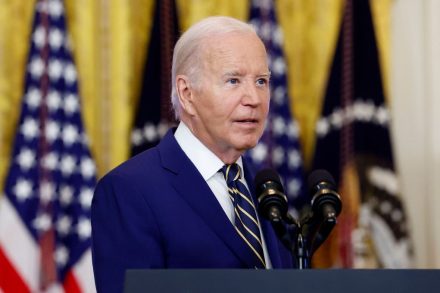
As much as things have changed since 2020, the campaign styles and strategies of Trump and Biden have mostly stayed the same. On Tuesday, President Biden held a phone call with Xi Jinping, the president of China. The two were set to speak about a host of important issues for the first time since 2022. Keep in mind that the day before, Biden struggled to get through a softball interview with weatherman Al Roker at the White House Easter Egg Roll. But sure, let’s all pretend that Joe’s conversation with Xi about artificial intelligence went smoothly. Often times Joe’s daily presidential duties — phone calls with world leaders, receiving the presidential daily briefing, attending various ceremonies — are the only things on his calendar.

biden gilded cage

What Chinese hackers want

From our UK edition

27 min listen

Over the last week the UK has been rocked by allegations that China was responsible for two cyber attacks in recent years – one on the Electoral Commission, where hackers successfully accessed the open register, which has the details of 40 million voters; and a set of attempts to access the emails of a number of China critics within parliament. So what do we know about China’s cyber capabilities? What are its goals? And now that the UK knows about these attacks, what should we be doing? Joining me on the podcast today is Nigel Inkster, senior advisor for cyber security and China at the think tank IISS, formerly director of operations and intelligence at MI6, and author of China’s Cyber Power, a 2016 book on precisely this question.