China

Power play: Zelensky’s plan for his Russian conquests

From our UK edition

40 min listen

This week: Power play. The Spectator’s Svitlana Morenets writes the cover article in this week’s magazine exploring Zelensky’s plan for his Russian conquests. What’s his aim? And how could Putin respond? Svitlana joins the podcast alongside historian and author Mark Galeotti (02:10).Next: Will and Gus discuss their favourite pieces from the magazine, including Richard Madeley’s diary and Lara Prendergast’s argument that bankers are hot again.Then: how concerned should we be about falling fertility rates? In the magazine this week Jesus Fernandez-Villaverde argues that the problem is already far more grave, and far more global, than we realise. Why should we worry about this, and what can be done to stem this?

Why China’s nostalgia industry is booming

From our UK edition

Nostalgia is a thriving industry in China. I first noticed this while walking around Nanjing last summer. There were shops with names like ‘Finding Childhood’ or ‘Childhood Memories’, selling sweets and toys that had long been discontinued. There were posters of TV shows and celebrities from the 1980s and 1990s. The customers were like me – misty-eyed millennials, often women, looking for their lost childhoods. ‘Oh my god, remember that!’ We relished every moment. The shops have sprung up suddenly in the past two years, mostly catering to my generation, who spend more on high-street tat than our elders. But older Chinese have been seeking nostalgia too. They get their hit from remembering a more rural way of life.

Another ‘Squad’ member axed

Missouri trims Bush Talk about Squad goals: another of the most progressive members of Congress lost her Democratic primary last night, as Cori Bush was beaten by Wesley Bell in the race for Missouri’s 1st district.Bush first won her seat after playing a prominent role in the Black Lives Matter movement in Ferguson and the post-George Floyd protests in St. Louis — with one local particularly pleased to see the back of her.“Bye bye Cori Bush,” tweeted Mark McCloskey, co-star of the infamous viral gun-toting photo with his wife Patricia, taken as they faced down the Bush-led protest outside their house. “You may have torn down my gate, but the people of St. Louis tore down your career. And I ‘spat on your name.

How oil became the latest Chinese food scandal

From our UK edition

53 min listen

Whenever I go back to China, I try to eat as much as I can – delicious Chinese food that I can’t have outside of the country, whether childhood favourites or the latest food trends. But I’m often struck by my relatives and friends who turn their noses up at many of these delicious dishes – they commonly say ‘不敢吃’ – ‘I’m scared to eat it’. The Chinese middle class can now be very discerning about the food that they eat, and who can blame them? In the last twenty years, there seems to have been a steady stream of food safety and hygiene scandals – most infamously melamine-laced milk powder in 2008, which poisoned tens of thousands of babies.

The rootlessness that haunts the children of immigrants

From our UK edition

As a child, Edward Wong had no idea that his father had been in the People’s Liberation Army. The only uniform the young Wong associated with his parent was the red blazer of Sampan Café, the Chinese take-away his father worked at in Virginia. China was seldom spoken of, with Wong getting only snatches and hints of what seemed like a painful family history – one the adults were keen to brush over. But, like many second-generation immigrants, Wong gravitated towards his father’s homeland in a bid to better understand the man. His parents’ silence only compounded the enigma.

The plotting to find the next Pope

From our UK edition

The Hollywood adaptation of Conclave, Robert Harris’s thriller about a conspiracy to rig a papal election, won’t be in cinemas until November. But judging by the trailer released last week, its starry cast, crafty plot and spectacular cinematography – jets of smoke scattering cardinals as an explosion shatters the Sistine Chapel – will instantly erase memories of The Two Popes, Netflix’s risible Oscar-nominated fantasy in which Benedict XVI secretly chooses Cardinal Bergoglio as his successor.

Why China loves Taylor Swift

From our UK edition

47 min listen

‘Swifties’, as Taylor Swift’s fans are known across the world, are extremely dedicated to the cause, and often estimated to drive up local economies wherever they flock, and Chinese fans are no different. Swift didn’t perform in China on the latest global tour, but that didn’t stop more wealthy fans flying to Singapore to see her; or the less wealthy, going to cinemas in China to watch the Taylor Swift Eras Tour documentary – which has broken box office records in China. All this got me thinking – how popular is American, and western, pop music in China in general? Is it considered mainstream, or something a bit more indie compared to Chinese pop? Is the language barrier a problem, or censorship? On this episode I'm joined by two people very much in the know.

Letters from Spectator readers, August 2024

Can the GOP do normal? I switched from Dem to Rep in 2014 after the disasters of the Obama presidency and the Dems’ loony hatred of the West and the US became clear. Since then I’ve not voted for the Rep nominee for president once, although I have voted for Reps down the ballot and have written in a Rep for president each cycle. I’m looking forward to the day when the GOP’s weird swooning over the orange one is over. - Thomas Nienow ‘Justice’ and the fall of a republic Great article and I hope you’re wrong.

letters

China’s slow but sure infiltration of America

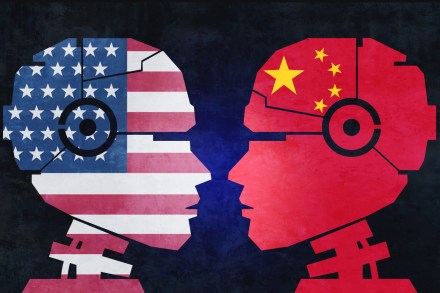
As it becomes clearer that China and the US have entered a new Cold War, Beijing’s spy operations have grown more flagrant and provocative. Whether it be flying spy balloons, buying farmland near US military bases or even establishing a secret police station in New York City, China is slowly but surely infiltrating the US. In February 2023, a US fighter jet shot down a Chinese spy balloon over the Atlantic. The balloon crossed into US airspace over Alaska in late January before passing through Canada and into Montana. While the balloon was able to transmit information back to Beijing in real time, CNN reports the government doesn’t know exactly what intelligence was gathered.

xi jinping wang huning wargame militarizing IP china

How China’s electric cars dominated the world

From our UK edition

34 min listen

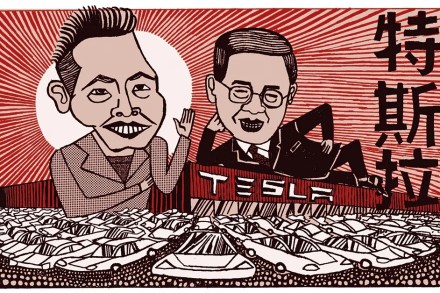
The EU and US are turning up the pressure on Chinese made electric cars, as I discussed with my guest Finbarr Bermingham on the last episode.  In this episode, I want to take a closer look at how China has come to dominate the global electric car market. Chinese EVs make up 60 per cent of worldwide sales, and a third of global exports. Its leading brand, BYD, now regularly gives Tesla a run for its money in terms of number of cars sold.  How much of a role do subsidies play, versus other factors like its control of rare earths or lower labour costs? Is there really an overcapacity issue that suggests a flooding of Chinese cars globally?

Can the EU fend off the threat of Chinese electric cars?

From our UK edition

30 min listen

The EU and China are in the foothills of a trade war. After a seven month investigation, the European Commission has announced tariffs of up to 38 per cent on electric cars from China, citing that they’ve found ‘subsidies in every part of the supply chain’. In retaliation, China has ramped up its own investigations into imports from the EU. This, of course, comes after the US has announced its own 100 per cent tariff on Chinese electric cars. Listeners will know that Chinese electric cars are becoming ever more competitive. In just three years, the value of the EU’s imports of Chinese EVs have surged tenfold – from $1.6 billion in 2020 to $11.5 billion last year. The Commission has warned that Chinese electric cars could make up 15 per cent of the EU market by next year.

The space race gets serious

We are shifting from the early era of space exploration to a more serious phase extending ever further from Earth’s orbit, focused on key opportunities such as mining and manufacturing as well as military purposes. This newly expanded playing field will determine not only who rules in space, but who ends up dominating Earth. The protagonists include some familiar faces — the US, Russia and the European Union — but much competition will come from emerging powers, notably India and China, both of which look upon the “final frontier” as critical to their economic and military futures. Yet the rise of non-state space entrepreneurs, notably SpaceX, has introduced a fresh and potentially decisive factor to the new space race.

space
Hong Kong

Inside the handover of Hong Kong

During the negotiations between the UK Foreign Office and the Chinese government that led to the 1997 handover of Hong Kong to China, I was engaged in the fruitless search for oil in the South China and Yellow Seas, in partnership with the China National Offshore Oil Corporation, or CNOOC (“Snook”). These arrangements were the first to be concluded with western companies since the Cultural Revolution. They were conducted with a chilly civility in Beijing — then still a spartan city to say the least, with only two hotels available to western visitors. We were installed in the north of the city in a hotel designed allegedly by I.M. Pei, about an hour’s drive from the CNOOC offices.

xi jinping wang huning wargame militarizing IP china

Explaining China’s IP problem

Since man’s early origins, the desire to possess gold has been a universal obsession. Gold was once viewed as the ultimate symbol of power and wealth. Governments amassed vast quantities of gold to finance their economies and political ambitions. Until the mid-twentieth century, leading national currencies were directly tied to how much physical gold was housed in national treasuries. But 500 years ago, Sir Thomas More got it right when he described gold as something “which in itself is so useless.” Today, rather than gold, what truly represents a nation’s strength is its ability to innovate and control technologies.

How would Britain’s Labour party change UK-China relations?

From our UK edition

34 min listen

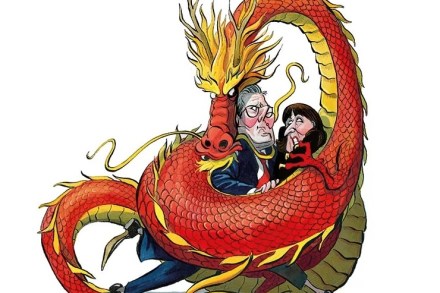
In less than a month’s time, Britain may well have a new prime minister – and a different ruling party. Under 14 years of the Conservative party, the UK’s approach to China has swung from the sycophancy of the golden era to fear and loathing under Liz Truss, stabilising in the last couple of years to a compete but engage approach, all while public opinion on China has hardened following the Hong Kong protests and the pandemic. What will a new government bring? Will the managerialism of Keir Starmer change UK-China relations much from the managerialism of Rishi Sunak? This is not a hypothetical question as Labour looks set to win the election and the question, now, is how big the Conservative losses will be.

Joe Biden’s TIME interview: the good the bad and the ugly

President Joe Biden sat down for an interview with TIME magazine in the White House last week. The questions centered around foreign affairs, with interviewers Massimo Calabresi and Sam Jacobs asking about D-Day, Ukraine, Israel and Hamas, nuclear power, China, inflation, tariffs and immigration. Back in March Americans generally agreed that the economy and foreign affairs were weak points in Biden’s administration. The TIME interview is unlikely to change anyone’s mind. Cockburn identified a few overarching themes: Biden accused TIME of misreporting and leaving his accomplishments unreported. The first accusation: “The Russian military has been decimated. You don’t write about that. It’s been freaking decimated.” Another theme: senility.

joe biden time magazine

Wannabes: are any of them ready?

From our UK edition

36 min listen

On this week's Edition: Wannabes - are any of them ready? Our cover piece takes a look at the state of the parties a week into the UK general election campaign. The election announcement took everyone by surprise, including Tory MPs, so what’s been the fallout since? To provide the latest analysis, The Spectator’s political editor Katy Balls joins the podcast (2:00). Then: Angus Colwell reports on how the election is playing out on social media, and the increasing role of the political ‘spinfluencer’. These accounts have millions of likes, but how influential could they be during the election? Alongside Angus, Harry Boeken, aka @thechampagne_socialist on TikTok, joins us to share their thoughts on who is winning the social media war (15:08).

China’s role in Soviet policy-making

From our UK edition

Why should we want to read yet another thumping great book about the collapse of the Soviet empire? Sergey Radchenko attempts an answer in his well-constructed new work. Based on recently opened Soviet archives and on extensive work in the Chinese archives, it places particular weight on China’s role in Soviet policy-making. The details are colourful. It is fun to know that Mao Tse-Tung sent Stalin a present of spices, and that the mouse on which the Russians tested it promptly died. But the new material forces no major revision of previous interpretations. Perhaps the book is best seen as a meditation on the limitations of political power.

The moon matters to China

From our UK edition

China’s Chang’e-6 moon mission was launched on 3 May. It reached lunar orbit a few days later and began waiting for sunrise over its landing site on the moon’s far side. Chang’e-6 is named after the Chinese goddess of the moon and it will land on Sunday in a crater called Apollo – an ancient double-ringed walled plain caused by an asteroid smashing into the young moon. Apollo has been heavily damaged by subsequent impacts and in many places covered with lava flows and sprinkled with particles from newer impacts. It is as Buzz Aldrin said, a magnificent desolation. It is a region of great geological significance, since it contains rocks from the moon’s lower crust and the deeper mantle – a treasure trove of planetary history.

Life in a changing China

From our UK edition

39 min listen

Since 1978, China has changed beyond recognition thanks to its economic boom. 800 million people have been lifted out of poverty as GDP per capita has grown eighty times. Some 60 per cent of the country now live in cities and towns, compared to just 18 per cent before. But you know all this. What’s less talked about is what that does to the people and families who live through these changes. What is it like to have such a different life to your parents before you, and your grandparents before then? How have people made the most of the boom, and what about those who’ve been left behind? A fascinating new book, Private Revolutions, tells the personal stories of four millennial women who were born as these changes took place.