Charles de Gaulle

The world’s most beautiful man in a den of iniquity

A photograph from the late 1960s shows a lavishly underdressed Marianne Faithfull sandwiched between Alain Delon, the most beautiful man in the world, and Mick Jagger, the second most beautiful man in the Rolling Stones. The gulf between these two indefatigable tombeurs is not merely sartorial. Delon wears a sharp suit, gun-metal grey, and a black tie. There are the makings of a master/servant dialogue here, for Jagger, far from mondaine, is gauche and scruffy with mismatched socks, no doubt counter-cultural. His picayune mis-demeanour, and his fitting up by bad apples in blue such as Pilcher of the Met, might have been a glitch, but it all turned out cosily parish-pump and, further, a great career move, assisted by William Rees-Mogg’s indignation. No one died in that Sussex cottage.

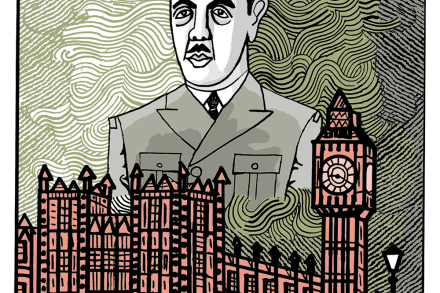
De Gaulle or nothing: lessons from the General

The first time I set foot in the White House as a Labour political adviser, in spring 2024, to see a then all-powerful Jake Sullivan as the US National Security Adviser, I went as an Atlanticist. By my final visit to the West Wing in January, accompanying David Lammy as his aide to see J.D. Vance, I was an Anglo-Gaullist. In between lay the humiliation of Chagos, twists and turns over Ukraine, surprise American strikes on Iran and the realisation that our closest ally, the superpower we had built our entire security around, had become erratic, emotional and unpredictable. When Labour came to power, I truly believed the country had been suffering mainly from Tory problems. I learnt the hard way that our instability stemmed mostly from British problems. And this brought me to Gaullism.

What this new history of Brexit gets right

Why did the United Kingdom leave the European Union? Perhaps it might be better to ask why did it ever join. Tom McTague attempts to answer both questions in this panoramic history of British – and continental – politics from 1942 to the present day. It is to the author’s great credit that he approaches a debate which has polarised politics and shattered friendships with disciplined, but never anaemic, detachment. It is hard to think of many books which leave one admiring both Edward Heath and Enoch Powell more. McTague has set himself a formidable task in seeking to explain the two most consequential decisions of British postwar politics. That he does so not just with fair-mindedness but mastery of narrative sweep and fresh perspective makes this a significant achievement.

Only Hitler could have brought the disparate Allies together

‘Allies,’ declared Stalin on 8 February 1945, the fifth day of the Yalta Conference, ‘should not deceive one another.’ In order to defeat Hitler, Mussolini and the Japanese, the British, Americans, Soviets, French and Chinese had indeed all worked closely together. But in his meticulous, scholarly and highly enjoyable history of the second world war, Tim Bouverie makes plain just what this entailed: a collaboration that was both deep and rivalrous, riven by secret deals, prejudice, changing loyalties and betrayals, conducted by people who at different times admired, feared and despised one another, while in public most often remaining models of civility.

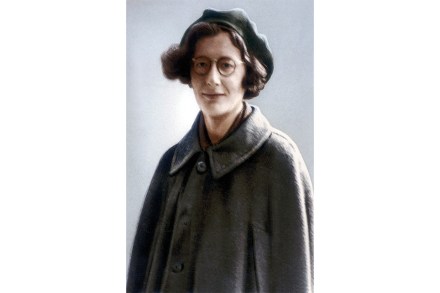
The troublesome idealism of Simone Weil

The French philosopher Simone Weil, who died of self-starvation and tuberculosis in a Kent sanitorium in 1943 at the age of 34, remains a conundrum. ‘Mais elle est folle!’ had been the spluttering response of Charles de Gaulle the previous year, during her short wartime period analysing reports for the Free French in London. Her simple brief was to précis the ideas coming in from the Resistance movement on how to reconstruct France after liberation. The result – which was posthumously published, as were most of her writings – turned out to be a major work of original philosophy, Enchainement (The Need for Roots), running to hundreds of pages, a testimony to Weil’s lifelong need to go further than anyone could ever have required into what she saw as the truth of things.

Citizens of nowhere: This Strange Eventful History, by Claire Messud, reviewed

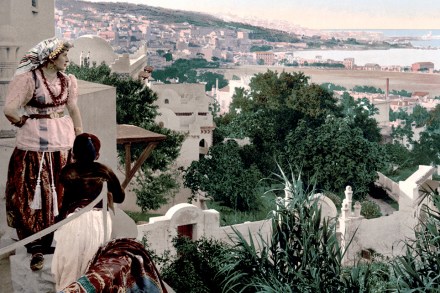
Any personal history is hard to fictionalise, not least because the story needs to be both universal and unique. Claire Messud manages to find the right balance in her latest novel, reconstructing her family’s past in vivid episodes that open a multitude of windows on to the world. Continents and decades chase one another as the narrative traces the movements of the Cassar family. Hailing from Algeria, for much of the book they are citizens of nowhere. Their tribulations begin in 1940, when Lucienne and her children, François and Denise, flee Greece (where their father, Gaston, has been posted as the French naval attaché) to wait out the war in the relative safety of an Algerian hinterland.

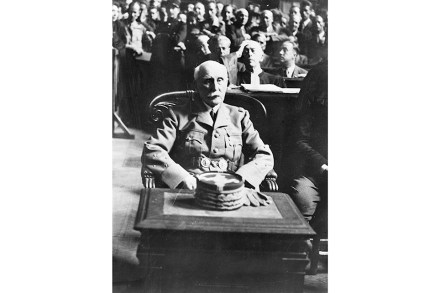
The trial of Marshal Pétain continues to haunt France to this day

In September 1944, a few months after being greeted by cheering crowds in Paris, Marshal Philippe Pétain, the head of the wartime État Français, was driven across the German frontier into exile under Gestapo escort. He no longer had access to the national radio service, so, as he passed through France, typed copies of his last speech had to be thrown to passers-by from the window of his car. Julian Jackson, the author of a previous magisterial biography of Charles de Gaulle, now undertakes a more complex task in telling the story of Pétain’s subsequent three-week trial for treason in 1945. The novelist and resister François Mauriac summarised the ordeal as the ‘trial that is never over and will never end’.

Henry Kissinger’s likely last book is on leadership

From our US edition

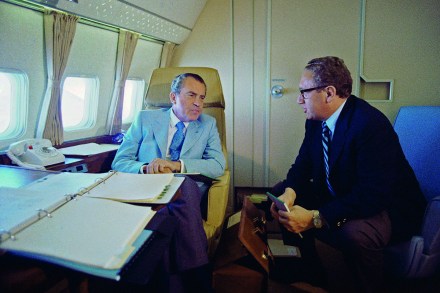
Leadership, Henry Kissinger writes in his latest book, is a medium by which a society moves from the past of its memory to the future of imagination. It is “indispensable.” As Kissinger says, “Decisions must be made, trust earned, promises kept, a way forward proposed.” Without leadership, ordinary people are, he argues, incapable of “reach[ing] from where they are to where they have never been and, sometimes, can scarcely imagine going.” But leadership is also, in Andrew Roberts’s phrase, “a ‘protean’ thing with little fixed definition.” Leadership is ultimately what leaders do; it goes in whatever direction they choose.

kissinger

French disconnection: how Emmanuel Macron went from savior to failure

From our US edition

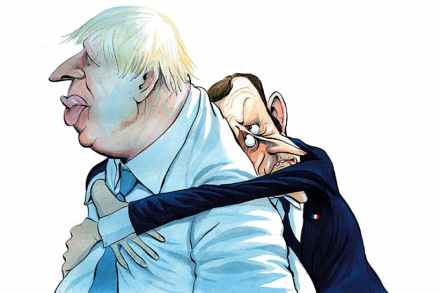
This article is in The Spectator’s February 2020 US edition. Subscribe here.Montpellier, France As the new year dawned, it was business as usual in France, with transportation paralyzed, hundreds of cars burning in the suburbs, violent demonstrations in the cities, a whiff of tear gas in the Métro, police beating protesters. Train drivers, air-traffic controllers, nurses, garbage collectors, ballet dancers, opera singers were all on strike — and so, even, were lawyers. If the country is not wholly immobilized, it’s because the French are pretty adaptable and, to be honest, some only pretend to strike. My garbage was picked up in the normal way. Making the French swallow bitter medicine is hard, even in a nation of hypochondriacs.

emmanuel macron