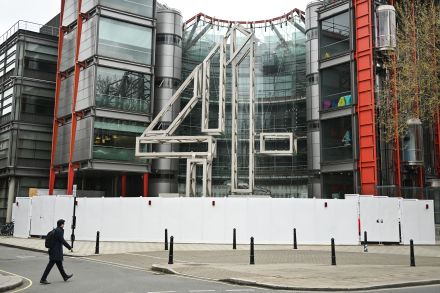
Channel 4

The fiasco of Operation Yewtree: C4’s The Accused – National Treasures on Trial reviewed

At 4.38 a.m., one morning in October 2013, the radio presenter Paul Gambaccini was understandably asleep when the doorbell rang. He was then arrested for sexually assaulting a minor on what proved to be the word of a drug addict with a history of making false accusations. The trouble for Gambaccini, though, was that this wasn’t proved for another 11 months. In the meantime, the allegations were all over the news, he was dropped by the BBC, lost around £100,000 in earnings and started having panic attacks. And Gambaccini, of course, wasn’t alone in being arrested and publicly named like this – not merely without being charged, but before any

Who are these pathologically liberal rozzers? Channel 4’s Night Coppers reviewed

Grizzled police officers of the old school should probably avoid Channel 4’s Night Coppers for reasons of blood pressure. Like most documentary series with close access to the police, this one paints them in a light so favourable as to be almost comically sycophantic. The trouble for those grizzled types is that – the times being as they are – what’s now considered favourable is to make the rozzers who patrol Brighton after dark all seem like that pathologically liberal Dutch cop played by Paul Whitehouse in the late 1990s. Not that this is a reference which most of the officers featured in Wednesday’s opening episode would get – largely

Channel 4’s failed charm offensive

It’s Jubilee week in London. Boom times for royal hacks mean tough times for their lobby counterparts. Fortunately, today’s publication of the latest edition of the MPs’ register of interests is a godsend for story-starved journalists, scrabbling around to write about something that isn’t about Harry and Meghan. Perusing the register this morning, Mr S was intrigued to see the name of Channel 4 popping up regularly as a frequent donor to MPs across the House. The public broadcaster has desperately been trying to fight a rearguard action against privatisation in recent months and appears to have launched something of a belated charm offensive to aid that goal. Sadly for

Why Channel 4 shouldn’t be privatised

Enough of stagflation forecasts, each more frightening than the last. Enough – for now – of energy policy sermons, as the government at last proclaims a serious nuclear plan. Instead, let’s have a week of real business stories, starting with tales of the old and new City. First, a rum do at the London Metal Exchange. The Bank of England and Financial Conduct Authority are investigating the exchange’s handling, last month, of a ‘short squeeze’ on nickel, provoked by fear of disrupted supplies from Russia. The metal’s price rocketed 250 per cent in two days to trade briefly above $100,000 a ton, reportedly leaving a Chinese tycoon called Xiang ‘Big

Spies shouldn’t be political

Now that events in Ukraine are restoring a sense of proportion about the difference between aggressive autocracies and free countries, it seems almost incredible that, only last year, sporting teams etc were all but compelled to ‘take the knee’ in deference to Black Lives Matter. One official prominent in this obeisance (metaphorical not literal in his case) was Sir Stephen Lovegrove. As Permanent Secretary at the Ministry of Defence, he emailed staff in the wake of George Floyd’s murder in May 2020, using the BLM hashtag, and castigating the racism of his own department. When challenged about creating this official link with a hard-left organisation with borderline racist views against

How to waste an 80-seat majority

Cast your mind back to Channel 4’s election night programme. The 2019 exit poll results flash up on screen. Realising the size of the Tory majority, hosts Krishnan Guru-Murthy and comedian Katherine Ryan, along with pundits Amber Rudd and Tom Watson, all look crestfallen: the Conservatives had won and Brexit was secured.  However, nearly two and a half years on from that night, the joy of the Channel 4 clip feels a bit empty. Very little has been done with that huge parliamentary advantage. Instead, the government’s big announcement this week is that they’re privatising the broadcaster. Fine. No problem with that; it’s probably a good thing. Except it doesn’t

Thatcher wanted to privatise Channel 4

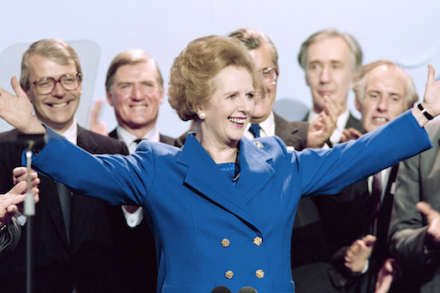
It is always amusing to hear the left selectively invoking Margaret Thatcher. This week, they are doing so to prevent the privatisation of Channel 4, citing the fact that she brought the channel into being. She did, in 1982; but in her memoirs, she explains that by 1988, when she was striving for the phasing out of the BBC television licence fee, she decided that Channel 4 would be better off privatised. On both subjects, she was defeated by what she calls ‘the monopolistic grip of the broadcasting establishment’. That grip is scarcely looser today.

Tory backlash over Channel 4 privatisation

Downing Street’s plan to privatise Channel 4 is already facing a Tory revolt – less than 24 hours after the plans were confirmed. On Monday night, the channel’s chief executive told staff that the government plans to proceed with privatisation. The official line from Culture Secretary Nadine Dorries is that this will ‘give Channel 4 the tools and freedom to flourish and thrive as a public service broadcaster long into the future’ and compete with streaming giants like Netflix. Only the broadcaster takes a different view: that this is a mistake – and plenty of senior Conservatives agree. Former Scottish Conservatives leader Ruth Davidson has described it as ‘the opposite of levelling up’ – citing

Five hysterical reactions to Channel 4’s sell-off

Roll up, roll up! The great Channel 4 sell-off is now on. The Culture Secretary, Nadine Dorries, is pushing ahead with plans to privatise the broadcaster after 40 years in public ownership. Ministers hope to raise around £1 billion, with the proceeds potentially being used to fund the levelling up agenda.  Inevitably, such a plan has sparked the squeals and howls from the usual suspects. There’s the accusations of ‘cultural vandalism’ and selling the ‘family silver’ – the implication being that the broadcaster ought to be considered a precious substance. After all, if we lose C4, we run the risk of gems such as Naked Attraction and Made in Chelsea being replaced by cheap, low-brow commercial rubbish. God

Some jolly TV artifice and a rare moment of authenticity: C4’s Miriam and Alan – Lost in Scotland reviewed

Thanks to Covid, the days are gone — or at least suspended — when a TV travel programme meant a thespian in a Panama hat wandering around souks and bravely trying some funny foreign food. Instead, we now have shows in which the presenters, often operating in pairs, drive around picturesque parts of Britain cranking up the bantz, with plenty of aerial shots of their car bowling along an abnormally empty road. Take Miriam and Alan: Lost in Scotland — by my reckoning approximately Exhibit P. The premise here is that Alan Cumming and Miriam Margolyes are seeking to reconnect with their proud Caledonian roots, which is why the first

Do I have a right to be offended by threesomes?

I couldn’t get to sleep the other night for worrying about the future of liberalism. So I got up and put the telly on. Maybe there would be something soothing on, to help me forget my worries. There was a show on Channel 4 called My First Threesome. The voiceover explained that lockdown had led many of us to be more sexually adventurous, and even to explore ‘what is for many of us the ultimate fantasy’. Before we met some enthusiastic adventurers, a brief historical segment explained that many wise ancient cultures saw sex with more than one person as a perfectly natural desire. ‘Then for centuries religion and shame

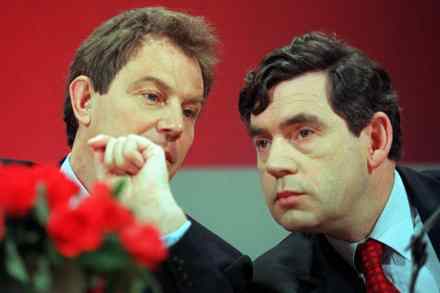
Blair & Brown: The New Labour Revolution should be called ‘The Tragedy of Gordon Brown’

Murder Island features eight real-life ‘ordinary people’ seeking to solve a fictional killing on a fictional Scottish island. What follows is so confused and confusing that you can only imagine it was pitched to Channel 4 as ‘Broadchurch meets The Apprentice’ and nodded through as a result, without anybody asking such pesky questions as ‘So how might that work, then?’ Or if they did, that they were silenced by the news that Ian Rankin was signed on as the writer — whatever that might mean, seeing as most of the programme is necessarily unscripted and the investigation itself impossible to plot in advance. Tuesday’s opening episode began with the ordinary

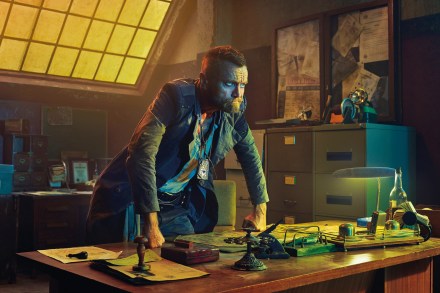
A total mess: BBC2’s The Watch reviewed

Last Sunday on Channel 4, a man called Eric Nicoli proudly remembered ‘the bravest thing I’ve ever done’. In November 1975, Rowntree was poised to launch the Trek chocolate bar. The packaging was ready, along with an advertising campaign featuring, for some reason, potholers. But as the company’s new product manager, Eric couldn’t rid himself of the niggling feeling that Trek was boring. So — and this is the brave bit — he went to the boss and said that Rowntree should think again. ‘You better be bloody right, young man,’ the boss replied. And with that, Eric returned to the drawing board where he came up with the name

Modern soap operas have lost the plot

I have Asperger’s syndrome and since childhood have been watching TV soaps: mainly EastEnders and Neighbours. I found classic EastEnders from the 1980s and 1990s highly reassuring during a dark time in my life three years ago, and in lockdown. I would say, though, that in recent years these two soaps have gone downhill. They are more staged, the storylines less intriguing and the themes exaggerated. They don’t seem to be about everyday life any more. In the EastEnders of the 1980s and early 1990s you could relate wholeheartedly to the characters and reflect on their behaviour. You would feel they were real, and also that they were part of

Is Jed Mercurio bored with Line of Duty?

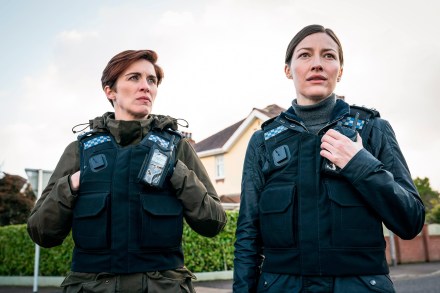
When a drama begins with news of a ‘Chis handler’ receiving ‘intel graded A1 on the matrix’ that causes a ‘conflab with the SFC’, it can mean only one thing: you’re watching a new series of Line of Duty. And just to confirm it, shortly afterwards a bunch of armed police carried out a raid that didn’t go to plan — possibly because it was being led by a bent copper. As ever, too, there’s a big name playing the potential wrong ’un, with Kelly Macdonald (Trainspotting, No Country for Old Men) guest-starring as DCI Jo Davidson, leader of the Murder Investigation Team. More unexpectedly, Jo’s underlings include Kate Fleming

John DeLorean: man of mystery – and full-blown psychopath

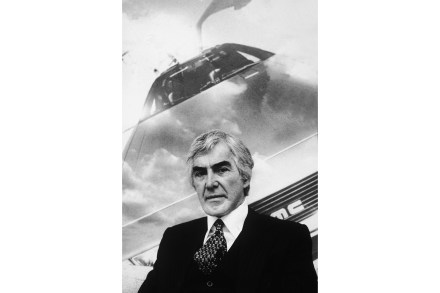
DeLorean: Back from the Future was one of those documentaries — for me at least — that takes a story you thought you sort of knew and makes you realise a) that you didn’t really, and b) what a great story it is. The programme began, as it was pretty much duty-bound to, with a clip of Michael J. Fox and the time-travelling DeLorean car from the movie that inspired Wednesday’s means-less-the-more-you-think-about-it subtitle. A series of captions then introduced us to John DeLorean himself: a man who ‘had everything’ (cue shots of a much younger ex-model wife and some Rolexes) until he ‘risked it all’ in the mid-1970s, when he

Who’s laughing now? Cancel culture is killing comedy

The BBC and Channel 4 are self-censoring their comedy output because they are so terrified of offending people. So says Jimmy Mulville, the producer of Have I Got News For You, who claims ‘cancel culture’ has resulted in a fearful atmosphere in these institutions:  ‘People who cause offence now can be cancelled. And the BBC are worried about it. I know that Channel 4 is worried about it, they’re all worried about it. I’m not blaming them, it’s the culture in which we live.’ This is becoming a familiar complaint. Comedian Dawn French recently bemoaned how censoriousness and offence-seeking was suffocating comedy. She said it was increasingly impossible to make risky,

Funny, tender and properly horrible: Channel 4’s Adult Material reviewed

A woman is eating a pie in her car as it gets an automatic wash. Careful to keep the pie out of shot, she then films herself on her phone pretending to have an orgasm, posts the clip online and drives to work. Once there, she’s constantly distracted by thoughts of domestic chores (‘Whites tonight, colours in the morning, hang them out before the school run’) — which mightn’t be so unusual, except that her work consists of having sex. But if the early scenes in Channel 4’s new porn-industry drama Adult Material suggested a cheeky, essentially light-hearted twist on female life-juggling, this soon proved deceptive. What followed was an

Sick, puerile, inappropriate and delicious: Amazon Prime’s The Boys reviewed

There’s a delicious scene in the new season of Amazon’s superheroes-gone-bad series The Boys. The chief superhero Homelander (Antony Starr) is introduced by a minion to a potential new member of his elite superhero group, the Seven. Homelander watches this bright new talent performing wonders in a gym-style training zone: the young man is agile, eager, skilled with weaponry; but perhaps his most valuable features, the minion suggests, are that he is disabled and belongs to an ethnic minority. This could play really well with the youth demographic, who are into that kind of woke stuff, the aide suggests. The potential recruit approaches Homelander, sweet, modest and starstruck. Even though

A fine, even rather noble drama: BBC1’s The Salisbury Poisonings reviewed

This week, BBC1 brought us a three-part dramatisation of an ‘unprecedented crisis’ in recent British life. Among other things, it featured a lockdown, an extensive tracking and tracing programme, much heroism from people on the front line, and much confusion among scientists as to how to provide the facts when they didn’t really know them. The Salisbury Poisonings (Sunday–Tuesday) was presumably made well before you-know-what. Yet watching the programme in the current circumstances, it wasn’t easy to decide whether the timing was good or bad luck for the makers. The obvious parallels did lend a haunting, drone-note resonance to proceedings. On the other hand, they sometimes threatened to overshadow what