Central asia

Uzbekistan by high-speed rail

From our US edition

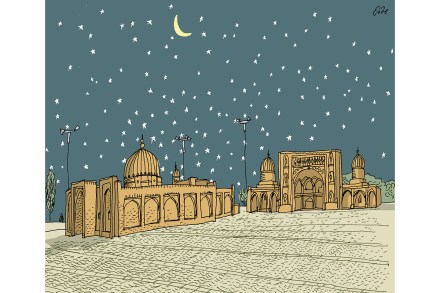
I am in Tashkent, the capital of Uzbekistan. I am standing in a historic complex of madrasas and mosques, courtyards and dusty roses and I am staring at the “oldest Quran in the world.” It is a strange and enormous thing: written in bold Kufic script on deerskin parchment; it was supposedly compiled by Uthman ibn Affan, the third Caliph of Islam, who was murdered while reading it. And so it is, as I linger here and reverently regard the Book, while scrolling my phone for more fascinating info, that I discover the world’s oldest Quran is actually in Birmingham. Yes, that’s right, Birmingham, England. It’s probably in some obscure library, lodged between a thesis on post-colonial emojis and a flyer for Falafel Night.
India radiates kindly light across the East

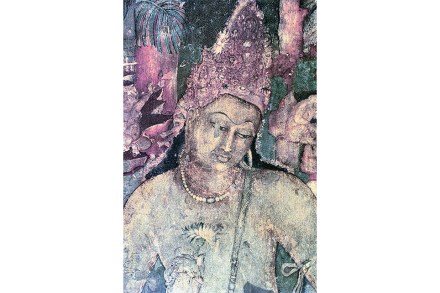
‘Everywhere I could see India, yet I could not recognise it.’ So said India’s great national poet Rabindranath Tagore of South-East Asia, after travelling there in 1927. Tagore was fascinated by how elements of ancient Indian culture had found their way eastwards: gods, temple architecture, the Sanskrit language and the great epics the Ramayana and the Mahabharata. A nationalist but also a universalist, Tagore welcomed the reshaping of these ideas by the people who received them, a process whose fruits he encountered in Malay literature and Balinese dance. He even hoped that one day a ‘regenerated Asia’, making creative use of its shared cultural heritage, might heal the world of the wounds he believed had been inflicted on it by the modern West.

Tall tales of the Golden East: the fabulous fabrications of two 20th-century con artists

Have literary deceit and spiritual self-invention ever been this entertaining? The question arises on almost every page of this galloping exposé of two men who were exceedingly relaxed about not telling the truth throughout their professional lives. They would have called it ‘storytelling’. Those who questioned the reliability of their often outlandish claims were dismissed as academic nonentities. One minute Ikbal’s journey across the Middle East was 15,000 miles, the next it was 25,000 miles Sirdar Ikbal Ali Shah was the great-grandson of Jan Fishan Khan, a 19th-century Arab nobleman who had supported the British in Afghanistan and been rewarded with an Indian title, palace and pension.

The pleasure of reliving foreign travel through food

The idea of the kitchen as a space for transformation and transportation is not a new one. Many writers have explored the room’s ability to offer both domesticity and alchemy at the same time – how it allows cooks to travel vicariously through the food they make. This is the subject of Cold Kitchen, Caroline Eden’s memoir of her time spent in her kitchen in Scotland and of her travels to Eastern European and Central Asian cities – and somehow she makes it fresh and compelling. She is an author and critic who has written extensively about the food and culture of the countries of the former Soviet Union. Black Sea, in which she explored Odessa, Istanbul and Trabzon, received a clutch of prizes, and Red Sands, about Central Asia, won the prestigious André Simon food book award.

What Xi wants from Central Asia

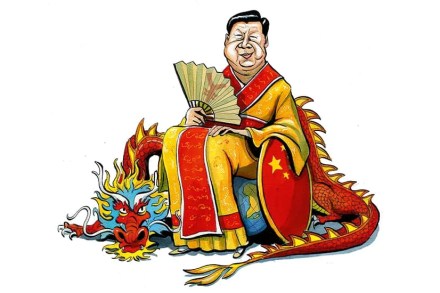
President Xi Jinping hasn’t stepped outside his country since the pandemic began. For almost three years, China’s elderly leaders have been swaddled inside Beijing; journalists granted an audience with Xi have told me that they had to go through days of hotel quarantine before the meeting. Today Xi returns to the global stage. His first stop is Kazakhstan, a country rarely on the minds of western politicians. It goes to show how important China’s western backyard is to the country. Washington and London are attempting to pivot to the Indo-Pacific to respond to Chinese influence in the South and East China seas; what they’ve failed to focus on is Beijing’s alliance-building in the mountains and deserts to the west.

Central Asia’s geography after America’s defeat

From our US edition

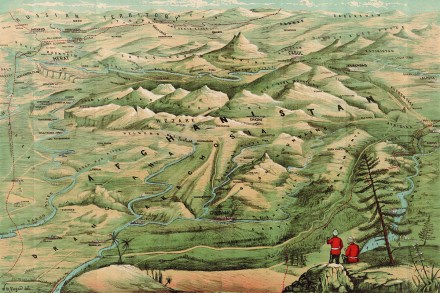
However much it is denied, we still live in an imperial age, at least metaphorically. Just as the withdrawal from Afghanistan registers the momentary decline of the American empire, it registers the momentary rise of the Russian and Chinese ones. America failed in Afghanistan because its military, while capable of fighting high-tech wars on land and sea, could not fix complex Islamic societies on the ground. Indeed, Afghanistan demonstrated how the deterministic elements of geography, culture and ethnic and sectarian awareness can vanquish Western ideals of democracy and individual liberty.

central asia

Flavors of the past

From our US edition

You realize western tourists are a rarity when the locals ask to take selfies with you. I was standing under the mammoth ramparts of the Ark, Bukhara’s great palace fortress, when two women came up and asked if they could have their picture taken with me. One was dressed Uzbek-style in a colorful dress with matching trousers and knotted headscarf, the other in a western blouse and trousers. We lined up, beaming, in front of a haughty two-humped camel. Visiting Uzbekistan is a huge adventure. It’s the heart of Central Asia and the old Silk Road, a land of deserts and oases where you can still feel as if you’re stepping back in time. But it’s also unexpectedly safe, easy, inexpensive and welcoming. At the airport, even the immigration officials were smiling.

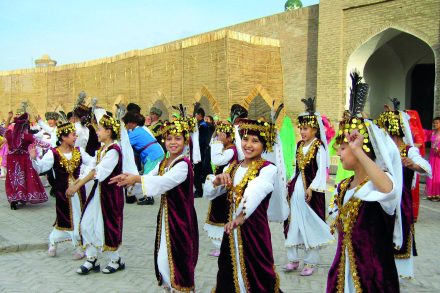
uzbekistan Dance to the music of time: Celebrations at the ancient Khorezm Mamum Academy, Khiva, 2006