Cats

An ambassador is the American version of a nobleman

America is, famously and proudly, a republic. Everyone is equal before the law. No earls or dukes or even knights of the realm. And a good thing, too. Er… not so fast. As one of the magazines devoted to Palm Beach life recently pointed out, there is one honor available to citizens of the United States that is much coveted because, as with princes, dukes and earls, the honorific comes before the recipient’s full name – and, like nobility (but not in Andrew Mountbatten-Windsor’s case), it is conferred for life. That title is “ambassador.

The cat that tamed Dom

From our UK edition

I don’t like cats. I don’t like their reptilian stealth, or the way their heads are set low and poke out from their bodies. I don’t like the constant showing off of their puckered bums, or their disregard for the normal rules of mammal eye contact. There are nearly 13 million cats in Britain – one in three of us owns them. There are roughly 74 million in the United States and until recently I found it inexplicable. Why would anyone choose to love and nurture a psycho that dismembers songbirds, often torturing them first in a casual, playful way? I’ve enjoyed in the past writing about the idiocy of ethical vegetarians who own cats.

We need a cat lockdown now

From our UK edition

I have always marvelled at the attitude of cat owners who point to bloodied arms or dramatic scratches and explain – with docile, almost apologetic acceptance – that Jasper or Bella just got a bit annoyed. It was all the human’s fault for patting them in the first place. Violent animals are a form of domestic abuser and should be treated as such. Why would anyone allow something to attack them – or their children – rather than simply removing the animal from their home? Sure, they are unlikely to maul you to death, unlike the technically banned XL Bullys, but it’s a different story for wildlife. Domestic cats, the wily rotters, are thought to kill around 270 million birds, mammals and reptiles per year across the UK. They’re the nukes of the animal kingdom.

Martin has worn down my defences

From our UK edition

Provence My older, adopted sister came to stay. She suffers from peripheral neuropathy secondary to diabetes and is registered disabled. It’s a worry watching her negotiate the cliff path and the 12 stone steps to the front door with her stick, but she adores it here. Since reversing her insulin-dependent diabetes with an extreme fasting keto diet, her mobility has improved and she no longer uses a mobility scooter. My sister got cross when I doubted the veracity of both his ID and love for her Obesity and diabetes killed her twin brother five years ago this week. He was 62. First he partially lost his eyesight, then sensation in his feet and fingers, and finally his legs. Anthony was a kind soul: a hardworking mechanical engineer who loved his family.

Trump and Kamala are competing over who’s more online

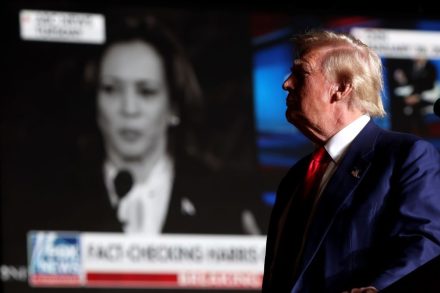
The messaging in the 2024 election has devolved into a contest to determine which campaign is more online, to their detriment. In 2019 (she never made it to 2020), the first Kamala Harris presidential campaign infamously imploded because, among other reasons, her staff and communications strategy were "way too online" — obsessed with the constant progressive social media flashpoints above and beyond the issues fundamental to the primary electorate. Instead of talking to voters about their priorities, Harris’s campaign was too focused on trending topics, memes and crafting the best clips of their candidate for the online audience.

online

Donald Trump’s Project 2025 problems

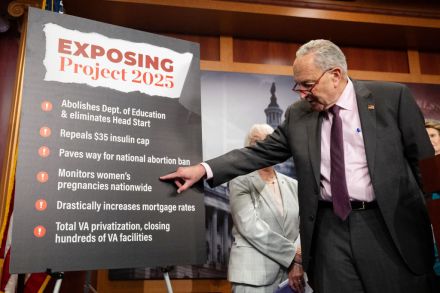
Project 2025 problems Despite Donald Trump’s best efforts, Project 2025 isn’t going anywhere. Its former director, Paul Dans, made the media rounds this week, where he attacked the leadership of the Trump campaign in a New York Times interview, while simultaneously telling CNN that “Trump has nothing to do with Project 2025.”Dans, who stepped down from Project 2025 over the summer, accused top Trump aides Chris LaCivita and Susie Wiles of “malpractice” for scheduling a presidential debate so early that it allowed President Joe Biden enough time to drop out. He is, however, excited at the involvement of Corey Lewandowski, Ben Carson and Robert F. Kennedy Jr.

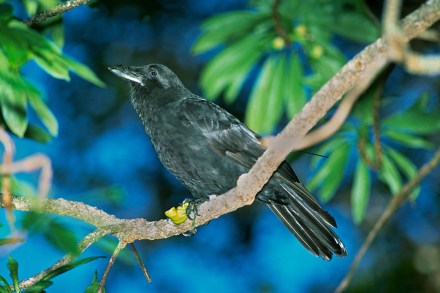
The sad history of the Hawaiian crow

From our UK edition

Over a 40-year career, Sophie Osborn has evolved from a greenhorn volunteer for nature, doing mundane tasks in the wilds of Wyoming, to the manager of a captive-release programme for California condors in Arizona. This post placed her at the heart of perhaps the most sophisticated operation for a threatened bird anywhere in the world. Yet Osborn was as passionate in her first role as in her later one. She describes her professional arc in Feather Trails, using three bird species as separate motifs to order her story as a play in three acts. The structure not only offers a way of organising an autobiography; it supplies a sequence of lenses through which to explore the challenges faced by all those acting for birds.

Why cats are a vintner’s best friend

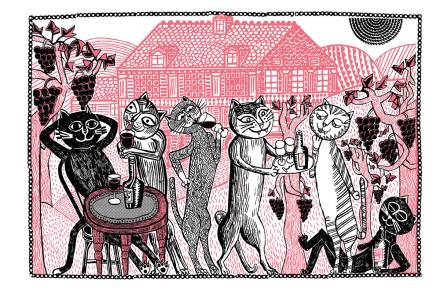
The internet has been good for cats. “Cute cat videos” dominated early YouTube and continue to be default Instagram Reels and YouTube Short recommendations. Some influencer cats — like Grumpy Cat and Karl Lagerfeld’s heir Choupette — hog the headlines, control tens of millions of dollars in social media and advertising contracts and out-earn many famous human influencers. There are cats significantly richer than you, whose selfies pay their owner’s mortgage. Taylor Swift’s cat Olivia Benson has a net worth of $97 million, which makes her only the third wealthiest pet in the world. It seems odd.

cats

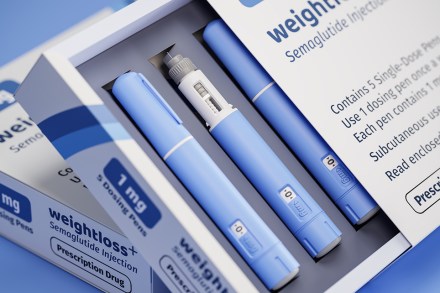
Letters: the problem with Ozempic

From our UK edition

At your service Sir: National service is a contentious issue with many people including the Armed Forces themselves (‘Identity crisis’, 1 June). National community service might be a far better option whereby everyone reaching the age of 18 would spend a year working in a care home, hospital, day nursery, park, graffiti cleaning, litter clearance and so on – all areas in which help is badly needed. We have a generation of young people badly affected by Covid isolation and screen addiction and this might help them feel more integrated into society.

Letters: save our churches!

From our UK edition

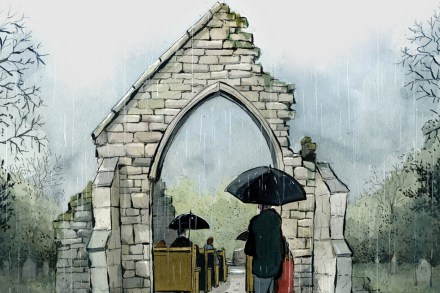
Free the C of E Sir: Patrick Kidd’s article on the shortcomings of today’s Church of England maintains the importance of the ‘volunteers in the pews’ who bind the church together (‘Miracle workers’, 18 May). He warns that these people ‘can so easily run away’. This is exactly what happened to the Church of Scotland in 1843 when the hierarchy got things badly wrong. The Great Disruption was caused by a disagreement over patronage: should a patron be the sole arbiter in hiring and firing ministers or did this undermine the spiritual independence of the congregation? The exit of more than 400 ministers from the Kirk’s General Assembly and the formation of the Free Church of Scotland (the Wee Frees) was the answer.

Confessions of a catnapper

From our UK edition

As Christopher Snowdon recently pointed out, the past few governments have had a habit of passing laws that are either wildly ambitious or incredibly trivial, while neglecting the real problems Britain faces, such as the housing shortage, the productivity crisis and the eye-watering dysfunction of the NHS. An example of the former is the net-zero emissions law passed in 2019, as if the energy policy of a small island in the North Sea can affect the world’s climate. An example of the latter is a bill that will make it a criminal offence to get cats to follow you down the road. Believe it or not, this had its second reading in the House of Lords last week and will enter the statute books later this year.

The naming of cats

From our UK edition

All sorts of animals have been kept as pets over the centuries. We know of sparrows in Catullus and John Skelton. There is a badger with a collar in a fresco by Signorelli – probably not much more biddable than the lobster Gerard de Nerval supposedly took for walks in Paris. The word ‘puss’ seems not to have referred to cats before the late 19th century but to hares, either a pet one (William Cowper had three, of whom Puss was sweet-natured and Tiney ‘the surliest of his kind’), or one being hunted in Surtees. Dogs always occupied a special place, with names and a position in the household. Cats were more marginal, accepted for their useful function of mousing but only gradually being awarded a position of affection.

A choice of this year’s gift books

From our UK edition

Obviously, the best and funniest gift book out this Christmas is my own Still a Bit of Snap in the Celery (Abacus, £16.99), about the horrors and delights of being 60, but I am far too humble and modest to mention it, so I won’t. Very nearly as good is Bob Cryer’s Barry Cryer: Same Time Tomorrow? (Bloomsbury, £20), a timely biography of his father, the legendary comedian and comic writer who died at a great age last year. I knew Barry a little –I used to go up to Hatch End, where he lived, with my friend Mark Mason and meet him in his local pub – and I can confirm he was every bit as kind, generous and, above all, funny as everyone says he was. Here was a man who could only remember falling out with one fellow comic, Jimmy Tarbuck, and even Tarby he eventually made up with.

Is your pet killing the planet?

From our UK edition

As a travel writer, I used to joke about the so-called ‘downsides of the job’. The stupidly complex shower-fixture in the five-star Maldivian Paradise. The unexpected commission to go to Denmark in winter. The vague but real sting of disappointment upon realising that the free hotel pillow-chocolate is actually a mint. But in recent years a genuine and troubling downside has arisen. When I meet someone and tell them what I do, the listener often winces, perhaps with a hint of moral superiority, and says something like: ‘Don’t you feel guilty about your carbon footprint? You’re killing the planet!

Move fast to snap up one of Elizabeth Blackadder’s sleek cats at the Scottish Gallery

From our UK edition

If there’s one thing the internet knows, it’s that cats sell. The Scottish painter Elizabeth Blackadder, who died in 2021 at the age of 89, knew it too. Her sinuous, characterful cat pictures, watercolours mostly but also oils and prints, helped cement her place as the nation’s favourite painter. She was an establishment favourite too, becoming the first woman to be elected to both the Royal Scottish Academy and the Royal Academy in London. In 1995, her cats adorned a set of Royal Mail stamps and, in 2001, she became the first woman to be appointed as Her Majesty’s Painter and Limner, a position unique to the Royal Household of Scotland, previously occupied by the likes of Henry Raeburn, David Wilkie and David Young Cameron.

Letters: Why we obeyed lockdown

From our UK edition

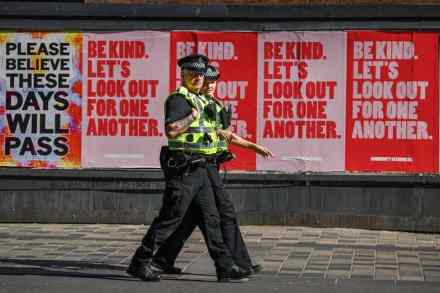
Why we allowed it Sir: In her article ‘Why didn’t more people resist lockdown?’ (3 September), Lionel Shriver partially answers her own question. Priti Patel told us it was our public duty to shop our neighbours if they had three friends to tea, and our previously invisible police force started to patrol parks and beaches with unprecedented vigour, with a threat of £1,000 fines for malfeasance. There was no eagerness, but the public were glued to the nightly broadcasts from No. 10, where the PM told us we would be little better than murderers if we didn’t obey the diktats. The fear all this created is still evident as I walk round Sainsbury’s every week and see masked shoppers disinfecting their trollies as if their life depended on it.

The latest Jane Austen adaptation is dreadful

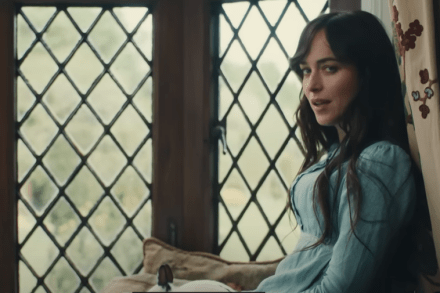
Full marks to whoever tweeted, after watching the trailer for the dire new version of Jane Austen’s Persuasion, that, "I’m sorry but Dakota Johnson has the face of someone who knows what an iPhone is." In that pithy phrase, the failings of Carrie Cracknell’s film are laid bare immediately. Johnson, despite the utter dreadfulness of the Fifty Shades films that launched her to fame, is a talented and likable actress, but she is also contemporary in a way that many of her peers are. You can dress her in all the crinolines and bonnets and Regency finery in the world, but she still looks like a California resident from 2022 cosplaying, rather than an inhabitant of early nineteenth-century Britain. But Johnson is not the only problem with Persuasion.

Could this kitty swing the midterms for the Demo-cats?

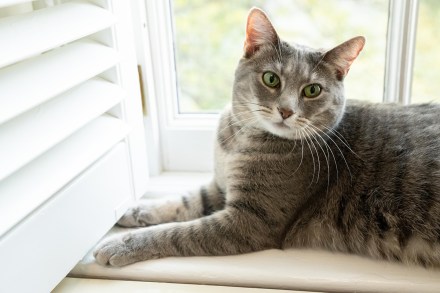
President Biden must not be feline optimistic about his paltry poll numbers, particularly after his landmark Build Back Better Act died on the Senate floor. But he’s finally delivered on one campaign promise: he’s got a cat. The First Family circulated pictures of Willow, a two-year-old gray and white short-haired tabby cat, on Friday morning. According to Politico, Willow first met Jill Biden “when she jumped on stage and interrupted her remarks during a 2020 campaign stop.” The New York Times reports that "Willow is named after the first lady’s hometown, Willow Grove, Pennsylvania." The cat hails from western Pennsylvania, which could prove useful for the Democrats as they try to claw back some credibility in the run-up to the midterms.

willow cat

Bad boy: Bidens dump dog week before Christmas

They say a dog is for life, not just for Christmas. Clearly that’s another old adage Joe Biden no longer remembers, as this week his White House announced the unsanctimonious jettisoning of Major, the president’s German shepherd, in favor of Commander, a younger, friendlier pup. “Welcome to the White House, Commander,” a tweet from the official POTUS account read. The president’s social media flacks then posted a video of the new First Dog playing with Biden. In the clip, Commander sits in order to earn a treat from the president: clearly an upgrade in the behavioral stakes. https://twitter.com/POTUS/status/1473057147017744390 Major, you may recall, was a rescue taken in by the Biden family in November 2018.

commander biden dog major cat

How crazy was Louis Wain?

From our UK edition

Before Tom Kitten, before Felix the Cat, before Thomas ‘Tom’ Cat, Sylvester James Pussycat Sr, Top Cat and Fat Freddy’s Cat, there were the cats of Louis Wain. The Wain cat came in a variety of breeds and colours: black and white, tabby, marmalade, white and blue (sky blue rather than Persian). But it always had the same disconcerting look in its wide, glassy eyes with the dilated pupils. It looked bombed out of its tiny mind. The original Wain cat was a black-and-white kitten called Peter belonging to a young late-Victorian magazine illustrator and his sick wife. In 1884 the 24-year-old Louis Wain had married his sisters’ governess, Emily Richardson, only for his new wife to fall ill with breast cancer.