Cats

Letters: Immunity passports are nothing to fear

From our UK edition

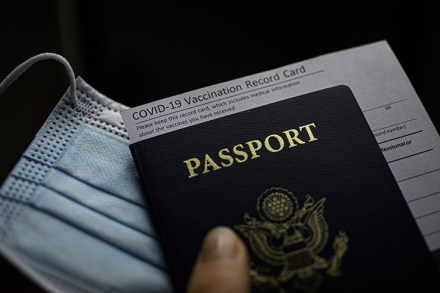
Nothing to fear Sir: Many of us await the day when we can travel abroad for much-anticipated holidays — but surely there is a distinction between immunisation passports and Tony Blair-type IDs (‘Papers, please’, 13 February)? If a country requires you to be immunised to travel there in order to protect its citizens against Covid, then I would be happy to have that ‘passport’ requirement. It is quite different from carrying ID with you in your own country. Let’s face it, the danger from Covid will fade in time, and the ‘passport’ requirement along with it. After all we happily travel with a passport in our pockets to show who we are when we go abroad. Didn’t people have the same worries when passports were introduced?

Salmond, Sturgeon and why The Spectator went to court

From our UK edition

Did Nicola Sturgeon lie to the Scottish parliament? A Holyrood committee into the now infamous Alex Salmond affair has been looking into what she knew and when she knew it. In its possession is Salmond’s explosive written evidence, which contradicts her account. So who is telling the truth? This SNP-chaired inquiry has been in no rush to find the answer. Last month, it made the extraordinary decision not to publish the Salmond submission at all — blaming legal problems. There’s a risk, it said, that his account might identify some of the women who complained against him, thereby defying a court order to protect anonymity. Without the key evidence, its inquiry would run into the ground. All very convenient. And questionable.

‘People confuse sadness with darkness’: the complicated world of Mary Gaitskill

From our UK edition

In the early 1990s, the American novelist Mary Gaitskill suffered an abrupt awakening. ‘I lived in New York, I didn’t have a television, I didn’t listen to the radio. I didn’t even read magazines or newspapers very often. I was really too preoccupied with my own existence, which was hand to mouth a lot of the time,’ she says. ‘But when I was a little better off, I began to pay attention. I did get a TV. I did listen to the news a lot. And I was just like, holy shit. What a weird fucking world.’ What particularly astonished her, she says, is how central the fashion industry had become: ‘Models had always been glamorous figures, but it was suddenly they were the most important thing any woman could possibly aspire to be.

Gift books for Christmas — reviewed by Marcus Berkmann

From our UK edition

We have a fine crop of Christmas gift books this year, so good that some of them actually qualify as real books. This is a rare and beautiful thing. What Cats Want (Bloomsbury, £12.99) is by Dr Yuki Hattori, billed here as ‘Japan’s leading cat doctor’, as though anyone is going to argue with that. It’s simply a guide to understanding your cat — clear, concise, very pleasingly designed and with some lovely, quintessentially Japanese illustrations, mainly of cats.

Today’s undergraduates are customers – and the customer is always right

From our UK edition

If you’re looking for a sign of the academic times, you could do worse than consider the image, published in newspapers recently, of Mr Chan King Wai at a solemn ceremony in China last year. There is Mr Chan, grinning stiffly but with real pride, dressed in a scholar’s cap with a gold tassel, and a red and shiny purple gown. Around his neck, a little incongruously, is a stripy Brideshead-type scarf. He looks like he has presented himself for Oxbridge theme week on RuPaul’s Drag Race. He is showing a certificate to the camera. Holding the other end of the certificate, and mustering more of a grimace than a grin, is Alan Hudson — recently retired director of programmes in leadership and public policy at Oxford’s China Centre.

Dear Mary: How do I tell my neighbours I forgot to feed their cat?

From our UK edition

Q. We invited two friends to supper in London. As they came in they said they should order their taxi home before we began to drink as they now had to pre-book. They then discussed the booking time between themselves and agreed on 11.30 p.m. But Mary, we wanted them to leave at 10.30 at the latest. How could we have conveyed this without making them feel unwelcome? — Name and address withheld A. You can pre-empt overstaying in future by outlining a time scale as you issue the invitation. For example, you could say to them: ‘Could you possibly come early, e.g. 7 or 7.30, as we have to be in bed by 10.45 at the latest that night?

Letters: Why is the problem of working-class white boys not considered worth solving?

From our UK edition

Left-behind boys Sir: Christopher Snowdon’s perceptive and informative article (‘The lost boys’, 18 July) reflects perfectly my own experiences in trying to highlight the under-attainment of white working-class boys in higher education, particularly in chemistry, a frontline Stem subject. I was elected to the Inclusion and Diversity Committee of the Royal Society of Chemistry to investigate this matter. Despite strong acknowledgment of the under-representation of ‘white working-class males’, any positive action remains painfully slow. It is abundantly clear that while white working-class males are the largest group of disadvantaged young people in this country, their cause is the least fashionable and the problem not considered worth solving.

She was just a damn cat – and I loved her

From our UK edition

I’ve never dug a grave before. But that was how I spent my Sunday afternoon. Three feet is awfully deep to dig, and three feet is how deep you have to go if you don’t want foxes to turn a little tragedy into a horror-comedy. I laboured till the head of the spade went out of sight. My children were eating burgers from the barbecue a few feet away, and I worried that they might guess what I was up to. Thank God for the heroic incuriosity of children. I told the youngest something about planting a tree and it seemed to satisfy him. The truth would have been ‘planting the family cat after we put her down tomorrow’. I worried the hole wasn’t big enough. But then it struck me that it was just about the diameter of a cat door and I felt my throat catch.

Top of my must-watch mustn’t-watch: Cats revisited

From our UK edition

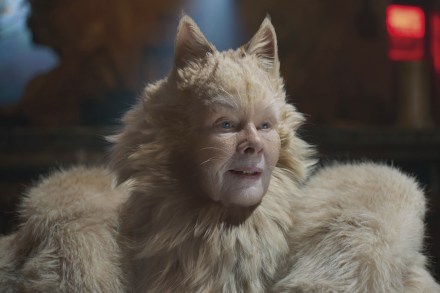
At the outset of lockdown I gave you my list of top mustn’t-watch films — that is, the ones that aren’t worth the bother — with the rider that when Cats is released digitally it will, however, likely be a must-watch mustn’t-watch. ‘I absolutely must watch this mustn’t-watch,’ you may even have said to yourself, after reading some of the wonderfully terrible reviews. (The Daily Telegraph gave it zero stars. Variety said it was one of those ‘once-in-a-blue-moon embarrassments’.) And it is as hoped.

Riveting – and disgusting: BFI’s ‘Dogs v Cats’ and ‘Eating In’ collections reviewed

From our UK edition

This week I’d like to point you in the direction of the British Film Institute and its free online archive collections, which are properly free. There is no signing up for one of those ‘free trials’ which means that, somewhere down the line, you’ll discover you’ve been paying £4.99 a month for something you didn’t want. And it’s certainly excellent value for the money you don’t pay, as there are 65 of these collections, grouped under various headings — ‘Football on Film’, ‘Black Britain on Film’ — although I plumped for ‘Eating In’, because it’s all any of us do now, and ‘Cats v Dogs’, as if that were even much of a competition…dogs!

How The Spectator discovered Helen Mirren

From our UK edition

One of the first jobs I ever did for The Spectator was to find out if professional wrestlers fixed the outcome of their fights in advance. This was 1965. The editor who wanted to know was Iain Macleod, a future chancellor of the exchequer filling in time while his party was out of office by dabbling in journalism. He turned out to be an addict of the professional wrestling screened on Saturday afternoon TV. In spite of the spinal disease that had immobilised his back and neck, he mimed what he meant by throttling himself without getting up from his chair in an Indian deathlock. His deputy editor, his political editor and I watched this unnerving performance in horrified silence. ‘Wouldn’t it be better if we sent a man?’ asked the deputy editor after a long pause.

We’re deep into Cats

After T.S. Eliot died in 1965, his second wife Valerie became notorious for not releasing his letters or unpublished verse, and for not licensing his published work for vulgar adaptation. This is why ‘The Love Song of J. Alfred Prufrock’ was never made into a musical with an opening number in which the protagonist jumps off an operating table as a female chorus come and go, talking of Michelangelo.

cats