Cars

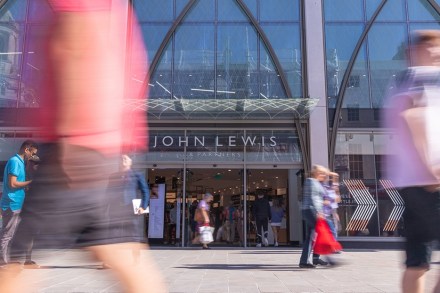
Will a John Lewis home be up Boris and Carrie’s street?

From our UK edition

The Financial Times carried a curious story at the weekend about ‘the secretive process to elect the Lord Mayor of London’ being ‘thrown into disarray’ by ‘objections from some City leaders’ to the candidacy, for 2022, of Nick Lyons — who has just been elected as one of the City’s two sheriffs but who happens to be an Irish citizen. Lyons’s unnamed opposers say City rules have always required the Lord Mayor to be a British citizen. The City Corporation, the Square Mile’s local authority, says it has legal advice to the effect that Lyons is not disqualified, EU citizens being permitted to stand in UK local elections.
Why I won’t buy a Tesla

From our UK edition

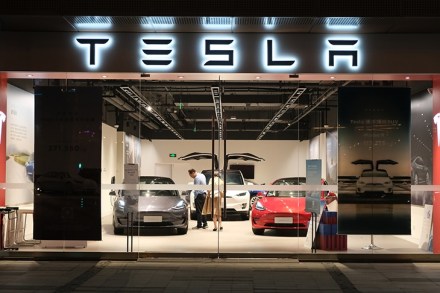
I loved the Ford Mustang Mach-E which I had on loan for four days. It was gorgeous to drive, and slightly saner than the Tesla Model 3 — in that some of the controls involve physical switches and buttons, rather than an on-screen interface. The only annoyance was a persistent whining noise. This came from my teenage daughter who endlessly delivered her strongly held opinion that a fat, 55-year-old advertising man shouldn’t be driving a Mustang. As I patiently explained, when you are a 55-year-old man, you don’t really buy a car for yourself, you buy it for your Jungian shadow-self. So whereas your real-life wife and children might not much like riding in a Mustang, your imaginary 26-year-old Colombian girlfriend thinks it’s fabulous.

Suddenly used cars are hot property

From our UK edition

Companies should willingly pay tax wherever they generate profits — this column has long argued — because it’s fair they should contribute to the cost of the public services on which all business ultimately relies, and because the reputation of capitalism as a whole is tainted when corporate tax bills are reduced to absurdly low levels by the use of offshore domiciles and spurious royalty payments that most governments lack the willpower to challenge. So I welcome at least one half of the G7 finance ministers’ agreement last weekend on a new global corporate tax regime. The half I’m ready to praise is the proposal that all countries should have the right to tax some of the locally generated profits of the world’s largest multinationals.

Letters: What happens if interest rates rise?

From our UK edition

Spinning plates Sir: Kate Andrews is right to highlight the looming risk of inflation (‘Rishi’s nightmare’, 6 March), but to say that the UK has known barely any inflation for almost a generation misses a very painful point. It may be true for consumer prices. Low interest rates and quantitative easing, along with other ill-advised stimuli, have caused huge inflation over the past two decades in the single greatest expense throughout most working people’s lives: the cost of housing.

The war on cars is backfiring

From our UK edition

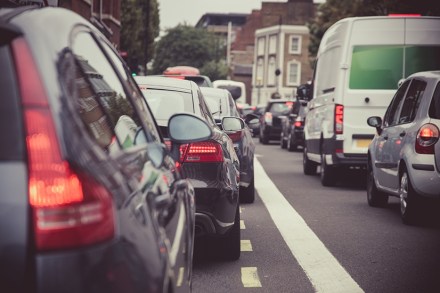
For most London-based politicians, there’s a threat that’s worse than Covid. You’ll begin to notice it as we ease out of lockdown. It’s not the Brazilian variant that keeps them awake at night, or collapsing hospitals. Nope. What really worries them is the thought of cars. Watch them pale as they mutter the words ‘car-led recovery’ and marvel at the variety of tortuous schemes cooked up to thwart motorists. You’d have thought, given the teetering economy, that any recovery, car-led or otherwise, would be welcome — especially as pollution plummeted between 2017 and early 2020, and diesel’s the problem, not your average commuter ride. Volvo said on Tuesday that all its cars will be fully electric by 2030.

John DeLorean: man of mystery – and full-blown psychopath

From our UK edition

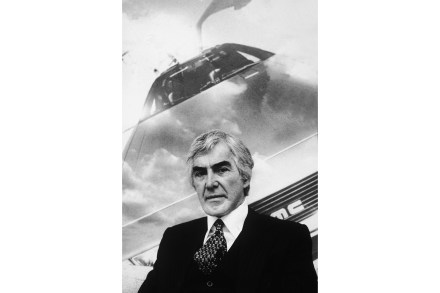
DeLorean: Back from the Future was one of those documentaries — for me at least — that takes a story you thought you sort of knew and makes you realise a) that you didn’t really, and b) what a great story it is. The programme began, as it was pretty much duty-bound to, with a clip of Michael J. Fox and the time-travelling DeLorean car from the movie that inspired Wednesday’s means-less-the-more-you-think-about-it subtitle. A series of captions then introduced us to John DeLorean himself: a man who ‘had everything’ (cue shots of a much younger ex-model wife and some Rolexes) until he ‘risked it all’ in the mid-1970s, when he left a high-ranking post at General Motors to found his own sports-car company. Now all he needed was the money.

‘Smart’ motorways are an accident waiting to happen

From our UK edition

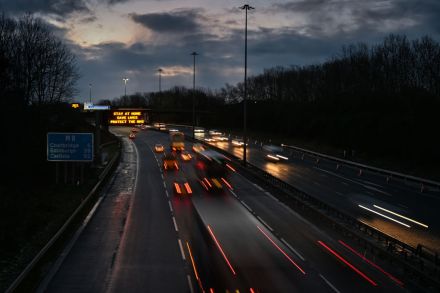
If I could wave a wand and reverse just one government policy it would be the expansion of so-called 'smart motorways' in the face of what seems the iron determination of the Department for Transport to press ahead with them. These are motorways where the hard shoulder is incorporated into the motorway to create an extra lane – a loss supposedly compensated for with periodic refuges for breakdowns. If you wondered why stretches of the M4 are shut most weekends for works, this is what they are doing. The consequences of such supposed 'improvements' can be lethal.

Escape vehicle

One of the more unusual works in the family art collection is a concept drawing of an automobile from 1937. The car, identified by the angular writing on its nose, is the LaSalle. To call this a drawing of just a car does a disservice to the concept behind it. With its shimmering grilles and Futurist forms, the vehicle might as well be an open-cockpit fighter plane about to strafe a runway. Automobile enthusiasts, as I recently learned, consider the drawing to present one of the first known examples of a ‘ripple-disk single-bar flipper hubcap’. Clearly, here is a machine meant to do more than just deliver you from point A to point B.

car

Letters: Why lockdown II was necessary

From our UK edition

Cancelled procedures Sir: Your leader (‘A lockdown too far’, 7 November) suggests that the Prime Minister should have shown ‘leadership’ and ignored Sage’s call for a second national lockdown. Sam Carlisle (‘No respite’, 7 November) illustrates why this would have been a mistake. Sam reminds us that ‘half of community paediatricians were deployed to acute services’ during the pandemic’s first wave. Many other specialists were similarly redeployed. That the NHS was not overwhelmed in the first wave was precisely because most routine work stopped and staff were redeployed en masse to treat Covid-19 patients. Leaving projections aside, there were in fact 13,000 Covid-19 patients in hospital on Sunday 8 November.

Could a classic car save you money?

From our UK edition

It's often said that classic cars are one of the best investments around, with some models outstripping the profits to be had in property, art and even gold. The problem is, it's not really true. Yes, if you were smart enough to buy, for example, a McLaren F1 for £2m a decade ago then you could cash it in today for a tidy profit of at least £8m, and if you happened to snap-up a Ferrari 250GTO in the late 1990s for what might then seemed like an astronomical $7m, it could now be worth something approaching seven times as much.Other blue chip collectable classics have also performed exceptionally well, such as the Porsche 911 2.

Why is buying a car such an ordeal?

From our UK edition

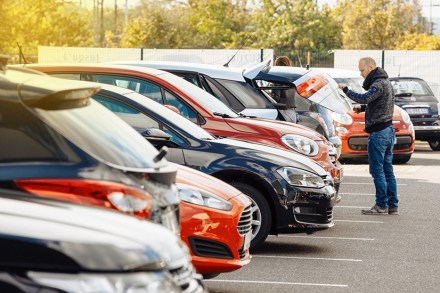
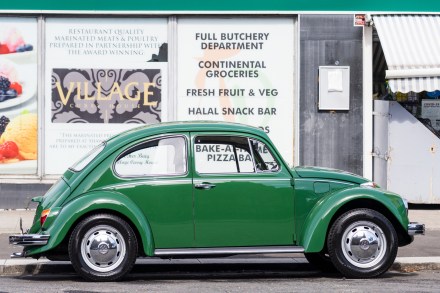
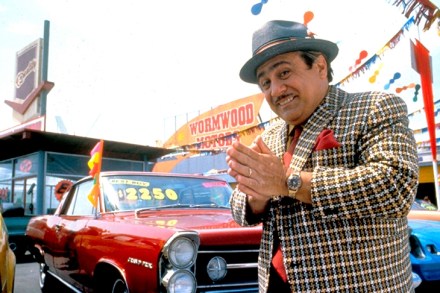
Why is it so insanely difficult to buy a car? And especially if you are a woman? Part of the trouble is that car salesmen are a particularly unreconstructed breed of men who think ‘lady’ customers will be more interested in the size of the vanity mirror than the fuel consumption. But it’s not just that — it’s the fact that they treat the transaction with all the pomp and gravitas of applying for a half-million-pound mortgage. This started back in February when I left a party (remember those?), got into my Volkswagen and set off into St James’s. Somehow I pressed the accelerator instead of the brake and drove smartly into the side of a taxi, making a serious dent.

Whose bright idea was the circuit-breaker?

From our UK edition

It’s electrifying! Who invented the circuit-breaker? Thomas Edison patented it in 1879, realising what damage could be caused to electrical equipment in the event of a surge in current created by short-circuit. However, his early electrical installations did not use them, opting instead for fuses — thin wires designed to burn out when the current flowing through them reached a critical level. The first circuit-breaker — with spring-loaded contacts designed to open when the current became too much — was not installed until 1898, at L Street Station by the Boston Electric Light Company. Vehicle recovery Has the recovery in car sales been maintained?

The art of street furniture

From our UK edition

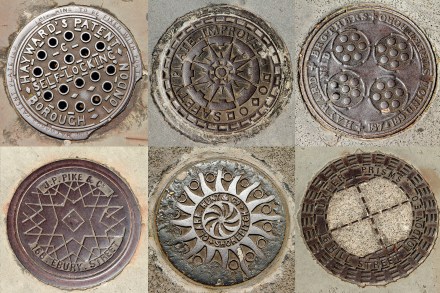
It was possible to stand in the middle of the road during the lockdown without being run over. In Willow Place, near Victoria Station, I crouched over a narrow grating of stout grey iron, and caught a glimpse of light reflected from moving water deep below, as though at the bottom of a well. This was the River Tyburn, on its way from Hampstead via Buckingham Palace to the Thames. During the endlessly sunny lockdown days, I wandered the streets near my office in Victoria. The bright unpeopled silence (like a landscape by de Chirico) brought to my attention details unnoticed before. With all the galleries closed, this was street art.

Why I won’t patent my brilliant idea

From our UK edition

In the past 30 years, I have driven about 8,000 miles in France in right-hand-drive cars. And I would be lying if I denied that one or two of those miles hadn’t been driven on the left-hand side of the road. This scared the life out of me. One second’s inattention elevated my risk of dying in a gruesome accident to levels previously experienced only by 1950s racing drivers or country and western singers. Yet driving on the other side of the road is surprisingly easy — provided you start out on the other side of the road. The error occurs in the first minute of driving: setting off at dawn on an empty road, or when befuddled after stopping at a petrol station, where normal lane rules don’t apply.

Drive-in cinemas are back – but for how long?

From our UK edition

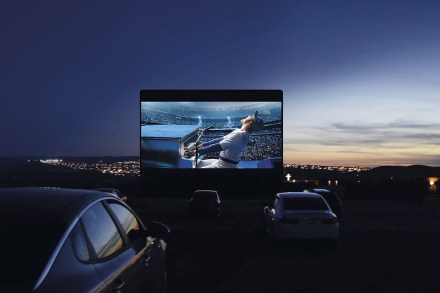
Pandemic creates the oddest phenomena: here, for instance, is a British drive-in cinema. They exist for people who won’t go to a conventional cinema for fear of infection, which sounds like a film in itself. But that is the charm: attending a drive-in cinema feels like living inside a film, because every British drive-in cinema until now has failed.

I wish John Chamberlain was still around to crush this hideous toothpaste-blue Ferrari

From our UK edition

For three months art lovers have had nothing but screens to look at. As one New York dealer complained to the Art Newspaper in May, ‘Everything is so flat — except for the curve,’ referring to the infection rate. Flatness isn’t such a problem for paintings, which are flat anyway, or for digital media obviously. The art form that has suffered most from the lockdown is sculpture, since no 360˚navigation technology yet invented can replicate the experience of walking around a 3-D object. So it’s fortuitous that Gagosian is unlocking its three London spaces to a trio of new exhibitions of 3-D works, under wraps since March.

Cars weren’t invented for transportation, but conversation

From our UK edition

When I first heard Abba’s magnificent 1982 swansong ‘The Day Before You Came’, I’d never come across the Americanised use of the verb ‘make’, meaning ‘reach’. So the line ‘I must have made my desk around a quarter after nine’ baffled me. Given the Swedish obsession with self-assembly furniture, I even wondered whether Björn was using the word conventionally, and Ms Fältskog was in fact kneeling on the floor aligning Tab A with Groove C, while looking for the elusive Allen key with which to attach the castors.

The cars of the future

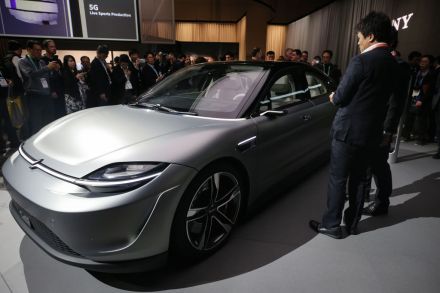
A revolution is under way that will fundamentally change the way humans relate to their cars, so that the vehicle more closely resembles the living room with all the stress of driving removed and all the possibilities of distracting entertainment.Cars will soon become an extension of movie theater, concert venue and 3D videogame as the full potential of 5G communication is unleashed, along with a business imperative of advertisers wishing to monetize the opportunity of drivers being a captive audience for hours at a time.A taste of the future was glimpsed at the Consumer Electronics Show in Las Vegas earlier this month.

cars

A museum-quality car-boot sale: V&A’s Cars reviewed

From our UK edition

We were looking at a 1956 Fiat Multipla, a charming ergonomic marvel that predicted today’s popular MPVs. Rather grandly, I said to my guide: ‘I think you’ll find the source of the Multipla in an unrealised 1930s design of Mario Revelli di Beaumont.’ He looked a bit blank. This exhibition is a rare attempt to explain the car, perhaps the most dramatic since the Museum of Modern Art’s 1951 New York show where Philip Johnson coined the term ‘rolling sculpture’. It is both occasionally brilliant and continuously exasperating. Rather as if in a crowded restaurant you are overhearing snatches of fascinating conversation coming from different tables. The context is significant. The V&A and the Science Museum were only separated in 1909.

What I learned on my speed awareness course

From our UK edition

Speed is in my blood. My father, grandfather and great-grandfather all used to race cars in their youth. We even have a hill-climb specialist car part-named after us, the Dellow. Just after I’d passed my test, my dad let me share the driving in his V12 Jag en route to our holiday home in Devon. I vividly remember him rebuking me whenever I let the speedometer dial creep below 100mph. So I suppose it was inevitable that naughty habits would catch up with me in the end and that I’d find myself doing one of those compulsory speed awareness courses. If there’s one thing every boy racer who has yet to experience one knows, SACs are a massive waste of time. They’re run by embittered ex-coppers with PTSD who torture you with bad jokes and treat you like children.