Cars

Why I’m giving electric cars a second chance

From our UK edition

In April 2021 I wrote a piece for The Spectator which became the most-read article I have ever had published here. It began with the words: ‘I bought an electric car and wish I hadn’t.’ It was the story of my ill-judged decision to get a Hyundai Kona Electric. I had hoped to use it to virtue-signal, but it turned into the car from hell. Many readers were kind enough to laugh at my self-deprecating jokes. I’ve always had a soft spot for gadgets. When electric cars started to become available in 2018, I ordered the Kona because it seemed to have a reasonable range of around 400km. It was a hatchback. With the rear seats folded down, it had plenty of room for the dogs. It was delivered a year later – and it proved to be not just the ultimate lemon, but a ticking time-bomb.

Why thieves are after your number plates

From our UK edition

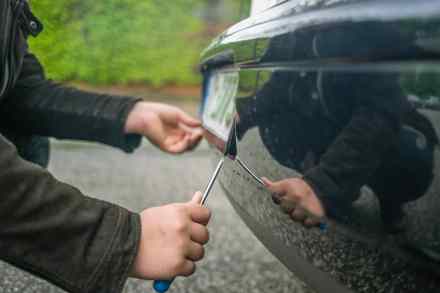
My day had started as it always does, with a near 40-mile round trip to school, then an hour’s walk in the pretty country park close to our home near Nottingham. As usual, I parked in the small car park and exchanged ‘good mornings’ and ‘beautiful weather, isn’t it?’ with the familiar faces I see most days – dog walkers, joggers and mums herding their kids to the village school. There was nothing out of the ordinary about my walk, which covers an undulating route on a track alongside the canal, through a small wood and past fields of sheep. Until I returned to my car, that is.  Straight away I realised something was different, but it took a few seconds to register what it was. The front number plate was missing.

Meet the Bristol Tyre Extinguishers

From our UK edition

If the world really does face a climate emergency, what ought you, personally, be doing about it? Should you, as increasing numbers of young people are doing, roam the streets at night letting down the tyres of SUVs? The fast-growing movement that calls itself the ‘Tyre Extinguishers’ thinks this is an effective approach, and has targeted thousands of SUVs in cities around the world. My home town of Bristol – always quick to espouse a green cause – has seen at least 200 SUVs ‘extinguished’ in recent weeks. Though they claim to be leaderless, the Extinguishers have a Twitter account where you can keep up-to-date with their latest ‘hits’, and a website that generously invites everyone to get involved.

Forget trains: American car culture is worth defending

Had Amtrak come to a screeching halt this week, as it was on the verge of doing, most Americans would not have noticed. Of those workers who still commute to in-person jobs, 76 percent drive their own cars, 10 percent ride a bike, and only 11 percent use public transportation. Other countries tend to give us a bad rap for our car-loving ways. Most of us — nine in 10 Americans over the age of 16 — drive. And we drive a lot: 59 minutes and 30 miles a day, on average. We’re on the road twice as much as our friends in France, Germany, and Great Britain. So when non-American critics blame climate change on our driving habits, I can’t help but think they’re just plain jealous. Here’s the thing about America: it’s huge. That means people can spread out, and we have.

Vanity plates and the fight for free speech

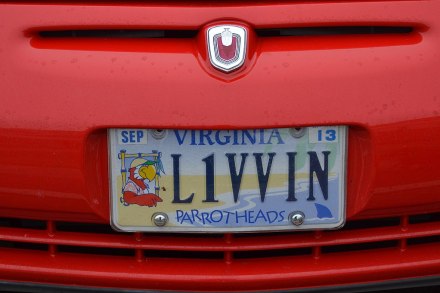
If politics makes strange bedfellows, defending free speech sends one down some equally odd paths. The First Amendment and laws protecting speech exist for every thing that can be said, but end up being tested at the margins of what society tolerates in the name of free speech. A recent case in Hawaii, involving a car license plate, is a perfect example. Like most states, Hawaii issues specialty/vanity license plates where the owner can chose his own letters or numbers. The only restrictions are that the letters/numbers not be "misleading" or "publicly objectionable." Otherwise pick your combination, pay the fee, and you have your unique license plate, such as LUV YOU. That was the plan of Edward Odquina, who runs a web site named www.fckblm.

Yours for £45,000, the car that drove Margaret Thatcher into history

From our UK edition

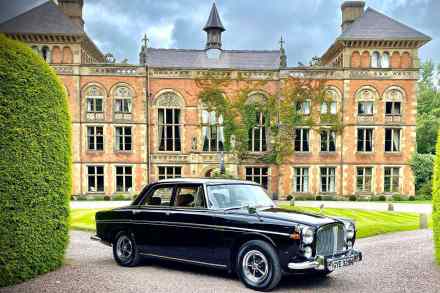
‘A new girl drops in at the palace,’ announced the London Evening News on the front page of its ‘election special’ of 4 May 1979. The accompanying image showed a beaming Margaret Thatcher (pre-implant teeth in evidence) waving from the rear seat of a ministerial car, on her way to meet the Queen and receive her official invitation to form a new administration. Another ‘new girl’ (or boy?) might be dropping in at the palace soon – but if he or she wants to do it in the same car, it will cost them.

A driver’s license, if you can keep it

I remember still the foreboding language and tone when I was learning to drive in New Jersey over a decade ago. First, you needed to earn your permit. Never forget that driving is a privilege, not a right (which only works if driving is an option, not effectively a requirement, though drivers ed isn’t in charge of land use). After your permit, you start with your probationary license. And in a twist that somehow passes civil liberties muster, you’re not even allowed to appeal a ticket issued to you during your probationary period. You feel a bit under suspicion until you finally get that license. Yet for all that, it’s still, basically, a lot of bureaucracy and paper-pushing.

Whatever happened to the good old American trolley?

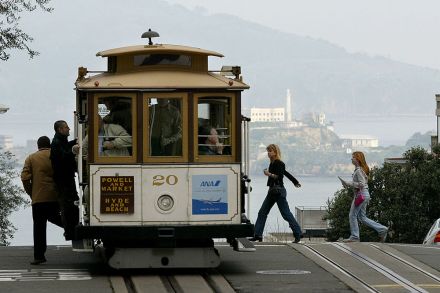
A few weeks ago, my wife and I took a day trip to Maryland, where we visited the National Capital Trolley Museum. It’s an unassuming building with an ornamented facade — a little like a Main Street building in a rural small town — and the gift shop, exhibits and ticket prices are all modest. There’s an interactive electricity exhibit for kids (and adults like me), where you can power a tiny trolley in a diorama of an old streetcar-suburb scene. One of the windows in a house even lights up. It’s simple and fun, a small, lean museum run by a dedicated group of people. An older man who worked there explained the old DC trolley map to me, recalling all the different lines he used to ride as a kid. That’s something you can’t get from a book.

The sad demise of American car culture

Today’s youth get a bad rap for being boring: they don’t join clubs, volunteer, pursue hobbies, or invent anything. Their sartorial style is a sad mishmash of tired trends, their movies unimaginative remakes (there are nine Spider-Man movies now), and their music is largely stoned hip-hop artists talk-singing to the same hypnotic beat. There are many forces at work in the dulling of the current generation, but one of the simplest reasons youngins may not feel inclined to go anywhere or do anything is because getting there is such an exercise in meh. When was the last time you sat in the driver’s seat of a new car, gripped the steering wheel and felt one iota of excitement?

car

The pernicious creep of the 20mph zone

From our UK edition

‘Twenty is plenty’ say the passive-aggressive road signs as you drive very slowly through 20mph zones all over Britain. The slogan is accompanied by a cartoon drawing of a snail. Then you get a frowny-frowny-frowny electronic sign and you slow from 25 to 20 to make it turn into a smiley face. That’s how we’ve been softened up: with a cocktail of the sanctimonious and the kindergarten. As I crawl along the empty dual carriageway of Park Lane late in the evening, where the speed limit has been reduced from its previous 40mph to the now blanket central-London limit of 20, I hiss: ‘No, twenty is not plenty. Twenty is lente.’ It feels ludicrously slow: the trundle of a Dinky car, and an affront to common sense.

A vroom of one’s own: how I loved my old Mini

From our UK edition

Almost 100 years ago the writer Virginia Woolf advised women to find themselves a room of their own: a refuge away from the busy, crowding demands of life, where they could focus instead on themselves and write, think, be. At a time of austerity, when space is at an expensive premium and when post-pandemic empty nests have been re-occupied by returning offspring and spare rooms newly identified as shared office space, I have found an alternative sanctuary. For the past 20 years or so my refuge was my car, acquired with the first real money I ever earned as a writer. My Mini offered me an unconditional escape during the milestones, the turbulence, the highs and lows of two decades.

Buying a brand-new car is the ultimate good deed

From our UK edition

The Department for Transport recently ended a £1,500 subsidy towards the price of new, lower-priced electric cars one year earlier than planned. To their credit, there are better ways to promote electric-car use – for instance by encouraging the installation of public charging stations. As it is, the spread of rapid-charging stations in the UK is bizarrely uneven. Some parts of the country are well served, but there are unexpected black spots. Oddly, trendy places where people talk endlessly about sustainability – such as Oxford, Cambridge and Brighton – are hopeless for rapid charging points, while less fanciful places like Thurrock, Milton Keynes and Newport are awash with them.

My solution to unfair traffic fines

From our UK edition

My driveway now lies in the middle of an ‘Average Speed Check Zone’. It’s a wonderful arrangement – for me – since the slower traffic makes it easier to pull into the road. Yet I am still free to drive through the village like Fangio since average speed check cameras do not record your speed, only time taken between two points. Since I rarely drive past my house without stopping, it barely affects me at all. It’s symptomatic of a wider problem. To what extent can we truly rely on technology to replace human judgment in the administration and enforcement of rules? If a traffic camera catches one person a day, that driver is likely at fault.

My plan to cut congestions on our roads

From our UK edition

Much of the current antipathy towards the car derives from the excessive influence Londoners exert over national debates. London is an outlier in being one of the very few places where you can avoid owning a car, and where cycling or public transport is faster than driving. Indeed a car is less useful in the middle of London than anywhere else: you can’t drive to work, you can’t park at the shops and, if you set out from inner London, after 30 minutes of fraught driving you will merely end up in a worse part of London. This is not true in other cities, where 30 minutes’ drive will take you from the centre to attractive countryside and fast roads.

The electric Mercedes with a range to die for

From our UK edition

As a pubescent teenager back in the late 1970s, I was delighted to once find a discarded copy of The Sun newspaper on a tube train, handily folded back to reveal page three. Having admired Miranda from Epping my eyes shifted to the report of a court case in which a retired brigadier had been stopped on the M1 motorway for driving his sporty Rover 3500S at a reckless 102 mph. His defence?

How to save money at the pump

From our UK edition

If fuel prices are making you splenetic, the driving techniques designed to make that fuel go further might restore a degree of calm. Driving with economy in mind is all about smoothness, anticipation, being aware of your surroundings and not rushing things. Serial congestion means that, more often than not, an easy going journey is only fractionally slower than one where you’ve gone hell for leather. So, here are some driving techniques that will help keep down the petrol bills: Leave time to brakeHarsh acceleration and braking will dent your car’s efficiency. Looking ahead and around you, so that you’re anticipating things that might bring you to a sudden stop will result in it working less hard, which will improve your MPG.

Why the characterful Ford Bronco is staging a comeback

From our UK edition

The best part of a decade elapsed between Land Rover's unveiling of the 'DC100' concept at the 2011 Frankfurt Motor Show and the first 'New Defenders' hitting the road two years ago just as Covid struck – prompting suggestions that the beefy SUV had arrived 'just in time for Armageddon'. During the interim, thousands of column inches and hours of video were dedicated to predicting what the production version might look like, how it would perform and debating whether or not it could ever truly match the rough-and-ready utilitarian charm of the time-served original.

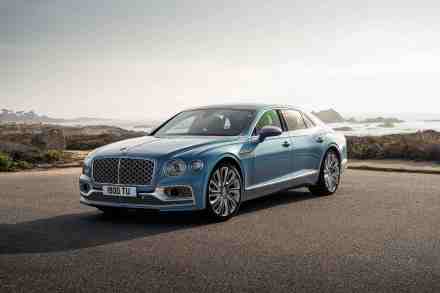
The affordable SUV that gets mistaken for a Bentley

From our UK edition

Readers of a certain age might remember when some car marques were the butt of relentless derogatory jokes. Czech brand Skoda – which has since been brought up-market under VW ownership – was an especially popular victim (Q: 'What do you call a Skoda with a sunroof?' A. 'A skip..') as were Lada (Q. 'How do you avoid a speeding ticket?' A. 'Buy a Lada') and Malaysia's Proton (Q: 'How do you double the value of a Proton?' A. 'Just add petrol.'). But even makers of famously good, solid, reliable cars can be coy about their original brand names when they decide to up their game by trying to penetrate the luxury market – which is why Toyota created Lexus, Nissan invented Infiniti, Honda coined 'Acura' and, more than 100 years ago, Ford adopted the Lincoln nameplate.

Hydrogen vs electric – which car is the better investment?

From our UK edition

Does the future of motoring really lie in electric cars? Battery powered motors are now commonplace, but a few intrepid British drivers have gone for hydrogen fuel cell models instead. They currently have two choices. The £69,495 Hyundai Nexo (28 sales) and the £55k plus Toyota Mirai (about 200 owners including James May), so they’re hardly cheap. Eventually there will be more, including a BMW X5 4x4 due to be launched later in 2022. Jaguar Land Rover is also said to be looking at the technology for its heftier offerings. These cars take minutes to re-fuel, go further between top ups and, unlike battery cars, aren’t adversely affected mileage-wise by cold weather. The only thing they emit is water vapour.

The Highway Code to hell

From our UK edition

I did a speed awareness course on Monday. For the uninitiated, you have the option of doing one of these if you’re caught speeding and want to avoid getting three points on your licence. It only lasts two and a half hours and there’s no test at the end, so it’s a no-brainer, although you have to do it again if you’re spotted playing on your phone at the back. I’ve never heard of anyone choosing the three points instead. Like most people forced to undergo this humiliation, I was convinced I had nothing to learn. We all know about the laws of motion: the faster you’re going, the longer it takes to stop. And, inevitably, I found myself silently correcting the poor English of the two trainers.