Capitalism

Bolivia votes for ‘capitalism for all’

Bolivia has taken a decisive turn to the right after the Christian Democratic Senator Rodrigo Paz won the second round of the presidential election after years of left-wing rule left the country’s economy in chaos. Paz, 58, narrowly beat another right winger, Jorge "Tuto" Quiroga by 54.6 percent to 45.4 percent to take the presidency in the second round run off. He will be inaugurated on November 8. The landlocked country had been ruled by the leftist MAS (Movement Towards Socialism) party since 2006, which enjoyed enormous support from Bolivia’s indigenous Indian majority.

Bolivia

Can tariffs replace income taxes?

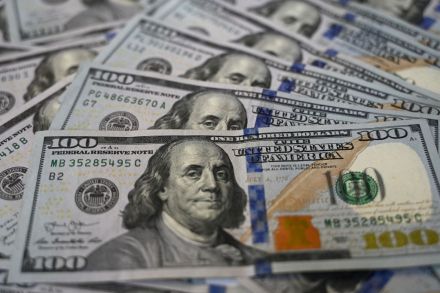
Can tariffs replace income taxes paid by Americans earning an income under $200,000 annually, as President Trump has suggested? We seem to have entered a new world in 2025, or rather, reincarnated an older America whose tax receipts were heavily built on tariff payments. U.S. Secretary of Commerce Howard Lutnick recently stated that tariffs could replace income taxes paid by Americans making up to $150,000 per year. And certain economic nationalists have urged that there is a vital causal connection here worth recalling in an “American system” of tariffs and protectionism, and the growth of American industry. They argue that America’s Gilded Age wasn’t regressive economically; in fact, the country exploded in growth, commerce and inventions.

Tariffs

The mask slips at Socialism 2025

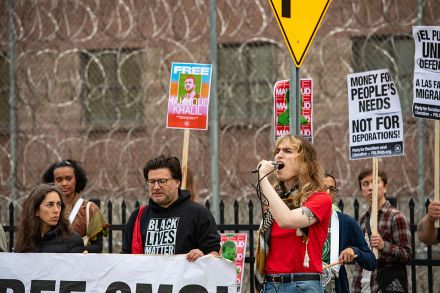
From college campuses to the media, socialism is increasingly getting repackaged as a solution to every problem: homelessness, housing, policing and education. For a generation grappling with high rent, student debt and political distrust, the collectivist utopia may sound like the moral, modern choice. But it isn't – and this year’s Socialism 2025 conference in Chicago proved just why it is doomed to failure. The conference brought together scholars, activists and self-styled revolutionaries to sketch out what a “just” society might look like. The vision was as radical as it was impractical.

Socialism

Why America has more lawyers per capita than any other country

Despite the sharp polarization of American politics, there is surprising agreement on what went wrong with capitalism. Whether the writer or politician is coming at this question from the left or right, the blame often falls on four decades of “small government” ideology and free market orthodoxy since Ronald Reagan and Margaret Thatcher. Whether the flaw in question is slowing productivity growth, the rise of oligopolies, the export of jobs, or income and wealth inequality, its source is traced to excessive faith in the “magic of the market.” Capitalism’s flaws are “market failures.” The problem: this narrative is wrong on the facts.

lawyers

A vigorous and persuasive defense of capitalism

“Under capitalism,” John Kenneth Galbraith once quipped, “man exploits man. Under communism, it’s just the opposite.” For a left-wing economist such as Galbraith, this was about as close as one might get to exalting capitalism — damning by faint praise. But in The Capitalist Manifesto, a lively, closely argued polemic by the Swedish historian Johan Norberg, we find a much more vigorous and persuasive defense of the most successful economic system the world has ever seen, a mechanism for sowing widespread abundance and lifting billions out of penury. “The argument for capitalism,” Norberg boldly declares in his preface, “is not that capitalists always behave well... but that they often do not behave well unless they have to.

capitalism

The new corporatism that’s killing capitalism

Over the years since the financial crisis, economic power and wealth has become ever more concentrated in fewer hands. This is something leaders have acknowledged, and policymakers have tried to do something about. And yet, despite brave talk of breaking up mega-giant companies, anti-trust efforts have been anemic, as most recently demonstrated by the failure to stop Microsoft from swallowing game maker Activision. The future looked a little brighter in the immediate aftermath of the pandemic. There were signs of a grassroots resurgence, with a strong uptick in new business formations in the United States. But since then, as interest rates have risen and regulatory pressures have increased, there has been a slackening off of new firms.

the new corporatism

Guardian writer doesn’t get why Americans love fall

We Americans are used to the Brits weighing in on our affairs. I try to view their concerns with compassion, as a hard-to-kick habit leftover from the pre-Revolution days, or an endearing tendency they can’t help, like when your mother continues to remind you to wear a coat in winter even after you’re well into your forties. But our English cousins have finally crossed the line. Writing for the Guardian, Arwa Mahdawi vilifies that which we Yanks hold most sacred: “the season they call ‘fall.’” According to Mahdawi, autumn is “overrated” “rubbish.” Instead of pumpkin-spicing everything, she suggests we elevate another squash variety, “the humble courgetti,” as our favorite flavor profile of the season. I simply cannot let such abuse go unchallenged.

Four vectors of danger for America and the West

Fifty years ago, everything seemed to be breaking down, kind of like it is now. In fact, it can feel like the 1970s redux. Searing issues of war, ecology, race, and “malaise” have never really disappeared. A silent majority, political schism, limits to growth, and price inflation — all are here. Yet there are new uncertainties too. Even to optimists, debt-induced fragility clouds the economic horizon. Investor Charles Munger notes that bitcoin actively undermines the Federal Reserve System; any gain comes from trading, not from creating products, crops or rents. As fantastic as non-binary sexuality, cryptocurrency points to additional contemporary follies.

Among the green conservatives

The American Conservation Coalition last week held its first official summit, hosting a vibrant crowd of over 250 people. The organization boasted speakers such as Michigan congressman Peter Meijer, New Hampshire governor Chris Sununu and conservative radio host Jason Rantz. Cockburn was lucky to attend — and even luckier to partake in the open bar. The many speakers held talks and panels on topics such as China as a player in the clean energy arms race, nuclear power as an alternative to fossil fuels, and the deregulation of free market economies. While it is still far from the mainstream attitude in conservative thought, the ACC represents a growing minority of people who recognize climate change as a threat, only without the left's “doom and gloom.

Squid Game’s bloody attack on inequality and dehumanization

Netflix’s biggest hits to date have been solidly middlebrow fare with a contemporary twist: Bridgerton, The Crown, Lupin. It’s surprising, then, that its all-conquering new success is an ultraviolent South Korean thriller laced with social satire. Squid Game isn’t just the Battle Royale/Hunger Games rip-off that its premise suggests. Instead, it combines cartoonish brutality with provocative digs at a society in which the acquisition of status has become all-important. This is served up in an addictive, cliffhanging format, which allows the audience to gasp in surprise at each new twist, even as the net tightens inexorably on its hapless protagonists.

squid game

Can you afford AOC’s ‘Tax the Rich’ sweater?

The revolution may or may not be televised. But it will be turned into branded merch to be sold through an easy-to-use website. Because Change Takes Courage (Alexandria Ocasio-Cortez™️, 2018), the war against the system will be systematically transformed into cuddly swag for internet consumers because, well, capitalism is literally killing us. Reuters reports that AOC is ‘investing heavily in her online store’ in order to fundraise and build ‘the second-term lawmaker's profile nationally.’ See folks, she ain’t grifting — she’s elevating her profile, because clearly not enough people have heard of Alexandria Ocasio-Cortez, even if she is the most famous congresswoman in the world.

aoc merch

Is communism authoritarian capitalism?

On July 1, 1921, the founding congress of the Chinese Communist party was held in Shanghai, when 12 men gathered in a villa in the richest part of the city. Today, the party has over 90 million members. It has transformed not only China but the history of the entire world. The main stages in its development are well-known. In late 1920, Mao Zedong took over and reoriented the party from city workers to poor farmers. In the mid-1930s, the Long March, although a retreat, established a link between the party and the people across China. In 1949, revolution won. From 1958 till 1975, the Great Leap forward and the Cultural Revolution tried to enforce fast economic and social change.

china communism capitalism

Why the West is best

‘Western civilization would be a good idea,’ joked Mahatma Gandhi, one of its most successful pupils. We are accustomed to hearing what is wrong with Western civilization: racism, sexism, colonialism and (gasp) capitalism. The world would be a kind of utopia, we are told, if only we could purge these sins from our societies. But if Western civilization is evil, what is the alternative? Four other -isms vie for our attention. The first is socialism. Its proponents include some old-fashioned Marxists, faithful to the old egalitarian nostrums, but most are pseudo- or neo-Marxists. The ‘woke’ activists fundamentally oppose capitalism and are aggressively committed to intersectionality, but they are vague on the alternatives. We can assume that they will not end in utopia.

western

Where did all those ‘capitalist pigs’ go?

'There are few ways in which a man can be more innocently employed than in getting money,' is an insight the famed biographer James Boswell attributed to Samuel Johnson. Clients of the late Bernie Madoff, however, might take issue. Over four decades, Madoff, acclaimed as the greatest fraudster of them all, ran a Ponzi scheme that swindled 40,000 people, including his closest friends, out of $65 billion. But if 'getting money' is among the most innocent of callings, America has more than its fair share of the goodly people who excel at it. According to Forbes's 35th annual ranking of billionaires, last year witnessed a population explosion. Some 660 new billionaires were added to the number for a total of 2,755. And more than one in every four billionaires is an American.

oligarchy tech capitalist pigs

Bastard capitalism

‘If we will not endure a king as a political power,’ Sen. John Sherman of Ohio said in 1890, ‘we should not endure a king over the production, transportation, and sale of any of the necessities of life.’ These words helped drive through the Sherman Anti-Trust Act that saved early American capitalism by breaking up Standard Oil and the robber barons’ fiefdoms.A long line of Anglo-Saxon dragon slayers straggles behind the senator, all the way back to King John at Runnymede. Over-mighty kings and industrial barons get short shrift in Britain and America. This isn’t mere resentment. It is a philosophy of power and knowledge, and the principle behind democracy and free markets.

capitalism