Business

Still hunting for a Trump trade? Gold may have further to rise

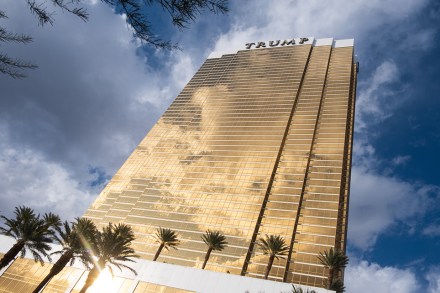
Anyone hunting for a ‘Trump trade’ at this late stage has probably missed the US election bus. If you bought gold as a traditional safe-haven asset back in February at £1,600 an ounce, you’d be a smug 33 per cent up by now – though my man in the bullion market tells me the rise is by no means all to do with presidential hopes and fears. There has also been big buying from China possibly linked to moves, with Russia and other unfriendly actors, towards ‘de-dollarisation’ of world trade using a partially gold-backed alternative currency. Which means there could be more upside ahead, my man says, and gold ETFs are still worth a look.

The rise of anti-Elonism

You can tell a lot about a country by who it admires. I was pleasantly surprised some years ago to see a poll showing that the most admired man in the UK was Richard Branson. You may not love all his publicity stunts, or have liked the sandwich selection on Virgin trains, but that poll suggested the British public still liked entrepreneurialism and achievement. It seems mainly to affect people who have really never done very much with their lives I slightly dread a rerun of such a poll today, because I suspect that among the youth vote in particular the winner would be the person with the most perceived disadvantages in life.

Goodbye to Old King Coal

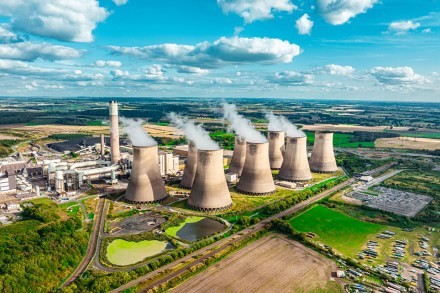
So farewell, Ratcliffe-on-Soar: the UK’s last coal-fired power station shut down on Monday, having burned five million tonnes of coal per year since it opened in 1968. Back then, 80 per cent of national power came from coal, our primary energy source since the 1880s; at the turn of this century there were still 25 coal plants in operation across the country. Now there are none – and 36 per cent of our power in the past year came from wind, solar and hydro with 7 per cent from biomass, compared with 24 per cent from natural gas and just 1 per cent from Ratcliffe’s coal. That’s a remarkable transition – but far from proof that we’ll have sufficient clean energy to keep the mid-century lights on.

How to find out what organisations are saying about you 

Every time I have a protracted ding-dong with a big organisation, I put in a request under data protection law to see what they’ve been saying about me behind my back. Anyone can do this. If you get into a row with a charity after complaining they’ve put your direct debit up without telling you, for example, you could then do a subject access request (SAR), asking them to send you a copy of anything mentioning you in their files, and they would send you back loads of emails in which various people in their offices discussed how to handle your complaint. The law requires them to do this, but it allows them to redact certain words, usually the names of those most involved in having you over, and other information they can argue is sensitive.

How many summers do you have left?

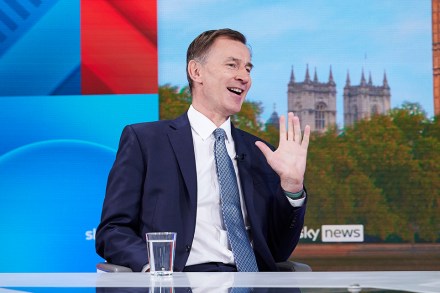
If the new government’s ‘pensions review’ takes forward last year’s ‘Mansion House reforms’ – credited to chancellor Jeremy Hunt but largely the work of the then Lord Mayor of London, Nick Lyons, and designed to push the UK’s largest private-sector pension providers to commit funds to unlisted equities and vital infrastructure – all to the good. If it succeeds in ‘unleashing the full investment might’ of the £360 billion Local Government Pension Scheme (LGPS), as the new Chancellor Rachel Reeves says she intends, even better. We’d have a public investment fund to rival those of the Netherlands and Singapore, though still way behind the likes of Norway and South Korea.

Bury the Canaletto, now

I’m not on the guest list for the Duke of Westminster’s wedding, but I wish him luck anyway. Mind you, the young seventh duke – Hughie to his friends – hardly needs more luck than has already come his way in the form of the £10 billion Grosvenor property empire in London and elsewhere. When the playboy second duke known as ‘Bend’Or’ died in 1953, Pimlico had to be sold to pay record death duties. But the Grosvenor family has taken a firmer grip on tax planning since then, their fortune multiplying despite the dukedom passing through three cousins to reach the father of today’s incumbent, who inherited via reportedly tax-proof trusts in 2016 and should have little to fear from a Labour regime. In other stately drawing rooms, however, teacups are rattling.

How to quit like the Japanese

Tokyo For many, the idea of quitting a job they hate, of walking into their boss’s office and telling him or her in no uncertain terms what they think of it (and them perhaps), and then striding out without a backward glance, is a delicious one, a pleasant daydream to be enjoyed on the dreary daily commute. But for the Japanese, the idea of resigning from your company is positively traumatic, so much so that the latest boom industry here is agencies who will take care of the whole messy business for you. For the Japanese, the idea of resigning from your company is positively traumatic There are now dozens of so-called ‘resignation firms’ in Tokyo, which will act as an intermediary between the prospective resignee and their company.

In praise of Yuengling

From our US edition

When I was a college student in Texas, I told someone at a bar that I was from Pennsylvania. The guy’s eyes lit up. “Pennsylvania?!” the man exclaimed. “That means you get to drink Yuengling whenever you want!” Yes, I mused, with a shrug and a swig of my Shiner Bock. So what? The barfly informed me he was such a big fan of America’s Oldest Brewery — established 1829 — that he and his family would haul cases of the traditional lager, Smokey and the Bandit style, back to the Lone Star State any time they traveled east of the Mississippi. Fast-forward (just!) a few years, and Yuengling is now available in twenty-six states. Texas, my old friend would be tickled to know, was the first western state to get a taste of Yuengling back in 2021.

Yuengling

The truth about ‘boardroom diversity’

We all know that increasing the diversity of your boardroom increases the success of your company because politicians, business leaders and academics keep telling us so. No one has ever got into trouble for making this assertion and, in any case, we have the scientific evidence to prove it – in the form of four studies pumped out by management consultants McKinsey & Company over the past decade. The first of these, Why Diversity Matters (2015), claimed, for example, that companies in the top quartile for gender diversity were 15 per cent more likely to outperform the median company in their industry, and companies in the top quartile for racial/ethnic diversity were 35 per cent more likely to outperform the median.

How AI helps the tech giants

From our US edition

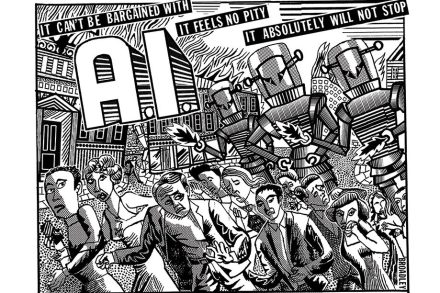
Artificial intelligence (AI) and its related technologies — machine learning and the metaverse — represent a watershed in the evolution of the global economy. Like other such shifts, its emergence is likely to favor certain interests, notably a handful of technology giants, the media and a small cadre of highly skilled programmers. Everyone else faces economic danger, certain to roil domestic and international politics in coming years. Eighty-two percent of millennials fear AI will reduce their earning ability — and they are right to be worried. The first group to lose will be the usual suspects: factory and warehouse workers as well as professionals with largely routinized occupations suited to automation.

ai

China is set for a serious economic fall

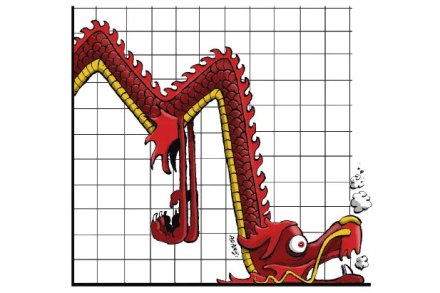
 The future trajectory of the Chinese economy is a subject for doctoral theses rather than casual column items. But the advent of the Year of the Dragon, at last weekend’s Lunar New Year, was greeted with such pessimistic commentaries that the natural contrarian should ask whether the consensualists are getting it wrong: maybe the dragon is merely marking a pause before martialling its mighty resources for the next transglobal burst of fire? The negative narrative goes like this. In spite of deflation in consumer prices, Chinese shoppers are frightened of spending. Despite central bank interventions aimed at boosting asset prices, the property market is crashing after the collapse of the developer Evergrande and the Shanghai stock market has been falling since last April.

The gloomy future facing trade unions

From our US edition

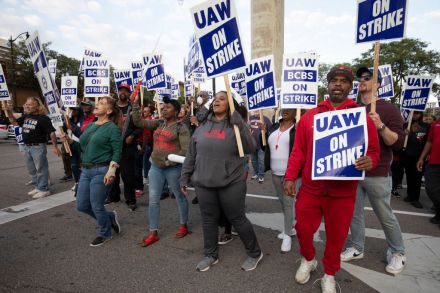
Few developments have more cheered progressive activists than the perceived resurgence of labor unions. This has been sparked by largely symbolic efforts to unionize in places such as Starbucks and Amazon, as well as more sizable wins by the Writers Guild of America and the Screen Actors Guild and United Auto Workers, the country’s most important private labor union. In 2022 strike activity more than doubled from the previous year. Yet ultimately these wins may turn out to be largely Pyrrhic.

unions

Rishi Sunak can’t take the credit for falling inflation

Even the best-run companies have occasional leadership crises. But if you asked ChatGPT to come up with a blockbuster boardroom-bloodbath movie scenario, I doubt it would propose anything as extreme as this week’s events in its own San Francisco-based parent company, OpenAI. Chief executive and co-founder Sam Altman was fired last week for failing to be ‘consistently candid’ with OpenAI’s board, though no one was prepared to say what he had not been candid about. By Monday he had a new job leading AI research at Microsoft, OpenAI’s 49 per cent shareholder. One inside source claimed 743 of OpenAI’s 770 staff had signed a letter supporting him and many of them would follow him to Microsoft.

Bernard Looney shows why every board should be braced for scandal

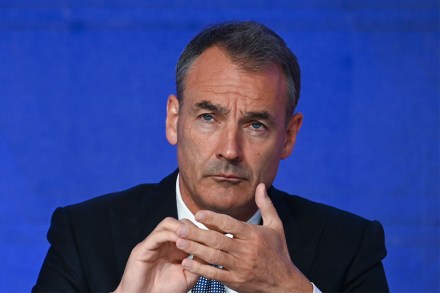
Bernard Looney, the fallen BP chief, always had a certain swagger about him. I’ve no idea whether he was unsafe in taxis, but he was certainly prone to unguarded remarks. ‘Not every barrel of oil in the world will get produced’ was a bold way, back in 2018, to introduce BP shareholders to the idea that the world’s energy giants will one day have to strand remaining carbon assets if they really intend to achieve net-zero targets. ‘This is literally a cash machine’ was not the best way to describe BP’s profit performance in November 2021, when British households were beginning to feel the pain of soaring energy bills.

The economy isn’t as sick as we thought

It would be churlish not to celebrate revisions from the Office for National Statistics that tell us the UK is not, after all, the post-Covid invalid of the G7. Contrary to previous figures suggesting we had struggled to regain pre-pandemic levels of economic output, it turns out that our gross domestic product passed that benchmark in late 2021 and our performance has been in line with France and ahead of Germany. Large sectoral revisions for agriculture and manufacturing tell us that statistical reporting is almost as much of a mug’s game as forecasting. But the brighter overall picture accords with the anecdotal sketch of ‘definite warming’ in consumer spending and confidence that I offered here early last month.

Is the era of the corporate DEI officer coming to an end?

From our US edition

Barely three years after the death of George Floyd, it appears the era of the corporate DEI officer is rapidly coming to an end. Or at least experiencing a major contraction. Across American business, the number of Diversity, Equity and Inclusion roles grew by 55 percent following the protests of summer 2020, reported the Society of Human Resource Management. At the start of 2022, the entire DEI “industry” was worth an estimated $9.4 billion. In 2023, it’s a very different story. According to the workplace trends consultancy Revelio Labs, DEI jobs shrank by one-third last year. The key problem with the DEI industrial complex is not the idea that American workplaces should be more representative of America — but the means often used to achieve those ends.

DEI

Let’s flush away the idea of a return to state-owned water

Water, water everywhere in the media this week, as the Thames Water utility – crippled by debt and shamed by Niagaras of raw sewage – reached the brink of collapse. Anticipating government intervention if Thames’s owners cannot inject sufficient new equity, pundits decried the 1989 privatisation of English and Welsh water – which passed from conventional shareholders to private equity and foreign sovereign wealth that combined to extract £72 billion of dividends while loading the industry with £60 billion of debt and allegedly denying it new reservoirs and leak-free pipes. Put like that, the fate of water – a resource so natural that some say it should be immune from all financial alchemy – is indefensible.

Inside the world of multilevel marketing

From our US edition

Emily Paulson felt lost. A young mother with several small children, she’d stepped away from the career ladder and found herself stuck juggling childcare alone when her husband traveled for his corporate job. She was trapped in a circuit of sweatpants and Spongebob. So when an old high school acquaintance invited her out for wine, she was thrilled at the chance to get dressed up, go somewhere swish and feel like herself again. It turned out to be a trap. Although she wasn’t swept into the back of a van by kidnappers, she was propelled into the world of Multilevel Marketing (MLM), also known as a pyramid scheme. The drinks invitation was a lure, first to be wowed by the fabulous cosmetics she could buy (at a discount!! And didn’t her friend’s skin look amazing?

multilevel marketing

Rampant unions will embed high inflation

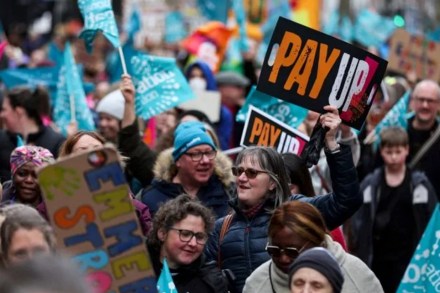
So farewell, Transpennine Express, the northern rail operator whose hapless management were no match for the Aslef union that was determined to see this underperforming franchise renationalised. TPE’s drivers, beneficiaries of the super-luxury conditions I recited last month, have effectively invented a new form of moral hazard: have no fear of crippling your employer with outrageous demands and relentless non-cooperation, because if it goes down, the government will step in and re-employ you on the same terms or better. Aslef has more strikes planned nationally for 31 May and 3 June, and the other rail union RMT – having done its best to disrupt travel to Eurovision in Liverpool – says it may join in on the second date, which happens to be FA Cup final day.

The scourge of London’s ‘American candy’ stores

Should US regulators ban short-selling of bank stocks? That’s a hot topic as investors refuse to accept reassurance from the Fed chairman Jerome Powell that the recent banking crisis-that-wasn’t is over. Following JPMorgan’s rescue of First Republic, shares in other regional banks such as PacWest in Los Angeles, Western Alliance (Phoenix) and First Horizon (Memphis) have fluctuated wildly and fingers have pointed at short-sellers – who borrow shares they think are about to fall in order to sell, buy back cheaper and pocket a profit. That’s bad, say critics, in the broad sense that it’s a negative form of investment, the reverse of backing companies you believe in; and much worse if sellers spread false rumours to push shares down.