Britain

How Wilfred Owen became a poet

Here is the opening of a sonnet written by Wilfred Owen in the spring of 1911: “Three colors have I known the Deep to wear;/ ’Tis well today that Purple grandeurs gloom.” Owen was eighteen and had just been on a pilgrimage to Teignmouth in England, where his hero John Keats had once stayed. The kindest thing to say about this poem is that it is heavy with the influence of Keats. Six years later, in a seaside hotel requisitioned by the army and waiting to be sent back to the Western Front, he begins a poem like this: “Sit on the bed. I’m blind, and three parts shell.” This looks so simple. The monosyllables carry the meter without fuss; “shell” here means both munitions and protection.
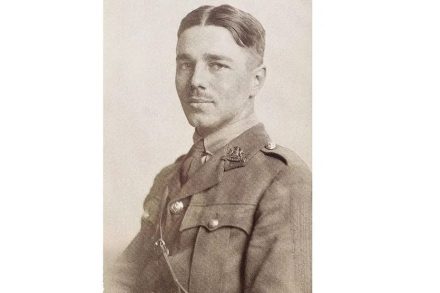
Owen

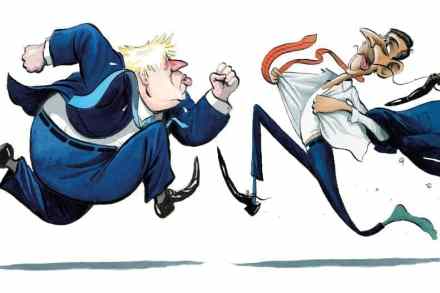
Rishi’s smoking ban inspired me to light a cigarette

From our UK edition

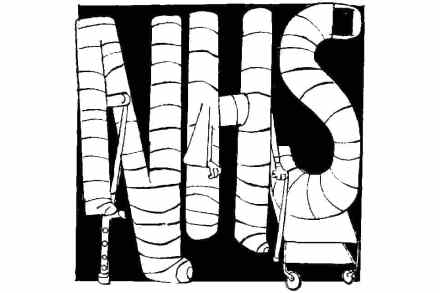
What has Rishi Sunak’s government achieved in its first year? The highlights include a renegotiated Brexit policy and setting more practical net-zero deadlines. But Sunak asked the country to judge him on his ability to deliver his pledges set out at the start of the year. If polls are to be believed, voters are preparing to do just that. Inflation is falling, but that’s largely due to interest rate hikes announced by the Bank of England. The economy is growing, but barely. The NHS waiting list keeps rising – 7.6 million now in England alone. On this last point, no doubt the six-figure salaried consultants who keep striking deserve part of the blame. But to say the Sunak government is struggling to make good on its promises would be putting it rather gently.

The full English: how to fall in love with this country

From our UK edition

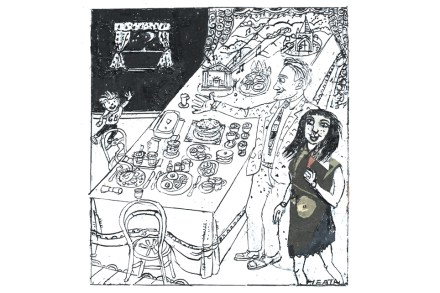
My nine-year-old half-Russian daughter has arrived in England for the first time since she was a baby. As she knows almost nothing about British culture apart from Peppa Pig and Willy Wonka, my job is to put together a week-long programme before she goes back to Italy, where she currently lives with her mother, my ex-partner. They were living in Russia but left following Vladimir Putin’s invasion of Ukraine. Ideally, my daughter will go home enthused about all things English and wanting a lifetime more. But where do I start? Peppermint Aeros and Crunchie bars are the things I want to pass on, far more than the music of Elgar First, there’s the question of food.

How do I know I’m an adult? I’m given unsolicited feedback

From our UK edition

Adulthood was once determined by age, but now we’ve extended childhood far beyond the teenage years. If the government gets its way, the next generation will never grow up: there are reportedly plans to ban cigarette sales to anyone born after 2009. This would mean that, come 2060, 50-year-olds could be begging their elders to pop into the local corner shop to buy them a pack of 20. We need a new metric of adulthood, and I have a proposal. The real mark is not an age or any particular milestone, it’s really when you receive your first piece of unsolicited feedback. It’s a grim but unavoidable rite of passage: having personal and outlandish comments directed your way, often in such a breezy or casual manner you’d think they were talking about the weather.

Britain has an entitlement problem

From our UK edition

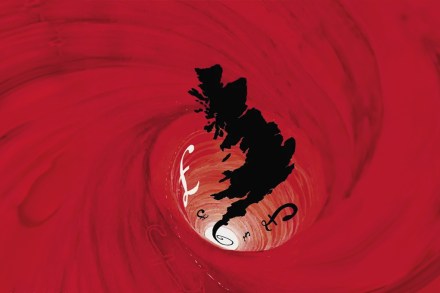
An Institute for Fiscal Studies paper, published at the end of last month, makes grim reading. Through the prism of the media reports it generated (‘One in 11 workers in England could be NHS staff by 2036,’ said the Guardian; ‘NHS staff will make up 49 per cent of the public sector workforce in 2036,’ said the Times), the most sensational finding was that our health service will be eating up an ever-increasing share of public spending. But, as so often, this particular cuckoo in the nest of public provision is only the most newsworthy of so many indications of Britain’s long, slow slide into insolvency. The gap grows between what we consider ourselves entitled to and what our governments can afford The paper is part of the Institute’s series Green Budget 2023.

British conservatism is lurching from one crisis to another

From our UK edition

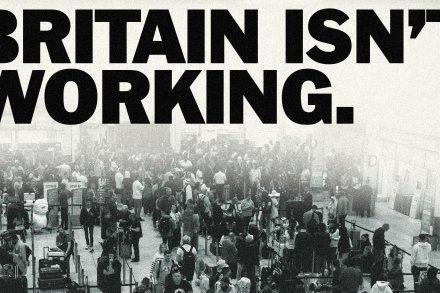
No. 10 quickly asserted that the meltdown at National Air Traffic Services was a technical issue rather than a cyber attack. This was presumably meant to be reassuring. It is anything but. It speaks, once more, of a Britain with creaking infrastructure, where national paralysis has become a regular occurrence. The highest tax revenues in peacetime history have not created a properly functioning country.  The breakdown was caused by a single mis-filed flight plan. That such havoc can result from one trivial event does little credit to the organisation entrusted with our airspace. This week’s event may not be a cyber attack, but hostile states and organisations will be taking note.

Britain should not be nervous of India

From our UK edition

For a disconcertingly large constituency in Britain, Indian history ends in 1947.The two centuries leading up to that bloody year – when British rule formally ended, India gained independence and Pakistan was conjured into existence – were replete with books, articles, pamphlets, lectures and debates on India. What unites this body of work, apart from colonial condescension, is an effort to comprehend India. That impulse faded once India attained freedom. After independence, India surged forward; Britain’s idea of India, however, remained captive to the past Britain’s sins in India – racism, carnage, plunder – are a matter for British consciences.

Why won’t my British friends see a GP?

From our UK edition

Having lived in the United Kingdom for almost my whole adult life, I like to think I’m well assimilated. I stopped trying to make pleasantries with strangers a long time ago. I skip dinner to stand outside the pub in the dark. Apart from my accent (though Americans tell me that’s changed, too) I think I can just about pass as British. But never for long. At some point, someone starts talking about a health worry or new ailment, and I tell them to see the doctor. Suddenly, the jig is up, and I’m an outsider again. I’m now very familiar with the British aversion to seeking medical care. Still, it horrifies me. I sound like a broken record around friends and colleagues, as I repeatedly tell them to go and get their problems checked out.

Britain is not a basket case

From our UK edition

It’s a dinner party in Brussels and I try to turn the conversation to the war in Ukraine. My host is having none of it. She is determined to initiate another round of discussion on the theme of ‘isn’t Britain a basket case?’ From bitter experience I know that I am in for a lengthy diatribe about ‘nothing works’ Britain.  At times it feels as if there is a veritable crusade targeting Britain. Media outlets on both sides of the Atlantic constantly refer to Britain as if it is a country in the throes of an existential breakdown.

The spy novelist who became an Irish nationalist

The period of the First World War was a golden age for the spy novel. There’s nothing like a really cataclysmic global conflict to stir any halfway attentive author. And perhaps the pick of the literary crop was 1903’s The Riddle of the Sands, by the Anglo-Irish writer, soldier, and politician Erskine Childers. The novel mixes some gentle satire about the graded snobberies of the Edwardian class system with a seafaring adventure involving a couple of topping British chaps going after German spies in the Baltic. It’s not only a riveting tale in itself, but so cogent in its account of the state of Britain’s maritime defenses that it prompted the Admiralty to hurriedly install a series of new coastal gun batteries.

She was the Queen of the West

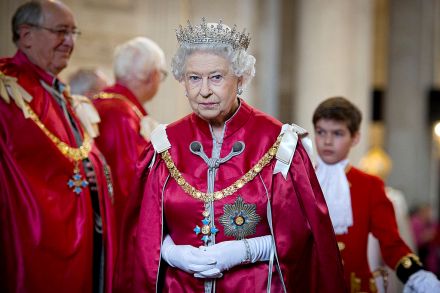
For much of my life, I confess I didn’t pay much attention to Queen Elizabeth II. My Muslim upbringing in Somalia, Ethiopia, Kenya and Saudi Arabia meant that the idea of a female figurehead was utterly foreign to me. How could a woman be the head of a church or the leader or embodiment of a nation? This was not what my god taught. Allah, for me, was the ultimate patriarchal ruler. He would certainly not countenance a figure like the Queen. But once I left Islam and became a convert to the ideals of the West, I came to appreciate her. The massive crowds following her coffin as it wound its way down from Balmoral, through Edinburgh, to London and finally to Windsor show that I am far from alone. The Queen was beloved.

queen

‘Bring Back Boris’ means the Conservatives are unleadable

From our UK edition

Boris Johnson was finally thrown out of Downing Street because of his handling of sexual misconduct allegations by a political ally. Dozens of ministers quit his government over his lack of integrity. He remains subject to an investigation that could see him suspended from parliament for dishonesty. Dozens of Conservative MPs believe he is the best person to lead their party and Britain. The Bring Back Boris movement confirms that the Conservative party is now unleadable. Whoever ends up as prime minister next week will be unable to command a reliable majority of the party’s MPs.

The slumber of the Anglosphere

The countries we call Anglo-Saxon (Great Britain, the Commonwealth and the United States) have been known for centuries for their ability to govern themselves democratically, peacefully and efficiently. In the twenty-first century they have been doing less well. Britain and America are both in dreadful straits politically, economically and socially. The implosion of Boris Johnson and the search for a satisfactory successor have revealed the leadership of the Tory Party as a hapless and embarrassing collection of mediocrities devoid of coherent ideas. Across the Atlantic, one of the two major parties is a gerontocracy at the top and a gang of urban guerrillas with Molotov cocktails at its base.

anglosphere

Europe is more bark than bite on Ukraine

Last Friday, President Biden signed a spending bill that will keep the government’s lights on until December 16, when lawmakers will have to cobble together a funding resolution to avert a shutdown. Tucked into that law was another tranche of security and economic assistance to Ukraine, to the tune of $12.3 billion. The signing came two days after the Defense Department announced the release of an additional $1.1 billion military package for Kyiv, which will include 18 more HIMARS systems, 150 armored vehicles, and ammunition of various calibers. The Biden administration has provided the Ukrainians with over $16 billion in security assistance since Russia’s invasion in February. Washington’s hands have been cramping up from writing so many checks.

macron europe blame

The ignorance of Queen Elizabeth’s ‘anti-colonialist’ critics

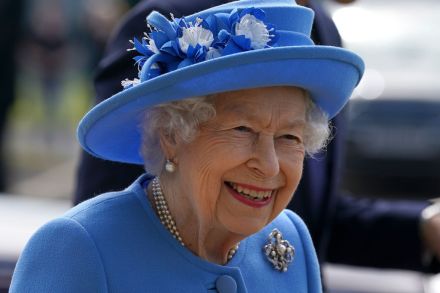
As Alexander Larman writes, the passage of the Queen is not a tragedy. No life lived so well, so dutifully, and with such faith in so many things now lost to us can be considered a tragedy. But it is nonetheless very sad, even for those of us in America — a nation she loved in so many ways. Her death seems like another blow to another important institution of the West, undermined in recent decades by boomer proclivities and millennial narcissism, and likely to break into a thousand pieces in the absence of the old-world values Elizabeth represented. What is more tragic, and more offensive, is the degree to which the Queen's passing has been met by historical ignorance from the anti-Western left and its attendant useful idiots on the decadence-obsessed right.

She lived her best life

CNN and Fox were fine, but you had to tune in to the British news channels to get the full weight of the Queen's death on Thursday. Every anchor, every reporter, spoke in a voice burdened by grief. So it was easy to forgive one Sky News commentator when she said, "At a time when it's all about having a brand, the Queen stood in defiance of that trend." In fact, it's hard to think of anyone who had a more cultivated brand than Elizabeth II. Her every public appearance, every utterance, every twitch was carefully calibrated toward the image of a stately monarch. Yet you can also understand what the Sky commentator meant.

‘Oxford or Cambridge?’: the vacation edition

"Oxford or Cambridge?" No, it isn’t just shorthand for which of Britain’s most famous universities you attended — or were rejected from. It’s also a question about your taste in weekend vacation spots. Oxford is an urban, bustling city, full of multiculturalism, wide-eyed gangs of tourists and a literary heritage that’s long since tipped over into cliché. Think Alice in Wonderland, C.S. Lewis, J.R.R. Tolkien, even — God help us — Harry Potter, claimed for posterity because of its use of Christ Church as a filming location. But its Eastern cousin — decidedly not Cambridge, Massachusetts — is a very different proposition.

Finally, some justice for the infected blood scandal’s victims

From our UK edition

Why has the greatest patient scandal in the history of the NHS rumbled on for so long before its victims even start to see justice? It shouldn’t have taken 40 years for there to be an answer Today the government awarded £100,000 in interim compensation to around 4,000 survivors of the contaminated blood scandal, as recommended by Sir Robert Francis, who published a report on the matter earlier this year. They have been fighting for 40 years for justice that, as yet, does not cover the bereaved parents and children of those who were infected with HIV and Hepatitis C when they were given dirty blood products for their haemophilia or blood transfusions. For that, they will have to wait until the conclusion of the public inquiry led by Sir Brian Langstaff later this year.

Britain’s crippling lack of infrastructure

From our UK edition

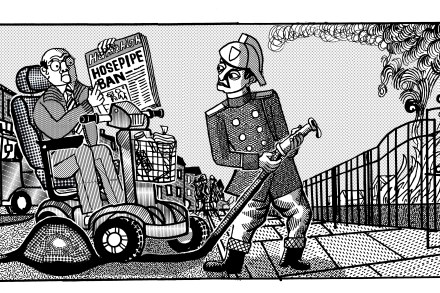
England is in the grip of its most widespread drought in 20 years. Water companies are implementing hosepipe bans. Half the country’s potato crop is expected to fail. Photographs of reservoirs show them drained, dry banks open to the sky. Another heatwave is here, bringing little prospect of imminent relief. Britain hasn’t built a reservoir since 1991. The population has grown. Hot weather has become more frequent. Water use has become more strained. The barriers to actually doing something about it remain in place. Take Layla Moran, Liberal Democrat MP for Oxford West. As late as March, she was doing the media rounds vigorously opposing the construction of a new reservoir in Abingdon; it would be unsightly, the population projections might be wrong, she said.

How Germany’s energy crisis could bite Britain

From our UK edition

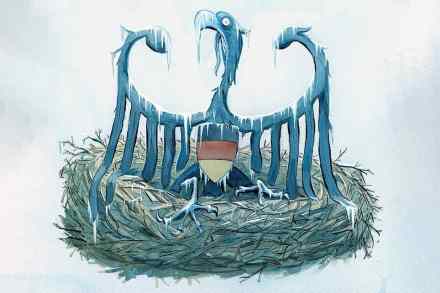
For now, Berlin can breathe a sigh of relief: after a ten-day shutdown for maintenance, the Nord Stream 1 pipeline is back online. Russia is once again heating German homes, fuelling German industry, and using German money to finance its war in Ukraine. But this happy exchange may not continue; the pipeline is still operating at just 40 per cent of its usual capacity, and Vladimir Putin is warning this could fall to 20 per cent next week.