Britain

Are we heading for a golden era in British-Indian relations?

From our UK edition

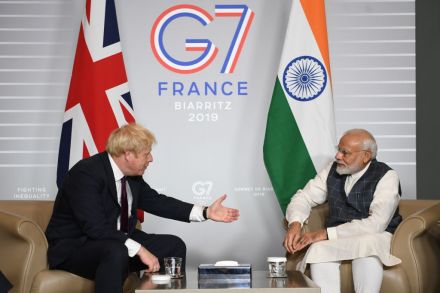
Britain's departure from the EU presents an exciting opportunity to build on old alliances around the world. Nowhere is this more true than in the UK's relationship with our old Indian friends.  India was preparing to roll out the red carpet for Boris Johnson this week. Being India’s annual guest of honour at their Republic Day celebrations is equivalent to the Buckingham Palace treatment or the Bastille Day invitation. Soldiers on double-humped camels, anti-satellite weapon systems on display and giant papier-mâché tableaux tributes to Mahatma Gandhi parade down New Delhi’s ceremonial boulevard that was once lined by statues of Britain’s kings and viceroys.

What Brexit Britain can really expect from Biden

From our UK edition

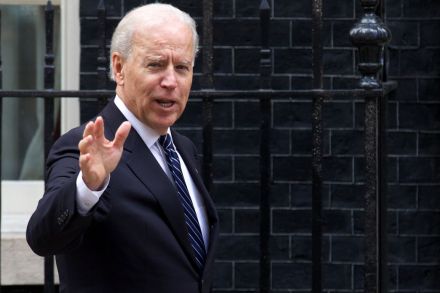
Joe Biden is both an exceptionally lucky and unlucky politician. It would have been easy to write off the former vice president a few years ago. Yet here he is, the oldest person to assume the office, albeit becoming president at perhaps the country’s (and entire planet’s) darkest hour since World War II. So what can we really expect from him? And is his arrival really bad news for Brexit Britain? Unlike Trump, Biden is less keen to talk up the 'special relationship' with Britain. But this might not be all bad news for Britain after Brexit. Biden has said little about Britain's departure from the EU, but he has been clear in warning the UK about the prospect of a hard border between Ireland and Northern Ireland:  'We worked too hard to get Ireland worked out.

Corbyn’s legacy is here to stay

From our UK edition

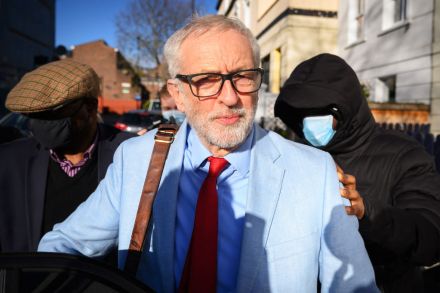
It’s been just over a year since the British people finally squashed a hard-left push for power under the dismal but unyieldingly dangerous leadership of Jeremy Corbyn. On 12 December 2019 we dodged a collective bullet. But Corbynism lasted almost half a decade; it reshaped the national conversation. As we enter 2021 it’s worth considering what it has taught us about our politics and what its legacy might be for Britain. First off, Corbynism provided something much-needed: a reminder that the left does not have a monopoly on virtue, or even on that vague but actually pretty important political quality – niceness. The dangers of an unfettered right are a staple of western politics.

The EU knew what it stood to lose and backed down

From our UK edition

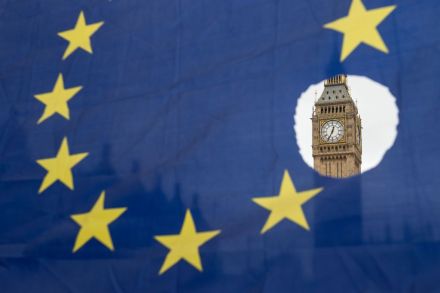
From the very beginning, the whole question of British and European integration has turned fundamentally on the question of sovereignty, as Ursula von der Leyen accepted this afternoon. Those who favoured membership then and now dismiss sovereignty as a meaningless or outdated notion in a world of interconnection. The events of the last four years, and perhaps even more the last few days, should have made them think again. The question of fishing had the merit of making sovereignty concrete and understandable, which is why it became suddenly so crucial. You may decide to give or lend certain rights or powers to others, but who makes that decision? Who has the power to make the decision stick? In a nutshell, that is sovereignty, as fundamental today as ever.

Europe’s slow vaccine approval is testing Germany’s patience

From our UK edition

The Bundestag can’t be an easy place to be a politician right now. At the start of the pandemic, Germany seemed to be steering a steadier course than other countries, who looked on in awe at the speed with which it launched its testing regime. But as Britain, Canada and the USA begin vaccinations, Germany has been left tapping its feet. It is still waiting for the European Medicines Agency to approve the Pfizer vaccine, which it is set to do on 21 December – a state of affairs that is rapidly turning into a national and international embarrassment. The German public have grown increasingly irritated at the delays. ‘It’s just beyond belief,’ the Bild newspaper wrote in an editorial.

Was the EU ever going to offer Britain a good deal?

From our UK edition

The announcement that Brexit negotiations are set to continue will no doubt alarm Brexiteers who fear compromise, sell-out and fudge. In fairness to Brussels however, they set out their stall early on and stuck to the script. The EU is unwilling – as they see it – to let Britain have its cake and eat it, by having large access to the EU’s market while not being a member or leaving the club and not ‘paying a price’. This might explain what could otherwise be seen as an unduly recalcitrant attitude. It also explains why any deal which the EU agrees to is likely to be on its terms. The level playing field has proved a major source of disagreement.

Britain is right to pursue closer military ties to Israel

From our UK edition

There’s a group called Palestine Action whose raison d’être is to throw red paint over the British offices of Elbit, an Israeli high-tech arms company, in an orchestrated attempt to hound it out of the country. Five members of the ‘direct-action network’, which has links to Extinction Rebellion, armed themselves with paint pots and climbed onto the roof of the Elbit offices in Staffordshire in September. Activists also targeted sites in London, where they not only hurled paint over buildings, but also over several Jewish people, who had gathered to stage a peaceful counter-demonstration.

A British state of mind

From our UK edition

I was born British and as a British citizen I will live out my days. My nationality is a state of mind and I have no intention of changing either. I know who I am and what I love – and what I love is Britain, the whole place, every nook and cranny. This is my island. No pronouncement by any politician – here today and gone tomorrow – and no referendum on this or that issue of the day will have any effect on my understanding of myself and where I belong. It makes me feel better just to put those words down on the page.The Canadian anthropologist Wade Davis said, 'The world into which you are born does not exist, not in any absolute sense, rather it is a model of reality.' I listen to those words and realise that Britain does not exist either.

Britain’s slave trade and the problem with ‘decolonisation’

From our UK edition

Colonialism and slavery. There is, of course, a connection between them. Yet the reason for our present interest in the topic assumes something stronger – not merely a connection, but an equation. That is why we are told we have to ‘decolonise’ ourselves. Because until we do, the vicious racism that slavery incarnated will continue to be our own. The assumption, however, is mistaken. It is true that the British were heavily involved in trading slaves across the Atlantic from Africa to the Caribbean and the southern colonies of North America, mostly between 1660 and 1807. Britain transported around 3 million Africans in conditions that were infamously dreadful, with human cargo packed like sardines below decks. Maybe 450,000 slaves did not survive the voyage.

China has taken control of Hong Kong’s legislature

From our UK edition

Hong Kong’s legislature has today moved one step closer to becoming a local branch of the Chinese Communist Party, after the disqualification of four of the most moderate, mainstream pro-democracy legislators resulted in the resignation en masse of every single pro-democracy legislator in protest. For the first time since 1997 the body now has no pro-democracy voices, marking yet another nail in the coffin of ‘one country, two systems.’ The four legislators who were ousted by Beijing – Alvin Yeung, Kwok Ka-ki, Dennis Kwok and Kenneth Leung – are hardly radical pro-independence activists.

Six places in Britain that make you feel like you’re abroad

From our UK edition

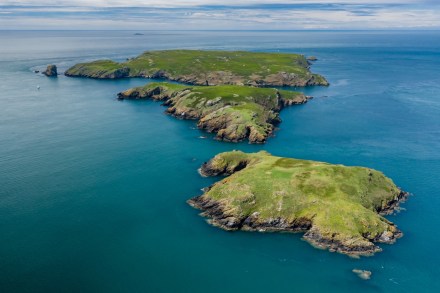
Even when lockdown ends in Britain it may be a while longer before international borders begin to reopen. But not being able to hop on a flight doesn’t mean you can’t enjoy an exotic escape. There are plenty of beautiful spots across the British Isles that make you feel as though you’re hundreds of miles from home. Here is our pick of the best. Somerset Lavender Farm, Somerset Sipping a coffee al fresco and gazing over the lilacy haze of fields at this family-run farm, you’d think you were in deepest Provence. In fact you’re just 10 miles from the UNESCO world heritage city of Bath and right on the fringes of the Cotswold Hills. The working farm has around 50,000 plants, including five acres of different types of lavender and a rose garden.

Monkeys, bats and our national trust

From our UK edition

There was always one key flaw in our species. Which is that someone always shags a monkey. I have expressed this thought fairly regularly in private, often to friends who don’t get the reference about the likely origin of Aids and look at me strangely ever after. Still, I find it a useful rule. We humans are — perhaps always have been — as weak as our weakest member makes us. And if just one of us chooses of an evening to force themselves on one of our simian cousins, then before long people across the planet start dropping dead. I suppose the monkey-shagger rule will now have to be updated to take into account the fact that someone will always blend a bat.

Bigamists, lunatics and adventurers: the raucous world of 19th century British music

From our UK edition

For a patriotic German in the decades before Bismarck, Britain’s power was an object of envy. But there was one thing, at least, that you could always hold over the Anglo-Saxons on their foggy little island. On 1 January 1837, Robert Schumann sat down in Leipzig to hear a new piano concerto by the 20-year-old William Sterndale Bennett. ‘An English composer; no composer,’ commented his neighbour, smugly, before the music started. Few 19th-century German music-lovers failed to point out that the land of Shakespeare had somehow failed to produce a single really significant composer since the late 17th century. We know how that story ended; and if you want to explore the flowering of the British musical renaissance, it’s never been easier.

American Healthcare versus the British system

Donald Trump recently disparaged Britain’s National Health Service for “going broke and not working,” leading Health Secretary Jeremy Hunt to express his pride in a system “where all get care no matter the size of their bank balance.” But the news has been filled for months with stories of people unable to access care they need under the NHS, regardless of their efforts or financial resources. Beyond the nationalistic pride and defensiveness of politicians both sides of the Atlantic, how do British and American healthcare really compare? Are both sides as crazy as the other imagines, or do they each know something the other can learn from? Sweeping generalizations regarding the nature of American health insurance are so popular because the reality is so complicated.