Bristol

Symbol of wisdom or harbinger of death – the owl preserves its mystery

From our UK edition

As the author of this engaging book makes plain, it is with good reason that owls are such cherished birds. They possess the most acute sense of hearing not just of any avian group but possibly of any creature. In experimental conditions of total darkness, barn owls were able to catch mice merely by hearing their rustling as they moved. The owls’ own flight is soundless because of special comb-like structures on the leading edges of their wings. Almost all owl species are adapted to see acutely at night and the largest are able to catch deer or pluck young eagles from the nest. But it is not merely these definable physical attributes that set owls apart. They also have a psychological aura. Their forward-facing eyes in a rather flat-faced configuration mimic our own arrangement.


The meaning of life is a bus journey away

From our UK edition

Loelia Lindsay, socialite and former wife of the 2nd Duke of Westminster, is said to have remarked: ‘Anybody seen in a bus over the age of 30 has been a failure in life.’ Well, I’m turning 59 soon and I still use buses. So, by that reckoning, success has so far not only eluded me but given me the widest possible berth.  In my defence, I live in Bristol, which has the worst congestion outside London. Driving here during rush hour is a kind of psychological torture. It’s also a war of attrition between the local council and motorists, with roadworks popping up overnight like molehills. Almost anything is preferable: walking, cycling or the bus. Admittedly, bus travel isn’t glamorous. There’s no bus equivalent of the Orient Express that I’m aware of.

The age of absolutism

From our UK edition

A Labour MP was prevented from visiting a school in his constituency because the teaching unions and the Palestine Solidarity Campaign do not like the fact that he believes Israel should have a right to exist. The MP in question is Damien Egan, who represents Bristol North East and who is vice-chairman of the Labour Friends of Israel caucus – or, as it is almost certainly referred to within the party, Labour Friends of Genocide. We haven’t heard from Egan just yet – perhaps he is less cross about it than I am, or simply doesn’t want to make a fuss. The school in question is the Bristol Brunel Academy, the principal of which is a woman called Jen Cusack who should, of course, be sacked.

The ballad of broken Britain

From our UK edition

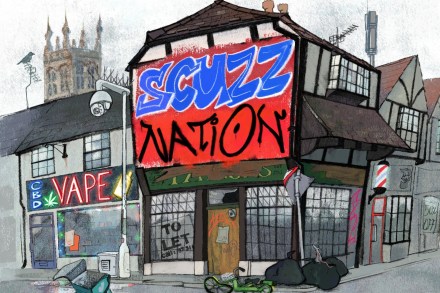
In my corner of Bristol, alongside drug dealers, shoplifters and street drinkers, we now have our very own pyromaniac. They started small – an abandoned office chair, a clothing bank and an old telephone box – before moving on to bigger things. Half a dozen cars have been torched over the past few months, including two on my road, and, most recently, a derelict pub. The other Saturday, hearing a commotion outside, my wife jumped out of bed and flung open the curtains. The scene that greeted us was apocalyptic. In daylight, on a narrow suburban street, the arsonist had set fire to three motorbikes parked in a row, which in turn had set alight a car and a hedge. It was pandemonium.

The changing smell of Britain’s streets

From our UK edition

The other day, while on my lunchtime walk, I passed a woman on a mobility scooter holding an impressive-looking doobie. Later, on my bus home, a bloke got on having just extinguished a joint, bringing the overpowering stench with him. Some commuters don’t even bother to put them out. All you can do is sit and tut passive-aggressively, hoping they’re only going a few stops. While cannabis use has slowly declined over the past 25 years, it seems that you can’t escape it in public. Perhaps part of the reason is that so few people now smoke at all, even tobacco. It makes weed far more noticeable. The other reason is that the police don’t bother punishing those caught. Most are either let off with a verbal warning or a fine.

The agonies of adolescence: The Party, by Tessa Hadley, reviewed

From our UK edition

My husband and I like to play Tessa Hadley bingo whenever she has a new book out. You get a point if one of the characters is dressed in a bad outfit, which the author seems rather to admire – a purple jacket with orange tassels; a long felt skirt; a beret, maybe at an angle. You get another point if a beautiful boy-man steals the heart of the story’s older heroine; bonus points if he is unaware of his beauty, a little callous, elegant or golden-skinned. In a recent interview with the New York Times, Sally Rooney said she thought originality was overrated: that she didn’t much mind the idea that she might end up producing variations on the same novel for the rest of her writing life. The 68-year-old Hadley has more or less done this, and her fans are grateful for it.

The best places to eat in Bristol

From our UK edition

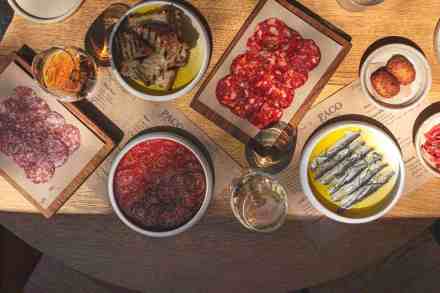
Thousands of people have fled London for buzzy, creative Bristol in recent years. Among them: top chefs, bakers, brewers and baristas. ‘There’s a thriving community of young food entrepreneurs, many refugees from the viciously profit-driven London restaurant scene,’ says Xanthe Clay, chef, food writer and Bristolian. ‘They are taking advantage of lower rents and rates to cook what they want to cook – not what some venture capital backer demands.’ Those to watch include Jamie Randall and Olivia Barry – the chef team behind Adelina Yard, near Queen Square in the city centre – who bring experience working with the likes of Angela Hartnett.

Meet the Bristol Tyre Extinguishers

From our UK edition

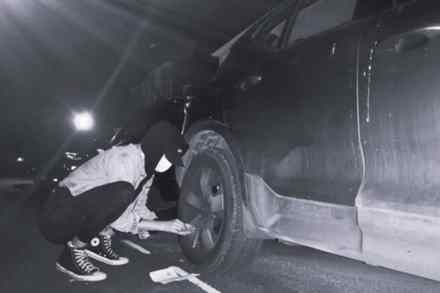
If the world really does face a climate emergency, what ought you, personally, be doing about it? Should you, as increasing numbers of young people are doing, roam the streets at night letting down the tyres of SUVs? The fast-growing movement that calls itself the ‘Tyre Extinguishers’ thinks this is an effective approach, and has targeted thousands of SUVs in cities around the world. My home town of Bristol – always quick to espouse a green cause – has seen at least 200 SUVs ‘extinguished’ in recent weeks. Though they claim to be leaderless, the Extinguishers have a Twitter account where you can keep up-to-date with their latest ‘hits’, and a website that generously invites everyone to get involved.

Bristol proves it: England doesn’t want elected mayors

From our UK edition

Among the many council election results coming in today, the decision of the voters in Bristol to ditch the post of elected mayor, by a margin of 59 to 41 per cent, could easily get missed. Why does it matter? Because the government’s ‘levelling up’ agenda proposes to establish elected mayoralties all over England – on the assumption that it is something we will all welcome as a way to bolster local democracy. Yet Bristol is just the latest in a long series of results which prove the opposite: we keep telling the government that we don’t want elected mayors and yet it keeps trying to force them on us anyway. Since 2001, there have been 54 referendums on whether or not to introduce an elected mayor. In only 17 cases have people voted yes.

Want to see your friends? Call it a protest

From our UK edition

I wonder exactly when we agreed that it is more of a priority to gather with strangers than to meet loved ones? You might chart a number of moments, but the presumption seems to have become fixed. You might say that it started before the pandemic with the idea that truanting from school is worthy, even admirable, so long as it is done in opposition to climate change. Indeed as we learned this week, if you leave school for long enough then you may eventually have a statue erected to you in an English town known for its cathedral and school but not for its university. If you were an adult you could close down major cities, prevent newspapers from leaving the print-works and much more for the same cause. So long as you were saving the planet.

It’s about time Bristol’s protestors grew up

From our UK edition

As a citizen of Bristol who was kept awake all night, again, by a circling police helicopter, I am growing weary of the riots. Outside of London, we must be the most rioted-in city in mainland Britain. As Robert Gore-Langton writes, we riot with monotonous and increasing regularity, with major events in 1793, 1831, 1932, 1944,1980, 1981, 1987, 1992, 2011, 2019, and in 2020, when the statue of Edward Colston was toppled and dumped in the dock. Apparently, our tendency to become disorderly in public spaces – so marked it has been investigated by sociologists – dates back at least 700 years to the St James's Fair, where people gathered to drink an excess of cider. The fair used to be held just yards from where things kicked off on Sunday night.

What is it with Bristol and rioting?

From our UK edition

'Bristol riots' has a lengthy section of its own on Wikipedia. In the wake of the ugly scenes that erupted in the city at the weekend, the list of disturbances is now even longer. Police were injured, a few badly. Vans were set alight and the mindless joy of all that breaking glass became infectious — one young woman found time to skateboard during the mayhem as tires burnt, fireworks flew and bobbies bled. The riot is now being described romantically as the 'the Battle of Bridewell Street' after the street where the police station sits now daubed in graffiti. But in reality it was vicious.

The Bristol riots show the danger of ignoring anti-police extremism

From our UK edition

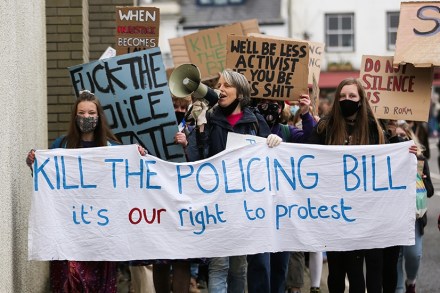
The ugly scenes in Bristol last night make it plain to see that Britain can no longer turn a blind eye to a particular brand of political disorder. Violent clashes during the city’s ‘Kill the Bill’ demonstration – supposedly in protest against the Conservative government’s Police, Crime, Sentencing, and Courts Bill – resulted in 20 police officers being injured, burned-out police vans, and a police station being attacked. Two officers who were seriously injured suffered from broken ribs, a broken arm and a punctured lung. So who was to blame for this violence? The chairman of Avon and Somerset Police Federation, Andy Roebuck, labelled last night’s anarchy a form of 'unprecedented violence'.

bristol

Bristol is Britain’s Portland

Last night, Bristol’s city center erupted in violence as far-left rioters smashed up the police station, assaulted police — breaking some officers’ bones — and set vehicles on fire. The scenes of violence and arson were familiar to me. It looked like any night out of Portland, Oregon, where I’m from. Since May 2020, Black Lives Matter-antifa rioters have regularly carried out similar organized acts of carnage targeting courthouses and police stations. [caption id="attachment_23906" align="alignnone" width="1024"] Several police vehicles were destroyed in Bristol (Ben Crocket)[/caption] Some of the rioters in Bristol last night were dressed in black bloc as they set dumpsters on fire to block streets and used barricades as battering rams to attack police.

Watch: Labour MP refuses to condemn Bristol violence

From our UK edition

Oh dear. Appearing on BBC Two's Politics Live this afternoon, Labour left winger Nadia Whittome refused to condemn the violent protesters in Bristol last night that left 20 policeman injured including two in a serious condition.  Despite being asked four times by presenter Jo Coburn, Whittome would only say 'I'm not going to get into condemning protesters when we don't know what's happened yet. We need a full investigation into what has happened.' https://www.youtube.com/watch?v=KlxijNsB6kA It is worth noting that all four of Bristol's Labour MPs and the city's Labour mayor Marvin Rees have already criticised the actions of the protesters, with Rees claiming it was 'selfish, self-indulgent, self-centred violence.' https://twitter.com/SkyNews/status/1373921295054831616?

The only man who didn’t want to be Cary Grant was Cary Grant himself

From our UK edition

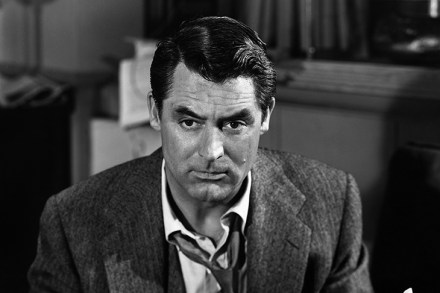
Cary Grant was a hoax so sublime his creator struggled to escape him. He was a metaphor, too, for the transformative magic of cinema, for its lies; and for the artifice and social mobility of the 20th century itself. His real name was Archie Leach, and he could, the critic David Thomson wrote, ‘be attractive and unattractive simultaneously; there is a light and dark side to him, but whichever is dominant, the other creeps into view’.

How we laughed: the golden days of Bananarama

From our UK edition

Saying you don’t like Bananarama is like saying you don’t like summer or Marilyn Monroe — a sure sign of a misanthropist who thinks that being a wet blanket makes them interesting. OK, they never had a blazing talent — their three small, sweet pipings barely adding up to one decent voice — but they were one step beyond even the glorious girls of the Human League: Have-a-Go-Heroines dancing round their handbags, a karaoke of themselves. Keren Woodward and Sara Dallin meet at infant school in Bristol. Their roustabout quality is evident when, as pre-teens, they engage in throwing bricks at each other’s ankles in a bid to skive off school — just think, they were behaving like that even before they were ever drunk!