Brexit

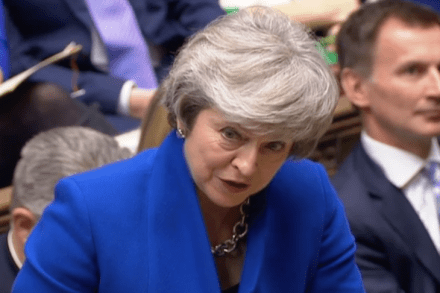
Theresa May says it would be ‘catastrophic’ to cancel Brexit. Is she right?

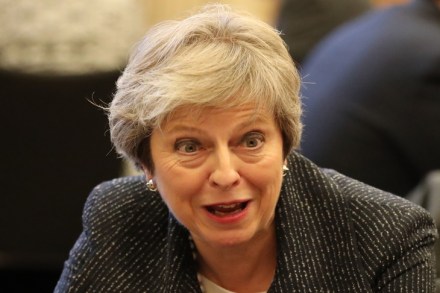
The prime minister will tomorrow make a powerful speech – in the heart of Brexit UK, Stoke on Trent – that MPs ‘all have a duty to implement the result of the referendum’, because failure to do so would wreak ‘catastrophic harm’ on ‘people’s faith in the democratic process and their politicians’. Coming as it does from the most important and powerful elected politician in the UK, this dramatic claim is worthy of careful consideration. What is it based upon? Well it is founded on the premise, in her words, that ‘on the rare occasions when Parliament puts a question to the British people directly we have always understood that

Sunday shows round-up: Corbyn promises a no confidence motion ‘soon’

Jeremy Corbyn: Labour will table vote of no confidence motion ‘soon’ The week ahead promises to be full of drama, with the long awaited ‘meaningful vote’ on Theresa May’s Brexit deal scheduled to take place on Tuesday. The current prognosis does not look good for the Prime Minister, who is still struggling to muster adequate support. This morning, the Leader of the Opposition sat down with Andrew Marr to discuss what course of action he would be taking: Jeremy Corbyn: "We will table a motion of no-confidence in the government at a time of our choosing" but it's going to be soon#marr https://t.co/KllLk4kP9b pic.twitter.com/MfbFXF6zBn — BBC Politics (@BBCPolitics) January 13,

Theresa May’s single most important strategic mistake

Before the big vote on Tuesday night, the EU’s 27 government heads will provide greater reassurances – probably in the form of a collective letter to Theresa May, and within the mandate confirmed at the last EU Council – that the controversial Northern Ireland backstop will not and cannot be forever. What does that mean? Well for those MPs agonising about whether or not to support the PM’s Brexit plan, and who think the word of political leaders counts for something, a few votes may move in Theresa May’s direction. And maybe, in the words of one senior British minister, May will be able to frame the letter as being

What will be May’s Plan B?

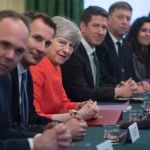
The Cabinet aren’t even waiting for the meaningful vote to be lost to start discussing Plan Bs. As I say in The Sun this morning, multiple ministers are expecting a major row when Cabinet meets on Tuesday morning—ahead of the meaningful vote. The row will be about what to do once the government has lost. One faction in the Cabinet believes that, in the words of one Secretary of State, ‘the only realistic route to go down is to force it into the EU’s hands’. This would involve devising a motion that made clear under what conditions parliament would back the deal. Then saying to the EU, if you want

The Spectator Podcast: time to make your own mind up about a no-deal Brexit

Lorries backing up in Kent, a Mars bar shortage, and no more Rome city breaks – these are just some of the things that we have been warned about when it comes to a no deal Brexit. But what will really happen? In this week’s cover piece, Ross Clark weighs up the pros and the cons. It’s fairly neutral, but on the podcast, we hear from two people who are anything but. Lord Peter Lilley, Tory MP, has said that a no-deal Brexit would be better than the status quo; he’s joined by Ian Dunt, editor of politics.co.uk, who thinks that it would be an ‘unmitigated disaster’. It was a

The politically correct tactics of the mob outside parliament

People are talking about the ugly protests outside parliament as if they are a new and strange phenomenon in British politics. The rough bellowing at politicians. The hollering of the word ‘Nazi!’ at people who clearly aren’t Nazis. The attempt to shout down politicians and journalists who simply want to make a political point. It is all so shocking and strange and un-British, commentators claim. Really? To me, the protests look and sound incredibly familiar. They look like another expression of the nasty, censorious, violent-minded political correctness that has been growing for years in this country. These protests aren’t fascism in action — they’re political correctness in action. All the elements are there. The

Live from the London Palladium: Jacob Rees-Mogg

Before Christmas, we at The Spectator arranged an evening with Jacob Rees-Mogg. The idea was that I’d interview him in front of our readers, and he’d take questions. After just one advert in the magazine, we sold out: a thousand tickets, gone. So, what to do? We may come to regret this, but we’re doing something that, until a while ago, I’d never have expected to happen: booked the London Palladium, one of the biggest theatres in the West End, for an evening of political discussion with a backbench MP. This is all quite unusual, but we live in unusual times. And there’s a decent chance that we’ll sell out this

High life | 10 January 2019

Gstaad The funny thing is that I was at school with a man called Ted Widmer, and I recently read that one Ted Widmer is a ‘distinguished lecturer’ at a New York university and a senior fellow at the Carnegie Council for Ethics in International Affairs. The Ted I knew was anything but ethical and dressed rather strangely. Never mind. Whether or not he was a schoolmate, Widmer has written a treatise on the year 1919 and called it ‘1919: the Year of the Crack-up’. It’s very good. Basically, he says that what took place in 1919 shaped the world for the rest of the century. One hundred years later,

Diary – 10 January 2019

As a hack who lived and breathed the financial crisis, you might think that at the start of 2008 and 2009 I would have been more anxious about what lay ahead than I am today. Wrong. In my understanding of the mechanistic link between a bust banking system and the wallop to our prosperity, I could at least broadcast about what needed to be done to clean up the mess. A problem understood is a mendable problem. I am more unsettled today than at any time in 35 years as a journalist because of a political paralysis that makes the destiny of this nation so uncertain. The Prime Minister’s Brexit

Jeremy Corbyn is right. We need a general election

Brenda from Bristol, look away now. Jeremy Corbyn is pressing Theresa May to call a general election, saying: ‘To break the deadlock, an election is not only the most practical option, it is also the most democratic option. It would give the winning party a renewed mandate to negotiate a better deal for Britain and secure support for it in Parliament and across the country.’  The EU has already made clear there will be no changes to the terms and Corbyn’s election call is really a holding tactic. However, he has, inadvertently, stumbled on an inescapable truth: this Parliament is no longer capable of delivering Brexit or even of thwarting

11 times John Bercow did care about Parliamentary precedent

John Bercow ditched Parliamentary precedent when he allowed a vote to take place on Dominic Grieve’s Brexit amendment yesterday. His decision caused uproar among Tory MPs, but Bercow defended the decision by saying that precedent didn’t count for everything when it comes to setting the rules in the Commons. He told MPs: ‘I am not in the business of invoking precedent, nor am I under any obligation to do so. I think the hon. Gentleman will know that it is the long-established practice of this House that the Speaker in the Chair makes judgments upon the selection of amendments and that those judgments are not questioned by Members of the House. I am clear in my mind that I

Project Fact

Food shortages, diabetics going without insulin, outbreaks of salmonella and swine flu: a no-deal Brexit has become a dystopia of the imagination that gives even the Old Testament a run for its money. To lend it extra credence, the doomsayers are not muttering men with long white beards but business leaders and figures from respectable-sounding thinktanks. Yet in just 11 weeks’ time, a no-deal Brexit could become a reality. Will we really be impoverished, hungry and living in fear of infectious diseases? Or is it just Project Fear, ratcheted up to a new level by those who see the clock ticking down and have become ever more desperate to persuade

Points of view

I suspect that whether or not you admire Neil MacGregor’s latest series for Radio 4, As Others See Us (produced by Paul Kobrak and Tom Alban), will depend on how you feel about Brexit. To my ears, it was shamelessly in favour of a Britain that stays in Europe and remains committed to its global role as the voice of moderation, a disseminator of liberal values, unusual in its ability to draw in other influences while retaining a strong sense of its own identity — and therefore to be cheered and recommended as essential listening. MacGregor is doing everything within his power to show us what we need to hear,

The two problems with Dominic Grieve’s Brexit amendment

Another day, another defeat for the government—this time on Dominic Grieve’s amendment, which requires Theresa May to set out within three sitting days what she’ll do next if the meaningful vote doesn’t pass. The significance of this is that Grieve thinks that the motion the government would put down would be amendable, so MPs would be able to tell the government what they want to happen. But what does this mean in practise? Well, the first thing to note is that there isn’t currently a majority for anything in the Commons. This suggest that no amendment—whether it be for a second referendum or Norway Plus—would be able to pass the

PMQs offered a glimpse of Corbyn’s narcissism

PMQs began with tributes to the late Paddy Ashdown. The philandering man-of-action was the closest thing the Liberal Democrats ever got to James Bond. And though he was often ridiculed by MPs as a self-important windbag, today they hailed him as one of the greats. In this respect the House truly reflected the people. Death brings out the hypocrite in all of us. May offered a few respectful words. The Lib Dems were represented by the weirdly pompous Sir Edward Davey whose knighthood has swollen his head without affecting the capacity of his brain. At least his tribute seemed genuinely heartfelt. The most sincere effort came from Jeremy Corbyn. ‘He

The forgotten voters who might win the next election for Corbyn

Before Brexit: The Uncivil War is allowed to drift off into the ether, there is an important point which needs to be made, and yet which has not been addressed in all the reams of comment which have written about it. There is a gaping hole in its narrative. That narrative seems straightforward enough: Vote Leave won the referendum because its leader, Dominic Cummings, and his team of geeks realised that they could tap into a vast, lost constituency of Britons with whom politicians and traditional political campaigning methods had lost touch. This they did by analysing Facebook and other social media data and then hitting the lost voters –

Can Martin Selmayr’s denials be trusted?

Martin Selmayr, the so-called ‘monster’ of Brussels, has reacted angrily to claims that he set out to punish Britain over Brexit. Selmayr, controversially elevated last year to become secretary general of the European Commission, was said to have told a meeting in Brussels in November that ‘the power is with us’ in Brexit trade talks. The claim was repeated in a detailed article by Tory MP Greg Hands, who sets out allegations that Selmayr and Sabine Weyand, another top EU official, crafted the Brexit deal in order to inflict maximum pain on Britain. Needless to say, Selmayr isn’t happy. This morning, he shared a link to Hands’ Conservative Home piece

What ‘Brexit: The Uncivil War’ got wrong

Brexit: The Uncivil War offered a wacky portrayal of the Vote Leave operation. I was intrigued to find myself portrayed at a board meeting which I never attended because I was not a member of the board and certainly not on the Vote Leave WhatsApp groups. Even a cursory glance of the records of Vote Leave would have revealed this. I received no contact from the makers of the programme at all. Beyond that, I always had the gravest reservations about the advertising on the bus and on the way the immigration issue was handled. I certainly don’t believe that the referendum result was the product of some quirky genius.

Brexit: The Uncivil War didn’t reveal the truth about Vote Leave

Brexit: The Uncivil War makes a big claim right at the start: to show us what really happened in the EU referendum two years ago, and to give us insight into the inner workings of the Vote Leave campaign. It’s an enticing offer but (ironically for a film about allegedly dodgy campaign pledges) I’m not really sure it ever really delivers on this promise. Now, I admit that I’m as far away as possible from a ‘neutral’ or ‘impartial’ reviewer. Having campaigned for Brexit long before ‘Brexit’ was even a word, and having served as the Research Director of Vote Leave, I realise it’s pretty much impossible for me to approach this