Brexit

Full list: The Tory MPs that voted to keep no deal on the table

From our UK edition

Theresa May has just been dealt another blow after the House of Commons voted decisively against a no-deal Brexit. MPs voted by 321 to 308 for a motion which rejects the UK leaving the EU without a deal, under any circumstances. The motion did not force the government to either revoke Article 50 or to request an extension, and so the UK will still leave without a deal on 29 March, until other arrangements are put in place.

Tory MP: Brexit mess is like a ‘cat’s arse’

From our UK edition

What's the best way to describe Britain's current Brexit situation? 'Mess' and 'disaster' probably spring to mind. But Mr S would also find it hard to disagree with the verdict of Trudy Harrison. The Tory MP delivered this verdict: 'We were just discussing in my office how we would describe the current situation, and using good old Cumbrian terminology we were really torn between whether it's a pig's ear, a dog's dinner or a cat's arse' Perhaps all three?

Is Philip Hammond to blame for the knife-crime epidemic?

From our UK edition

The Chancellor, Philip Hammond, breezed into the Commons to deliver a languid and greatly abridged Spring Statement. He had the genial air of a president-for-life emerging from his palace to correct the mis-steps of a bungling and soon-to-be-discarded Prime Minister. He dished out a few hundred million quid on various worthy schemes (save-the-hedgehog projects; free sanitary towels for school-girls) and he added some passing references to Brexit. A ‘cloud’ he called it. ‘A spectre of uncertainty.’ It sounded like a minor niggle which he could resolve while signing his morning correspondence. He used encrypted language, of course. He said that tomorrow’s vote on Article 50 will ‘map out a way forward towards building a consensus’.

Michael Gove’s Brexit agony

From our UK edition

I feel particularly sorry for Michael Gove, because there is psychological torment here. His understandable reasoning for not resigning over Theresa May’s Chequers proposal was that he had been accused first of betraying David Cameron, then of betraying Boris Johnson. He could not face being accused of a third betrayal by walking out on Mrs May. This meant that he unintentionally betrayed the cause of Brexit. He is now the government’s media apologist for whatever piece of contortion comes out of Downing Street, and is humiliated when the line he has just peddled collapses a few hours later.

Philip Hammond tore up the Brexit script at his Spring Statement

From our UK edition

Brexit was always going to dominate this Spring Statement. Philip Hammond even began by saying he’d keep it short to allow the Commons to move on to the ‘no deal’ debate. But the most eye-catching thing Hammond said on Brexit came at the very end. He talked about the need to build consensus across the House. This is Westminster code for a customs union style solution. Hammond has been making the case for this approach at Cabinet for quite a while now. But it isn’t yet Government policy—most ministers still think that there is a chance May’s deal could pass in a third meaningful vote. So it was quite remarkable to hear Hammond saying it from the despatch box at the Spring Statement. It is another demonstration of how discipline is breaking down.

Hammond to MPs: make up your mind on Brexit or the domestic policies get it

From our UK edition

Philip Hammond’s squeeze message to MPs trying to work out how to vote on Brexit over the next few days was clear: if they don’t reach a consensus, then there won’t be lots of lovely spending on important domestic policies such as social care.  Theresa May has been so busy procrastinating on Brexit that her failure to make decisions on these policy areas has not attracted the level of attention it deserves. The social care green paper, for instance, has been pushed back by over a year. This isn’t as much to do with Brexit as ministers like to make out, by the way, but all the same it is now highly convenient for the Chancellor to link the two.

The problem with Theresa May

From our UK edition

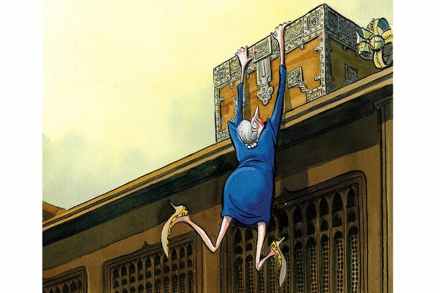
I had forgotten, until I checked this week, that Theresa May timed the general election of June 2017 in order to have a mandate for the Brexit negotiations. They began ten days after the nation voted. She conveyed no sense, at the time, of how the election result had changed her situation. In her beginning is her end. Political leadership requires imagination. She has never displayed any. Why, for example, did she fly to Strasbourg on Monday night? She made the same mistake in December 2017 when she took a dawn flight to Brussels after making a hash of the Irish problem. The point of dramatically winging your way out of the country is to be seen to win something. Instead, Mrs May is the spurned suppliant.

The no-deal Brexit tariffs are nothing to be afraid of

From our UK edition

What strange knots some tie themselves in over Brexit. The attitude of some of those opposed to Britain leaving the EU is this when it comes to free trade: when conducted with the EU, it is essential for our prosperity. But when conducted with any other country it is a dark threat to our very being. How else to explain the reaction of CBI director-general Carolyn Fairbairn to the publication of the Government’s proposed tariff rates, which would apply in the even of a no-deal Brexit. The new regime would see some tariffs imposed on EU goods which currently enter the country tariff-free – 18 per cent of EU imports by value would fall into this category. But overall it would mean a sharp drop in tariffs on goods from all around the world.

The Brexiteers have blown it | 13 March 2019

From our UK edition

If, as Rod Liddle says, Brexit has been killed there is no shortage of suspects. 75 of them, in fact. That’s the number of Conservative MPs who voted against the Government in last night’s second – but not necessarily final – meaningful vote. They wanted Brexit and then, when they were given it, they decided it wasn’t the kind of Brexit they wanted after all.  Fanaticism invariably devours its adherents and so it is with Brexit. The Brexiteers wanted the ball but once they had it they decided they did not actually want it after all. They had their chance and they blew it. All they had to do was vote for the withdrawal agreement. Now they have rejected that, there is little reason to pay them any further attention.

Third time’s the charm? We could be heading for another vote on Theresa May’s Brexit deal

Late last night, there was a sense of optimism among British government ministers that Theresa May’s revised deal might have a chance of passing. But those hopes were crushed this morning by Attorney General Geoffrey Cox’s blunt legal advice. With Cox declaring that the legal risk was unchanged, the Democratic Unionist Party were never going to back the deal. That in turn meant the bulk of the Brexiteers in the European Research Group wouldn’t either. In the end, the withdrawal agreement went down by 149 votes — at the worst end of expectations. ‘I profoundly regret the decision that this House has taken tonight,’ May said upon defeat.

brexit deal

“The backstop risk is unchanged”: Geoffrey Cox’s full legal advice

From our UK edition

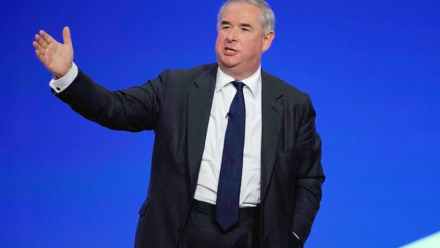
Geoffrey Cox, the Attorney General, has published his verdict on the EU's concessions. He reminds us that in his last judgement, the backstop "could not be brought to an end in the absence of a subsequent [UK-EU] agreement. This would remain the case even if parties were still negotiating many years later, and even if the parties believed that talks have clearly broken down." There is now a reduced risk of this, he says.

Why the EU is so keen for Theresa May’s Brexit deal to pass

From our UK edition

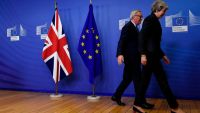
In recent weeks, two big beasts in the European political arena pushed forward their respective ideas for the future of the European Union. France's president Emmanuel Macron repeated his dream of a big EU. And the leader of Germany's Christian Democratic Union Annegret Kramp-Karrenbauer responded in kind with a vision of an EU that is larger than it is now but smaller than the EU ‘a la Macron’. In both visions, the reality of Brexit was conspicuously absent. The decision to ignore Brexit in these visions of the future EU is easily understood if one gets the updated ‘deal’ that Theresa May struck with the EU overnight. ‘This is it’, declared Jean-Claude Juncker. There wouldn’t be a third chance for the UK.

The silence from Geoffrey Cox bodes ill for May’s deal

From our UK edition

The loudest sound this morning is the silence from Geoffrey Cox, the Attorney-General. The test for Theresa May's discussion with Brussels is whether it means the UK will be caught indefinitely in the backstop. And the person who decides this is Mr Cox. No10 misrepresented the nature of the backstop when it was signed: some (then) Cabinet members go further and say that they were lied to. Then No10's own representation of the Withdrawal Agreement was contradicted by the Attorney-General. This is what led us to this point: No10 has, alas, proved that it cannot be trusted to interpret legal advice. Cox has proven that he can be trusted.  Cox is said to be 'agonising' this morning and I can see why.

Why we could be heading for a third vote on May’s Brexit deal

From our UK edition

Late last night, there was a sense of optimism among ministers that the government’s revised deal might have a chance. But those hopes were crushed this morning by Geoffrey Cox’s blunt legal advice. With Cox declaring that the legal risk was unchanged, the DUP were never going to back the deal and that meant the bulk of the ERG wouldn’t either. In the end, the withdrawal agreement went down by 149 votes—at the worst end of expectations. May immediately declared that there would be a vote on no deal tomorrow, and it would be a free vote. May’s justification for this was the referendum precedent, but for the governing party to have no position on the most important issue to come before the Commons in years is remarkable.

We’re now heading for a no-deal Brexit – but not just yet

From our UK edition

A member of the Cabinet uttered just one word to me about this latest humiliating defeat for the Prime Minister about her Brexit deal: "nightmare!". Let's put this nightmare into context. In January, the Prime Minister's painstakingly negotiated Brexit plan was rejected by a record 230 votes, the worst defeat for a government ever. Tonight's defeat by 149 votes is also huge by all measures. And let's be clear, these are not defeats about rules and regulations for ice cream vans. They relate to the most important economic, security and foreign policy decision this country has taken for many decades. This is therefore without precedent in modern times as a diplomatic and political failure for a Prime Minister.

Full text: Theresa May reacts to her Brexit deal defeat

From our UK edition

I profoundly regret the decision that this House has taken tonight. I continue to believe that by far the best outcome is that the UK leaves the EU in an orderly fashion with a deal, and that the deal we have negotiated is the best and indeed the only deal available. Mr Speaker, I would like to set out briefly how the Government means to proceed. Two weeks ago, I made a series of commitments from this despatch box regarding the steps we would take in the event that this House rejected the deal on offer. I stand by those commitments in full. Therefore, tonight we will table a motion for debate tomorrow to test whether the House supports leaving the European Union without a deal on 29 March.

Theresa May’s Brexit deal defeated again in the Commons

From our UK edition

Theresa May's revised Brexit deal has been voted down decisively by MPs. The Prime Minister's Withdrawal Agreement was defeated by 391 to 242 votes, a margin of 149 votes. May had said if her 'improved' deal did not pass, there was a risk of 'no Brexit at all'. But while the number of Tory rebels was down on the first meaningful vote, which the Government lost by a margin of 230, it wasn't enough for the PM's deal to pass. May reacted to the defeat by promising a free vote in the Commons tomorrow on whether MPs would back a no-deal Brexit. On Thursday, May said that the Commons would vote on a possible Brexit extension.